Family SUVs are often discussed in terms of cargo volume, cupholders, and crash test scores. All essential, of course—but for families who value refinement, the conversation can go further. Beyond the spec sheet lies a layer of thoughtful engineering and design that quietly transforms the daily school run, the late-night airport pickup, or the long holiday drive into something more composed, more considered, and frankly, more enjoyable.
This is where the truly well-designed family SUV distinguishes itself: not by shouting with gimmicks, but by integrating features that simply make family life feel smoother, calmer, and more controlled. The following five insights focus on those subtler advantages—details that don’t always feature in dealer brochures, yet may matter most over years of ownership.
Insight 1: Cabin Architecture That Calms, Not Clutters
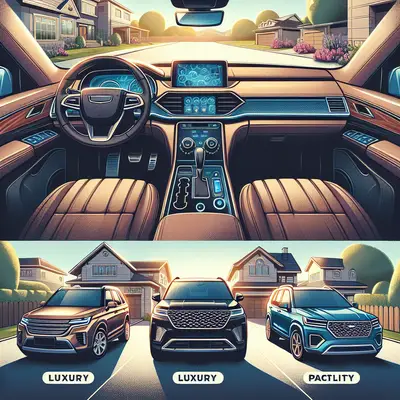
A family SUV’s interior is more than seating and storage; it is an environment, and its architecture directly shapes how hectic or harmonious your drives feel.
Sophisticated family-focused cabins use horizontal design lines and a low cowl (the section under the windshield) to enhance outward visibility and create a sense of openness. Thoughtfully contoured dashboards reduce visual “noise,” placing major controls in a natural reach zone so parents aren’t hunting for buttons at 70 mph. High-quality, matte-finish materials not only look refined but also minimize glare—an undervalued consideration when you have toddlers who nap best in low-light calm.
Look for second-row seats that slide and recline independently with a near-flat floor; this combination gives each child a defined, comfortable space and reduces jostling. Likewise, a wide rear door aperture and a high, squared-off roofline make it easier to secure a child seat without contorting your back. These details rarely appear in the headline features list, but they will quietly save you hundreds of small frustrations every year.
Insight 2: Subtle Technology That Serves the Parent, Not the Gadget
In a premium family SUV, technology should feel invisible until the moment you need it. The goal is not more screens, but smarter support for real family routines.
Start with the fundamentals: an intuitive, low-latency infotainment system with clear, large icons and physical shortcuts for climate and audio. Parents juggling traffic, schedules, and backseat negotiations don’t have the bandwidth for complex menu trees. Wireless Apple CarPlay and Android Auto reduce cable clutter and make spontaneous route changes or music requests effortless, especially when the designated “DJ” is in the passenger seat.
Seek out features like driver profiles that remember seating, mirrors, climate preferences, and even safety system settings for each adult driver. Families that share one SUV will appreciate how the vehicle quietly reconfigures itself at startup without negotiation. Similarly, multi-zone climate control and individual fan-speed settings allow every row to be comfortable without the endless “it’s too hot/too cold” back-and-forth.
Most importantly, examine how the SUV handles distraction: does it offer clear, concise driver alerts rather than constant beeping? Are safety messages readable at a glance? The most refined systems respect a parent’s mental load rather than adding to it.
Insight 3: Acoustics, Ride Quality, and the Art of Arriving Composed
Families rarely frame their search around acoustics and ride tuning, yet these qualities may define how rested—or frazzled—you feel at the end of even short trips.
Premium family SUVs often use laminated front glass, additional sound-deadening materials in the floor and firewall, and acoustic insulation in the doors to filter out wind and tire noise. The result is not absolute silence, but a more controlled soundscape where conversation is easier and children are less overstimulated. It’s the difference between raising your voice to be heard and speaking at a normal tone, hour after hour.
Ride quality is equally nuanced. An ideal family setup is firm enough to prevent car sickness yet supple enough to smooth broken pavement. Look for vehicles whose suspension tuning prioritizes composure over aggressiveness: less body float over highway undulations, controlled responses to potholes, and stable behavior during lane changes and on-ramps. If available, adaptive dampers can subtly tailor the ride for solo commuting during the week and fully loaded trips on the weekend.
Together, these elements shape what might be the most underrated luxury for parents: arriving at your destination without feeling as though you’ve been battling the car and the road the entire way.
Insight 4: Cargo Spaces Designed Around Real Family Logistics
Nearly every SUV touts its cargo capacity figure, but the number itself is only part of the story. The more revealing question is: how thoughtfully is that space executed?
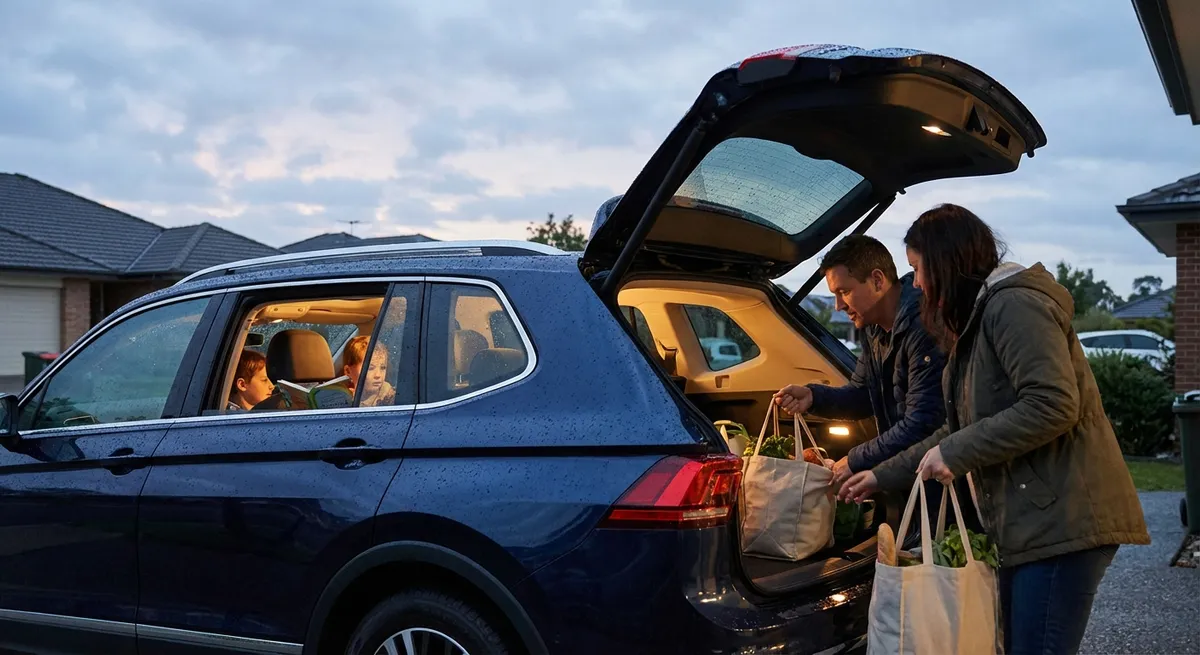
Families benefit from cargo areas with a low load floor and a wide, square opening so strollers, sports gear, and luggage slide in without strategic angling. A flat floor with minimal intrusions from wheel wells or suspension components is more valuable in practice than an extra theoretical cubic foot or two. Split-folding rear seats that fold nearly flat—preferably from levers in the cargo area—let you reconfigure space with one hand while holding a backpack or a toddler with the other.
Pay attention to the presence and placement of hooks, underfloor storage, and side bins. Grocery bag hooks, hidden compartments for emergency kits, and built-in side pockets for dirty cleats or wet gear can discreetly separate the clean from the chaotic. If you frequently travel with pets, look for robust tie-down points and a tall cargo area with a nearly vertical tailgate; this geometry is safer and more comfortable for a properly secured pet.
Power-operated tailgates with hands-free activation are now common, but the best implementations open high enough for taller adults, close softly, and allow you to stop the motion mid-travel if a child darts in unexpectedly. It’s in these seemingly modest details that a family SUV reveals whether it has truly been designed around daily life.
Insight 5: Safety Systems Tuned for Families, Not Just Crash Tests
Modern SUVs are saturated with safety technology, yet the value for families lies less in the checklist and more in how these systems behave in real, imperfect scenarios.
Look for advanced driver assistance systems (ADAS) that have been well-reviewed for smoothness, not just presence: adaptive cruise control that accelerates and brakes gently enough for sleeping children to remain undisturbed, lane-centering that guards against drift without constant ping-ponging between lines, and blind-spot monitoring with clear, restrained alerts. Systems that are too abrupt or overly talkative quickly get disabled—and once turned off, they no longer provide protection.
Pay close attention to rear-seat safety. Rear-seat reminder systems can prompt you to check the back seats before locking the vehicle, a small but important safeguard in busy lives. Sunshades built into rear doors, UV-filtering glass, and third-row side-curtain airbags are all meaningful enhancements for younger passengers, even if they sit below the marketing spotlight.
Finally, consider how transparently the SUV communicates with you. A sophisticated family vehicle offers straightforward, readable information about tire pressures, following distance, driver attention, and system limitations. This clarity allows parents to remain confidently in control rather than guessing what the technology is doing at any moment.
Conclusion
For families, a truly exceptional SUV is less about spectacle and more about the quiet, consistent ease it introduces into every drive. The most rewarding models don’t just check boxes; they orchestrate cabin architecture, technology, refinement, practicality, and safety into a calm, coherent whole.
When you next step into a showroom, bring these five insights with you. Ask how the vehicle feels, not only how it performs. Notice how the doors open, how the seats move, how the cabin sounds at speed, and how clearly the technology communicates. In that attention to detail, you’ll often discover the difference between an SUV that simply moves your family, and one that gracefully supports the life you are building together.
Sources
- National Highway Traffic Safety Administration (NHTSA) – 5-Star Safety Ratings - Official U.S. government crash test ratings and safety information for SUVs and other vehicles
- Insurance Institute for Highway Safety (IIHS) – Vehicle Ratings - Independent crash tests, headlight evaluations, and safety feature assessments
- Edmunds – Car Interior and Comfort Guide - Overview of interior design, comfort, and usability factors that affect daily family driving
- Consumer Reports – Guide to Advanced Safety Features - Detailed explanations and evaluations of modern ADAS and how they behave in real-world conditions
- EPA – Fuel Economy and Environment Labels - Official information on fuel economy labels, helping families understand efficiency and operating costs over time
Key Takeaway
The most important thing to remember from this article is that this information can change how you think about Family Features.