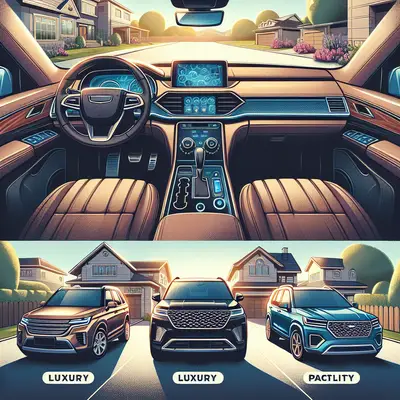
Family SUVs are no longer just about space and safety. For discerning households, the right vehicle becomes an extension of how you live: how you manage time, how you protect your children, and how you maintain calm in the middle of everyday chaos. The most satisfying family SUVs excel not through headline-grabbing gimmicks, but through understated details that make every school run, road trip, and late-night airport pick-up feel more considered.
Below are five exclusive, often-overlooked insights that can genuinely elevate your next SUV from “sensible choice” to “quietly indispensable.”
1. The Architecture of Comfort: Seating That Anticipates Your Day
When evaluating family SUVs, most people count seats; fewer people study the architecture of those seats and how they interact with daily life. Yet this is one of the strongest indicators of whether you will still love your SUV in five years.
A refined family cabin starts with second- and third-row flexibility that feels intuitive rather than fiddly. Look for second rows that both slide and recline independently, so a sleeping child can stretch out while still allowing access to the third row. Pay attention to how the third-row seats are shaped: is the cushion long enough to support an older child’s legs, or will teenagers be perching rather than sitting? The most thoughtfully designed SUVs now offer adult-tolerable third rows, with slightly elevated seating and smart footwell design that reduce fatigue on longer drives.
Material choice matters more than it first appears. High-quality synthetic or semi-aniline leather with stain-resistant coatings can look elegant while standing up to crayons, snack spills, and muddy cleats. Subtle details—such as seat stitching that is slightly darker than the main upholstery, or perforation patterns that hide minor wear—keep the cabin looking composed over time. In premium family SUVs, even the foam density and lateral support in the second row are tuned so children are gently “held” in place, reducing the head-toss that often leads to car sickness.
Finally, consider how the seats fold in real life. One-touch mechanisms that allow you to tip and slide a second-row seat forward—without removing a child seat—are a quiet luxury on hectic mornings. The best designs turn seat reconfiguration into a single, graceful motion rather than a wrestling match in the driveway.
2. The Sound of Calm: Cabin Acoustics That Protect Your Sanity
For families, cabin quiet isn’t about bragging rights—it’s about everyone arriving less drained. The difference between a merely “quiet” SUV and a genuinely well-engineered one becomes clear after an hour on coarse highways or in gusty crosswinds.
Look beyond simple marketing claims and ask about the underlying acoustic engineering. Elements such as laminated front and side glass, extensive door sealing, and sound-deadening material in the floor and firewall work together to soften the constant “hiss” of the outside world. Some of the most refined family SUVs now employ active noise cancellation, using microphones and speakers to subtly counteract intrusive frequencies from the engine and road. The result is not an eerie silence, but a calmer, more muted soundscape.
This serenity compounds your other choices. A high-quality audio system benefits exponentially from a well-insulated cabin, meaning children can listen to an audiobook in the back while you enjoy a podcast at the front at civilized volumes. Conversations between first and third rows become easier and less strained, which matters more than you might think when you’re spelling out homework instructions at 7:45 a.m. in traffic.
Pay attention during your test drive to how the SUV sounds over broken pavement and at freeway speeds. Do you need to raise your voice to talk to third-row passengers? Does wind noise start to intrude around the mirrors or panoramic roof? The most family-friendly luxury is often the one you hear—or rather, don’t hear.
3. Intelligent Storage: A Place for Everything, Not Just “More Space”
Spec sheets love to quote cargo volume, but families live in the details of storage, not the headline number. The refinement test isn’t just “How much does it hold?” but “How effortlessly can we stay organized?”
Start with the cargo area. Look for a load floor that remains flat when the third row is folded, ideally with an adjustable height or a recessed well that creates a “hidden” lower level. This allows you to separate everyday items—stroller, sports equipment, reusable grocery bags—from luggage and bulky gear. Rail systems, integrated hooks, and configurable dividers reduce the annoying shuffle of loose items rolling around on every corner.
Within the cabin, study the first- and second-row storage with the same attention you might give kitchen cabinetry. Are there covered spaces for valuables when you park at a busy venue? Are cupholders large and deep enough for travel mugs and children’s water bottles, with rubberized inserts that don’t rattle? Does the center console offer a dedicated slot for a phone while it charges, or will it slide around awkwardly?
Sophisticated family SUVs now incorporate “micro-storage” that feels like it was designed by someone who actually lives with children: slim compartments in the doors for coloring books, concealed drawers under the second row for emergency supplies, or a lidded bin accessible to rear passengers for snacks and wipes. The most elegant cabins allow you to keep surfaces visually clean—even when the vehicle is quietly carrying half the contents of your home.
4. Subtle Tech: Digital Features That Enhance, Not Distract
Family-oriented technology has matured from novelty screens to integrated systems that genuinely smooth daily logistics. The key is not how much tech an SUV has, but how gracefully it disappears into your routine.
Prioritize clarity and simplicity over flash. A clean, logically arranged central display with quick access to climate, navigation, and audio is far more luxurious in daily use than a visually busy screen that buries common functions. Wireless Apple CarPlay and Android Auto are now near-essential for families, reducing cables and allowing effortless handoff between drivers. The most sophisticated systems reconnect instantly and resume your route or audio without fuss.
Rear-seat tech is where discernment matters. Instead of chasing the biggest screens, look for flexibility: multiple USB-C ports in all rows, 120V outlets for laptops or breast pumps, and robust Wi‑Fi hotspot capability for longer journeys. Some premium SUVs now offer rear infotainment that can mirror a child’s tablet or stream independently, with headphone support so the cabin doesn’t become an audio battleground.
Driver-focused tech can also make family life smoother in subtle ways. Profiles that remember seat, mirror, and climate preferences for different drivers minimize the “who drove last?” shuffle. Digital instrument clusters that clearly surface navigation directions and driver-assistance status reduce cognitive load during complex drives. The most refined solutions almost vanish—doing their work quietly in the background while you focus on the humans you’re transporting.
5. Everyday Grace: The “Micro-Moments” That Reveal True Thoughtfulness
What often distinguishes a truly exceptional family SUV is not a single headline feature, but a hundred small design decisions that collectively make your life easier. These “micro-moments” are rarely captured on spec sheets, yet they dramatically shape long-term satisfaction.
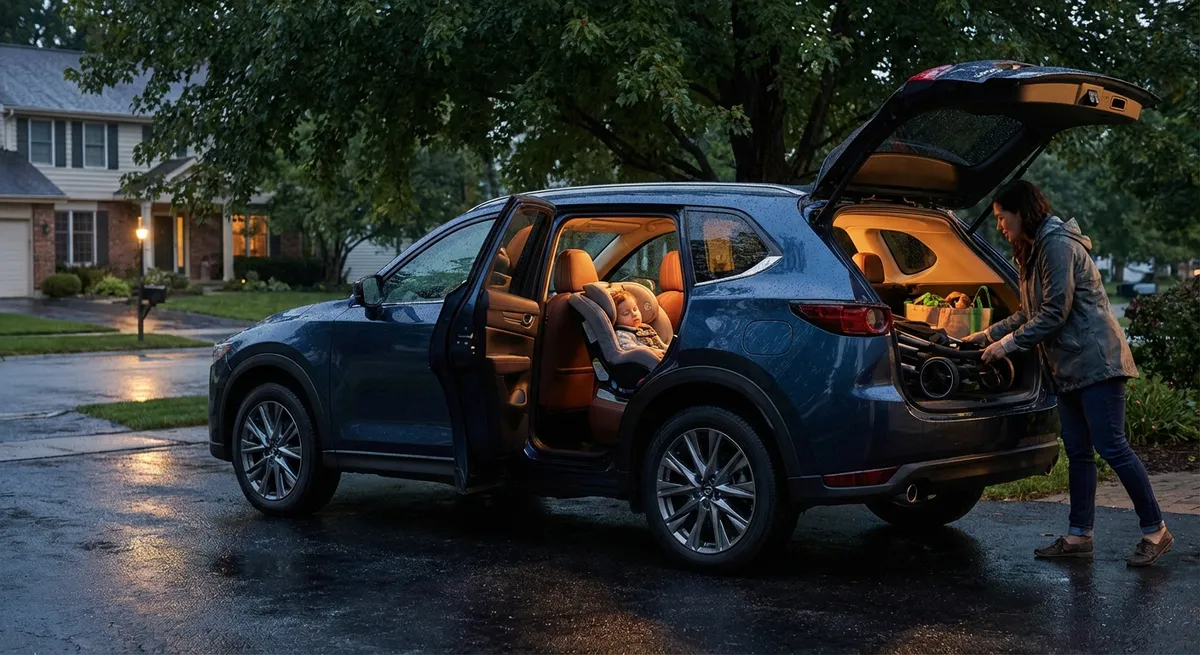
Consider entry and exit. Wide-opening rear doors and thoughtful step-in height make it far easier for grandparents and small children alike. Power tailgates with adjustable opening height prevent accidental bumps in low garages. Hands-free operation—triggered by a foot motion or proximity—can be transformative when you’re carrying a sleeping toddler in one arm and groceries in the other.
Lighting is another area where subtlety matters. Soft, indirect ambient lighting in the cabin makes nighttime drives feel calmer, while well-placed LED puddle lamps and cargo lights help you find that missing shoe or pacifier after dark. Some premium SUVs now offer configurable color temperatures that avoid harsh blue tones, making late-night returns less jarring for tired children.
Finally, assess how the SUV supports the less glamorous parts of family travel: an easily accessible spare tire or repair kit, intelligent placement of ISOFIX/LATCH anchors, door openings that protect clothing from exterior grime, and intuitive child-lock controls that don’t require a manual. When these details are thoughtfully executed, your vehicle feels like a quiet partner—present, capable, and always a step ahead of what you’ll need next.
Conclusion
Choosing a family SUV at a higher level is less about chasing size or spec-sheet superlatives, and more about recognizing which details will shape your everyday rhythm. Seating that respects every age in your household, acoustics that preserve calm, storage that keeps disorder elegantly hidden, technology that serves rather than distracts, and countless small touches that ease the transitions between home, school, work, and weekend.
For families who value refinement, the most rewarding SUVs are those that feel increasingly tailored the longer you live with them—vehicles that transform the ordinary act of getting from A to B into something quietly, consistently better.
Sources
- National Highway Traffic Safety Administration (NHTSA) - Authoritative information on vehicle safety technologies and child passenger protection
- Insurance Institute for Highway Safety (IIHS) – Ratings & Safety Features - Independent crash test ratings and evaluations of family-relevant safety and usability features
- Edmunds – Car Features for Families - Practical overview of features that matter most to family buyers
- Consumer Reports – How to Choose the Best Family Car - Guidance on assessing comfort, practicality, and everyday usability in family vehicles
- US Department of Transportation – Child Safety - Government recommendations on safe child seating, restraints, and family travel practices
Key Takeaway
The most important thing to remember from this article is that this information can change how you think about Family Features.