For many families, the right SUV is less about spectacle and more about the quiet, cumulative ways a vehicle reshapes everyday routines. School runs, late flights, weekend tournaments, and impromptu road trips all reveal which features genuinely earn their keep—and which are little more than showroom theater. This is where the most thoughtfully equipped family SUVs distinguish themselves: not with flash, but with refinement, restraint, and a clear understanding of how modern families actually live.
Below are five under-the-radar, yet genuinely transformative, family-focused features—presented less as a checklist and more as a lens for evaluating your next SUV with unusual clarity.
1. True Cabin Zoning: Climate, Light, and Noise in Harmony
Many SUVs advertise multi-zone climate control; far fewer create a genuinely zoned environment that respects each occupant’s comfort. For families, “cabin zoning” is no longer just about temperature. It is the nuanced interplay of air, light, and sound.
Begin with climate: look for tri- or quad-zone systems with individual digital controls and vents that reach the third row with conviction, not as an afterthought. Rear occupants should be able to adjust their temperature and fan speed without the front row acting as gatekeeper. This matters on long journeys when a sleeping toddler, a teenager in a hoodie, and a driver in a work shirt all coexist in different thermal worlds.
Light is equally important. Panoramic roofs can feel indulgent, but their value is practical: they reduce the sense of confinement for second- and third-row passengers, make car seats easier to manage, and can curb motion sickness when paired with strong sunshades. Seek out roofs with dual-pane sections or independent rear shades so you can give the kids daylight while the driver gets glare control.
Then there is sound. Acoustic glass, additional insulation around the firewall and wheel arches, and active noise cancellation are not marketing flourishes; they are the difference between a cabin that feels like an extension of your living room and one that feels like a tin echo chamber. A genuinely quiet SUV makes soft conversations possible, keeps baby naps intact, and reduces the mental fatigue of dense traffic. When you test drive, turn off the music, cruise at highway speed, and listen. The quietest cabins are often the safest simply because they support focus and calm.
2. Seating That Anticipates Real Family Logistics
Spec sheets often reduce seating to numbers—“up to seven” or “available eight-passenger”—but a discerning family will look past capacity and evaluate choreography. The daily dance of loading, buckling, and exiting reveals a great deal about how seriously an automaker considered family life.
Begin with second-row flexibility. A true family-friendly layout offers fore-aft adjustment with generous travel, reclining functionality, and one-handed mechanisms that don’t require athleticism to operate. Some of the smartest solutions now allow a child seat to remain latched while the entire second-row seat tilts and slides for third-row access—a small detail with enormous impact when grandparents or older siblings need to enter the back without unbuckling a securely installed seat.
Pay close attention to the third row. Does it only suit children, or can it accommodate adults for at least a dinner out or a short road trip? Look for proper seat height (thigh support), not just a cushion bolted low to the floor, and check whether the footwell is deep enough to avoid a knees-up posture. Headroom, side-curtain airbag coverage, and access to USB ports and cupholders also signal whether the third row is truly designed for people you care about, not just for brochure photography.
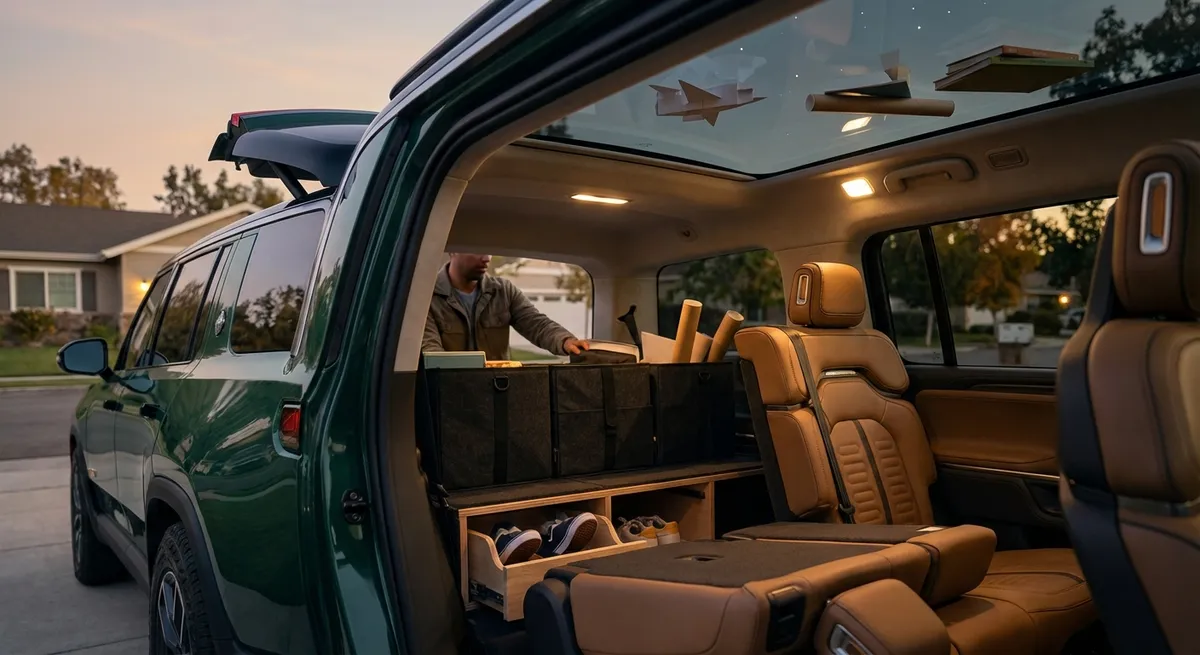
Finally, consider the folding sequence. The best family SUVs offer near-effortless transitions from people-hauler to cargo-hauler, with powered or simple one-touch folding from the rear cargo area. If transforming the layout feels like a wrestling match, it eventually won’t happen—leading to crammed gear, frustrated passengers, and needless compromises.
3. Digital Calm: Tech That Serves, Not Distracts
Modern SUVs are dense with screens and software, yet for families, “more tech” is not automatically better. The ideal family SUV creates digital calm—technology that reduces friction rather than competing for attention.
Start with the driver’s interface. A large, crisp central screen is useful, but what matters is responsiveness and clarity. Simple, persistent access to navigation, audio, and phone without nested menus makes every trip smoother. Physical controls for frequently used functions—temperature, fan, volume, defroster—are a strong marker of an SUV designed for real life, not just showroom minimalism. When you test the interface, try common family use-cases: adjusting climate while navigating a detour, or changing a playlist while answering a call.
Consider the rear cabin’s digital ecosystem. Thoughtfully placed USB-C ports in every row, ideally both sides, avoid cable battles. Integrated rear entertainment can be valuable if it allows independent content per screen, easy headphone pairing, and simple parental control—without obligating you to a specific media platform. Screens should be positioned to reduce neck strain, with brightness that can be dimmed significantly for night journeys.
Critically, look into how the SUV handles firmware and map updates. Over-the-air update capability, when well-executed, can extend the lifespan of your vehicle’s tech, from navigation improvements to refined driver-assistance behavior. It’s a subtle but meaningful hedge against obsolescence, especially for families who plan to keep their SUV well beyond the lease cycle.
4. Safety That Works in the Background, Not in the Spotlight
Headlines tend to focus on crash-test scores, but the most sophisticated safety experiences are often invisible: systems that quietly prevent mishaps, support a focused driver, and reduce the strain of complex driving conditions without eroding skill or attentiveness.
Prioritize driver-assistance suites that feel natural and unobtrusive. Adaptive cruise control and lane-centering that work smoothly in stop-and-go traffic can transform school runs and late-night highway returns from exhausting to manageable. The key is how they behave at the margins—gentle braking versus abrupt jolts, subtle steering nudges instead of constant corrections. During a test drive, deliberately experience these systems, then ask yourself whether you arrive more relaxed or more irritated.
Surround-view camera systems have matured into a must-have for family SUVs. High-resolution, bird’s-eye views that eliminate blind spots around the vehicle are invaluable in school parking lots, tight garages, and crowded driveways. Look for dynamic guidelines that respond to steering input, multiple angles (including a front-facing low camera for parking curbs), and clear visuals even at dusk or in rain.
Do not overlook rear occupant alerts, safe exit assistance, and pedestrian or cyclist detection. These are softly revolutionary features for families—designed not for dramatic emergencies, but for the quieter, more probable moments of distraction. The most premium family SUVs treat these technologies not as add-ons, but as integral facets of a safety philosophy centered on preventing the incident in the first place.
5. Subtle Luxury: The Everyday Materials and Details That Age Gracefully
Families place extraordinary demands on interiors. The most discerning choice is not necessarily the most lavish, but the one that looks and feels refined on day one—and still does years later, after countless school bags, snack spills, and weekend adventures.
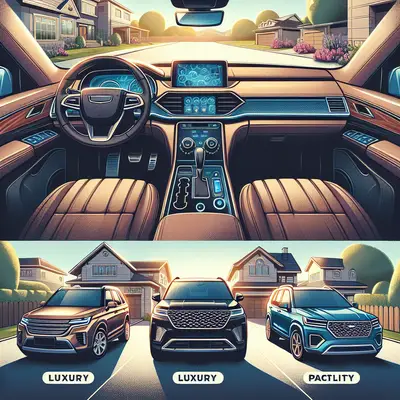
Evaluate the tactile environment first. Soft-touch materials along the main contact points—armrests, door tops, steering wheel, and center console—reduce fatigue and elevate the sense of calm. High-quality synthetic leather or robust woven fabrics can be more family-friendly than delicate hides, resisting stains and wear while still feeling premium. Examine stitching, panel gaps, and how tightly materials are pulled around corners; these subtleties are indicators of longevity.
Next, consider how the cabin handles the inevitable mess. Removable cargo mats with raised edges, carpeting that resists matting, and seat upholstery treated for stain resistance all contribute to a cabin that remains dignified over time. Abrasion-resistant seat backs (where little feet land), rubberized storage bins, and easily accessible underfloor compartments suggest a manufacturer that has watched how real families load a vehicle.
Ambient lighting, too, can be quietly transformative. Gentle, configurable lighting in the footwells and along the doors preserves visibility for the driver while helping children find dropped items without harsh overhead glare. When done well, it creates a sense of occasion on evening drives—a small daily luxury that makes the SUV feel like a considered space, not simply a container on wheels.
Ultimately, you are looking for a cabin that recognizes adulthood and parenthood can coexist: a space where children are entirely welcome, yet the overall impression remains serene, organized, and subtly indulgent.
Conclusion
The most rewarding family SUVs rarely announce their virtues in bold type. Instead, they earn their place in your life through a series of well-judged decisions: cabin zoning that respects everyone’s comfort, seating that anticipates real-world choreography, technology that recedes into the background, safety features that function as a quiet safety net, and materials that age with grace rather than surrender.
As you explore your options, bring these lenses with you. Sit in every row, experiment with the configurations, test the tech under mild pressure, and imagine not just the first week of ownership, but the fifth year. For families who value refinement as much as practicality, these quietly transformative features are where a merely competent SUV becomes an indispensable companion.
Sources
- [National Highway Traffic Safety Administration (NHTSA)](https://www.nhtsa.gov/vehicle-safety) - Authoritative information on vehicle safety technologies and ratings, including driver-assistance systems and child passenger safety guidance
- [Insurance Institute for Highway Safety (IIHS) – Ratings & Research](https://www.iihs.org/ratings) - Crash-test results, evaluations of headlight performance, and research on advanced safety features relevant to family vehicles
- [Environmental Protection Agency (EPA) – Fuel Economy Guide](https://www.fueleconomy.gov/feg/findacar.shtml) - Official fuel economy data and comparisons for SUVs, helpful when weighing efficiency against size and capability
- [Kelley Blue Book – Family Car Buying Advice](https://www.kbb.com/car-advice/family-car/) - Practical editor insights on family-focused features, seating configurations, and interior usability
- [Consumer Reports – Car Seat & Child Safety Resources](https://www.consumerreports.org/cars/child-car-seats/car-seat-checks-a1047508018/) - Independent evaluations of how well different vehicles accommodate car seats and support real-world family use
Key Takeaway
The most important thing to remember from this article is that this information can change how you think about Family Features.