Children are currently charming the internet by renaming everyday things—calling elevators “up-down rooms” or seatbelts “clicky hugs.” That viral Bored Panda roundup of parents sharing the hilarious new names their kids give objects isn’t just light entertainment; it’s a quiet masterclass in how children actually experience the world. And for families shopping for an SUV right now, those misnamings are an unexpected gift: they show us exactly what kids notice, what they ignore, and where automotive design either delights them or lets them down.
When you’re choosing a family SUV, you’re not just buying a vehicle—you’re curating a moving environment that has to make sense to a five‑year‑old who calls the rear climate control “the cold and hot buttons” and the panoramic roof “the sky window.” In a season where family content is trending heavily toward authentic, kid‑centered perspectives, it’s the perfect moment to step back and ask: if our children were naming our SUVs, what would they care about first?
Below are five refined, deeply practical insights—drawn from this viral “kid renaming” moment—that today’s families can use to choose an SUV that doesn’t just impress adults, but genuinely works for the smallest passengers who ride in it most.
1. Design for How Kids Describe the Cabin, Not How Adults Spec It
Those viral posts show a clear pattern: children strip objects down to what they do for them. A vacuum becomes a “crumb sucker,” a remote is “the channel changer.” Apply that lens to your next SUV, and the question shifts from “What’s the trim level?” to “What does this cabin really do for our kids every day?”
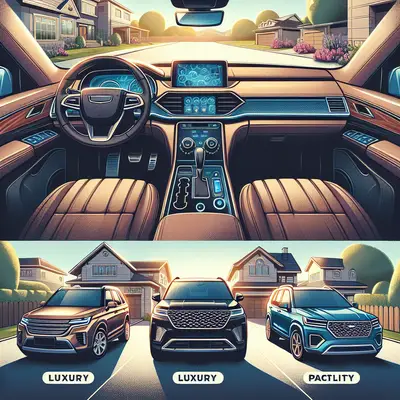
Look for SUVs whose interiors telegraph function in an almost childlike way. Door handles that are intuitive from a low height, climate controls with clear icons rather than tiny script, and window switches placed where a strapped‑in child can see (but not easily abuse) them all matter. Premium family SUVs like the latest Volvo XC90, Kia EV9, and Lexus TX are rethinking cabin ergonomics with larger, more legible icons, simplified temperature sliders, and voice commands that feel natural—even to a child who might say “make it less hot” instead of “set to 70 degrees.” When you sit inside, imagine how your child would rename each feature. If you can’t describe it in a simple phrase (“bright light button,” “door open handle”), odds are your kids won’t use it easily—or safely.
2. Choose “Sky Windows” and “Outside Screens” That Calm, Not Overstimulate
In parents’ social‑media posts, kids routinely rename sunroofs and windows as “sky TVs” or “outside screens.” That’s a reminder that big glass isn’t just an aesthetic flourish; it’s an emotional regulator for young passengers who can’t yet articulate “I feel carsick” or “I’m overstimulated.”
A panoramic roof can turn a stressful school run into a serene ritual, letting in natural light that reduces the cave‑like feeling of a dark interior. But it needs balance. Look for SUVs with dual‑pane or laminated glass to reduce glare and heat, power shades that slide silently, and UV‑filtering that protects delicate skin even during long weekend drives. Models such as the Hyundai Palisade Calligraphy and BMW X5 excel here, pairing expansive glass with exceptional acoustic insulation and heat management.
Side windows matter as much as the roof. Deep‑tinted privacy glass can be helpful, but verify outward visibility from the third row—many kids call tightly framed windows “tiny look‑outs” for a reason. Ask to sit in every row during your test drive, at child eye‑level. Can a small passenger see the horizon easily? Can they track passing landmarks? Children who can see “the outside screen” clearly tend to experience less motion sickness and fewer meltdowns.
3. Build Around “Snack Stations” and “Treasure Pockets,” Not Just Cupholders
Scroll through the trending posts and you’ll see kids renaming gloveboxes “secret treasure doors” and any storage bin a “snack cave.” For families, interior storage is no longer a nice‑to‑have; it’s the architecture of daily harmony. Premium SUVs increasingly acknowledge this, but the details separate the merely good from the genuinely exceptional.
Seek vehicles that offer layered storage: shallow, easy‑wipe trays for today’s snacks, deeper hidden compartments for long‑term “treasures” (favorite cars, crayons, a well‑loved plush), and lidded bins that keep visual clutter low. The latest Honda Pilot and Toyota Grand Highlander, for instance, integrate multi‑tiered center consoles and clever under‑floor wells in the cargo area that can double as organized toy vaults. In the luxury segment, the Mercedes‑Benz GLS and Audi Q7 pair soft‑close lids and felt‑lined pockets with beautifully damped hinges—small touches that communicate “this is a place where your things are respected.”
Don’t just count cupholders; examine their placement. Can a child in a booster seat reach them without contorting? Are there seatback pockets sized for picture books and tablets, not just magazines? Are charging ports thoughtfully distributed so a rear‑row device doesn’t require a cable strung precariously across the cabin? A well‑designed “snack and stuff ecosystem” turns your SUV into a mobile lounge rather than a moving storage problem.
4. Prioritize “Gentle Louds” and “Soft Stops” Over Raw Performance
In those now‑viral parenting threads, kids often call sirens “too‑loud cars” and heavy braking “big stops.” They may not have the language for NVH (noise, vibration, and harshness), but they feel it acutely. For families, the real luxury in an SUV isn’t just horsepower—it’s the gentleness with which that power is delivered.
When you test drive, notice more than acceleration. How does the vehicle pull away from a stop if you’re deliberately smooth? Some of the most family‑centric SUVs—like the latest Lexus RX and Genesis GV80—tune their throttle response and transmission mapping to avoid that abrupt lurch that sends crayons flying and juice boxes tilting. Well‑calibrated brake pedals that allow feather‑light modulation make a profound difference to how “safe” a vehicle feels to a child in the back.
Cabin sound isolation is equally important. Children often perceive a constant droning road noise as “the car being too mad” or “the engine yelling.” Look for laminated front glass, substantial door seals, and active noise cancellation, increasingly present even in mainstream models such as the Chevrolet Traverse and Ford Explorer. Check on the highway whether you can speak to the third row in a normal tone without raising your voice. That calm acoustic environment makes conversations, audiobooks, and quiet naps feel natural—and turns your SUV into a sanctuary between the louder moments of family life.
5. Let Kids’ “New Names” Guide Your Tech Priorities
In the trending Bored Panda piece, children rebrand smartphones as “picture machines,” streaming remotes as “cartoon buttons,” and smart speakers as “question robots.” Their vocabulary reveals what matters to them: clarity, predictability, and responsiveness. Your SUV’s technology should deliver the same.
Start with the interface. A sprawling, high‑resolution touchscreen is only an upgrade if it remains legible and simple under pressure. Look for systems that support wireless Apple CarPlay and Android Auto, since your phone’s familiar layout is often easier to navigate quickly than a proprietary interface. Evaluate the home screen: are core functions (navigation, audio, climate) accessible with minimal taps? Premium systems from brands like BMW (iDrive 9), Hyundai/Kia, and Volvo are moving toward cleaner, widget‑based layouts that reduce menu diving—an underrated safety feature when you’re mediating a back‑seat dispute.
Rear‑seat tech deserves equal scrutiny. Instead of chasing the flashiest entertainment suite, ask: can kids control their own climate zones? Can they dim their individual reading lights? Is there a simple, hard button for “all lights off” you can reach from the driver’s seat when it’s finally bedtime on a late‑night drive? Some of the most family‑savvy SUVs now integrate kid‑friendly touches like cabin intercoms (Honda’s CabinTalk, Kia’s similar systems) so you can speak quietly to the third row without shouting, and programmable user profiles so older children can return to “their” seat and media presets with a single tap.
Finally, talk to your kids about the tech during the test drive. Ask them what they’d name certain features: the surround‑view camera, the head‑up display, the one‑touch walk‑in button to the third row. Their instinctive responses will quickly reveal which elements feel intuitive and magical—and which feel confusing or intimidating.
Conclusion
The current wave of parents sharing their children’s wonderfully original renamings is more than a feel‑good social‑media moment; it’s a lens into how our youngest passengers inhabit the spaces we design for them. When a child calls your SUV’s sunroof a “sky window,” they’re reminding you that light matters. When they dub the center console a “snack cave,” they’re telling you storage and accessibility shape their comfort long before they can spell the word ergonomics.
For families choosing a new SUV in this moment, the most sophisticated decision you can make isn’t just about leather grades or badge prestige. It’s about selecting a vehicle whose design respects the way children actually perceive the world: through function, feeling, and small daily rituals. If you let their playful “new names” quietly steer your choices—toward clearer interfaces, calmer dynamics, smarter storage, and more thoughtful glass—you’ll end up with something far rarer than a spec‑sheet champion: an SUV that feels intuitively right to every member of the family, from the driver’s seat to the very last “tiny look‑out” in the third row.
Key Takeaway
The most important thing to remember from this article is that this information can change how you think about Family Features.