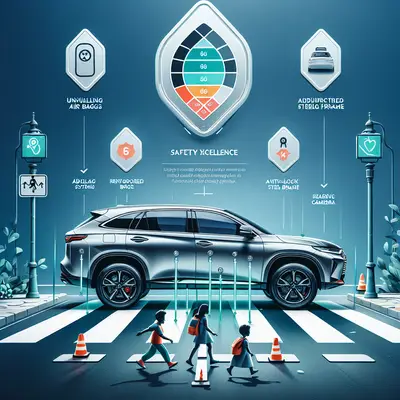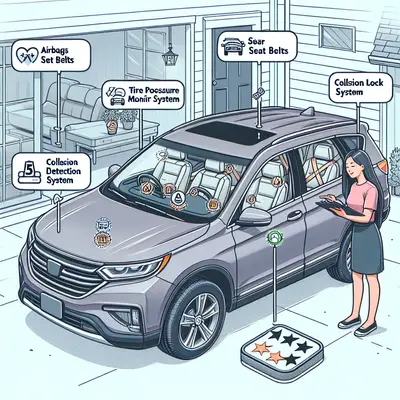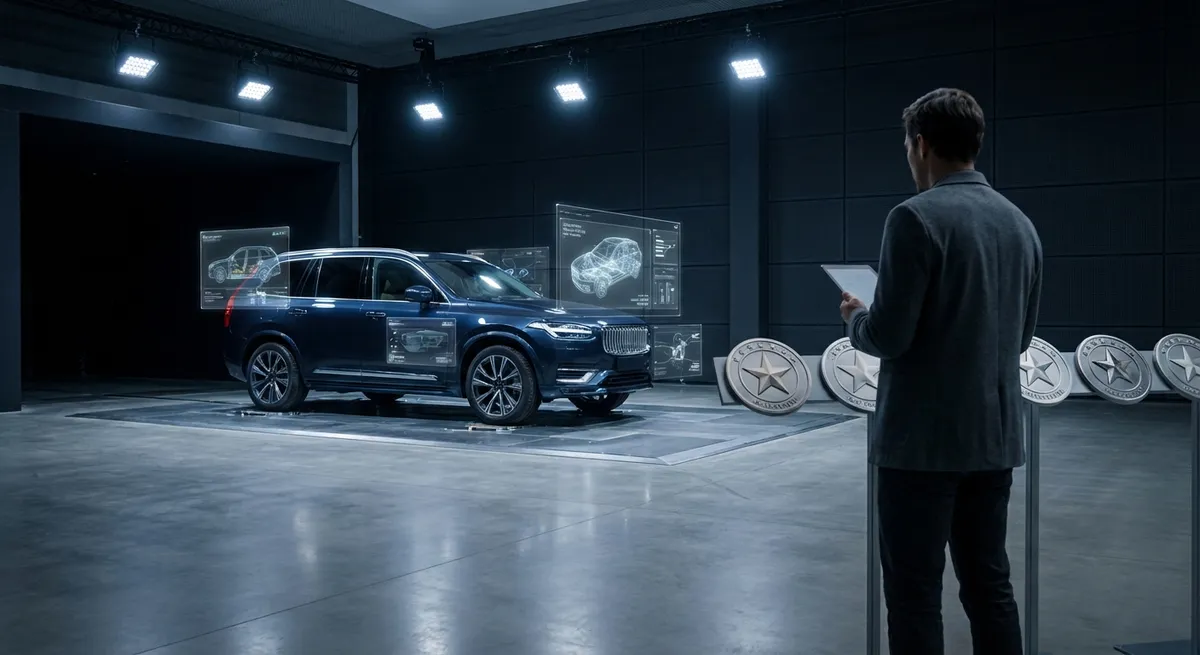
For discerning families, a safety rating is not a marketing slogan—it is a quiet contract between your loved ones and the engineering behind every journey. Yet the landscape of crash scores, acronyms, and test results can feel opaque, even for thoughtful buyers. This guide moves beyond surface-level reassurance and focuses on how sophisticated families can interpret safety ratings with nuance, context, and confidence, revealing subtle advantages that rarely make it into dealership conversations.
Understanding the Safety Institutions Behind the Scores
Before comparing scores, it helps to understand who is doing the evaluating and what their priorities are. In the United States, the two primary authorities are the National Highway Traffic Safety Administration (NHTSA) and the Insurance Institute for Highway Safety (IIHS). NHTSA’s 5-Star Safety Ratings program focuses on how a vehicle performs in frontal, side, and rollover tests, while IIHS conducts a wider array of examinations, including small overlap crashes, headlight performance, and advanced driver-assistance systems (ADAS) effectiveness.
For families cross-shopping SUVs, it is essential to recognize that a 5-star rating from NHTSA and a “Top Safety Pick+” from IIHS are derived from different methodologies. NHTSA’s star system is relatively easy to digest but less granular; IIHS, by contrast, uses “Good,” “Acceptable,” “Marginal,” and “Poor” ratings across multiple categories. A sophisticated approach involves looking at both: use NHTSA to establish a strong baseline and IIHS to identify subtle distinctions between seemingly similar SUVs.
Exclusive Insight #1: Not All “5-Star” SUVs Offer Equal Protection
A key nuance often overlooked is that a 5-star rating is not an absolute guarantee of identical performance across all 5-star SUVs. NHTSA’s star ratings are banded ranges, not precise scores; two SUVs may both achieve 5 stars while one sits just above the threshold and another significantly exceeds it. The public-facing rating compresses a spectrum of performance into a single symbol.
For a family choosing among premium SUV options, interrogate the details behind the score. Look at the individual frontal and side-impact ratings for both the driver and passenger, as well as rollover resistance. Consider the vehicle’s size and weight in context: larger SUVs tend to provide better protection in multi-vehicle collisions, while smaller SUVs may be more agile in helping avoid a crash altogether. The sophistication lies in viewing the rating as a starting point, then layering in vehicle class, weight, and specific test performance before drawing conclusions.
Exclusive Insight #2: Side-Impact and Rear Occupant Scores Matter More for Families
Families rarely travel alone; second and third rows are often occupied by children, grandparents, and friends. Yet many buyers focus only on the driver’s crash scores. IIHS has recently expanded its side-impact and rear occupant protection tests, specifically evaluating how back-seat passengers fare in collisions—precisely where your children and their car seats will be.
In practical terms, prioritize SUVs that demonstrate strong performance in side-impact tests and any available rear occupant protection evaluations. Side-impact collisions remain among the most dangerous for occupants, particularly in urban and suburban environments where intersections and cross-traffic are common. An SUV that excels in these newer, more demanding tests often reflects an engineering philosophy that genuinely anticipates family use, rather than merely optimizing for headline scores. When comparing models, pay close attention to any language referencing “enhanced rear occupant protection,” “updated side-impact tests,” or “child restraint compatibility” in official safety literature.
Exclusive Insight #3: Headlights and Nighttime Safety Are Quiet Differentiators
It is easy to overlook headlights in a spec sheet full of horsepower figures and screen sizes, but for safety-conscious families, headlight ratings are surprisingly revealing. IIHS includes headlight performance in its criteria for “Top Safety Pick” awards, evaluating both illumination and glare. Many otherwise well-rated SUVs fall short in this area, which directly affects nighttime visibility on family road trips, late pickups, and weekend getaways.
Modern SUVs may offer multiple headlight configurations across trims—halogen, LED, or adaptive units—each with distinct safety performance. A base model might receive a lower headlight rating than an upgraded trim, even within the same nameplate. For a refined, safety-first configuration, look for models where the best-available headlight system achieves a “Good” IIHS rating and, where possible, select that package or trim. It is one of the most understated upgrades that can materially improve real-world safety without drawing visible attention.
Exclusive Insight #4: Advanced Driver Assistance Is Only as Valuable as Its Calibration
Advanced driver-assistance systems—such as automatic emergency braking, lane-keeping assistance, adaptive cruise control, and blind-spot monitoring—have become central to modern SUV safety narratives. Yet the mere presence of these technologies does not guarantee equal effectiveness across models. IIHS and other organizations increasingly test not just whether a feature exists, but how consistently and competently it performs.
For families, the distinction is critical. A thoughtfully calibrated system should feel almost invisible in day-to-day driving: smoothly intervening to avoid collisions, gently steering you away from lane departures, and supporting—not replacing—the driver’s judgment. When reviewing safety ratings, pay attention to specific evaluations of automatic emergency braking and pedestrian detection; these tests simulate real-world scenarios such as a child entering the roadway. Favor SUVs that earn the highest available ratings for front crash prevention in both vehicle-to-vehicle and vehicle-to-pedestrian testing. This is where engineering refinement, sensor placement, and software sophistication quietly separate premium family SUVs from adequate ones.
Exclusive Insight #5: Child Seat Compatibility and Cabin Layout Are Part of Safety, Not Just Convenience
Safety ratings traditionally emphasize crash performance, but for families, safety begins before the engine starts—with how securely and easily child seats can be installed. IIHS now evaluates LATCH (Lower Anchors and Tethers for Children) usability, scoring how intuitive, accessible, and flexible a vehicle’s child seat anchors are. An SUV may deliver strong crash test scores yet make proper car seat installation challenging, undermining real-world safety.
A refined evaluation of a family SUV includes reviewing LATCH ratings, anchor placement, and how many full child seat positions are truly usable in the second and third rows. Consider details such as whether outboard seats allow easy access to the third row while car seats remain installed, or if tether anchors are clearly marked and unobstructed by headrests or seatbacks. Families who routinely transport multiple children—especially in various seat stages (rear-facing, forward-facing, booster)—benefit from SUVs where engineers have visibly considered seat configurations as a core safety element, not an afterthought.
Synthesizing Ratings into a Confident, Family-Centric Choice
Interpreting SUV safety ratings with discernment means looking beyond a single emblem or badge and layering multiple dimensions: crashworthiness, headlight performance, driver assistance systems, occupant protection in all rows, and child seat practicality. The most reassuring family SUVs are rarely the ones that rely on one standout metric; instead, they demonstrate a pattern of excellence across different tests, organizations, and real-world use cases.
When shortlisting candidates, build a safety “profile” for each SUV: combine NHTSA star ratings, IIHS crash and headlight scores, ADAS evaluations, and LATCH usability. Then place those data points against your family’s actual driving life—nighttime driving, urban or rural routes, frequent highway trips, carpooling needs, and the ages of your children. This approach transforms safety ratings from abstract numbers into a tailored safety strategy, ensuring the SUV you select does more than protect—it quietly complements the way your family truly lives and travels.
Sources
- NHTSA 5-Star Safety Ratings - Official U.S. government crash test results and explanations of the star rating system
- IIHS Vehicle Ratings - Detailed crashworthiness, headlight, LATCH, and driver-assistance evaluations for current vehicles
- NHTSA: Car Seat and Booster Seat Safety - Guidance on child seat safety, installation, and regulatory standards
- CDC: Road Traffic Injury Prevention - Data and research on motor vehicle injuries and key risk factors for families
- AAA Foundation for Traffic Safety – Research Library - Studies on advanced driver-assistance systems, nighttime driving, and real-world crash prevention
Key Takeaway
The most important thing to remember from this article is that this information can change how you think about Safety Ratings.