For families who value refinement as much as reassurance, safety ratings are not just a checklist—they are a quiet form of protection that surrounds every journey. Yet the star counts, acronyms, and charts can feel strangely one‑dimensional when your real life includes school runs, evening events, luggage, and the occasional late‑night airport pickup. This is where a more nuanced perspective matters. When you look beyond the headlines and read safety ratings through a discerning lens, you begin to see which SUVs are engineered for real families, not just test dummies.
Below are five exclusive insights that bring depth and context to safety ratings, helping you select an SUV that deserves your trust as much as your time.
Why “Five Stars” Is Only the Opening Conversation
Most premium family SUVs boast impressive scores from the National Highway Traffic Safety Administration (NHTSA) and strong ratings from the Insurance Institute for Highway Safety (IIHS). But a five‑star badge or “Top Safety Pick+” seal is the beginning of the story, not the end.
What matters just as much is how the vehicle earned that result. Did it perform equally well in front, side, and rollover tests, or is the rating buoyed by a single strong category? How did the rear seating area perform in side‑impact tests—where children are most likely to sit? Were head restraints and seat geometry evaluated for whiplash in low‑speed collisions, or does the rating emphasize primarily high‑speed crashes?
A sophisticated reading of safety ratings examines the full score breakdown: the difference between driver and passenger performance, the structural integrity in small overlap crashes (which simulate clipping a tree or pole), and the likelihood of injury to the chest, pelvis, and head. Families who live on winding suburban roads or in dense urban traffic should pay particular attention to small overlap and side‑impact scores, while frequent highway travelers may prioritize frontal crash performance and rollover resistance.
In essence, identical overall ratings may conceal very different safety profiles. A truly family‑focused selection looks past the single letter grade or star count to the detailed test data—especially for the seats your children will occupy most often.
The Hidden Impact of Size, Weight, and Structure
Conventional wisdom suggests that “bigger is safer,” and to an extent, mass does confer an advantage in multi‑vehicle collisions. Yet for discerning families, the conversation is more sophisticated than sheer size.
Crash tests compare vehicles within their own weight class, so a “good” rating in a smaller SUV does not equal the same physics as a “good” rating in a substantially heavier model. What bridges that gap is the integrity of the underlying structure: how the body absorbs, directs, and dissipates crash energy away from occupants.
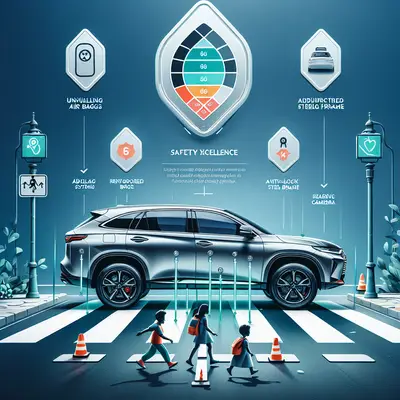
Look for SUVs that pair high‑strength steel or carefully engineered crumple zones with cabins explicitly described as “safety cages.” The most advanced designs channel impact forces around the passenger compartment rather than through it, protecting the integrity of the space where your family sits. Also note roof strength ratings if you live where rollovers or icy conditions are a greater risk; a strong roof is quiet peace of mind during sudden maneuvers or a slide off the road.
Families often overlook side‑impact performance, yet this is where structural excellence is revealed. An SUV that maintains cabin space and reduces intrusion into the rear doors in IIHS side tests is particularly well‑suited to families, since it better protects children seated outboard. The truly sophisticated choice is not simply the largest SUV, but the one whose engineering creates a calm, controlled collapse around the cabin rather than through it.
Advanced Driver Assistance: Ratings Beyond the Brochure
The latest safety ratings increasingly factor in active safety technologies—those that help you avoid a crash altogether. For families, this is where the experience can feel quietly transformative: the gentle steering correction when you drift, the discreet warning when a vehicle lurks in your blind spot, the automatic braking that reacts faster than you in a moment of distraction.
Yet not all systems are created equal, and not all rating agencies evaluate them with the same rigor. When reviewing ratings, look for specific references to:
- Automatic emergency braking (AEB) performance at both city and highway speeds
- Pedestrian and cyclist detection, especially low‑light performance
- Lane keeping assistance that subtly helps rather than intrusively wrestles the wheel
- Adaptive cruise control that maintains smooth, predictable gaps in traffic
Ratings that praise “superior” or “advanced” crash avoidance systems indicate not just the presence of features, but their consistency and responsiveness in instrumented tests. For families who often drive at night, in busy urban settings, or on long highway stretches, the difference between a basic system and an exceptionally calibrated one can be the difference between a near‑miss and a collision.
The most refined SUVs integrate these technologies seamlessly, with calm visual and haptic cues rather than constant chimes and alarms. When test‑driving, consider how the system feels: Is the braking progressive rather than jarring? Does the blind‑spot alert integrate elegantly into the mirrors or head‑up display? Safety, when done well, becomes a graceful companion rather than a noisy overseer.
Rear Seats, Child Seats, and the Overlooked Half of Safety
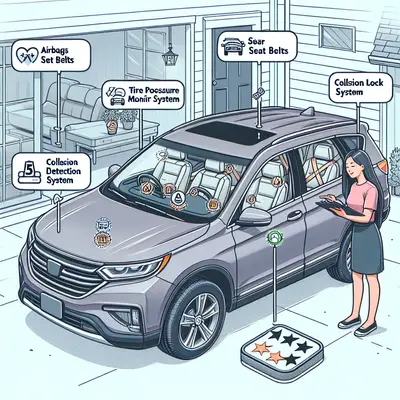
Safety ratings often spotlight the driver’s seat, yet families experience the SUV from the rear—where children ride, car seats anchor, and teenagers lean against the glass scrolling through their phones. A sophisticated reading of safety means examining how the rear cabin performs and functions in real life.
Pay close attention to:
- Rear occupant protection scores in frontal and side‑impact tests
- Head restraint and seatback performance for rear passengers
- LATCH system ratings for car seat installation—ease of access, anchor depth, and labeling
- Availability of side‑curtain airbags that extend to all three rows, if applicable
For parents, two sets of LATCH anchors are no longer sufficient in many scenarios. If you anticipate more than one child seat at a time—or the mix of a booster, a convertible seat, and an older child—seek SUVs with multiple, clearly accessible anchor points and generous rear bench width. Some safety evaluations now specifically address LATCH usability; a “good” or “acceptable” rating here translates directly into fewer installation compromises and safer daily use.
Also consider how rear airbags deploy relative to fixed child seats and high back boosters. While this is not always explicitly detailed in ratings, crash test videos and technical notes can offer valuable clues. The most family‑friendly SUVs treat the second row with the same engineering respect as the driver’s seat, recognizing that the passengers you care about most rarely sit up front.
Real‑World Safety: When Ratings Meet Lifestyle
Even the most meticulous ratings exist in controlled environments. The final layer of sophistication comes from overlaying those results onto your actual life: where you drive, when you drive, and what you carry.
Families who commute before dawn or return home after evening activities may place a premium on excellent headlight ratings, which some agencies now score separately. Superior illumination with a clean cutoff pattern reduces glare for oncoming traffic while dramatically improving your ability to see pedestrians, animals, and roadside hazards. This is more than a comfort feature; it is an active layer of safety.
Likewise, if your weekends involve mountain roads, coastal highways, or snowy passes, pay attention to stability control performance, rollover resistance, and the availability of sophisticated all‑wheel drive with torque vectoring. If your daily reality includes dense city traffic and frequent parallel parking, look closely at low‑speed AEB testing, 360‑degree camera quality, and cross‑traffic alerts.
In other words, two SUVs may both carry excellent safety credentials, but the one whose strengths align with your specific routine—night driving, long‑distance touring, urban maneuvering, or winter commuting—will offer a more meaningful, lived‑in sense of security. Safety ratings provide the framework; your family’s lifestyle completes the picture.
Conclusion
A truly refined family SUV is one that extends its protection quietly and consistently, long after the showroom lights dim and the brochures are put away. When you look beyond a single star rating and examine structure, technology, rear‑seat protection, and real‑world alignment, you begin to see which vehicles are engineered not just to pass tests, but to safeguard lives lived fully.
For the discerning family, safety is not a headline—it is a philosophy. Read the ratings deeply, pair them with your own priorities, and you will find an SUV that offers what matters most: calm confidence, every time you close the doors and drive away.
Sources
- National Highway Traffic Safety Administration (NHTSA) 5-Star Safety Ratings - Official U.S. government crash test ratings and explanations of test procedures
- Insurance Institute for Highway Safety (IIHS) Vehicle Ratings - Independent crash test results, crash avoidance evaluations, and headlight performance scores
- IIHS – Understanding Crash Test Ratings - Detailed overview of how IIHS evaluates vehicles and what its ratings mean for real-world safety
- CDC – Child Passenger Safety Guidelines - Evidence-based recommendations on child restraints and rear-seat safety
- Edmunds – Car Seat Safety and LATCH Systems Explained - Practical guidance on evaluating LATCH systems and rear-seat usability in vehicles
Key Takeaway
The most important thing to remember from this article is that this information can change how you think about Safety Ratings.