For families who treat a vehicle as an extension of their home, safety ratings are not a checklist item—they are a design brief. Yet the polished stars and letter grades that dominate brochures rarely tell the full story. Behind every score lies a quiet world of engineering nuance, test assumptions, and trade‑offs that can dramatically influence how protected your family truly is in real‑world conditions.
This is a refined look at safety ratings through a more discerning lens—one that goes beyond the headline number to uncover subtler signals of excellence. Below are five exclusive insights that help families translate abstract ratings into meaningful, confidence‑inspiring decisions.
1. Why “Top” Ratings Don’t Always Mean “Top” Protection
Five stars and “Top Safety Pick” badges create an illusion of simplicity: vehicles appear either safe enough or not. For a family that expects more than “good enough,” that binary view is limiting.
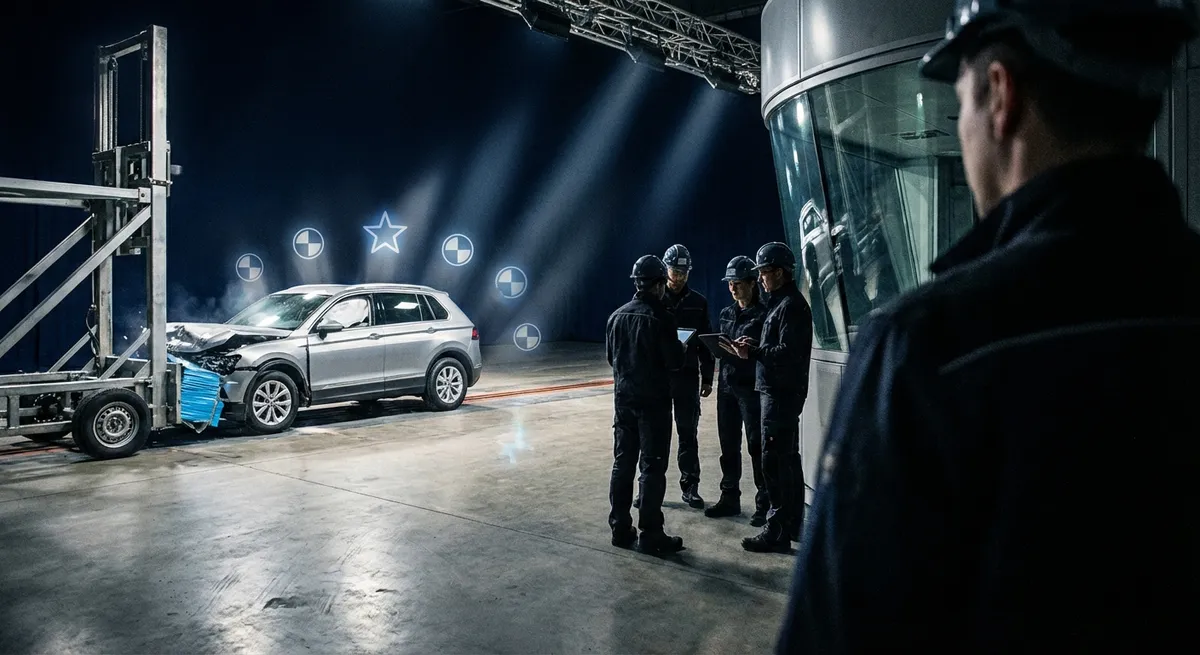
Crash‑testing programs like the U.S. National Highway Traffic Safety Administration (NHTSA) and the Insurance Institute for Highway Safety (IIHS) evaluate only specific scenarios: controlled impacts at fixed speeds, with defined dummy sizes and seating positions. A model that earns top marks may be exceptional in those precise scenarios, yet less impressive in marginal situations—such as slightly offset impacts, secondary collisions, or unusual occupant sizes and postures.
The nuance lies in the sub‑scores and test evolution. For example, two SUVs might both earn the highest frontal crash rating, but one could have meaningfully lower injury measures to the chest and legs. That difference rarely makes its way into marketing copy, yet it may matter if your family regularly undertakes long highway journeys or carries older relatives with more fragile bones.
Sophisticated shoppers should treat the headline rating as a threshold, not the verdict. Once you narrow to only top‑rated models, the real comparison begins in the fine print: how the vehicle behaves in each test, how recently it was tested under updated protocols, and how those results align with your family’s actual driving patterns.
2. The Hidden Weight of Test Updates: Old Scores, New Expectations
Not all “five‑star” SUVs are created under the same rulebook. Test programs evolve as crash patterns change, new technologies appear, and regulators respond to real‑world injury data. This timeline matters enormously for families expecting a decade or more of service from one vehicle.
When IIHS introduced the small overlap front crash test, vehicles that had long been regarded as safe suddenly exposed structural weaknesses around the wheel well and cabin edge. More recently, the organization has tightened criteria for side impacts, pedestrian protection, and nighttime automatic emergency braking. Similarly, NHTSA has proposed modernized testing to reflect today’s heavier vehicles, advanced driver assistance systems (ADAS), and emerging crash patterns.
A sophisticated approach is to look not only at the result but the test vintage. If an SUV’s stellar rating dates back several years and hasn’t been re‑evaluated under newer protocols, you are effectively comparing yesterday’s gold standard to today’s baseline.
Families should prioritize vehicles that:
- Have been tested or re‑tested under the most current protocols.
- Perform consistently across both legacy and newer evaluations.
- Demonstrate improvements when tests become more stringent, indicating a forward‑looking safety philosophy rather than mere compliance.
This is less about chasing novelty and more about aligning your purchase with the latest understanding of how modern crashes actually occur.
3. How Real‑World Data Quietly Confirms—or Contradicts—Lab Scores
Crash tests act as a controlled simulation. Real‑world crash data is the reality check.
Organizations such as IIHS publish driver death rates and insurance loss data, which can validate—or occasionally challenge—what the star ratings suggest. A vehicle that performs beautifully in the lab but has an unexpectedly high real‑world claim rate or injury rate warrants closer scrutiny. Conversely, some models with modest publicity may demonstrate exceptional real‑world safety performance over time, especially in certain crash types or environments.
For discerning families, the most telling alignment is when three signals converge:
- Top crash‑test ratings under modern criteria.
- Favorable driver death or injury rates in insurance and federal data.
- A strong record of safety‑related recalls being handled promptly and transparently by the manufacturer.
This trinity of evidence paints a richer portrait than test results alone. Families who prioritize long‑term peace of mind should view crash tests as the starting sketch, and real‑world data as the finishing brushwork that brings the safety picture into focus.
4. The Quiet Power of Advanced Driver Assistance—Especially When Ratings Dig Deeper
For many families, daily life is lived in the “almost” moments: the car that almost drifted into your lane, the pedestrian you almost did not see at dusk, the traffic ahead that almost stopped too quickly. Advanced driver assistance systems (ADAS) are designed precisely for these nearly‑missed disasters, yet their sophistication varies widely, even among similarly priced SUVs.
Modern rating programs increasingly incorporate ADAS performance—particularly automatic emergency braking (AEB), lane‑keeping support, and pedestrian detection. However, the nuance is not just whether these systems exist, but how they behave:
- Detection range and conditions: Does the AEB system work reliably at night, in rain, or around curves?
- Pedestrian and cyclist performance: Is the system tuned only for vehicle‑to‑vehicle impacts, or does it effectively recognize vulnerable road users?
- False alarms and smoothness: Refined calibration reduces intrusive warnings, helping families actually keep the systems turned on rather than disabling them out of frustration.
- Integration with larger suites: Adaptive cruise control, lane centering, and blind‑spot monitoring that work harmoniously create a calmer, more predictable environment for children and passengers.
Where ratings go beyond “available vs. not available” and test the systems in controlled scenarios—day and night, for pedestrians and vehicles—families gain a much more realistic measure of how the SUV might avert or mitigate the crashes that never make it onto paper.
A premium mindset sees ADAS not as a gadget layer, but as a quiet, ever‑present guardian that works with the vehicle’s structural integrity to form a holistic safety envelope.
5. Cabin Realities: How Occupant Size, Seating, and Restraints Transform the Numbers
Most crash‑test dummies represent an average‑sized adult in the front seat. Families, by definition, rarely fit that template. Children in boosters, teens in the second row, and grandparents in the front passenger seat all interact with the vehicle’s safety architecture in different ways.
This is where refined attention to detail matters:
- Rear‑seat safety focus: Some crash programs have begun evaluating rear‑seat restraints and protection, but emphasis remains less robust than for the driver. An SUV that shines in driver protection yet offers only basic rear‑seat belt pretensioners or lacks sophisticated load limiters may be less ideal if your children spend years in those seats.
- Car seat installation realities: LATCH anchor accessibility, angle of the seatback, and belt geometry all influence how securely a child seat can be installed. An SUV may have impeccable crash scores, yet be frustrating or sub‑optimal for safe, repeatable child seat installations across multiple positions.
- Third‑row considerations: For three‑row SUVs, the furthest seats often benefit from fewer structural reinforcements and may have different belt anchorage points. Test coverage is limited here, so families should treat crash ratings as incomplete for third‑row occupants and pay close attention to seat design, head restraints, and available airbags.
- Head restraint and whiplash design: Upper‑back and neck protection, especially in rear impacts, can be vital for smaller or older occupants whose cervical spines are more vulnerable.
Sophisticated families look at crash ratings as a floor, then ask: How does this cabin distribute protection to every seat we intend to use, every day, for years? That question often separates competent safety from genuinely family‑centric safety.
Conclusion
Safety ratings are powerful, but they are also inherently simplified. For families who see their SUV as a long‑term sanctuary, the real value lies in what those ratings imply about philosophy, engineering discipline, and attention to varied occupants and real‑world conditions.
By considering the age of the tests, the alignment with real‑world data, the depth of ADAS evaluations, and how protection extends to every row and every body type, you move from passively accepting a star count to actively curating a safety environment tailored to your family’s life.
The most satisfying family SUV will not simply wear its safety accolades; it will quietly demonstrate, in its structure, systems, and cabin design, that every journey has been anticipated—and your family’s well‑being, deliberately protected.
Sources
- [NHTSA 5-Star Safety Ratings](https://www.nhtsa.gov/ratings) - Official U.S. government crash-test ratings, methodology, and vehicle results
- [IIHS Vehicle Ratings](https://www.iihs.org/ratings) - Detailed crash-test results, driver death rates, and evaluations of advanced driver assistance systems
- [Proposed Updates to NHTSA’s New Car Assessment Program (NCAP)](https://www.nhtsa.gov/new-car-assessment-program-ncap) - Information on evolving test protocols and planned future safety rating enhancements
- [CDC – Child Passenger Safety](https://www.cdc.gov/transportationsafety/child_passenger_safety/index.html) - Guidance on child restraints, occupant protection, and real-world injury concerns for younger passengers
- [AAA Foundation for Traffic Safety – Automated Vehicle Technology Research](https://aaafoundation.org/portfolio/automated-vehicle-technology/) - Independent research on the performance and limitations of advanced driver assistance systems in real-world scenarios
Key Takeaway
The most important thing to remember from this article is that this information can change how you think about Safety Ratings.