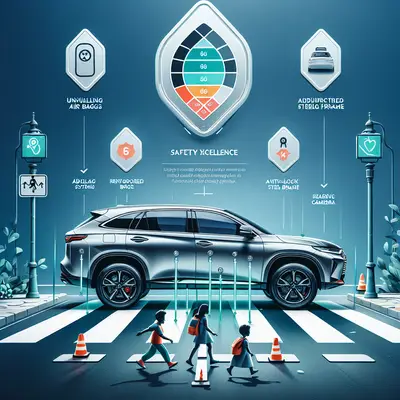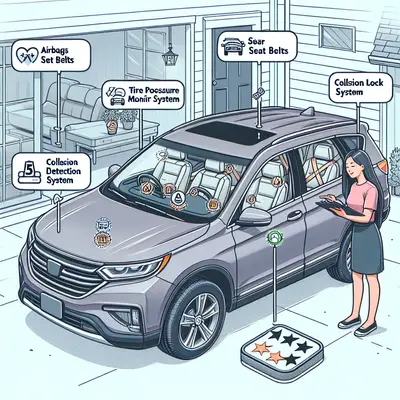
For families who expect more from an SUV than a glossy five-star badge, safety ratings are a beginning—not a destination. Behind every score is a story about engineering priorities, crash-test philosophy, and how thoughtfully a vehicle anticipates real family life. This guide invites you to look past the headline numbers and understand how safety ratings can quietly reveal which SUVs are truly engineered for both protection and poise.
Why Safety Ratings Are Only the First Chapter
Modern safety ratings from organizations such as the National Highway Traffic Safety Administration (NHTSA) and the Insurance Institute for Highway Safety (IIHS) have dramatically raised the baseline of protection. A large proportion of family SUVs now earn high scores, which can make them seem nearly interchangeable at first glance. But families who pay attention to nuance quickly learn that the same overall score can conceal meaningful differences in structure, restraint systems, and advanced driver assistance performance.
What ratings do exceptionally well is create a structured comparison across brands and sizes. However, they cannot fully capture how an SUV behaves when loaded with children, strollers, sports gear, and luggage, or how predictably its driver assistance features respond on a rainy school run. The truly informed buyer uses ratings as a curated shortlist, then looks deeper into how each score was earned, what tests were performed, and how those tests map to the realities of daily family life. In short, the number is the invitation; the detail is where the confidence lives.
Insight 1: The “Small Overlap” Story Reveals Structural Character
Among crash tests, one quietly revealing exam is the “small overlap” frontal test, in which only a narrow portion of the vehicle’s front corner strikes an object. This scenario is unforgiving, and it exposes whether the vehicle’s energy-absorbing structure and safety cage are rigorously engineered all the way to the edges—not just in the obvious central zones. For a family SUV, this matters in real-world situations like clipped oncoming collisions or striking a barrier to avoid a larger impact.
When reviewing ratings, don’t just confirm that a vehicle “passed” this test. Look for notes about intrusion into the footwell, steering column movement, and whether the dummy’s head remained properly engaged with the airbag. Subtle comments about lower leg or foot injury risk, or about how well the A-pillar resisted deformation, can distinguish an SUV that merely meets standards from one that feels structurally overengineered. The latter often indicates a brand philosophy that prioritizes occupant protection even in edge-case scenarios.
Insight 2: Child Restraint Compatibility Is a Quiet Luxury
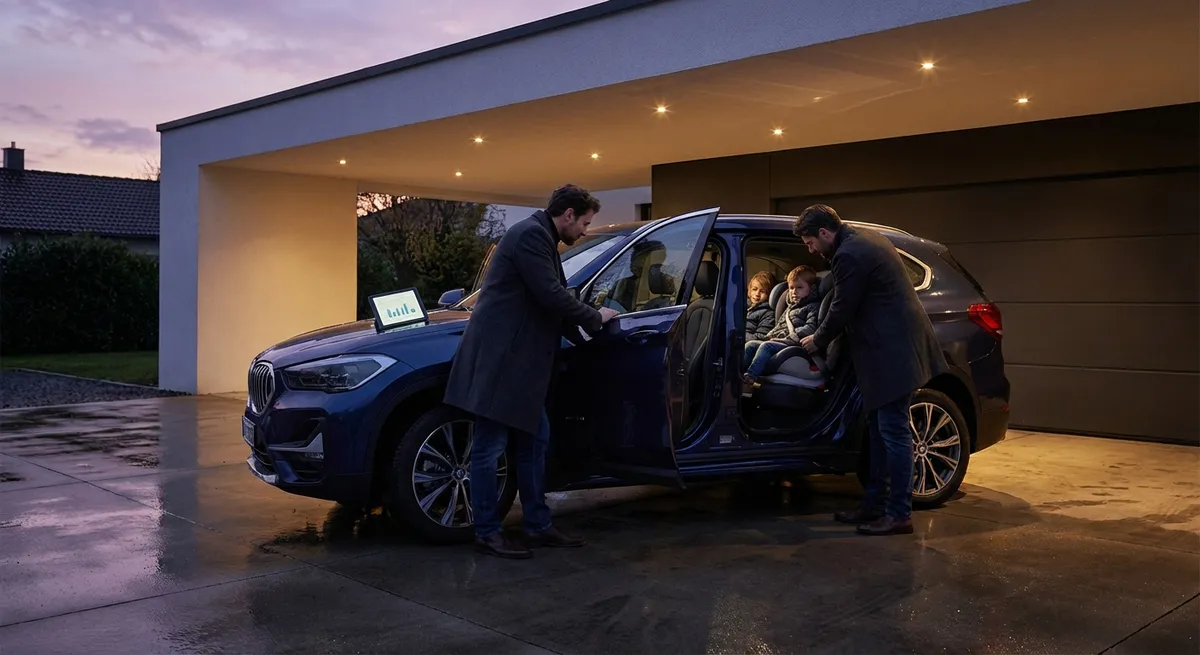
For families, the ease and integrity of child-seat installation may be more relevant day-to-day than raw crash numbers. Many safety ratings now incorporate a dedicated evaluation of LATCH (Lower Anchors and Tethers for Children) usability, which assesses anchor accessibility, labeling clarity, and the risk of confusion with other hardware. This is not a mere convenience score; a perfectly designed car seat offers little protection if it is not perfectly installed.
Look for SUVs that score highly in child restraint compatibility and then go one layer deeper: how many positions provide full LATCH capability, and in which rows? Are the anchors recessed behind stiff leather, or are they designed for easy access without digging and wrestling? A thoughtfully designed rear cabin with intuitive anchor placement, generous door openings, and flat-ish seat cushions can turn weekly installations and adjustments into a calm, predictable ritual—an understated form of safety luxury that pays dividends over years of ownership.
Insight 3: Not All “Driver Assistance” Is Created Equal
Advanced driver assistance systems (ADAS)—such as automatic emergency braking, lane-keeping assistance, and blind-spot monitoring—are increasingly factored into safety evaluations. Yet the mere presence of these features does not guarantee a refined or trustworthy experience. Ratings often differentiate between basic functionality and more advanced, well-calibrated systems that perform consistently in varied conditions.
When studying safety ratings, note whether the SUV’s automatic emergency braking is evaluated for both vehicle and pedestrian detection, and if it is tested in daylight, low light, or both. Pay attention to whether the system is praised for smooth intervention and early warnings versus abrupt, last-second responses. A premium family SUV should feel like a composed co-pilot—subtly supportive, rarely startling, and sophisticated enough to protect vulnerable road users around you. This graceful, predictable behavior is seldom described in brochure language, but it is often revealed in testing notes and detailed score breakdowns.
Insight 4: Rollover and Stability Scores Matter More in the Real World
While dramatic frontal and side-impact results often capture attention, rollover resistance is particularly relevant for taller, heavier vehicles such as SUVs. NHTSA’s rollover ratings analyze both a vehicle’s geometry and its electronic stability control systems to estimate its likelihood of tipping in a single-vehicle crash. For a family loaded with people, pets, and cargo on long highway trips, this measure of stability can be quietly reassuring.
Examine rollover ratings alongside information on stability control, traction management, and tire choice. An SUV with a lower center of gravity, wide track stance, and well-tuned stability system will typically feel more composed in abrupt lane changes and emergency maneuvers. In daily life, this can translate to poised behavior when avoiding a sudden obstacle or managing a tight downhill curve in the rain. Families who drive frequently on highways, rural roads, or in challenging weather will especially appreciate a vehicle that pairs high rollover scores with sophisticated stability tuning.
Insight 5: Headlights and Visibility Are Safety Features in Disguise
Headlight performance and outward visibility rarely dominate showroom conversations, yet both are increasingly critical elements within modern safety ratings. Poor illumination can undermine even the most advanced braking systems, while limited visibility can increase the driver’s cognitive load and response time—especially important when children, cyclists, or pets are near the vehicle.
Many rating agencies now assess headlight strength, beam pattern, and glare. Seek SUVs that earn top marks for headlight performance across trim levels, not only on the most expensive models. Add to that the subtler aspects of visibility: slender roof pillars, thoughtfully placed mirrors, high-quality cameras, and clear, undistorted lenses for 360-degree views. For a family SUV, the ability to see confidently when backing out of a school parking space at dusk or navigating a narrow driveway may be one of the most quietly transformative safety advantages.
Conclusion
For families choosing a premium SUV, safety ratings should be approached as a finely detailed portrait rather than a simple label. The most reassuring vehicles are those that excel not only in headline crash scores, but also in the nuanced areas where real life unfolds: edge-case impacts, child-seat usability, driver assistance refinement, stability under pressure, and night-time visibility. By reading beyond the stars and leaning into these five insights, you can identify the SUVs that are not just safe in theory, but serenely protective in practice—mile after carefully considered mile.
Sources
- NHTSA 5-Star Safety Ratings - Official U.S. government crash test results, rollover ratings, and safety feature information
- IIHS Vehicle Ratings - Detailed crash test data, small overlap test results, child seat anchor evaluations, and headlight performance scores
- IIHS: Frontal Crash Tests Explained - Technical overview of moderate and small overlap frontal tests and what they reveal about vehicle structure
- IIHS: LATCH Ease-of-Use Ratings - Evaluations of child seat anchor accessibility and usability across different vehicles
- NHTSA: Understanding Rollover Ratings - Explanation of rollover resistance ratings and the role of electronic stability control in SUV safety
Key Takeaway
The most important thing to remember from this article is that this information can change how you think about Safety Ratings.