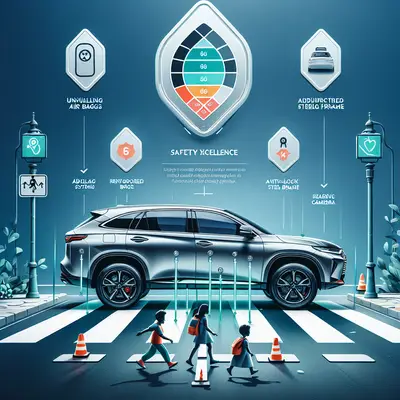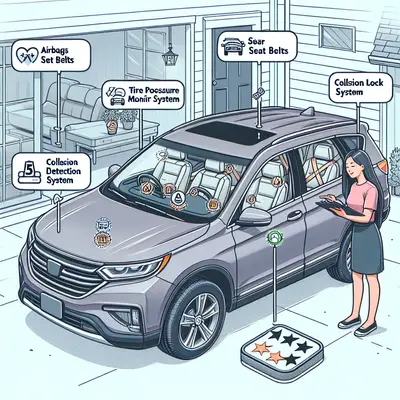
For many families, a new SUV isn’t just a purchase; it’s a moving sanctuary where school runs, late‑night airport pickups, and weekend escapes quietly unfold. Safety ratings sit at the center of that decision, yet the numbers and acronyms can feel curiously detached from the lived reality of traveling with children, grandparents, and everything in between. Understanding what those ratings do—and do not—reveal can transform your shopping experience from box‑ticking to genuinely curating protection for the people who matter most.
This refined guide goes beyond the headline scores and highlights five exclusive, often‑overlooked insights that discerning families will appreciate when evaluating safety ratings in today’s crowded SUV market.
How Safety Ratings Are Really Decided—And Why Test Types Matter
Most shoppers recognize the names: NHTSA’s 5‑Star Safety Ratings and IIHS’s Top Safety Pick awards. But the way each organization tests an SUV—and the assumptions built into those tests—deeply shape the scores you see on a window sticker or brand website.
NHTSA focuses on a series of crash and rollover tests, applying a 5‑star scale that is simple but relatively broad in its granularity. IIHS, by contrast, uses a more nuanced “Good” to “Poor” scale and continuously refines its evaluation criteria as real‑world crash patterns emerge. For instance, the IIHS small overlap front test fundamentally changed how manufacturers engineered front structures and restraint systems after it exposed weaknesses that traditional frontal tests did not.
For families, the distinction matters: a vehicle with identical overall star ratings may perform quite differently in specific crash scenarios that are more relevant to your everyday driving. A parent who regularly commutes on narrow, tree‑lined roads may weigh small‑overlap crash performance more heavily than highway rollover risk, while someone in a snow‑belt region might pay closer attention to stability and roof‑strength metrics.
The refined approach: treat safety ratings not as a single score to chase, but as a portfolio of tests that collectively describe how an SUV behaves in varied, sometimes very specific, situations.
The First Exclusive Insight: “Good” Isn’t Always Good Enough for the Rear Seats
One of the most underappreciated subtleties in modern safety ratings is the evolving focus on rear‑seat occupant protection—particularly for children in boosters or pre‑teens transitioning out of car seats. For years, engineers prioritized front occupants, and many SUVs consequently provided exemplary protection up front while lagging behind in the second row.
Recent IIHS updates now incorporate more demanding rear‑seat evaluations in certain crash tests. This is quietly transforming how automakers design second‑row seatbelts, pretensioners, and load limiters. Some SUVs that previously achieved top overall scores have seen their accolades downgraded because rear‑seat metrics no longer pass with the same ease.
For families, this is more than a technicality. If your children spend almost all of their time in the second row, a vehicle’s rear‑seat performance is arguably more relevant than its front‑seat protection. The nuance: a “Top Safety Pick+” for the latest model year typically reflects stronger rear‑seat protection than a similarly named award from just a few years ago.
When comparing SUVs, look beyond the headline rating and examine notes on rear‑seat crash-test dummies, chest loads, and seatbelt performance. In a sophisticated safety choice, the experience of your youngest passengers is not assumed; it is deliberately prioritized.
The Second Exclusive Insight: Headlights and Nighttime Safety Are Quiet Game‑Changers
Headlights rarely feature in glossy brochures, yet they now play a major role in overall safety assessments—and for good reason. A significant proportion of serious crashes occurs at night or in low‑light conditions. The difference between “Acceptable” and “Poor” headlight performance can translate into vital meters of reaction time.
The IIHS evaluates headlights not just for brightness but for beam pattern, glare to oncoming drivers, and performance on curves. An SUV can excel structurally in a crash but still fall short of top safety awards because its headlights underperform. LED technology and adaptive systems that pivot into corners or adjust beam height can materially increase nighttime visibility, especially on rural or poorly lit suburban roads.
For a family often driving home after evening activities, this is more than a convenience feature; it’s a real safety differentiator. As you review ratings, note whether all trims share the same headlight rating. Some SUVs only earn top marks in higher trims with upgraded lighting packages, leaving base models with less capable—and less safe—systems.
A refined buyer will ensure the specific headlight configuration they are ordering is the one that earned the strong rating, rather than assuming all variants perform equally.
The Third Exclusive Insight: Advanced Driver Assistance Is Rated—But Not All Systems Behave Alike
Feature lists often read impressively: forward collision warning, automatic emergency braking, lane‑keeping assistance, blind‑spot monitoring, rear cross‑traffic alert. Yet safety ratings organizations increasingly distinguish between vehicles that merely offer these systems and those that implement them with reassuring sophistication and consistency.
NHTSA’s New Car Assessment Program (NCAP) and the IIHS both now factor crash avoidance and driver assistance features into their evaluations. However, the presence of a system does not guarantee that it intervenes predictably, avoids false alarms, or feels natural for a cautious driver. Some systems apply abrupt braking or intrusive steering corrections, encouraging owners to disable them; others intervene seamlessly and quietly, fostering trust.
Families should pay attention not only to whether these technologies are standard, but also to how the ratings bodies describe their performance: does automatic emergency braking perform reliably in pedestrian scenarios and at night? Does lane‑keeping assistance help gently, or does it frequently “ping‑pong” between lane markers?
The elegant approach is to blend the ratings with a thorough test drive in varied conditions—urban streets, multi‑lane highways, and dimly lit roads—to ensure that the safety technology enhances calm, rather than creating a new source of tension.
The Fourth Exclusive Insight: Child Seat Realities Rarely Show Up in the Headline Score
For many families, a new SUV will spend years as a platform for car seats, boosters, and complex seating permutations. Yet the most visible safety ratings usually focus on crash performance, not the everyday ergonomics of installing and using child restraints. This gap can significantly affect both safety and day‑to‑day serenity.
IIHS’s LATCH (Lower Anchors and Tethers for Children) ratings provide a window into this reality. They evaluate the ease of locating anchors, the clarity of labeling, and whether surrounding seat cushions or hardware interfere with secure installation. A structurally safe SUV with poorly accessible anchors or awkward third‑row tether routing can lead to compromised installations—no matter how careful the parent.
Other seat‑related nuances matter as well: how flat are the cushions for rear‑facing seats? Do outboard seats tilt or slide in a way that eases third‑row access without disturbing installed child seats? Can three restraints fit across the second row safely, not just physically?
The family‑centric, sophisticated shopper uses overall crash ratings as the foundation, then layers in LATCH ratings and, ideally, a hands‑on test of car seat installation with the exact models used at home. True safety is not only what happens in a lab; it’s what happens in your driveway on a rushed Tuesday morning.
The Fifth Exclusive Insight: Weight, Size, and Crash Compatibility Deserve a Nuanced View
Conventional wisdom often suggests that “bigger is safer,” and there is some truth: larger, heavier SUVs generally fare better in two‑vehicle collisions when striking a smaller vehicle. Safety ratings, however, are typically conducted within a similar weight class, meaning a top rating in a compact SUV does not make it physically equivalent to a full‑size model in a head‑on crash.
At the same time, excess size and weight introduce their own trade‑offs. Heavier vehicles require longer stopping distances and can be more challenging to maneuver in evasive situations. Crash compatibility—how well vehicles protect their own occupants while limiting harm to others—is an increasing focus in safety research and regulation.
For the discerning family, the choice is less about “largest possible SUV” and more about a balanced envelope of protection, agility, and everyday usability. A thoughtfully engineered midsize SUV with exemplary crash performance, advanced avoidance systems, and well‑tuned brakes may offer a more holistic sense of security than an oversized model that feels unwieldy in tight urban environments or school parking lots.
Understanding that safety ratings operate within vehicle categories helps calibrate expectations and encourages families to choose a size that aligns with their real‑world needs, not just hypothetical extremes.
Conclusion
Safety ratings offer an essential, evidence‑based lens through which to evaluate family SUVs, but their true value emerges when you look beyond the headline numbers. The nuances—rear‑seat protection, headlight performance, the behavior of driver assistance systems, child seat practicality, and the interplay of size and agility—combine to shape how secure your family feels, day after day.
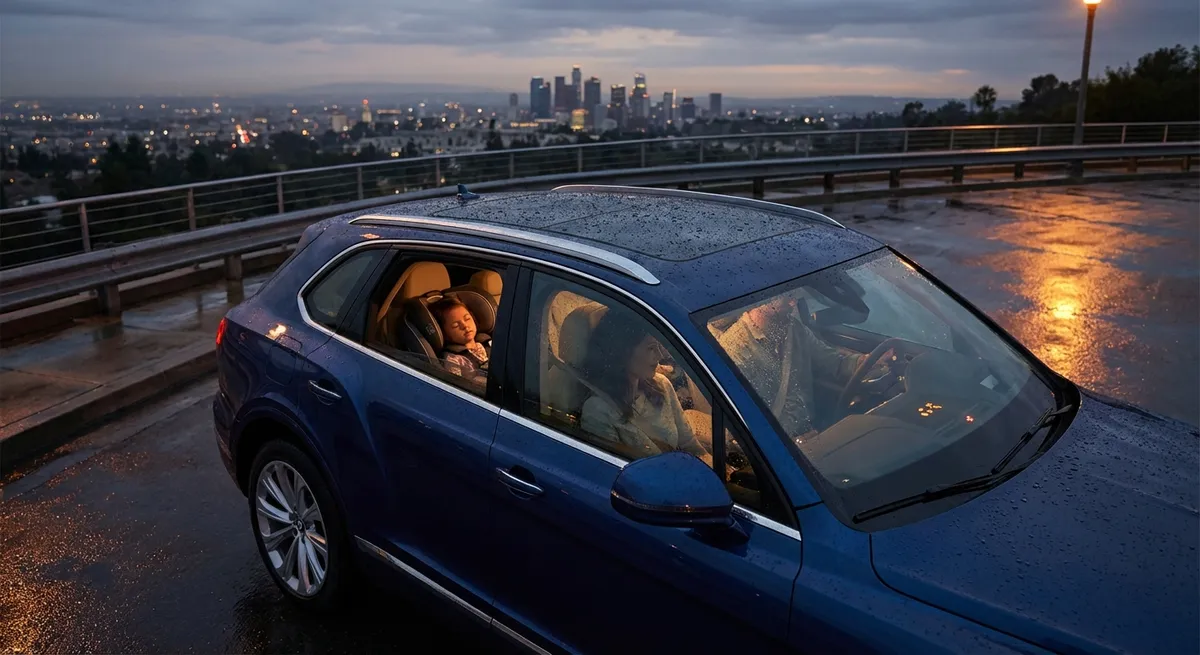
A sophisticated safety decision respects both the rigor of formal testing and the quiet realities of family life: night drives after a delayed flight, a toddler asleep in the second row, a teenager learning to drive in your trusted SUV. By reading safety ratings with this richer perspective, you move from simply selecting a safe vehicle to curating a genuinely protective environment—one that honors the small, irreplaceable moments unfolding within it.
Sources
- NHTSA 5-Star Safety Ratings Overview - Explains how the U.S. National Highway Traffic Safety Administration conducts crash tests and assigns star ratings.
- IIHS Vehicle Ratings and Testing Protocols - Details the Insurance Institute for Highway Safety’s crashworthiness, crash avoidance, headlight, and LATCH evaluations.
- NHTSA Child Safety and LATCH Information - Provides guidance on child restraint systems, installation best practices, and related safety considerations.
- IIHS Headlight Evaluations - Discusses the methodology and findings behind headlight performance ratings and their impact on crash risk.
- CDC Motor Vehicle Safety Data - Offers broader context on crash statistics, risk factors, and the public health importance of vehicle safety.
Key Takeaway
The most important thing to remember from this article is that this information can change how you think about Safety Ratings.