For many families, the SUV is more than transportation; it is the moving center of daily life. School runs, weekend escapes, late-night airport pick‑ups—each journey carries priceless cargo. Safety ratings are often the starting point, but for a discerning family, they are merely the beginning of a more nuanced conversation. Beneath the stars and scores lies a deeper story about how an SUV will actually protect your family in the real world.
This guide elevates the typical safety checklist into a more refined framework, revealing five exclusive insights that help you interpret safety ratings with the same care you would devote to selecting your child’s school or your own home.
Looking Beyond the Badge: How Safety Ratings Really Work
Most families recognize the familiar acronyms—NHTSA, IIHS, and, in Europe, Euro NCAP—but few pause to examine how differently they approach safety. Each organization tests for crashworthiness and crash avoidance, yet they do so with distinct methodologies, thresholds, and weightings. A five‑star rating from one program does not necessarily equal a “Top Safety Pick+” from another.
Sophisticated SUV selection starts by pairing the badge on the tailgate with the badges on the test reports. The National Highway Traffic Safety Administration (NHTSA) in the U.S. focuses on star ratings for frontal, side, and rollover resistance. The Insurance Institute for Highway Safety (IIHS) digs deeper into front overlap crashes, roof strength, head restraints, and advanced driver assistance systems. Meanwhile, Euro NCAP includes vulnerable road user protection and safety assistance as core components. Reviewing multiple sources reveals consistency—or exposes gaps—between test performances.
Families who want a deeper assurance should look for models that perform well across more than one testing body whenever possible. It is this convergence of strong results, rather than a single score in isolation, that offers a more complete portrait of safety.
Hidden Layers of Protection: Structural Design and Cabin Integrity
The true sophistication of a family SUV often lies in its underlying architecture. While ratings capture outcomes, they don’t always illuminate the engineering philosophy behind them. Yet for parents, the way an SUV manages and redirects crash forces is as important as the number of airbags listed in a brochure.
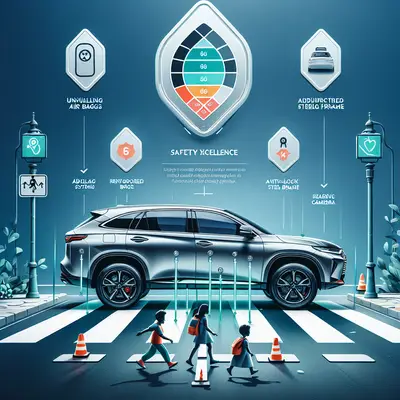
High-strength and ultra‑high‑strength steels, carefully engineered crumple zones, and reinforced occupant cells all shape how energy is absorbed before it reaches the cabin. Side‑impact beams, strategic load paths, and robust B‑pillars contribute silently to your peace of mind. An SUV with an elegantly designed body structure should maintain cabin integrity even in demanding small‑overlap or angled crashes—precisely the kind of incidents that mirror real‑world collisions at intersections or on narrow roads.
Discerning buyers can read beyond the star rating by examining how a vehicle fared in small overlap and side‑impact tests and whether intrusion into the footwell or passenger space remained minimal. This is where premium engineering truly proves its worth: not in visible embellishments, but in the quiet assurance that the passenger cell remains a secure sanctuary when it is needed most.
Intelligent Safety: Evaluating Driver Assistance With Real-World Discipline
Advanced driver assistance systems (ADAS) have transformed the modern SUV into a co‑pilot, but not all systems are created with the same level of refinement. Families are increasingly presented with suites of acronyms—AEB, ACC, LKA, BSM—and marketing promises that verge on autonomy. A sophisticated approach means asking: how well do these features work in unplanned, imperfect conditions?
Independent testing bodies now assess automatic emergency braking performance with both vehicle and pedestrian scenarios, sometimes including cyclists and nighttime conditions. Lane keeping and lane centering are evaluated not just for presence, but for smoothness and reliability. For a family SUV, elegant calibration matters: intrusive alerts that shriek at every lane marking soon get switched off; systems that intervene gently and predictably are more likely to be trusted and kept active.
When reviewing safety ratings, focus not just on whether an SUV has a given system, but on the quality of its implementation in third‑party tests. Look for detailed evaluations of pedestrian and cyclist detection, night performance, and collision‑avoidance success at suburban speeds—because those are the settings that most closely resemble your school runs, weekend errands, and evening drives home.
The Second-Row Priority: Child Safety, Seating, and Installation Realities
Safety ratings often begin and end with the front seats, but for families, the second and third rows are the true center stage. Child occupant protection deserves its own lens—one that blends formal test results with the practical realities of installing and using child seats every single day.
European and some global assessments include specific child occupant scores that simulate the impact forces on child dummies in frontal and side crashes. Meanwhile, organizations like IIHS have started rating LATCH (Lower Anchors and Tethers for Children) usability, highlighting how accessible, well‑positioned, and intuitive the anchors are. An SUV can score well in crash tests yet make daily child‑seat installation a frustrating, compromise‑ridden experience.
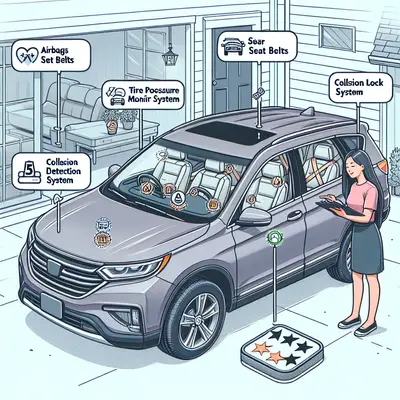
Refined family shoppers should consider: Are there full‑strength LATCH positions across the second row, or only in the outboard seats? Can three child seats fit comfortably side‑by‑side without contortions? Do curtain airbags extend fully to the third row? Do rear doors open wide enough to allow a dignified, strain‑free installation? These details rarely appear in a single rating number—but they define what safety feels like day after day.
The Safety Experience: Vision, Comfort, and Driver Readiness
The most sophisticated approach to safety recognizes that ratings capture crash outcomes, while families must also avoid crashes in the first place. Here, subtle design decisions shape a driver’s confidence: visibility, driving position, control layout, and even cabin comfort all contribute to real‑world safety.
Large glazing and slim roof pillars expand outward visibility, while thoughtfully positioned mirrors and available surround‑view cameras reduce blind spots in car‑pool lanes and crowded school parking lots. An elevated, natural driving position that minimizes fatigue on longer trips helps maintain alertness, as do intuitive controls that allow the driver to adjust climate or navigation without unnecessary distraction.
Cabin refinement also plays a quiet but meaningful role. Low noise levels, supportive seats, and effective climate control help parents stay calm and focused, even with a full complement of passengers. While these features do not directly influence crash test scores, they form an essential, and often overlooked, dimension of comprehensive safety: the driver’s ability to remain composed, comfortable, and in control.
Conclusion
For families who view their SUV as an extension of home, safety ratings are a vital but incomplete chapter in the story. True peace of mind comes from understanding how those numbers are earned, what lies beneath the sheet metal, and how thoughtfully the vehicle supports the realities of family life—from precise child‑seat installation to intuitive driver assistance and serene daily driving.
By interpreting ratings through these five lenses—multi‑source test results, structural integrity, intelligent assistance, child‑focused design, and driver‑centric ergonomics—you move from simply buying a safe SUV to curating a truly protective environment. The result is not just a higher score on paper, but a deeper, more enduring confidence every time you close the doors and set off with the people who matter most.
Sources
- [NHTSA 5-Star Safety Ratings](https://www.nhtsa.gov/ratings) - Official U.S. government crash-test ratings and methodology for evaluating vehicle safety
- [IIHS Vehicle Ratings](https://www.iihs.org/ratings) - Independent crash-test results, Top Safety Pick awards, and evaluations of crash avoidance and LATCH usability
- [Euro NCAP Official Website](https://www.euroncap.com/en) - European crash-test program with detailed breakdowns of adult, child, and vulnerable road user protection
- [CDC – Child Passenger Safety](https://www.cdc.gov/transportationsafety/child_passenger_safety/index.html) - Evidence-based guidance on child restraints, booster usage, and reducing injury risk
- [National Safety Council – Advanced Driver Assistance Systems](https://www.nsc.org/road/safety-topics/adaptive-driving-beam-adas) - Overview of ADAS technologies and how they contribute to real-world crash prevention
Key Takeaway
The most important thing to remember from this article is that this information can change how you think about Safety Ratings.