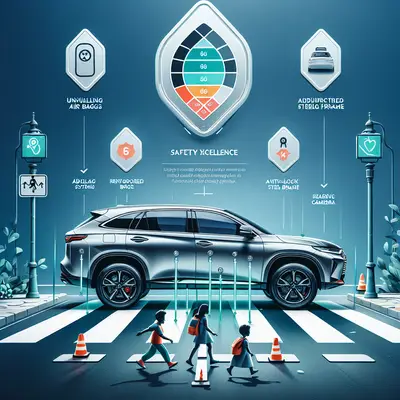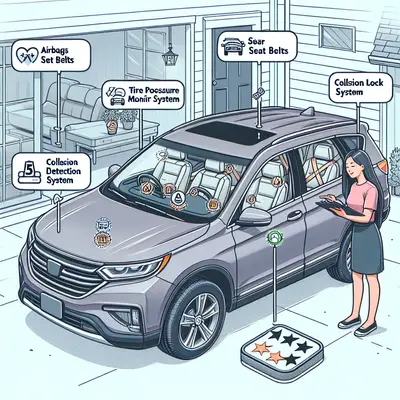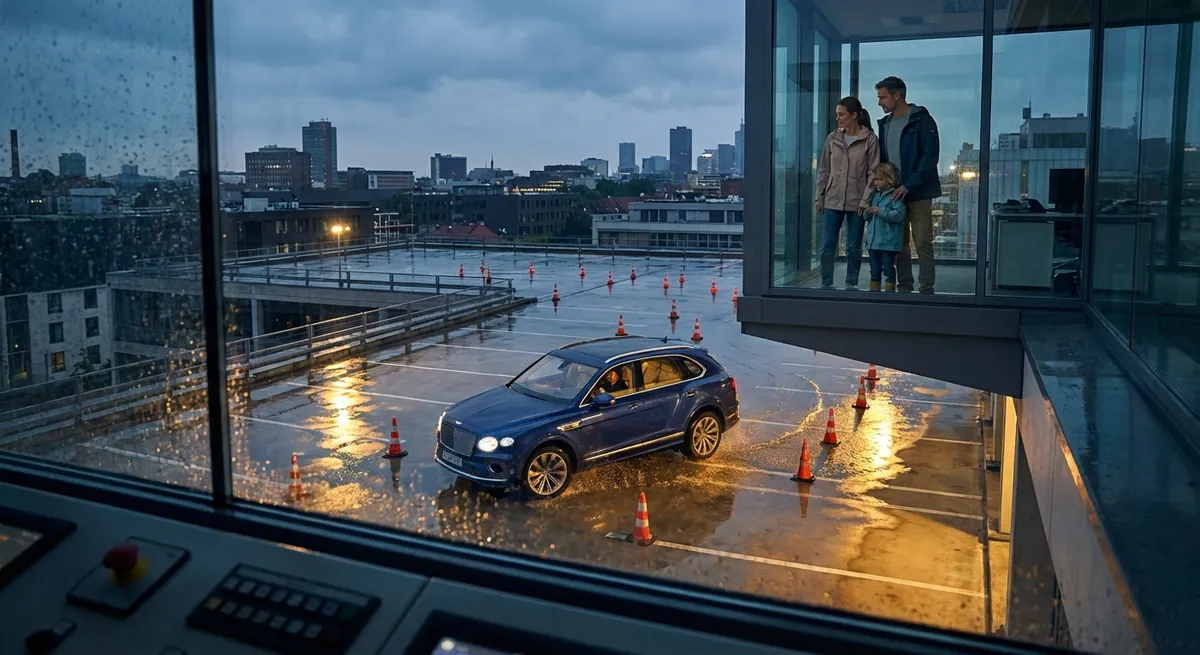
For families who choose carefully rather than quickly, “safe enough” is never quite sufficient. Safety ratings offer a reassuring baseline, but the reality of protecting your family is quietly more nuanced. Beyond the stars and scores lies a more refined layer of insight—how an SUV behaves in difficult moments, how its technology anticipates error, and how its design supports calm, confident driving when it matters most.
This is a considered exploration of safety that goes deeper than the brochure. The focus is not on fear, but on control, composure, and the subtle choices that separate a merely safe SUV from one that feels like a sanctuary on the road.
The Silent Architecture of Crash Testing
Most families recognize the names—NHTSA, IIHS, Euro NCAP—but the structure behind these ratings is often overlooked. A five-star score or “Top Safety Pick+” designation reflects dozens of discrete tests, engineering decisions, and performance thresholds that tell a richer story than a single label can convey.
The first layer is the type of impact: frontal, side, rear, and rollover. Each test stresses different structural zones—A-pillars, door sills, roof rails—to determine how effectively the cabin resists intrusion. For a family SUV, the integrity of the second and third rows is particularly telling, especially in side impacts and offset frontal tests where vulnerable occupants may be children in car seats. The second layer is restraint performance: how airbags deploy (timing and intensity), how well seatbelts manage forces, and whether pretensioners and load limiters work in concert with the structure rather than fighting it.
Finally, there is the question of how current the test protocol is. Safety testing evolves; an SUV that aced tests five years ago may be outclassed by models engineered to meet stricter, more recent standards. For the discerning buyer, the most revealing question is not simply “Is it five stars?” but “Under which tests, in which model year, and with what level of structural sophistication?”
Insight 1: Star Ratings Are the Beginning, Not the Verdict
The first exclusive insight is deceptively simple: families should treat safety ratings as a shortlist filter, not a final verdict. Once an SUV is in the top tier—5 stars from NHTSA or Top Safety Pick/Top Safety Pick+ from IIHS—the meaningful differences lie in the fine print rather than the headline score.
Within the same overall rating, an SUV may show subtle variations in specific crash modes: “Good” versus “Acceptable” roof strength, or differing levels of chest, head, or leg injury risk in small-overlap crashes. For a family who regularly drives on winding two-lane roads, small-overlap front protection takes on heightened importance; for those who spend most of their time in dense urban traffic, rear-impact whiplash protection and advanced pedestrian detection become more relevant.
Another overlooked nuance is body style and configuration. The same model can perform differently depending on wheelbase, drivetrain, or even the presence of a panoramic roof. High trim levels may include different wheels or suspension setups that subtly alter handling and braking, which are not always captured in crash tests. The discerning approach: identify a narrow group of top-rated SUVs, then scrutinize the detailed test breakdown and equipment lists for the exact configuration you intend to purchase.
Insight 2: Active Safety Tech Is Only as Good as Its Tuning
Safety ratings increasingly incorporate advanced driver-assistance systems (ADAS), but the presence of a feature says nothing about how gracefully it performs. Families often focus on the checklist—automatic emergency braking, lane-keeping assist, blind-spot monitoring—without evaluating a far more critical element: tuning.
Overly intrusive systems that beep, vibrate, or yank the wheel too aggressively can breed complacency or, worse, lead drivers to switch them off entirely. Conversely, well-calibrated systems intervene with quiet precision, offering a subtle nudge rather than a startling correction. This difference in character is not captured by a binary “equipped/not equipped” rating, yet it has significant real-world implications for safety.
During a test drive, it is worth intentionally triggering these features in a controlled, safe manner: gently drift toward a lane marker, approach a stopped vehicle at modest speed, or reverse toward an obstacle at low speed. Notice whether the SUV anticipates smoothly or reacts abruptly, whether alerts are intuitive or overwhelming, and whether the interventions inspire trust rather than irritation. The premium choice is not the SUV with the longest list of acronyms, but the one whose electronic “co-driver” feels like a composed, intelligent assistant rather than a nervous passenger.
Insight 3: Child-Seat Practicality Is an Underrated Safety Asset
For families, passive safety is only as effective as the child-seat installation that precedes it. Yet child-seat usability rarely appears in headline safety scores, despite its direct influence on real-world protection. An SUV can be structurally excellent and still fall short if its cabin design makes correct installation difficult or impractical.
The first dimension is access: how wide the rear-door opening is, how much the door swings out, and whether the roofline allows you to lift a sleeping toddler in and out without awkward angles. The second is anchorage: the depth, visibility, and alignment of the LATCH/ISOFIX anchors, plus whether tether points are easy to locate and use when three-row seating is in play. Some SUVs place third-row anchors in locations that are difficult to reach or incompatible with certain seat designs, effectively limiting that row to older children.
The third dimension is layout flexibility. If you routinely carry multiple children in car seats or boosters, the ability to comfortably and securely fit three across, or to leave a child seat installed while accessing the third row, becomes a genuine safety advantage by reducing the likelihood of hurried, imperfect installations. Families should not hesitate to bring their actual seats to the dealership and perform a full, unhurried trial fit; the SUV that accommodates your real-world child-seat configuration cleanly is inherently the safer choice, whether or not that nuance appears in any rating.
Insight 4: Nighttime and Poor-Weather Vision Are the Quiet Protectors
Another underappreciated layer of safety lies in visibility—particularly at night and in inclement weather. Ratings increasingly account for headlight performance, but the subtleties of illumination, glare management, and driver confidence in the dark are best evaluated in context.
Modern LED and adaptive headlights vary substantially in beam pattern, cutoff sharpness, and responsiveness to steering input. High-quality systems offer broad, evenly lit coverage without harsh hotspots or distracting flicker, with carefully controlled glare for oncoming traffic. For parents driving early to school, commuting in winter darkness, or navigating poorly lit rural roads, this distinction can be transformative. Some advanced systems—even when partially constrained by regional regulations—use dynamic bending lights or matrix-style beam control to maximize forward visibility without dazzling others.
Equally important are the supporting elements: effective defogging and demisting systems, heated mirrors, well-placed washer nozzles, and intuitive wiper controls with competent automatic modes. These rarely feature in marketing headlines but contribute directly to your ability to see—and be seen—when conditions are at their worst. An SUV that excels here delivers a form of safety that feels natural and unremarkable, precisely because you are not struggling to compensate.
Insight 5: Cabin Composure Directly Influences Driver Performance
The final insight is perhaps the most counterintuitive: the refinement of the cabin—its noise levels, ergonomics, and control layout—has a measurable impact on safety, even though it is not formally scored in crash-testing regimes. A calm driver is a more accurate, observant, and patient driver.
Reduced wind and road noise, well-damped suspension tuning, and thoughtfully tuned steering all help to lower cognitive load on long journeys. When the cabin is serene rather than frenetic, parents are better equipped to manage inevitable in-car distractions—children calling from the third row, devices requesting charging, navigation prompts—without feeling overwhelmed. High-quality seats that properly support the back and thighs fight fatigue on extended trips, reducing the likelihood of minor mistakes caused by discomfort or stiffness.
Equally vital is the clarity of the interface. An intuitive layout with physical controls for critical functions (temperature, volume, defogging) allows you to make adjustments by feel rather than looking away from the road. A well-designed head-up display and thoughtfully presented digital cluster can provide essential information without clutter. The most sophisticated family SUVs use refinement not as a superficial luxury, but as a tool to keep the driver mentally present, physically comfortable, and better prepared to respond to the unexpected.
Conclusion
Safety ratings are an essential foundation, but they are not the full architecture of protection. For families seeking something beyond a checklist—the kind of safety that feels deeply integrated rather than merely installed—the difference lies in nuance: how an SUV’s structure is engineered, how its technology behaves, how gracefully it accommodates child seats, how it illuminates the road, and how it supports the driver’s composure.
Approach safety not as a box to be ticked, but as an experience to be curated. Begin with top-tier ratings, then refine your choice through these five lenses. The result is not merely a safe SUV, but a quietly confident one—an environment where engineering, design, and technology align to protect the people who matter most, in ways that are both measurable and deeply felt.
Sources
- [National Highway Traffic Safety Administration (NHTSA) 5-Star Safety Ratings](https://www.nhtsa.gov/ratings) - Official U.S. government crash-test ratings and explanations of test procedures
- [Insurance Institute for Highway Safety (IIHS) – Ratings & Testing](https://www.iihs.org/ratings) - Detailed crash-test results, headlight evaluations, and child-seat anchor usability scores
- [Euro NCAP – Safety Ratings & Protocols](https://www.euroncap.com/en/ratings-rewards/latest-safety-ratings/) - European crash-test results and evolving testing standards, including active safety performance
- [U.S. Department of Transportation – Child Passenger Safety](https://www.nhtsa.gov/road-safety/child-safety) - Guidance on child-seat installation, LATCH use, and best practices for families
- [Harvard School of Public Health – Driver Fatigue and Road Safety](https://www.hsph.harvard.edu/news/hsph-in-the-news/drowsy-driving-accidents/) - Research on fatigue, driver performance, and the importance of comfort and alertness for safe driving
Key Takeaway
The most important thing to remember from this article is that this information can change how you think about Safety Ratings.