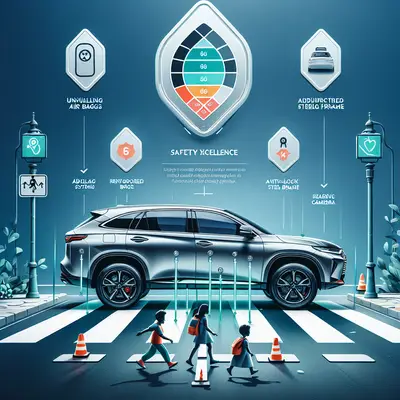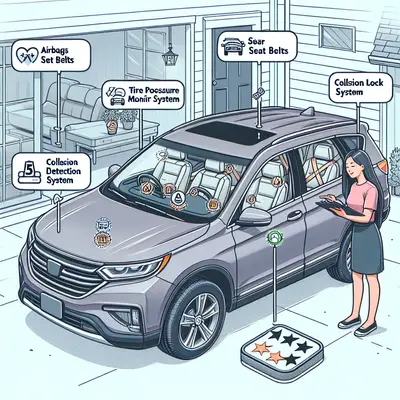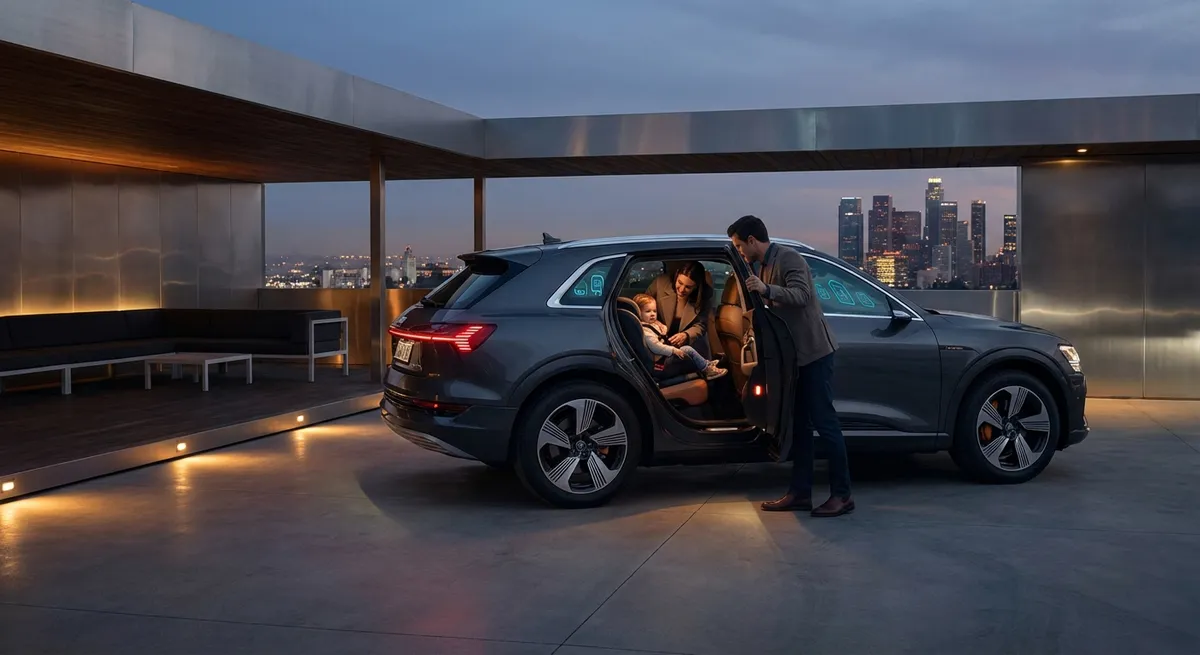
Safety ratings are often treated like a finish line—five stars, top pick, and the search is over. For families with more discerning expectations, they’re just the beginning. The true measure of a family SUV lies in the layers beneath the score: how it behaves in the chaos of real traffic, how it protects smaller passengers, how it supports a tired parent making late‑night decisions at 70 mph. This is where a sophisticated reading of safety ratings becomes less about numbers and more about nuance.
What Safety Ratings Really Measure—and What They Quietly Assume
Formal safety ratings from agencies such as the National Highway Traffic Safety Administration (NHTSA) and the Insurance Institute for Highway Safety (IIHS) are built around standardized crash tests and controlled scenarios. They give you structured, comparable data on how a vehicle performs in front, side, rear, and rollover events, plus how its crash-avoidance technology behaves in staged emergencies.
Yet these tests quietly assume a “typical” occupant: average adult size, standard seating positions, and conventional restraint use. For families, this is only part of the picture. Car seats, booster stages, taller teens, and grandparents with different mobility needs all slightly step outside this theoretical “average.” When you interpret safety ratings, it’s worth remembering that the five-star label or “Top Safety Pick+” award reflects a curated set of conditions. The premium approach is to use these ratings as a core foundation—and then layer on questions about how your specific family, with its real ages, sizes, and habits, fits into that framework.
Exclusive Insight #1: The Hidden Importance of Small-Overlap Protection
Most shoppers notice overall crash scores but overlook one of the most telling tests: the small-overlap front crash. In this test (prominently used by IIHS), only a narrow slice of the front corner of the vehicle strikes an obstacle—mimicking a glancing hit with a tree, pole, or oncoming vehicle at the edge of a lane. It’s an unforgiving scenario that exposes weaknesses in structural rigidity and cabin integrity.
For families, this test is quietly vital. Small-overlap crashes can push the cabin sideways and test how well the footwell, A-pillars, and door sills are reinforced. A family SUV that maintains a stable survival space in this test often reflects meticulous engineering around high-strength steel usage and load paths designed to divert crash energy away from occupants. When comparing SUVs with similar overall scores, give special weight to their small-overlap performance—especially if you regularly drive on narrow roads, in winter weather, or in areas with tight urban obstacles.
Exclusive Insight #2: Child Occupant Protection Is More Than a Generic “Rear Seat” Score
Many safety summaries casually refer to “rear occupant protection,” but families need a much finer lens. European testing protocols, such as those from Euro NCAP, actually provide dedicated child occupant protection assessments, modeling children in properly secured child restraints and boosters. While U.S. ratings are evolving, there is still limited granularity about how a vehicle works with real-world child seats.
The premium family approach is to treat safety ratings as a starting point, then interrogate how child safety actually plays out:
- Are the lower anchors easy to access without digging into the upholstery or fighting with stiff cushions?
- Are the top tether anchors clearly marked and located where they don’t interfere with luggage covers or third-row folding?
- Does the vehicle’s rear seat geometry allow for proper recline and head restraint positions when a car seat is installed?
An SUV may score well in laboratory tests yet be difficult in daily life, tempting parents to cut corners with seat installation or belt routing. A model that pairs excellent crash performance with thoughtful LATCH placement, intuitive tether routing, and a rear bench designed around child seats offers functional safety that numbers alone can’t fully capture.
Exclusive Insight #3: Advanced Driver Assistance Systems—Calibration Matters as Much as the Checklist
On spec sheets, two SUVs may appear nearly identical: automatic emergency braking, lane-keeping assist, adaptive cruise control, blind-spot monitoring. Yet the lived experience behind the wheel can be dramatically different, depending on how these systems are calibrated.
A refined family SUV tends to exhibit driver assistance that feels like an attentive co‑pilot, not a nervous backseat driver. Subtle but critical distinctions include:
- Brake Modulation: Does automatic emergency braking intervene smoothly and progressively, or does it deliver an abrupt, unsettling jolt that risks being disabled by frustrated drivers?
- Lane Support Behavior: Is lane-keeping precise yet unobtrusive, or does it “ping‑pong” between lane lines and constantly tug at the wheel?
- Driver Monitoring: Does the system unobtrusively watch for signs of inattention, or does it flood the cabin with alarms the moment a parent adjusts the navigation or tends to a child?
Safety ratings that include front-crash prevention scores and pedestrian detection are an important signal, but families should also look for references in reviews and owner feedback about how these systems behave day-to-day. The safest technology is the one you’re willing to leave on, every drive, because it feels natural and trustworthy, not overwhelming.
Exclusive Insight #4: Nighttime and Poor-Weather Performance—Where Headlights and Sensors Earn Their Keep
Headlight ratings are often relegated to fine print, but they are quietly transformative for family safety. IIHS has put growing emphasis on headlight performance, evaluating beam reach, glare for oncoming traffic, and consistency between trims. For a parent driving home on an unlit highway after an evening practice or late flight, superior illumination can mean additional seconds to identify a pedestrian, a cyclist, or a stray animal.
Similarly, radar and camera-based driver assistance systems can struggle in rain, fog, snowfall, or road grime. Some SUVs now house cameras behind heated glass, use high-mounted radar units less prone to slush buildup, or include self-cleaning features for key sensors. While this level of design doesn’t always surface directly in headline safety scores, it strongly influences how reliably those technologies function when conditions are less than ideal—precisely when families most rely on them. When possible, pay attention to whether an SUV’s highest headlight rating applies across trims, not just to an expensive optional package; a truly family‑first safety strategy should not be locked behind a premium lighting upgrade.
Exclusive Insight #5: Real-World Crash Data and Insurance Outcomes as a Quiet Second Opinion
Laboratory tests are controlled; life is not. That’s why, beyond ratings, it’s worth consulting real-world data on how SUVs perform once they leave the test track. The IIHS and the Highway Loss Data Institute (HLDI) publish insurance loss figures and claim frequencies that reveal how often certain models are involved in injury-causing crashes and how costly those incidents tend to be.
A vehicle that earns excellent crash test scores yet shows unusually high injury claims may be revealing something about visibility, driver behavior, or how it’s typically used. Conversely, an SUV whose insurance loss data is consistently better than average suggests that its safety technologies, ergonomics, and driver support features effectively translate into fewer and less severe real-world incidents. Treat this as a quiet, data‑driven second opinion layered on top of formal ratings—a way to validate that engineering intentions are reflected in everyday family use.
Conclusion
For a discerning family, the safest SUV is rarely defined by a single star rating or award. It’s the interplay of subtle structural decisions, child-focused practicality, intelligent driver assistance calibration, superior visibility in the dark, and reassuring real-world data. Approached this way, safety ratings become less of a marketing badge and more of a curated safety profile that you assemble around your family’s specific needs.
In a market where many SUVs wear similar safety numbers, these five nuanced perspectives can help you distinguish between “safe on paper” and “quietly reassuring in real life.” The result is not just survival in a worst-case scenario, but daily peace of mind—knowing that the vehicle carrying your family has been chosen with a level of attention worthy of its cargo.
Sources
- [National Highway Traffic Safety Administration (NHTSA) – 5-Star Safety Ratings](https://www.nhtsa.gov/ratings) - Official U.S. government crash test results and explanations of testing protocols
- [Insurance Institute for Highway Safety (IIHS) – Vehicle Ratings](https://www.iihs.org/ratings) - Detailed crash test, headlight, and crash-avoidance ratings, including small-overlap tests
- [Euro NCAP – Child Occupant Protection](https://www.euroncap.com/en/vehicle-safety/the-ratings-explained/child-occupant-protection/) - Explains how child occupant safety is evaluated in European testing
- [Highway Loss Data Institute (HLDI) – Insurance Loss Information](https://www.iihs.org/ratings/insurance-loss-information) - Real-world insurance claims data by vehicle model, highlighting injury and damage patterns
- [IIHS – Headlight Ratings and Nighttime Safety](https://www.iihs.org/topics/headlights) - Research and ratings showing how headlight performance affects crash risk at night
Key Takeaway
The most important thing to remember from this article is that this information can change how you think about Safety Ratings.