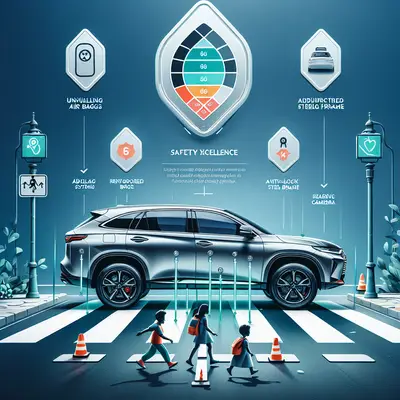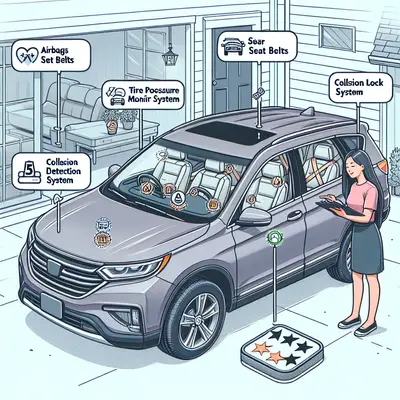
For families who value both composure and protection, safety ratings are not simply another specification—they are the quiet architecture beneath every school run, weekend escape, and late-night drive home. Yet the way safety is scored, reported, and marketed often obscures the nuances that matter most to discerning parents. This guide steps beyond the headline stars and letters to reveal what sophisticated SUV shoppers actually look for when safety is as important as style, comfort, and craftsmanship.
How Safety Ratings Really Work—And Where They Differ
Safety ratings are not a single universal standard; they are an orchestration of different testing philosophies, protocols, and priorities. In the United States, the National Highway Traffic Safety Administration (NHTSA) offers a 5-star rating system focused on crash performance and rollover resistance, while the Insurance Institute for Highway Safety (IIHS) uses a more granular structure that includes crashworthiness, crash avoidance, and headlight evaluations.
For a family SUV buyer, this means that “5 stars” from NHTSA and a “Top Safety Pick+” from IIHS do not measure the same thing in the same way. NHTSA emphasizes how a vehicle protects occupants once a crash is already happening. IIHS, in contrast, puts increasing weight on preventing the crash in the first place, through advanced driver-assistance systems (ADAS) such as automatic emergency braking and sophisticated headlight performance. The most refined safety decisions are made by cross‑referencing both sets of ratings, then pairing them with your real-world driving patterns—urban versus suburban, day versus frequent night driving, solo commuting versus fully loaded family trips.
This is where the premium mindset shows: you are not merely checking boxes; you are curating the safest possible environment for your family’s specific lifestyle and routes.
Exclusive Insight 1: The Overlooked Importance of Side-Impact and Small Overlap Tests
Families often focus on frontal crash scores because they seem most intuitive—front of car, front of mind. Yet in modern traffic, side impacts and “small overlap” crashes (where only part of the vehicle’s front end hits an object) can be especially dangerous, particularly at intersections and on narrow two-lane roads.
IIHS small overlap tests on both driver and passenger sides reveal how well the SUV’s structure directs forces away from occupants. Superior performance here usually points to a robust safety cage, advanced materials, and carefully engineered crumple zones—hallmarks of a well-conceived family vehicle. Similarly, side-impact scores show how effectively the SUV protects against intrusions into the cabin, especially in collisions with another SUV or pickup, which are now common on American roads.
For families, this means an SUV that excels in small overlap and side-impact tests often offers a margin of protection that never appears on a window sticker but can be decisive in real‑world scenarios: busy school zones, left-turn conflicts at dusk, and unprotected intersections that you navigate daily.
Exclusive Insight 2: Headlights and Nighttime Visibility—A Quiet Luxury in Safety
Nighttime safety is an underappreciated dimension, even though a disproportionate number of serious crashes occur after dark. IIHS now scores headlights, and these ratings tell a more practical story than many realize. “Good” or “Acceptable” ratings usually indicate a headlight system with proper reach, controlled glare, and consistent illumination across the lane and shoulder—subtleties that profoundly affect evening commutes and weekend highway travel.
Premium family SUVs that prioritize adaptive LED headlights, automatic high beams, and cornering illumination reinforce a sense of quiet confidence on unlit roads or in heavy rain. The difference is most dramatic on winding suburban routes, rural weekend getaways, and poorly lit interchanges where children may be sleeping in the back and the driver must rely on calm, effortless visibility.
When cross‑shopping SUVs, treat headlight ratings as you would a luxury interior finish: a daily, tactile experience that influences comfort, fatigue, and peace of mind. An SUV that scores highly in this area is not just “safer on paper”—it is more serene to drive at night.
Exclusive Insight 3: Advanced Driver Assistance as a System, Not a Checklist
The modern family SUV landscape is dominated by terms like “lane keep assist,” “automatic emergency braking,” and “adaptive cruise control.” Yet the sophistication lies not in whether these features exist, but in how seamlessly they work together. The most refined systems reduce cognitive load without feeling intrusive, allowing the driver to remain engaged while being quietly assisted.
IIHS evaluates front crash prevention against vehicles and pedestrians, while NHTSA’s New Car Assessment Program is evolving to account for these technologies more directly. Families should look beyond the presence of ADAS features and consider how they’re tuned: Does lane centering feel natural or “tuggy”? Does adaptive cruise react smoothly to changing traffic? Are pedestrian and cyclist detection systems recognized and rated by independent agencies?
For a family buyer, an integrated, well-calibrated suite of driver aids can transform long drives from draining to manageable. It supports the parent navigating a late-night airport run, the weekend road trip with an overtired toddler, or the daily freeway merge in unpredictable traffic—moments when subtle assistance can prevent fatigue from becoming risk.
Exclusive Insight 4: Child Seat Realities Hidden Behind Top-Line Scores
Most safety ratings presume adult occupants in standard seating positions. Families, however, live in a world of child seats, booster stages, and ever-evolving belt configurations. IIHS offers a “LATCH ease-of-use” rating, which is a quietly essential indicator for parents who regularly install and adjust child restraints.
An SUV with thoughtfully designed LATCH anchor access, sufficient rear-seat room, and clear belt geometry for boosters is not only safer in a crash; it also reduces the likelihood of installation errors that compromise protection. The difference can be as simple as how far you must dig between seat cushions to find anchors, whether the headrests interfere with child seats, or how easily three seats can be configured across the second row.
A refined family SUV marries top-tier crash performance with intelligent interior packaging for children—because a five-star frontal rating is only as good as the way your child seat is secured.
Exclusive Insight 5: Rollover, Stability, and the Subtle Assurance of Chassis Tuning
Sport-utility vehicles, by design, sit higher than sedans. That extra height brings benefits—commanding visibility, easier entry, more space—but it also makes rollover risk and stability control essential components of any serious safety conversation. NHTSA’s rollover rating estimates the risk of rollover in a single-vehicle crash, taking into account vehicle design and test results.
For a family SUV, an excellent rollover rating often correlates with a wider track, carefully calibrated suspension, and advanced electronic stability control. On the road, this translates into an SUV that feels composed during evasive maneuvers, maintains its poise in emergency lane changes, and inspires confidence in crosswinds or on wet highways.
Families who frequently drive with a full load of passengers, sports gear, or luggage should pay particular attention to this dimension. The most sophisticated SUVs are engineered so that, even when fully occupied, their stability systems, tire selection, and suspension tuning continue to prioritize control, predictable handling, and a calm ride.
Conclusion
For families who seek more than marketing promises, safety ratings are not a destination but a starting point—an invitation to examine how structure, technology, and thoughtful interior design quietly converge to protect what matters most. By looking beyond headline stars and badges and focusing on side-impact performance, headlight quality, integrated driver assistance, child-seat usability, and rollover stability, you assemble a clearer, more nuanced picture of an SUV’s true character.
The result is not merely a “safe” vehicle, but a family SUV that feels composed on every journey: reassuring in an unexpected storm, unflustered in dense urban traffic, and quietly protective on nightly drives home. In a market filled with noise, this deeper understanding of safety ratings allows you to select the SUV that matches your standards—for refinement, for comfort, and above all, for your family’s enduring security.
Sources
- NHTSA 5-Star Safety Ratings - Official U.S. government crash test and rollover ratings, plus detailed methodology
- IIHS Vehicle Ratings - Comprehensive crashworthiness, crash avoidance, headlight, and LATCH ease-of-use evaluations
- IIHS: Frontal Small Overlap Crash Tests - Explanation of small overlap testing and why it matters for real-world crashes
- CDC: Child Passenger Safety - Data and best practices on child restraints and their impact on injury prevention
- NHTSA: Rollover Prevention - Background on rollover risk factors and the role of stability control systems
Key Takeaway
The most important thing to remember from this article is that this information can change how you think about Safety Ratings.