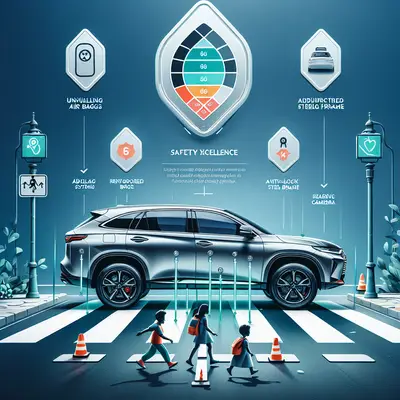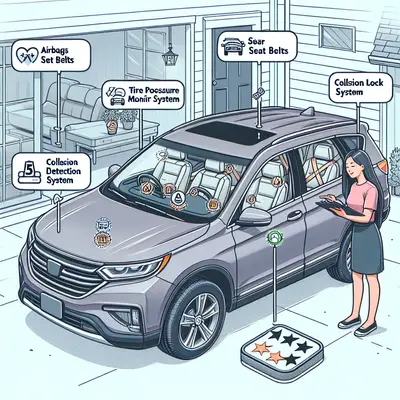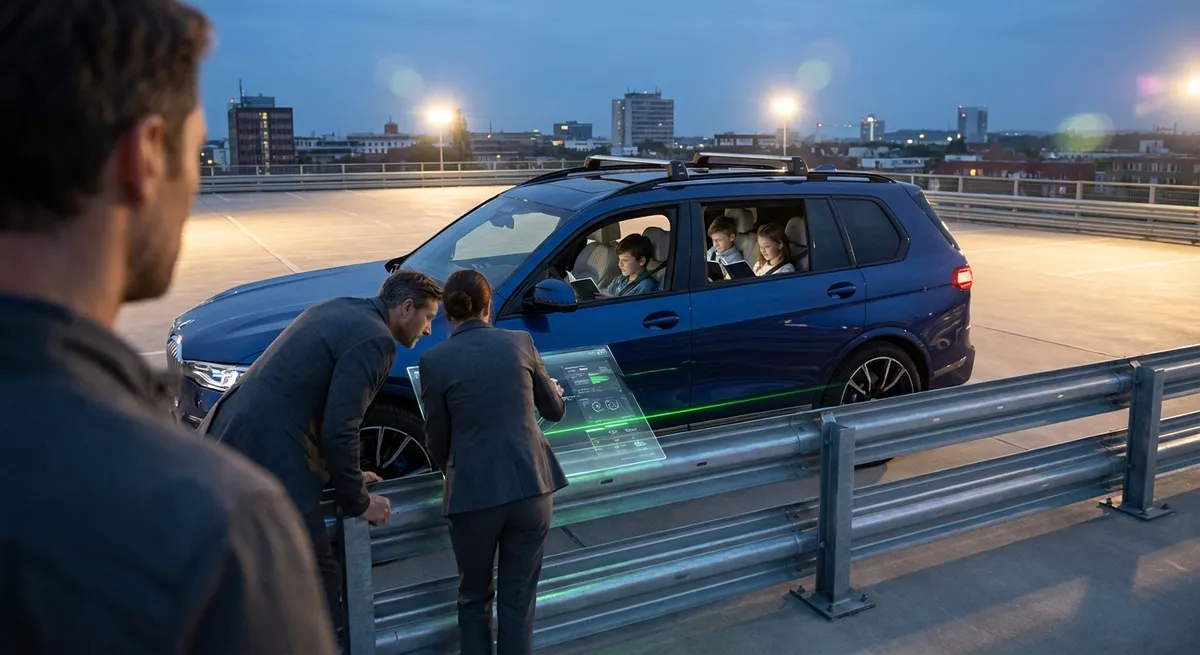
For families who expect more than a passing grade on a crash test chart, safety ratings are no longer just a box to tick—they are a quiet form of insurance on every school run, late‑night airport pickup, and weekend escape. Yet the way those ratings are presented can be deceptively simple: stars, scores, acronyms. Beneath the clean numbers lies a nuanced story about engineering priorities, cabin design, and how well a vehicle anticipates human error. This is where discerning families gain an advantage—by reading the ratings not as marketing, but as architecture for real‑world protection.
How to Read “Top Safety” Labels Without Being Misled
Many SUVs now wear “Top Safety” accolades as confidently as a luxury timepiece, but the headline alone rarely tells the full story. The Insurance Institute for Highway Safety (IIHS) and the National Highway Traffic Safety Administration (NHTSA) evaluate vehicles using different crash tests, thresholds, and scoring philosophies. A model that appears flawless under one protocol may reveal small but meaningful compromises under the other.
For a family buyer, the critical step is to look beyond the award banner. Examine individual ratings for small overlap front, side impact, roof strength, and head restraints rather than relying exclusively on the combined score. A five‑star overall NHTSA rating, for example, can coexist with a less flattering rating in a specific area that may matter more in dense urban traffic or on narrow two‑lane roads. Treat the “Top Safety Pick” or five‑star badge as an invitation to investigate—not as the conclusion.
Exclusive Insight #1: Side-Impact Scores Reveal More About Your Neighbors Than You
While front crash tests often dominate the spotlight, side‑impact ratings quietly describe how your SUV behaves when someone else makes a mistake. Modern side impacts often involve cross‑traffic at intersections, distracted drivers running lights, or vehicles approaching from blind angles—exactly where families are most vulnerable.
A strong side‑impact rating reflects more than robust door beams; it signals careful tuning of curtain airbags, seat structures, and how well the cabin preserves space around occupants’ heads and torsos. For families who regularly navigate busy school zones, urban grids, or multi‑lane roundabouts, side‑impact performance can be more predictive of real‑world outcomes than the more publicized frontal tests. When comparing SUVs, prioritize models that pair high side‑impact ratings with generous glazing and excellent outward visibility; collective awareness—both structural and visual—is a quiet luxury.
Exclusive Insight #2: Roof Strength Is a Proxy for Structural Integrity, Not Just Rollovers
Roof strength ratings are often associated with dramatic rollover events, but their value extends far beyond that scenario. The test essentially measures how well the upper structure resists crushing when a force is applied—an elegant, technical way of asking how carefully the body shell has been engineered.
A strong roof rating correlates with a more rigid passenger cell overall. That stiffness benefits not only rollover protection but also helps the vehicle better manage forces in oblique and multi‑vehicle crashes, where the direction of impact can be unpredictable. Families who favor three-row SUVs, taller crossovers, or models with large panoramic roofs should pay particular attention here. If a vehicle pairs a panoramic glass roof with top‑tier roof strength ratings, that is a strong signal of careful design rather than simple aesthetic excess.
Exclusive Insight #3: Advanced Driver Assistance Scores Tell You How a Vehicle “Thinks”
Crash tests describe how a vehicle behaves once an impact is unavoidable. Advanced driver assistance evaluations, by contrast, describe how the vehicle helps avoid the impact altogether. IIHS ratings for front crash prevention—both vehicle‑to‑vehicle and vehicle‑to‑pedestrian—are increasingly revealing, especially for families moving through busy neighborhoods, school car lines, and evening crosswalks.
Look for systems that earn superior or advanced scores in multiple scenarios, including low‑speed stops, higher‑speed approaches, and pedestrian detection in both daylight and low light. A sophisticated SUV will quietly intervene with smooth braking, subtle steering support, and clear alerts without feeling intrusive. When shopping, do not simply verify the presence of acronyms like AEB (automatic emergency braking) or LKA (lane‑keeping assist); instead, confirm whether the exact configuration you are considering has been tested and rated, and whether those systems are standard across trims or tied to a particular package.
Exclusive Insight #4: Child Seat and LATCH Ratings Are the True Family Litmus Test
For families with infants, toddlers, or young children, crash scores alone are only part of the safety portrait. How easily and securely a child seat can be installed is equally critical—an area where many otherwise excellent SUVs quietly underperform. IIHS provides ease‑of‑use ratings for LATCH (Lower Anchors and Tethers for Children) systems, assessing factors such as anchor placement, depth, and how free they are from interference by seat cushions or decorative elements.
A premium family experience is one in which installing a child seat does not require contortionist skills or guesswork. Favor SUVs with clearly visible anchors, minimal seatbelt tangling, and generous access in second and third rows. If an SUV offers three‑row seating, investigate whether the third row accommodates child seats safely and practically. In many models, the second row is well‑designed but the third row is an afterthought—perfectly acceptable for occasional adult use, but less so for a properly secured child seat on a daily commute.
Exclusive Insight #5: Nighttime Headlight Ratings Are Quietly Transformative
Headlights rarely feature in glossy brochures, yet they play a decisive role in real‑world safety—especially for families returning from evening activities, weekend getaways, or holiday visits. IIHS now rates headlight performance, including illumination distance and glare control for oncoming drivers, and those results often vary dramatically across trim levels of the same SUV.
For a family buyer, this nuance matters. A base or mid‑level trim may carry average headlight ratings, while a higher‑spec model with adaptive LED or matrix lighting earns top marks. Poor headlights shorten your preview of the road, compressing reaction time when a pedestrian steps off a curb or an animal crosses a rural lane; refined lighting restores that vital buffer. Before finalizing a purchase, confirm which headlight configuration is on the exact trim you are considering and whether adaptive features—such as automatic high beams or curve‑following lamps—are included. In night driving, those details feel less like features and more like composure.
Blending Test Data with Everyday Reality
Safety ratings are, by nature, controlled snapshots. They are indispensable, yet they cannot capture the full tapestry of daily life: a rushed morning, a spilled drink, an anxious teen behind the wheel, a surprise storm on a long drive. To choose wisely, families should use ratings as a foundation, then layer on their own realities—how often they drive at night, how frequently the third row is occupied, how comfortable they are with driver assistance technologies.
Look for an SUV whose safety story hangs together coherently: a rigid structure, excellent side and roof performance, thoughtful child‑seat usability, sophisticated collision avoidance, and headlight performance that honors night‑time visibility. When those pieces align, safety ceases to be a standout feature and becomes something far more valuable: an understated confidence that quietly supports every mile together.
Sources
- IIHS Vehicle Ratings - Official crash test, headlight, and LATCH ratings from the Insurance Institute for Highway Safety
- NHTSA 5-Star Safety Ratings - U.S. government safety ratings, including frontal, side, and rollover tests
- NHTSA Child Safety Seat Information - Guidance and regulations on proper child seat use and installation
- IIHS Front Crash Prevention Evaluations - Detailed explanations of how automatic emergency braking and related systems are tested
- CDC Motor Vehicle Safety - Research-backed context on crash risks and protective factors for families
Key Takeaway
The most important thing to remember from this article is that this information can change how you think about Safety Ratings.