Choosing a family SUV is no longer about simply passing crash tests—it’s about understanding how a vehicle protects the people who matter most, in the moments that matter least. Safety ratings can look reassuringly numerical and objective, yet the nuance behind those scores is where thoughtful families gain a real advantage. For parents who prefer quiet assurance over marketing gloss, reading safety data with a refined, critical eye can transform an overwhelming decision into a quietly confident one.
Below, we explore how to interpret safety ratings with sophistication—and share five exclusive insights that families shopping for SUVs will genuinely appreciate.
Moving Beyond the Overall Score
Most families first encounter safety data in the form of a single, polished number or letter grade—“5 stars,” “Top Safety Pick+,” “Good” or “Acceptable.” While these summaries are useful, they’re the equivalent of judging a novel by its cover art.
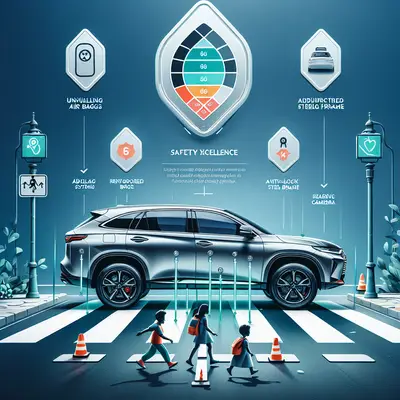
A discerning approach starts by separating overall results from specific tests. Look closely at how a vehicle performs in distinct crash scenarios: frontal, side, rear, and especially the more modern small-overlap or moderate-overlap frontal tests. These simulate real-world crashes in which only part of the front end strikes another vehicle or object—exactly the kind of uneven impact that can severely challenge structural integrity.
Families should also pay attention to injury measures by seating position. Some SUVs perform brilliantly for the driver but show weaker results for front passengers or rear-seat occupants. An elegant, well-considered choice looks for consistency: protection that is strong and balanced across every row, not just the front seats. That kind of even performance is often a hallmark of deeper engineering quality rather than surface-level fine-tuning for tests.
Insight 1: Rear-Seat Safety Is the Quiet Benchmark of a Truly Family-Centric SUV
In many ratings, the spotlight falls squarely on the driver and front passenger. Yet for a family SUV, the second and third rows are where your most precious passengers usually ride. Rear-seat safety has become a sophisticated differentiator, and it’s where the most family-focused engineering quietly appears.
Modern test programs increasingly evaluate rear occupant injury metrics, seatbelt performance, and head restraint design. Look for vehicles where rear-seat crash test data, when available, is called out as a strength—especially in newer frontal tests that now measure rear passenger protection, not just the front. Pay close attention to comments about chest and head injury risk in the second row.
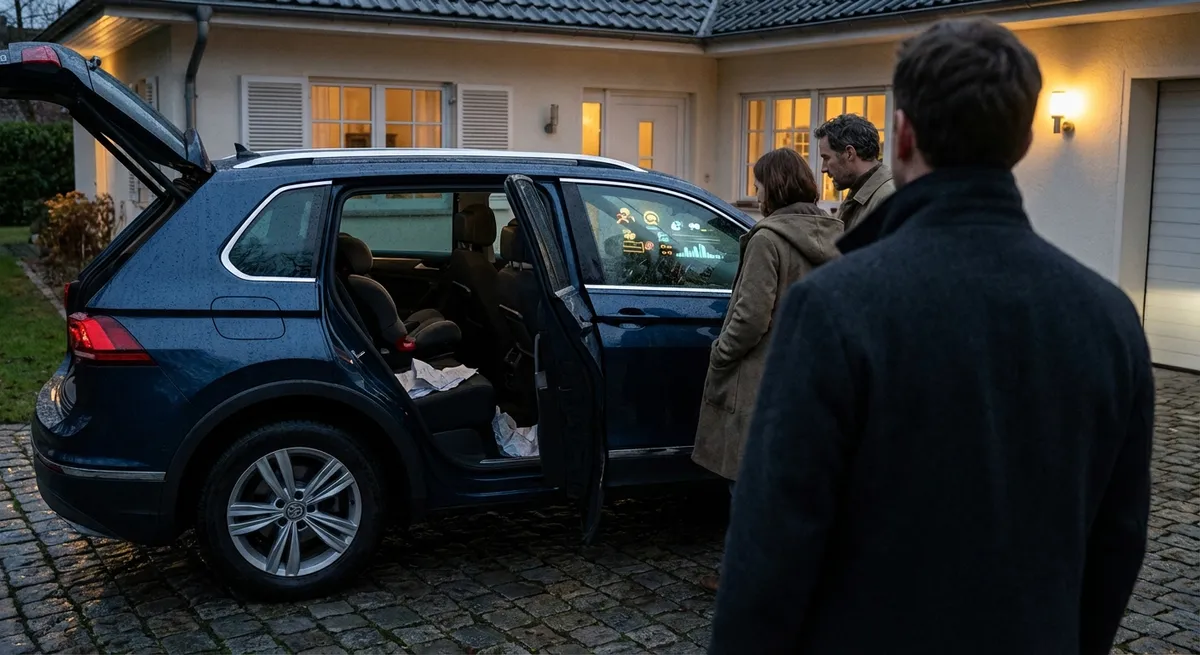
For families using child seats, the sophistication extends further. Strong rear safety isn’t just about impact performance; it’s about how securely and easily restraints can be installed. High-quality SUVs often feature clearly marked, accessible LATCH anchors, ample door openings, and thoughtfully shaped cushions that allow both a snug child-seat fit and comfortable seating for older children. If a safety rating report or independent review highlights rear-seat geometry and child-seat compatibility as a strength, that’s a quiet but powerful signal that the vehicle was designed with real families in mind.
Insight 2: Active Safety Systems Matter Most Before the Crash
Traditional safety scores focus on how well a vehicle protects occupants once a collision is underway. However, the most sophisticated family SUVs now place equal emphasis on preventing the crash entirely through advanced driver assistance systems (ADAS).
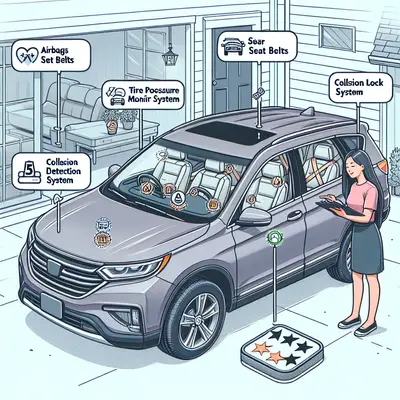
Pay careful attention to the vehicle’s ratings for technologies such as automatic emergency braking (AEB), lane-keeping assistance, blind-spot monitoring, and rear cross-traffic alert. Not all systems are created equal; independent testing organizations often rate these technologies based on how effectively they mitigate or avoid collisions with other vehicles, pedestrians, or cyclists.
Families should look for vehicles that achieve top marks in forward collision prevention tests, particularly those that evaluate performance at both city and highway speeds. Consider whether the safety suite comes standard across all trims or is confined to higher-priced variants—a subtle yet telling detail about the brand’s priorities. An SUV that quietly offers its full safety technology range without requiring a premium package often reflects a more deeply held safety philosophy, not mere feature packaging.
Insight 3: Headlights and Nighttime Safety Are the Understated Luxury You Need
Night driving is when fatigue meets reduced visibility—the very conditions in which families are often on the move after a long day, returning from activities, or driving home from trips. Headlight performance, long considered a secondary detail, has now emerged as a core component of sophisticated safety evaluations.
Many rating agencies now assign specific grades to headlight systems, taking into account lighting distance, glare for oncoming drivers, and performance on curves. For family SUVs, this matters more than most owners realize. Strong headlight ratings can significantly lower the risk of nighttime crashes, especially on unlit roads or in suburban neighborhoods where pedestrians and animals can appear suddenly.
Seek out vehicles where the standard headlights—rather than only optional premium units—earn high marks. Adaptive headlights that pivot into corners, automatic high beams that intelligently adjust to traffic, and well-calibrated LED beams are more than comfort features; they’re active safety tools. In practical terms, that means less strain for the driver, more time to react, and a driving experience that feels both more relaxed and more controlled, especially on late-evening journeys with sleeping children in the back.
Insight 4: Structural Integrity and Weight Balance—Why “Solid” Feels Safe
Many families associate safety with size and weight alone, assuming that “bigger must be safer.” While size and mass can offer advantages in multi-vehicle collisions, the modern safety conversation is far more nuanced, particularly with SUVs of varying footprints and powertrains.
What you want to see in safety reports is clear evidence of strong occupant compartment integrity: comments noting limited intrusion in crash tests, stable safety cages, and well-managed energy absorption. When a vehicle’s structure remains stable in small-overlap or side-impact tests, crash forces are directed around occupants rather than through them, allowing airbags and seatbelts to work as intended.
Additionally, families considering hybrid or electric SUVs should scrutinize testing feedback for battery protection and underbody strength. A well-engineered electrified SUV will show careful containment of the high-voltage battery pack and minimal intrusion into the footwell and cabin in severe impacts. That kind of structural sophistication often translates into a “solid,” planted feeling on the road—less body flex, more composure over rough surfaces, and a sense of poised control that subtly reassures the driver every time the family is on board.
Insight 5: Safety Ratings Age—Here’s How to Shop the Model Year with Intention
A 5-star SUV from several years ago is not automatically equivalent to a 5-star SUV tested more recently. Test protocols evolve, thresholds tighten, and new assessments—such as updated side-impact tests or expanded evaluations for pedestrian safety—raise the bar. For families shopping both new and nearly new SUVs, understanding the timing of a rating is an underappreciated advantage.
When reviewing safety data, note the model year tested and whether the vehicle has undergone significant redesigns or structural updates since then. Some organizations clearly label when a test protocol has changed, meaning a newer rating may be more stringent than an older one, even if they appear similar at a glance. This becomes particularly important when comparing a brand-new model to a previous-generation used or certified-pre-owned alternative.
Also, pay attention to mid-cycle updates that focus specifically on safety. Subtle changes—reinforced pillars, improved seatbelts, added airbags, recalibrated ADAS—might be reflected in updated crash test results or in improved performance for certain tests. For a family that values both value and protection, choosing the right model year can deliver a high level of safety at a more accessible price, without compromising on the quiet reassurance that comes from up-to-date engineering.
Bringing It All Together: Choosing Safety with Poise, Not Panic
Safety ratings were designed to simplify decision-making, but for thoughtful families, they can become a refined tool rather than just a checklist. By looking beyond the headline score—focusing on rear-seat protection, active safety systems, headlight performance, structural integrity, and the evolution of test protocols over time—you move from passive reassurance to informed confidence.
The most compelling family SUVs are those that feel composed in motion and carefully considered in design, where engineering attention extends gracefully from the driver’s seat to the third row. When you read safety ratings through this more nuanced lens, you’re not just buying a vehicle with good numbers; you’re selecting a calm, protective environment in which your family will spend thousands of hours together.
That quiet understanding—rooted in data, refined by discernment—is the true luxury in family SUV safety.
Sources
- [National Highway Traffic Safety Administration (NHTSA) 5-Star Safety Ratings](https://www.nhtsa.gov/ratings) - Official U.S. government crash test and safety ratings, including frontal, side, and rollover evaluations
- [Insurance Institute for Highway Safety (IIHS) Ratings](https://www.iihs.org/ratings) - Detailed crash test results, headlight evaluations, and driver-assistance system performance data
- [IIHS: Rear-Seat Safety in Modern Vehicles](https://www.iihs.org/news/detail/rear-seat-passenger-safety-lagging-behind-front) - Explains how rear-seat safety has evolved and why newer tests increasingly focus on rear occupants
- [IIHS: Headlight Ratings and Nighttime Safety](https://www.iihs.org/topics/headlights) - Describes how headlight performance is tested and why it matters for crash risk after dark
- [NHTSA: Advanced Driver Assistance Systems](https://www.nhtsa.gov/vehicle-safety/advanced-driver-assistance-systems) - Overview of ADAS features such as AEB and lane-keeping, and their role in crash avoidance
Key Takeaway
The most important thing to remember from this article is that this information can change how you think about Safety Ratings.