Safety ratings are often treated as a box to tick: five stars, a quick nod of approval, and on to the color palette. Yet for families who notice the details—the way a vehicle shields, anticipates, and responds—those ratings can become something more refined: a language of protection, nuance, and thoughtful engineering.
This piece reinterprets safety ratings not as a score, but as a set of quiet assurances. Below are five exclusive, often-overlooked insights that help discerning families read beyond the headline and understand what those numbers truly mean for real life in an SUV.
1. How and Where Your SUV Protects You Matters More Than the Overall Score
A five-star overall rating is reassuring, but it compresses an extraordinary amount of nuance into a single number. For a family SUV, which test earned that score—and where protection is strongest—can matter more than the headline result.
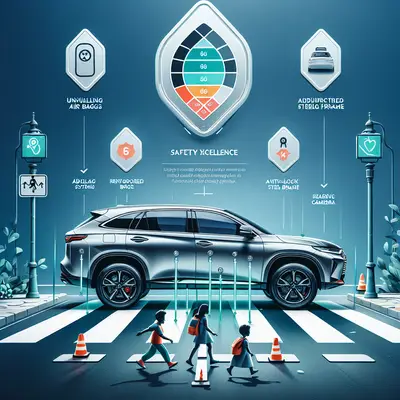
Look closely at how an SUV performs in specific crash scenarios most relevant to family use. For example, frontal offset or small overlap tests highlight how well the vehicle protects the driver and front passenger in more realistic, partial-impact collisions, rather than perfectly centered impacts. Side-impact and side pole tests reveal how a model handles cross-traffic at intersections or impacts with fixed objects—both very real risks in school zones, driveways, and urban errands.
A sophisticated approach is to think of the SUV’s structure as a tailored suit of armor: Is the cabin’s integrity preserved in multiple directions? Does the roof strength rating suggest confidence in a rollover? Does the vehicle maintain survivable space across different impact points? Instead of chasing the highest single score, focus on the consistency of strong performance across all major tests. A truly family-focused SUV will feel secure from every angle, not just one.
2. Advanced Driver Assistance Ratings Hint at the SUV’s “Personality”
Crash-test scores show how well an SUV protects you after something has gone wrong. Advanced driver assistance system (ADAS) ratings hint at how actively the vehicle works to keep trouble at arm’s length.
Systems such as automatic emergency braking, pedestrian and cyclist detection, lane-keeping assistance, and blind-spot monitoring are now evaluated with increasing sophistication by safety organizations. It’s tempting to see these features as interchangeable, but the way they behave from brand to brand is quietly revealing.
Some SUVs intervene early, gently nudging you back toward center when you drift; others remain more reserved, only stepping in during a clear error. The quality of tuning affects how natural the vehicle feels on daily drives—particularly when you have children on board and prefer a calm cabin to abrupt corrections. High marks for crash prevention technology often signal that the manufacturer has invested not only in hardware, but also in refined calibration that minimizes false alarms, jerky inputs, and driver fatigue.
When browsing safety ratings, look for distinctions between “basic,” “advanced,” and “superior” for crash avoidance systems. Then, during your test drive, pay close attention to how those technologies feel in real use: quiet confidence is the true luxury here.
3. Child-Seat Friendliness Is a Safety Metric Hiding in Plain Sight
For families, child-seat ease-of-use is not merely a convenience; it is a safety variable. Poorly installed car seats, awkward belt paths, and hard-to-access LATCH anchors can quietly undermine even the most impressive crash-test scores.
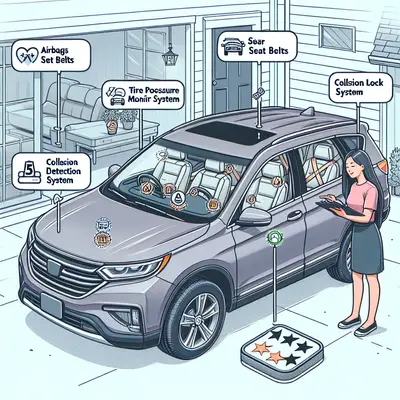
Some safety organizations now evaluate child-seat compatibility and LATCH usability in a structured way. They consider how easily anchors can be found and used, whether there is enough space to accommodate various seat sizes, and how intuitive the process is for parents and caregivers. An SUV can be structurally outstanding yet frustratingly impractical when you are wrestling with a rear-facing infant seat or three across the second row.
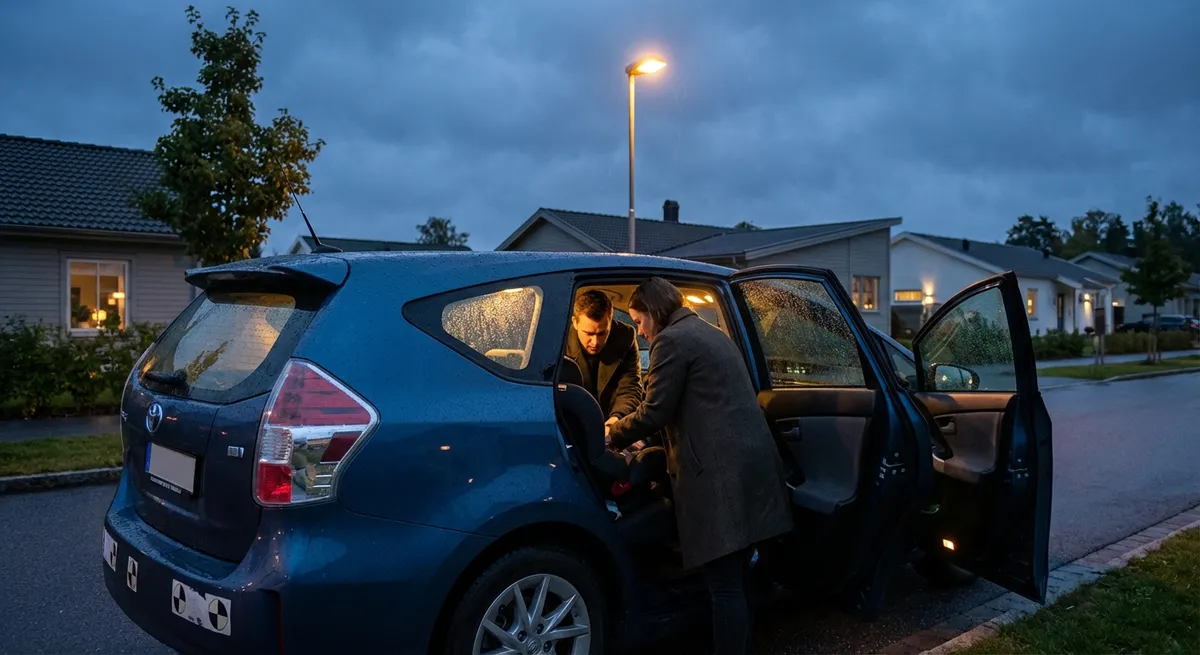
Seek models that earn favorable assessments for LATCH access and child-seat fit, and then personally confirm what those ratings suggest. Bring your actual seats to the test drive if possible. Is there space to adjust the front passenger seat comfortably with a rear-facing base behind it? Can grandparents operate the buckles without a tutorial? The most elegant safety is the kind that integrates seamlessly into the rhythm of family life.
4. Headlights and Nighttime Safety: The Subtle Metric That Changes Everything
Headlight performance remains one of the most undervalued aspects of SUV safety. Many ratings systems now assess headlight quality—measuring how far the light reaches, how evenly it illuminates the road, and whether it creates distracting glare for other drivers. For families traveling at dusk to after-school practices, late flights, or weekend getaways, this quiet metric can be transformative.
Superior headlights extend your reaction window. Better visibility means more time to notice a cyclist edging out between parked cars, a pet darting across a residential street, or a curve approaching faster than expected on an unfamiliar road. Poor or uneven lighting, even on a structurally safe vehicle, can make the road feel narrower, the drive more tiring, and night trips subtly more stressful.
When comparing SUVs, look for models that earn high marks for headlight performance—and confirm that the trim level and lighting package you choose match those tested lights. Then, during a test drive, schedule a brief evening route if possible. Observe not just brightness, but clarity: Is the light crisp, well-shaped, and confidence-inspiring, or hazy and fatiguing? Nighttime peace of mind is one of the most refined safety luxuries you can give your family.
5. Consistency Across Model Years Is the Quiet Mark of a Trustworthy Design
It is easy to focus solely on the most recent test results and model-year updates. Yet one of the most revealing signs of genuine safety excellence is consistency over time. Vehicles that maintain high ratings across several years and through stricter testing protocols reflect a philosophy of continuous, safety-first engineering rather than one-off compliance.
Safety organizations often upgrade their tests—making them more demanding or adding new evaluations for advanced driver assistance, pedestrian protection, and crash compatibility with larger vehicles. Watch how a particular SUV responds to these evolving standards. Does it retain strong scores? Does the automaker proactively update structure, airbags, and software to meet new benchmarks, or does performance plateau?
For families, this longevity signals something important: that the safety story of the vehicle is not an advertising moment, but an underlying commitment. Whether you intend to keep your SUV for many years or anticipate reselling it, a model with a stable history of excellence—and demonstrable adaptation to stricter tests—offers a quieter form of reassurance. You are not just buying today’s rating; you are investing in a platform and philosophy that have already been tested by time.
Conclusion
Safety ratings, when viewed with discernment, become more than a set of stars or letters; they form a layered portrait of how your future SUV will behave in the moments that matter most.
By looking beyond the overall score—scrutinizing structural performance from every angle, understanding the “personality” of advanced driver assistance systems, confirming child-seat compatibility, prioritizing headlight quality, and valuing consistency across model years—you begin to choose not just a safer vehicle, but a calmer daily experience for your family.
In the end, true safety for a family SUV is not simply surviving the unexpected; it is quietly, elegantly reducing the likelihood that the unexpected ever reaches your front seats at all.
Sources
- [National Highway Traffic Safety Administration (NHTSA) 5-Star Safety Ratings](https://www.nhtsa.gov/ratings) - Official U.S. government crash-test results and explanations of individual test types and overall scores
- [Insurance Institute for Highway Safety (IIHS) Ratings](https://www.iihs.org/ratings) - Detailed crashworthiness, crash avoidance, headlight, and LATCH usability evaluations for SUVs and other vehicles
- [IIHS: A Closer Look at Child Seat Anchors](https://www.iihs.org/news/detail/new-ratings-program-evaluates-ease-of-use-of-latch) - Explanation of how child-seat (LATCH) usability is assessed and why it matters for real-world safety
- [IIHS: Headlight Ratings and Nighttime Visibility](https://www.iihs.org/news/detail/new-iihs-headlight-ratings-show-most-need-improvement) - Insight into how headlight performance affects crash risk after dark
- [NHTSA: Safety Technologies and Driver Assistance](https://www.nhtsa.gov/equipment/driver-assistance-technologies) - Overview of advanced driver assistance systems and their role in preventing or mitigating crashes
Key Takeaway
The most important thing to remember from this article is that this information can change how you think about Safety Ratings.