Selecting a family SUV today means navigating a sea of stars, scores, and acronyms. On paper, many vehicles look nearly identical: top marks from major testing agencies, polished marketing claims, and glossy safety brochures. Yet for families who value not only protection in a crash, but also grace in everyday driving, the difference between “safe enough” and genuinely confidence‑inspiring can be subtle. Safety ratings are a crucial starting point—but they are not the whole story.
This is where the discerning parent looks more closely. Behind each rating lies a philosophy of engineering, a series of design decisions, and a particular way the vehicle behaves when real life intrudes—an unexpected lane drift, black ice on a school run, or a distracted driver at a busy intersection. The most reassuring SUVs blend robust test performance with sophisticated, almost invisible support that allows your family to move through the world with quiet assurance.
Below are five exclusive, often-overlooked insights that elevate safety ratings from abstract numbers to something deeply practical—and profoundly personal.
1. The Character of a Crash Test: How Your SUV Protects Every Seat, Not Just the Driver
Most buyers glance at the headline rating—five stars, “Top Safety Pick,” “Good”—and stop there. A more refined approach is to consider which tests were performed, and where your passengers actually sit. Not all five‑star vehicles protect all occupants equally, and the nuances are especially important for families with rear‑seat passengers and child seats.
Look for ratings that break down performance by seating position and test type. The Insurance Institute for Highway Safety (IIHS) has increasingly focused on rear‑seat occupant protection, acknowledging that children and teenagers are more likely to ride in the back. Their updated moderate overlap front test, for example, evaluates how well a vehicle protects rear occupants, not just those in the front row. Similarly, check side-impact assessments, paying attention to the injury measures and intrusion levels in the second row.
Luxury-leaning family SUVs often distinguish themselves not only by using high‑strength steels and advanced crumple structures, but also by carefully sculpting the cabin layout—seat geometry, belt anchorage points, and side curtain airbag coverage—to keep every passenger in the best possible position during a crash. Safety ratings become far more meaningful when you view them through the lens of who will sit where, rather than as a single score that supposedly covers everyone.
2. The Quiet Power of Structure: What the Rating Hints at—but Doesn’t Fully Reveal
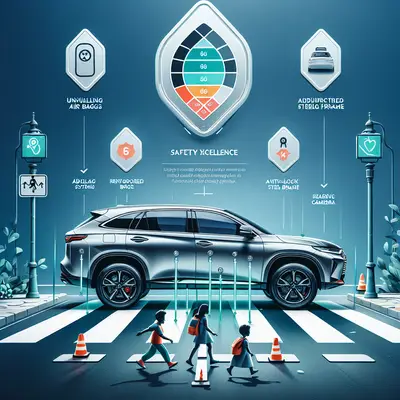
A rating tells you how a vehicle performed in a controlled test; it doesn’t fully explain why. For families aiming beyond mere compliance, the underlying structure matters as much as the score. The way an SUV’s body is engineered determines how it channels crash forces around the passenger cell, how gracefully it absorbs energy, and how it maintains integrity in diverse real‑world situations.
Modern safety reports often reference “high‑strength steel,” “ultra‑high‑strength steel,” or “advanced body structures.” Seek out automakers that provide at least some transparency about the composition of their safety cage and load paths, particularly around the A‑ and B‑pillars, roof rails, and floorpan. An SUV with exemplary roof strength test results, for instance, offers extra reassurance in a rollover—still a concern for taller vehicles—while robust small overlap front protection suggests thoughtful engineering for oblique, real‑world frontal impacts.
The most sophisticated family SUVs blend structural fortitude with refinement: added rigidity can improve both crash performance and ride quality, reducing vibrations that fatigue passengers on longer trips. When you see top crash scores combined with strong roof crush ratings and low cabin intrusion measurements, you’re observing the signature of a well‑resolved structure—one that quietly underpins every mile you drive with your family.
3. Advanced Driver Assistance Systems: Calibration, Not Just Checkboxes
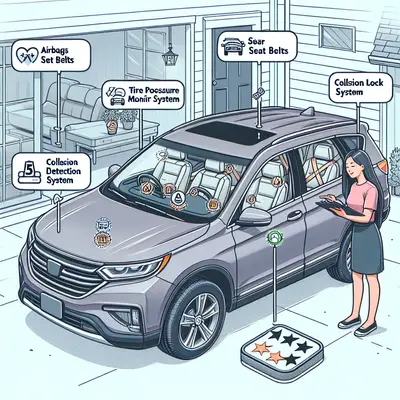
Today, many SUVs offer similar suites of advanced driver assistance systems (ADAS): automatic emergency braking, lane-keeping, adaptive cruise, blind-spot monitoring, and more. Safety ratings are increasingly incorporating assessments of front crash prevention performance, pedestrian detection, and lane support. Yet what truly separates an exceptional family SUV is not the existence of these features, but the quality of their calibration.
In practice, this means paying attention to how early, how smoothly, and how consistently these systems intervene. The best implementations feel almost intuitive—warning gently but decisively, providing subtle steering assistance to keep you centered, or applying just enough brake pressure to avoid a collision without causing a jarring stop. Some rating organizations now publish results for pedestrian and cyclist detection, especially in low‑light conditions, an essential consideration for families navigating busy urban or suburban streets.
During your test drive, engage these systems in realistic scenarios. Does lane-keeping gently guide you, or ping‑pong you between lane markings? Does adaptive cruise handle stop‑and‑go traffic with composure, or lurch forward and back? The sophistication of these systems can significantly influence everyday safety, reducing fatigue on long journeys and providing critical backup in moments of distraction. A family SUV that pairs strong crash scores with well‑tuned, confidence‑inspiring ADAS represents a more complete expression of safety than scores alone can convey.
4. Child-Centric Safety: Reading Ratings Through the Eyes of a Car Seat
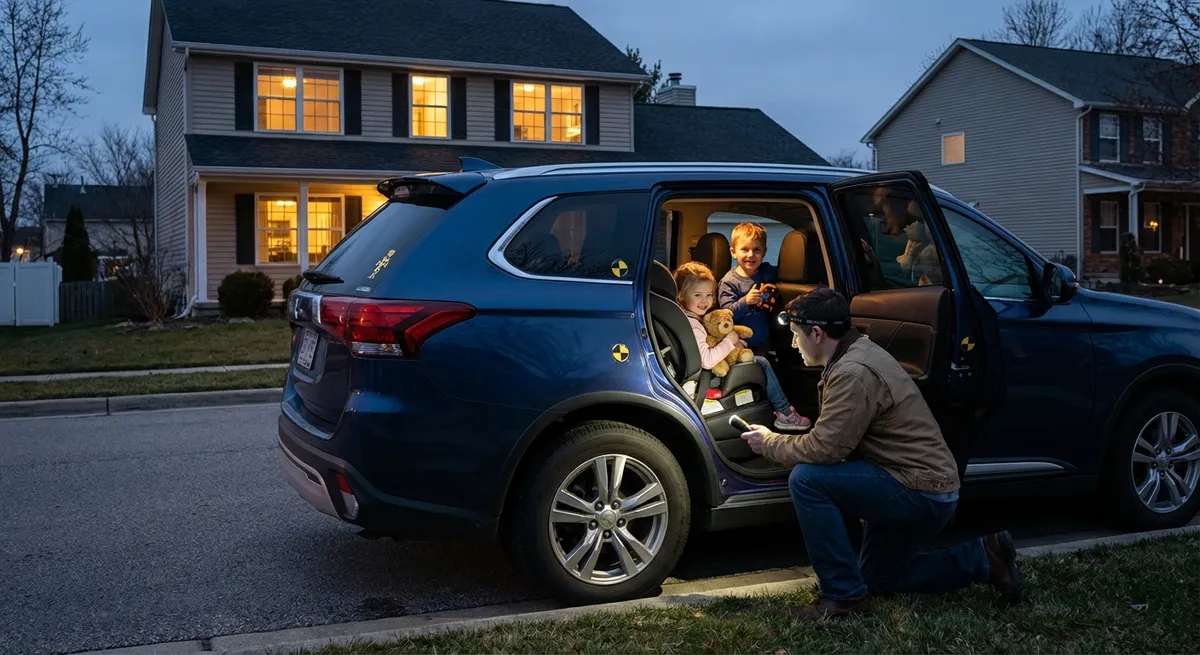
For families with young children, safety ratings intersect with a more granular reality: car seats, boosters, and the rituals of buckling in. Many SUVs tout LATCH anchors and rear side airbags, but the real luxury is a cabin that makes safe installation intuitive and repeatable. Some testing bodies, including IIHS, now provide child seat anchorage evaluations that go beyond simply counting the number of points.
Look for assessments of tether anchor accessibility, LATCH depth, and adjacent seat interference. Vehicles that earn higher marks in these detailed evaluations tend to make car seat installation less of an ordeal, reducing the chance of misuse—a vital point, given that research consistently shows many child restraints are not installed exactly as intended. Also consider how easily older children can buckle themselves; belt receptacle accessibility and seat contouring play a subtle but important role in everyday safety.
An SUV that supports proper child-seat use aligns its structure, restraint systems, and cabin layout with real family life. This might include rear-seatbelt reminders for all positions, tailored airbag deployment strategies for smaller occupants, and clear guidance on where rear-facing seats may be safely installed. When you combine robust crash scores with thoughtful child occupant design and favorable anchor ratings, you are looking at a vehicle that treats child safety as an integrated priority, not a postscript.
5. Safety in the Spaces Between Crashes: Visibility, Lighting, and Driver Poise
The most meaningful aspects of safety often happen quietly, in moments that never make it into a data table. Safety ratings focus largely on crashworthiness and crash avoidance systems, but the day‑to‑day experience of driving with your family is shaped by broader qualities: outward visibility, lighting excellence, handling composure, and ergonomic clarity.
High‑quality headlight performance, for example, is no longer a trivial detail. IIHS now rates headlights, and the difference between poor and good illumination can be the difference between spotting a pedestrian in time or not. Pay attention not only to the presence of LED or adaptive headlights, but also to independent evaluations of their reach, glare, and curve-following ability.
Similarly, an SUV that feels poised and predictable in emergency maneuvers—supported by well‑tuned stability control, balanced steering, and progressive braking—helps you avoid relying on passive crash structures in the first place. Large windows, restrained pillar thickness where possible, and thoughtfully positioned mirrors reduce blind spots, easing lane changes and parking lot maneuvers with children on board. Intuitive, uncluttered controls help you keep your eyes on the road instead of searching through menus. These are the subtle, almost architectural aspects of safety: they shape how serenely, and how attentively, you can drive.
When you interpret safety ratings through this wider lens, you begin to see them as part of a broader narrative—one in which the safest family SUVs are those that protect you before, during, and after the unexpected.
Conclusion
Safety ratings remain a powerful tool for families choosing an SUV, but they are most valuable when treated as an elegant starting point rather than a final verdict. By looking beyond the headline scores—considering how each seat is protected, how the structure behaves, how assistance systems are tuned, how child seats integrate, and how confidently you can see and be seen—you assemble a far richer picture of real‑world safety.
For families who prize both refinement and reassurance, the goal is not simply to own an SUV that scores well, but to live with one that behaves safely in every dimension. The most compelling choices pair exemplary test performance with nuanced engineering and quietly intelligent features that support your family on every school run, weekend escape, and late‑night drive home. In that union of numbers and nuance, the modern family SUV becomes more than transportation—it becomes a carefully considered companion in the background of your most important journeys.
Sources
- Insurance Institute for Highway Safety (IIHS) – Vehicle Ratings - Detailed crash test, headlight, and child seat anchor ratings, including updated tests for rear-seat occupants
- National Highway Traffic Safety Administration (NHTSA) – 5-Star Safety Ratings - U.S. government crash test results, rollover resistance data, and safety recall information
- Euro NCAP – Safety Assist and Child Occupant Protection - Explains how active safety and child protection are evaluated in European testing
- Centers for Disease Control and Prevention (CDC) – Child Passenger Safety - Research and guidance on proper child restraint use and its impact on injury outcomes
- National Safety Council – Advanced Driver Assistance Systems - Overview of common ADAS features, how they work, and how they contribute to crash avoidance
Key Takeaway
The most important thing to remember from this article is that this information can change how you think about Safety Ratings.