For families, safety ratings are more than numbers on a window sticker—they are quiet promises. Yet in a marketplace saturated with acronyms and test scores, it becomes surprisingly easy to confuse marketing gloss with meaningful protection. The most discerning buyers look beyond a five-star badge to understand how an SUV will behave in real, imperfect moments: a distracted driver, a dark intersection, an icy merge.
This guide explores how to move past surface-level ratings and into the refined details that actually shape how well an SUV can protect your family. Along the way, you’ll find five exclusive insights that help you distinguish between “technically safe” and “thoughtfully engineered for safety.”
Why Safety Ratings Are Only the Beginning
Modern SUVs often arrive with an impressive constellation of stars, Top Safety Pick awards, and glowing blurbs. These are valuable indicators, but they are not the entire story.
Laboratory crash tests, by design, are controlled. They standardize speed, angles, and conditions so vehicles can be compared fairly. Yet real life is not standardized: impact angles vary, loads differ, and occupants range from infants in rear-facing seats to grandparents with more fragile physiology. A rating can tell you how the SUV behaves in a specific test, but not how it supports the diverse realities of a family’s daily life.
Premium family safety emerges where engineering, restraint systems, driver assistance, and cabin design are orchestrated together. The distinction is subtle, but vital: one SUV may technically “pass” the same test as another, yet provide calmer control, better post-crash survivability, or smarter driver warnings that help you avoid the crash altogether. A sophisticated approach to safety looks at how all of these elements interact—not simply which badge appears on the brochure.
Exclusive Insight 1: The Geometry of Protection Matters More Than the Badge
Families often fixate on overall crash scores, but the underlying structure—and how it manages energy—is where the real artistry lives.
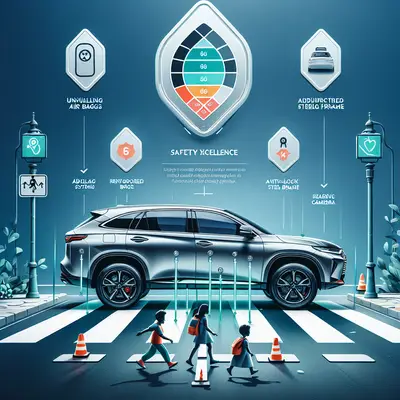
Modern SUVs use carefully tuned crumple zones and ultra-high-strength steel in critical areas to channel crash forces away from the passenger cell. However, the magic is in the geometry: how the front subframe deforms, how side structures are reinforced, and how load paths redirect force around the cabin instead of through it. Two SUVs with similar ratings can feel very different in their engineering ambition.
Subtle indicators of structural excellence include:
- Strong small-overlap performance: These tests simulate clipping a tree, pole, or the corner of another vehicle—unfortunately common in real-world crashes. SUVs that excel here have more sophisticated front-end engineering, not just thicker metal.
- Minimal cabin intrusion measurements: Look beyond the overall rating to assessments of how far pedals, A-pillars, and door frames move during impact. Less intrusion usually translates to a better survival space for legs, hips, and chest.
- Roof strength and rollover performance: For taller SUVs, roof strength in rollover scenarios is critical. A robust roof structure preserves the “living space” if the vehicle ends up on its side or roof, especially important with third-row passengers.
When comparing safety documents or independent test results, focus on cabin deformation, roof crush resistance, and small-overlap outcomes as much as the overall score. These silent metrics often reveal the difference between merely adequate and meticulously engineered protection.
Exclusive Insight 2: Smart Restraints Beat More Airbags Every Time
“More airbags” sounds reassuring, but true restraint sophistication comes from timing, tuning, and integration rather than sheer quantity.
Advanced restraint systems consider not just that a crash is happening, but which crash, to whom, and how fast:
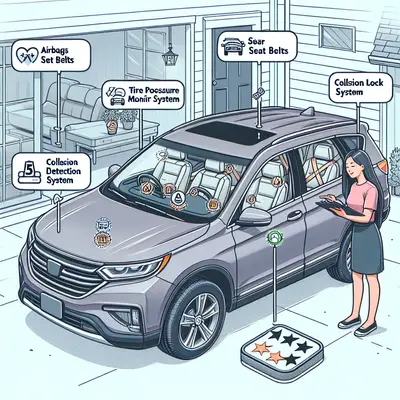
- Multi-stage airbags: Rather than inflating at a single force level, they deploy with different intensities depending on crash severity and seat position. This reduces the risk of airbag-related injuries to smaller adults and older children.
- Seatbelt pretensioners and load limiters: Pretensioners gently “pull” occupants into the ideal position in the milliseconds before impact. Load limiters then allow very slight controlled belt give to reduce forces on the chest, protecting ribs and internal organs.
- Integrated front-center airbags: Some SUVs now include a center airbag between driver and front passenger, designed to reduce head and torso contact during side impacts or spin events—particularly important when one parent is driving solo with a child in the passenger seat.
- Thoughtful second- and third-row protection: Look for side curtain airbags that extend all the way to the third row and are designed to remain inflated long enough to protect during a rollover. This matters when children or teens prefer the “back-back” seats.
Families should prioritize SUVs where the manufacturer openly details restraint technologies, not just counts them. A brand willing to explain airbag staging, belt systems, and child-seat compatibility is usually one that has invested in the subtleties of real-world protection.
Exclusive Insight 3: Driver Assistance Tech Is Only as Safe as Its Tuning
Advanced driver-assistance systems (ADAS)—such as automatic emergency braking, lane-keeping assist, and blind-spot monitoring—can be transformative for family safety. However, their effectiveness depends dramatically on how they’re calibrated and how naturally they integrate into daily driving.
Key nuances to consider:
- Pedestrian and cyclist detection: Some systems only detect vehicles; the more sophisticated setups recognize pedestrians and cyclists, often in day and low-light conditions. For families walking to school or navigating dense urban areas, this distinction is critical.
- Intersection and cross-traffic awareness: Forward-collision alerts that respond to turning across traffic, and rear cross-traffic braking that can stop you when backing out of a driveway or parking space, are particularly valuable in school zones and crowded lots.
- Refinement over aggressiveness: Overly jumpy systems that false-alarm or intervene harshly can lead drivers to disable them—defeating the purpose. The best SUVs offer calm, early warnings and smooth corrections that feel like a skilled co-pilot rather than a nervous passenger.
- Child-friendly use cases: Adaptive cruise and lane-centering can reduce fatigue on long family trips, helping parents arrive more alert. In stop-and-go traffic, this can be the difference between a near-miss and a rear-end collision.
Look for independent evaluations of ADAS performance and, if possible, test drive with these systems actively engaged. The ideal SUV will support your driving instincts while quietly compensating for fatigue and distraction—never startling you, never nagging, always assisting.
Exclusive Insight 4: Child-Seat Practicality Is a Hidden Safety Metric
Crash tests usually involve standardized dummies, not real-world child seats, strollers, and booster arrangements. Yet, for many families, child-passenger safety is the most crucial component of any safety rating—even if it’s not explicitly scored.
Subtleties that genuinely matter:
- ISOFIX/LATCH anchorage accessibility: Deeply buried or difficult-to-reach anchors encourage imperfect installations. The safest SUVs offer clearly marked, easily accessible anchors and enough space to comfortably attach and tighten the child seat without contortions.
- Third-row child-seat compatibility: Many families assume any third row is safe for child seats, but not all are designed to accommodate them properly. Investigate whether the third row offers adequate top-tether points, sufficient legroom, and a seatback angle that allows a secure install.
- Side-airbag and child-seat interaction: Premium designs provide side-impact protection for children without risking airbag interference with tall boosters or certain seats. Manufacturers that publish compatibility recommendations and perform internal tests with popular seat brands show a higher level of concern and sophistication.
- Safe cabin movement: Details like wide door openings, low step-in height, and thoughtful grab handles reduce the chance of parents losing balance while lifting infants or toddlers into higher seating positions—small, but significant, everyday safety moments.
If possible, bring your own child seats to the dealership and install them yourself. Assess how naturally you can achieve a rock-solid install, whether door openings allow safe lifting and loading, and how easily older children can buckle themselves without twisting the belts into unsafe angles.
Exclusive Insight 5: Post-Crash Thoughtfulness Separates Exceptional from Adequate
Most ratings focus on during the crash, not what happens in the crucial minutes afterward. However, some of the most thoughtful family SUVs anticipate the needs of a shaken, possibly injured family once the impact has ended.
Look for subtle post-crash features such as:
- Automatic door unlocking and fuel cut-off: Many modern SUVs unlock doors and shut off fuel supply after a significant collision, facilitating safe exit and reducing fire risk. This is especially vital when older children may be trying to help younger siblings out of the vehicle.
- Emergency braking and hazard activation after impact: Advanced systems can apply the brakes post-collision to prevent secondary impacts and automatically activate hazard lights to alert approaching drivers, particularly valuable on multi-lane roads or in poor visibility.
- Built-in emergency communication: Integrated telematics systems that automatically contact emergency services and share location and crash data can be life-saving—especially on rural routes or in bad weather when your phone may be out of reach or thrown from its mount.
- Clear, calm in-cabin alerts: Well-designed instrument panels and audio chimes that guide you through what to do next—whether checking passengers, calling for help, or safely exiting—can make an overwhelming moment feel more manageable.
These post-crash features are rarely highlighted in basic safety summaries, yet they can materially shape the outcome of a serious incident. When a brand talks openly about post-crash protocols and emergency assistance, it is often a clue that safety has been considered as a continuum, not a single event.
Conclusion
For families, a safety rating should be an introduction—not a verdict. The true measure of a protective SUV lies in how structure, restraints, assistance technology, child-seat practicality, and post-crash support work together in nuanced, often invisible ways.
By looking beyond the stars to the geometry of the cabin, the intelligence of restraint systems, the maturity of driver assistance, the reality of child-seat usage, and the calm thoughtfulness of post-crash features, you begin to see clear differences between SUVs that simply pass tests and those that are genuinely crafted for family protection.
In a world where nearly every vehicle claims to be “safe,” your advantage as a discerning buyer is in noticing these refined distinctions. The safest family SUV is not just the one that scores well in a lab—it is the one that quietly, consistently, and elegantly protects your family in the unplanned chapters of everyday life.
Sources
- National Highway Traffic Safety Administration (NHTSA) – 5-Star Safety Ratings - Official U.S. government crash-test ratings and explanations of test procedures
- Insurance Institute for Highway Safety (IIHS) – Vehicle Ratings - Independent crashworthiness and crash-avoidance evaluations, including small-overlap and roof-strength tests
- Centers for Disease Control and Prevention – Child Passenger Safety - Research and guidelines on correct child-seat use and its impact on injury outcomes
- SaferCar.gov – Car Seats and Booster Seats - U.S. government resources on child-seat installation, LATCH, and vehicle compatibility
- Volvo Cars – Safety Innovations - Example of a manufacturer detailing structural design, restraint systems, and safety philosophy in modern vehicles
Key Takeaway
The most important thing to remember from this article is that following these steps can lead to great results.