For families who expect more from an SUV than a lofty ride height and a rear-seat entertainment screen, safety is not a checkbox—it is the quiet architecture behind every journey. Yet the modern safety landscape is dense with acronyms, stars, and scores that can feel both technical and oddly generic. This article is designed for parents who already know safety matters, but want to understand where the numbers end and meaningful differentiation begins. Below, we explore how to read safety ratings with a refined lens, and share five exclusive insights that help distinguish truly exceptional family SUVs from merely acceptable ones.
Safety Ratings as a Starting Point, Not the Finish Line
Crash-test ratings from agencies such as the National Highway Traffic Safety Administration (NHTSA) and the Insurance Institute for Highway Safety (IIHS) are essential—but they are inherently broad strokes. A five-star overall score or a Top Safety Pick+ designation signals strong fundamentals, yet these metrics often compress very different vehicles into the same rating band.
The discerning approach is to use ratings as an initial filter, not a final verdict. Begin by shortlisting models that consistently perform well across multiple tests: front, side, rollover, and especially newer assessments like small overlap frontal impacts. Then, move beyond the labels to the detailed test notes. How did the dummy’s head move? Were there concerns about lower-leg or chest injuries? Did the airbag coverage fully protect smaller occupants? This level of nuance rarely appears in marketing materials, but it is readily available in the testing organizations’ reports. In short, ratings tell you that a vehicle is safe; the underlying data tells you how it is safe—and for whom.
Insight 1: Pay Attention to Advanced Crash Tests, Not Just the Overall Score
For a family SUV, the most revealing evaluations are often the specialized crash tests that simulate real-world edge cases, not the headline frontal or side-impact scores. The small overlap front crash test, for example, mimics what happens when only a corner of the vehicle hits an object like a pole or guardrail—exactly the type of crash that can challenge structural integrity.
Another underappreciated metric is roof strength and rollover resistance, especially important in taller vehicles with higher centers of gravity. Look for SUVs that not only score well but significantly exceed minimum thresholds; some brands deliberately engineer generous structural margins. For parents, this means heightened protection in scenarios that are statistically less frequent but often more severe. When comparing contenders, prioritize models that excel consistently across these demanding tests, not just those with an appealing overall badge.
Insight 2: Evaluate How Well the Vehicle “Understands” Vulnerable Road Users
Modern safety ratings increasingly consider how a vehicle interacts not just with its occupants, but with the world around it—particularly pedestrians and cyclists. This matters profoundly for families living in walkable neighborhoods, near schools, or in cities where children may be in close proximity to traffic.
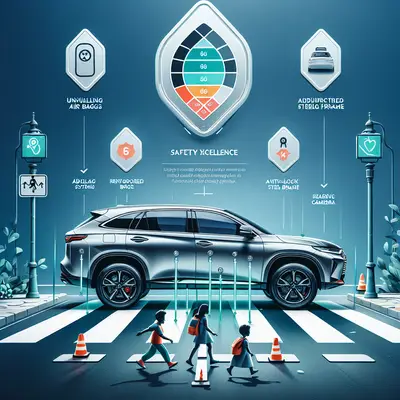
Driver-assistance technologies such as Automatic Emergency Braking (AEB) with pedestrian and cyclist detection vary substantially in performance. Independent tests often reveal that some systems respond more quickly, detect at wider angles, or maintain effectiveness at higher speeds. SUVs that incorporate advanced object recognition, wider camera fields of view, and radar or lidar fusion tend to better “understand” complex urban scenarios—like a child emerging from between parked cars. When scanning spec sheets, look specifically for high ratings in pedestrian safety tests and robust performance in independent AEB evaluations, not just the presence of an AEB label.
Insight 3: Child-Specific Protection Is More Than Just LATCH Anchors
Many families understandably focus on LATCH availability and rear-seat space, but genuine child protection goes deeper. Look at how safety organizations evaluate child occupant protection, including how easily car seats can be installed and how well the vehicle accommodates various child restraint systems. Some SUVs may technically have multiple LATCH positions yet be frustrating or insecure in practice due to anchor placement, seat contouring, or belt geometry.
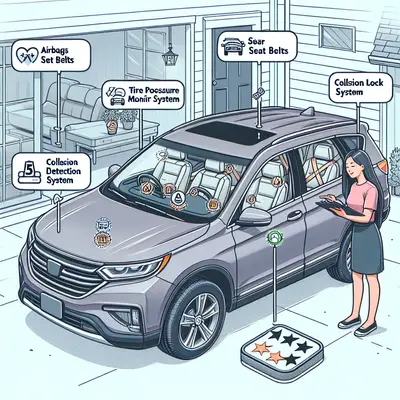
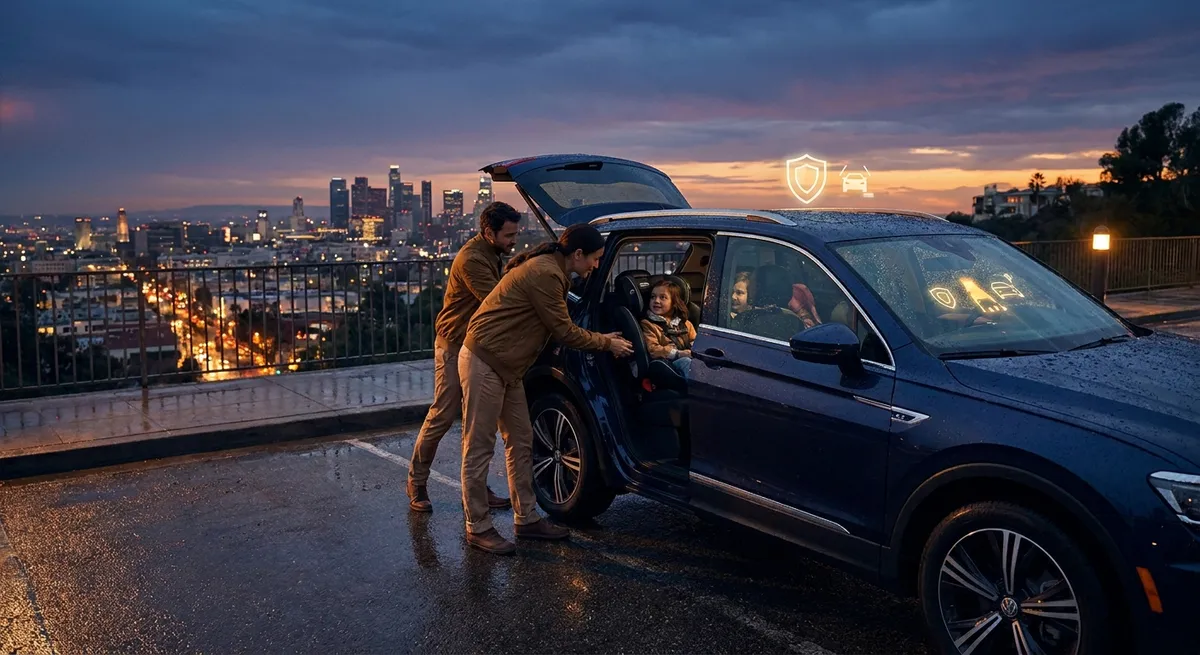
Another subtle factor is rear-seat crash performance. Certain crash tests and consumer information programs provide specific scores or notes for rear-seat occupant protection, including seatbelt tensioning, load limiters, and airbag deployment patterns. Pay attention to whether rear side-curtain airbags fully cover smaller rear passengers and whether seatbelts are designed to manage forces appropriately for children in boosters. If possible, bring your own car seats to a test drive and confirm that they install securely without awkward belt routing or significant tilting—this real-world “fit test” can be as telling as any brochure statistic.
Insight 4: Active Safety Systems Should Be Predictable, Not Just Impressive
Families are often presented with a parade of advanced driver-assistance features: lane-keeping, adaptive cruise control, blind-spot monitoring, traffic jam assist, and more. But the quality of tuning matters as much as the list itself. Overly intrusive or inconsistent systems can lead to driver fatigue, complacency, or outright disengagement—the opposite of what a family-focused SUV should encourage.
Seek out reviews and test data that comment on system behavior, not merely availability. Does lane-keeping assistance gently center the vehicle or abruptly “ping-pong” between lane markings? Does adaptive cruise control brake smoothly, preserving passenger comfort, or react late and harshly? An SUV that delivers restrained, predictable interventions allows parents to remain confidently in control, while still benefiting from an invisible safety net. The most sophisticated systems feel almost transparent: there when needed, but never theatrical.
Insight 5: Interior Safety Is Also About Materials, Ergonomics, and Visibility
Safety ratings emphasize structural performance and electronic systems, but the cabin environment itself is a crucial—yet under-discussed—layer of protection. Families should think carefully about how the SUV’s design supports calm, focused driving and reduces unnecessary risk inside the cabin.
Materials matter: soft-touch surfaces and clean, well-padded design around knee, head, and elbow areas can mitigate minor injuries during sudden stops or low-speed impacts. Ergonomics play a quiet but critical role; intuitive controls and minimal clutter mean less time with eyes off the road. Evaluate whether key functions (climate, defrost, drive modes) can be operated without diving into deep touch-screen menus.
Visibility is equally vital. Large rear windows, thoughtfully sculpted pillars, well-placed mirrors, and high-quality 360-degree camera systems all reduce blind spots—a meaningful advantage in crowded school pickup zones, multi-story parking garages, and tight city streets. The most family-conscious SUVs combine excellent crash protection with an interior designed to keep the driver composed and situationally aware at all times.
Weaving Ratings and Reality into a Confident Choice
In the end, a family SUV’s safety story is written in layers: crash-test scores, advanced driver-assistance technologies, structural engineering, and the daily grace with which the vehicle supports focused, unhurried driving. Ratings from NHTSA, IIHS, and other authorities form the essential backbone of that story, but the truly exceptional models distinguish themselves in the subtleties: superior performance in edge-case tests, nuanced protection for children, well-tuned assistance systems, and an interior that safeguards both body and attention.
For families with elevated expectations, the goal is not simply to purchase a “safe” SUV, but to curate a vehicle whose safety philosophy aligns with their own—quietly protective, intelligently proactive, and reassuringly consistent. When evaluated with this refined lens, safety ratings become less of a box to check and more of a powerful tool to identify the SUVs that will protect what matters most, mile after composed mile.
Sources
- National Highway Traffic Safety Administration (NHTSA) 5-Star Safety Ratings - Official crash-test results, rollover ratings, and detailed documentation of test procedures and outcomes
- Insurance Institute for Highway Safety (IIHS) Vehicle Ratings - Comprehensive safety ratings, including small overlap tests, pedestrian crash prevention, and child seat anchor evaluations
- European New Car Assessment Programme (Euro NCAP) - Advanced safety and driver-assistance performance evaluations, including vulnerable road user protection
- U.S. Department of Transportation: Child Passenger Safety - Guidance and research on child occupant protection, car seat installation, and related safety best practices
- AAA Foundation for Traffic Safety – Driver Assistance Systems Research - Independent studies on how advanced driver-assistance systems perform and affect real-world driving safety
Key Takeaway
The most important thing to remember from this article is that this information can change how you think about Safety Ratings.