For families who expect more from their SUV than a spec sheet and a star count, safety is not a checkbox—it is the quiet architecture around which every journey is built. Yet the modern safety landscape is dense with acronyms, tests, and marketing language that can feel more performative than practical. This guide is designed for the discerning family who wants to move beyond the headline rating and into the nuanced realities that genuinely shape protection on the road.
Below are five exclusive, often‑overlooked insights that separate a merely “safe” SUV from one that feels intuitively protective, polished, and prepared for the unexpected.
The Geometry of Protection: Why Structure Outweighs the Star Count
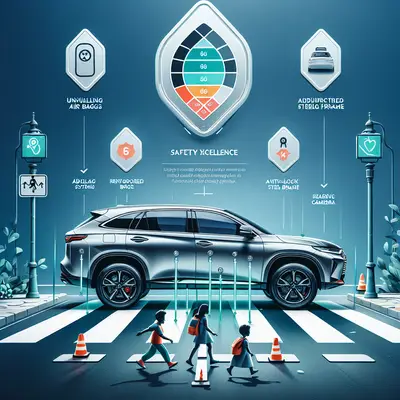
Safety ratings typically spotlight crash outcomes, but the underlying body structure is what determines how elegantly a vehicle manages violent forces. Two SUVs can share identical star ratings yet behave very differently in a real‑world crash.
Pay close attention to how an SUV performs in small overlap and moderate overlap crash tests from the Insurance Institute for Highway Safety (IIHS). These evaluate how well the structure preserves the occupant space when only a portion of the front end is involved—similar to clipping a barrier or another vehicle. Strong performance here signals a well‑engineered safety cage, not just added airbag coverage.
Look for vehicles that earn “Good” ratings in the IIHS small overlap front tests on both the driver and passenger sides. Also examine roof strength ratings; higher roof strength helps during rollovers and is especially relevant for taller vehicles like SUVs. A premium family choice should maintain cabin integrity with minimal intrusion into the footwell, door frame, and dashboard. This is the difference between surviving a crash and walking away from it.
Finally, consult technical details when available: use of high‑strength or ultra‑high‑strength steel, hot‑stamped components, and carefully engineered crumple zones all indicate thoughtful energy management. A structurally sound SUV provides a reassuring sense of calm: you feel the solidity not just in how it drives, but in how it is quietly prepared for the unthinkable.
Real‑World Scenarios, Not Laboratory Perfection
Crash tests and ratings are necessarily standardized; your life is not. The most forward‑thinking families review safety ratings with an eye toward scenarios that resemble their actual habits.
If your typical drive involves dense urban traffic, prioritize front crash prevention ratings—especially pedestrian detection, cyclist detection, and low‑speed automatic emergency braking performance. The latest evaluations from IIHS and the National Highway Traffic Safety Administration (NHTSA) increasingly include these elements, and you should treat them as foundational, not optional.
Highway commuters should look more closely at lane‑keeping support, adaptive cruise control behavior, and nighttime visibility. Vehicles with top‑tier headlight ratings (from IIHS) offer better illumination without blinding oncoming drivers, which can materially reduce the risk of night‑time incidents. Do not overlook this: headlight performance is one of the most underappreciated, safety‑critical details in the modern SUV market.
For those in regions with challenging weather, consider how stability control, all‑wheel drive tuning, and traction management systems integrate with the SUV’s safety architecture. A vehicle that passes every crash test but feels nervous on a wet on‑ramp or icy neighborhood street is not fully serving your family.
When assessing ratings, ask a simple question: “Does this test map to the way we actually live, drive, and travel?” The closer the alignment, the more meaningful that rating becomes.
Intelligent Tech vs. Intrusive Tech: The Refinement Test
Advanced driver assistance systems (ADAS) can be transformative, but their execution varies dramatically between brands. A sophisticated family SUV should make safety feel like a seamless extension of your driving—not a series of startling beeps and abrupt interventions.
Look beyond whether a feature is present and focus on how gracefully it operates. Reviews from credible sources and long‑term road tests can reveal whether lane‑keeping assist gently guides you or tugs at the wheel with all the subtlety of a parking bollard. Likewise, automatic emergency braking should intervene decisively but not so conservatively that it triggers false alarms in normal traffic.
Premium safety is not just about having every acronym on the brochure. It is about tuning: adaptive cruise control that accelerates and decelerates in a smooth, humanlike way; blind‑spot monitoring that is visible but not visually aggressive; rear cross‑traffic alert that distinguishes between real threats and distant movement.
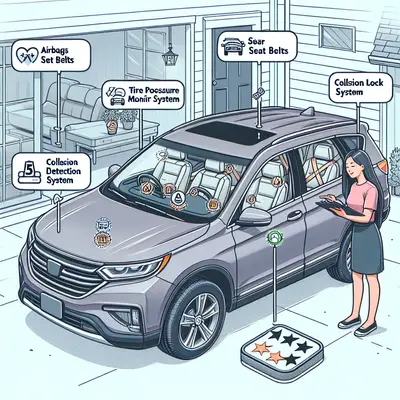
Families with young passengers will particularly appreciate systems that extend their safety net into everyday rituals: safe exit assist that alerts you if a vehicle or cyclist is approaching as a rear door opens, or rear occupant alerts that help guard against forgotten children or pets in the back seat. These details rarely dominate the ratings conversation but can be life‑changing in practice.
When test‑driving, treat every safety feature as you would a piece of fine furniture hardware: it should function flawlessly, quietly, and without calling attention to itself unless truly necessary.
Child-Centric Safety: Beyond the ISOFIX/LATCH Badges
For families with infants, toddlers, or young children, crash ratings are only half of the equation. The subtle ergonomics of child-seat installation and rear-cabin protection often go unmeasured in headline scores but are essential in real-world use.
Investigate how child restraints fit in the second and, if relevant, third rows. Some vehicles earn high marks in general safety yet make it frustratingly difficult to install a rear-facing seat behind a taller driver. Check how accessible the ISOFIX/LATCH anchors are—are they hidden deep in the seat crease, or thoughtfully exposed with guiding hardware? The IIHS “LATCH ease of use” ratings are an excellent, underutilized resource for this exact issue.
Side-impact protection in the rear seats matters just as much as the front, particularly for children. Look for SUVs that perform well in side-impact evaluations and, when possible, choose models with side-curtain airbags that extend through all occupied rows. Proper head restraints for rear passengers—including in the center rear seat—also play a role in preventing whiplash injuries in collisions.
An often overlooked refinement: the presence of integrated sunshades, wide-opening rear doors, and flat entry sills. These are not luxuries; they reduce the likelihood of rushed, awkward movements when loading children, which can lead to misrouted seat belts or improperly latched buckles. A genuinely family‑centric SUV makes the safe choice the easy choice every single day.
The Long View: Durability, Recalls, and Evolving Safety Standards
Safety is not static. The SUV you purchase today will be evaluated against tougher standards in just a few years. Families who think in decades rather than model years take a broader view.
Begin by reviewing an SUV’s recall history via official government databases. A model with frequent safety-related recalls is not necessarily disqualified, but the pattern—and how swiftly the manufacturer responds—reveals much about engineering rigor and accountability. Consistently proactive updates can inspire more confidence than a spotless but unproven record.
Pay attention to how a brand handles over-the-air (OTA) updates for safety and driver-assistance systems. Increasingly, automakers can refine braking interventions, camera behavior, and even collision-avoidance algorithms after purchase. A vehicle that can grow safer through software is inherently future-leaning.
Also consider whether the SUV’s platform is recent or in its final production years. Newer architectures are often designed with the latest crash standards in mind, including improved side-impact protection, better battery shielding on hybrids/EVs, and refined pedestrian protection measures. While older platforms can still be safe, newer ones are typically engineered around more stringent benchmarks.
Finally, look at how the model performs not just in domestic safety tests, but in other global programs when available (such as Euro NCAP). A vehicle that meets or exceeds multiple regional standards suggests a more globally conscious approach to safety engineering—and that can quietly enhance your peace of mind for years to come.
Conclusion
For a family that values calm, control, and quiet confidence, the most meaningful SUV safety story lives beneath the marketing language. It is found in the geometry of the safety cage, the grace of its driver assistance tuning, the thoughtfulness of its child-seat accommodations, and the integrity of the brand over time.
When you read safety ratings through this more refined lens, you stop chasing the loudest claims and instead gravitate toward vehicles that feel quietly prepared for whatever life sends across your path. The result is not just a “safe” family SUV—it is a deeply considered companion for the journeys that matter most.
Sources
- [Insurance Institute for Highway Safety (IIHS) – Ratings & Evaluations](https://www.iihs.org/ratings) – Official crash-test results, headlight evaluations, and LATCH ease-of-use ratings
- [NHTSA – 5-Star Safety Ratings](https://www.nhtsa.gov/ratings) – U.S. government crash-test ratings and safety information, including recall lookup
- [Euro NCAP – Safety Ratings](https://www.euroncap.com/en/ratings-rewards/latest-safety-ratings/) – European crash-test results and advanced safety assessments for many global models
- [U.S. Department of Transportation – Vehicle Safety](https://www.transportation.gov/roads-bridges-safety/vehicles) – Federal resources and policy context for vehicle safety standards
- [National Safety Council – Motor Vehicle Safety](https://www.nsc.org/road) – Research, statistics, and best practices related to driver assistance, child passenger safety, and crash prevention
Key Takeaway
The most important thing to remember from this article is that this information can change how you think about Safety Ratings.