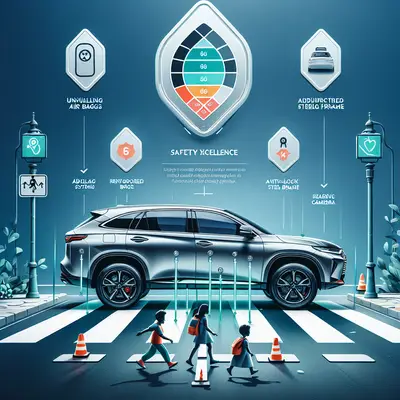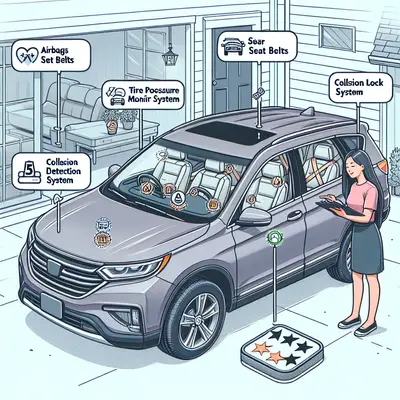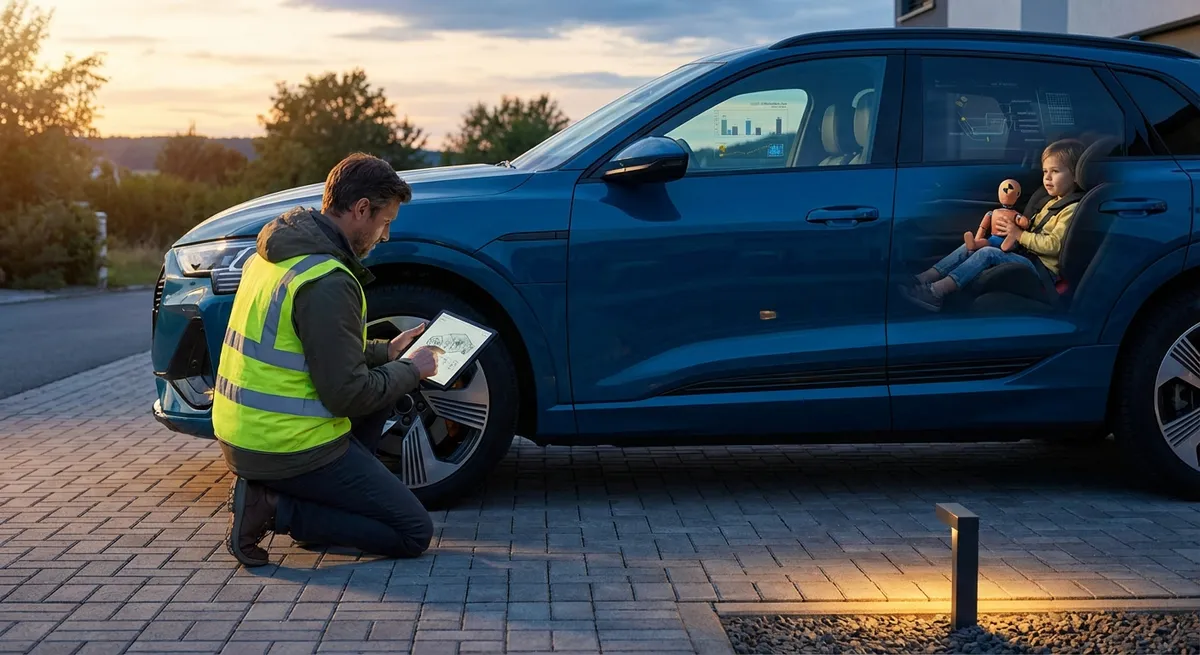
For many families, safety ratings are the quiet foundation beneath every other decision—from paint color to panoramic roof. Yet the language of stars, scores, and acronyms can feel opaque, even for discerning buyers. This isn’t about chasing the highest number on a window sticker; it’s about understanding what those numbers genuinely mean for the people you carry every day.
This refined guide unpacks safety ratings through a family lens, distilling five exclusive insights that often stay between the lines of brochures and spec sheets—so you can evaluate an SUV not just as a vehicle, but as a protective space.
Why “Five Stars” Isn’t the End of the Conversation
A five-star rating can be reassuring, but it’s not the entire story—nor is every five-star SUV equally protective in all conditions. Both the National Highway Traffic Safety Administration (NHTSA) and the Insurance Institute for Highway Safety (IIHS) continually update their testing, making yesterday’s top performer merely average by today’s standards. This evolution is intentional: as vehicles become safer overall, tests grow more stringent to expose finer differences in protection.
For families, this means two things. First, always note the model year when looking at ratings; a 2018 “excellent” and a 2024 “excellent” were not judged by identical yardsticks. Second, look beyond the overall score to the individual test categories—frontal crash, side impact, rollover resistance, and small overlap tests. An SUV that shines in frontal protection but lags in side-impact or rollover performance may not align with the unpredictable realities of daily family driving, especially in urban environments or on winding suburban roads. Treat five stars as an entry point, not the final verdict.
Insight 1: Side-Impact and Small Overlap Tests Quietly Reveal Real-World Protection
For families, side-impact and small overlap crash tests arguably say more about everyday risk than the classic head-on collision assessments. Many serious collisions happen at intersections, on narrow roads, and when a vehicle partially leaves its lane—exactly the scenarios simulated by side-impact and small overlap tests. These tests are where cabin engineering and structural solidity quietly earn their keep.
Pay special attention to ratings for both front and rear occupants, particularly if your children will be seated in the second row. IIHS, for instance, now conducts updated side-impact and rear-occupant protection tests, reflecting how modern families actually use their SUVs. A model that performs exceptionally in rear-occupant injury metrics suggests thoughtful engineering around the second row, where car seats, booster seats, and older children often sit.
Look for language that indicates more than a passing grade: terms like “Good” in IIHS crashworthiness categories, strong performance in updated side crash tests, and favorable rear-occupant scores in moderate overlap or side-impact scenarios. These nuanced distinctions signal that the SUV’s safety has been optimized not only for the driver, but for the quieter passengers in back.
Insight 2: Rollover and Stability Ratings Matter More in Taller, Family-Sized SUVs
For crossovers and SUVs, rollover resistance is not a theoretical metric—it’s central to how the vehicle behaves in emergency maneuvers. Taller ride heights bring visibility and comfort, but they also introduce a higher center of gravity, which can affect stability during sudden swerves, evasive lane changes, or high-speed curves. NHTSA’s rollover ratings and dynamic tests offer a window into how gracefully a family SUV can manage these moments.
Don’t overlook differences in stability control systems when comparing similarly rated SUVs. Some brands quietly tune their electronic stability control (ESC) and traction systems with unusual precision, allowing the vehicle to intervene earlier and more smoothly during a potential loss of control. When reading reviews or test reports, watch for descriptions of how the SUV behaves in abrupt maneuvers: does it feel composed or unsettled, predictable or twitchy?
For families who frequently travel on rural roads, in inclement weather, or with a full cabin, a strong rollover resistance rating paired with well-calibrated ESC is not simply a safety statistic—it’s a subtle assurance that the vehicle will remain composed when the unexpected unfolds at speed.
Insight 3: Active Safety Tech Is Only as Good as Its Calibration—and Your Comfort With It
Modern safety ratings increasingly factor in advanced driver-assistance systems (ADAS): automatic emergency braking, lane-keeping assistance, blind-spot monitoring, and adaptive cruise control. Yet not all systems are created equal, and their presence on a spec sheet doesn’t reveal how elegantly they operate in daily life. Two SUVs can offer “automatic emergency braking,” but differ dramatically in how quickly they detect obstacles, how smoothly they intervene, and how confidently they interact with real traffic.
Families should consider both the breadth and the refinement of these systems. Look for independent evaluations of automatic emergency braking and pedestrian detection in particular, as these features often make the crucial difference in low-speed urban scenarios—school zones, parking lots, and busy neighborhood streets. IIHS and other organizations now test these systems specifically, rating performance in scenarios that mirror daily family environments.
Equally important is how intuitive these systems are to live with. Does the SUV allow fine-grained customization of sensitivity levels? Are alerts well-judged or constantly intrusive? A truly premium family SUV feels like a discreetly attentive co-pilot, not a nervous backseat driver. The goal is to find a vehicle whose technology quietly supports your attentiveness rather than overwhelming it.
Insight 4: Child Seat Compatibility and Rear-Seat Design Are Unspoken Safety Differentiators
Crash ratings typically assume occupants are properly restrained—but in family life, the real challenge is ensuring seats and restraints integrate cleanly with the vehicle’s interior. Here, ratings rarely tell the full story. Some SUVs offer exemplary LATCH anchor accessibility, generous rear-door openings, and thoughtful seat-belt routing; others turn basic tasks into contortions. These details influence whether car seats are installed correctly every time, which is the foundation of real-world child safety.
Seek out vehicles with clear, unobstructed LATCH anchors that are easy to access without compressing the seat cushion excessively. Consider whether three child seats across the second row are feasible if your family might grow or if you frequently carpool. Some higher-end SUVs provide additional top tether anchors or clever second-row configurations that improve both convenience and safety.
Also pay attention to rear-seat head restraints and seat contouring. Properly positioned head restraints can reduce whiplash risk, while flatter, more accommodating cushions typically provide a better foundation for both forward- and rear-facing child seats. These subtleties rarely make it into headline ratings but have a profound effect on how protective—and practical—an SUV truly is for day-to-day family use.
Insight 5: Crash Avoidance and Nighttime Visibility Quietly Redefine Safety
Traditional crash tests measure how well an SUV protects you when an impact occurs. Increasingly, the more discerning question is: how effectively does this vehicle help you avoid the crash altogether—particularly at night, when visibility drops and fatigue rises? Headlight performance, automatic high beams, and camera clarity (front, rear, and surround-view) play a much larger role in modern safety than many buyers realize.
IIHS now evaluates headlight systems, noting both brightness and beam pattern, and these scores often vary significantly within the same model line depending on trim level or optional packages. For families who regularly drive at dawn, dusk, or on unlit roads, choosing a configuration with top-rated headlights is a quiet but meaningful upgrade in safety. Similarly, high-resolution cameras and thoughtfully tuned parking sensors transform tight school parking lots, nighttime parallel parks, and crowded driveways into calmer, more controlled environments.
When evaluating an SUV, ask not only about passive safety and ADAS features, but also about visibility: how well you can see out, how clearly the cameras render obstacles, and how confident you feel navigating poor light or bad weather. Safety, at its most sophisticated, begins long before the airbags are ever called upon.
Conclusion
Safety ratings are often presented as a single number or a neat row of stars, but families live in the spaces between those symbols—the school run in the rain, the late-night drive home on a country road, the carefully buckled child seat before a weekend trip. By looking beyond the headline score to understand structural performance, stability, active safety calibration, child-seat compatibility, and real-world visibility, you elevate your SUV choice from simply “safe enough” to thoughtfully protective.
For the discerning family, the most reassuring SUV is not merely the one with the highest rating, but the one whose safety story is coherent from every angle: in its crash test data, its daily drivability, its quiet support of your vigilance, and its careful accommodation of the people you value most.
Sources
- [NHTSA 5-Star Safety Ratings Overview](https://www.nhtsa.gov/ratings) - Explains how U.S. government crash tests and rollover ratings are conducted and how to interpret the 5-star system
- [IIHS Vehicle Ratings and Test Protocols](https://www.iihs.org/ratings) - Provides detailed crash test results, headlight evaluations, and crash avoidance ratings for SUVs and other vehicles
- [CDC Child Passenger Safety Guidelines](https://www.cdc.gov/transportationsafety/child_passenger_safety/cps-factsheet.html) - Outlines best practices for child seats, booster seats, and seat-belt use in passenger vehicles
- [SaferCar.gov – Child Car Seat Information](https://www.nhtsa.gov/equipment/car-seats-and-booster-seats) - Offers federal guidance on car seat installation, LATCH usage, and selecting appropriate restraints
- [IIHS Headlight Ratings and Research](https://www.iihs.org/topics/headlights) - Details how headlight performance is tested and why it matters for nighttime crash prevention
Key Takeaway
The most important thing to remember from this article is that this information can change how you think about Safety Ratings.