For discerning families, safety is not a marketing tagline; it is a non-negotiable baseline. Yet in the age of five-star badges and glossy crash-test footage, it can be surprisingly difficult to understand what those numbers truly mean for your daily life—school runs, late-night drives back from the airport, and weekends on the highway with everyone’s luggage in tow. This is where a more nuanced, quietly confident approach to safety ratings becomes essential: not just asking “Is it safe?” but “How does it protect our family, in our reality?”
Below are five exclusive, refined insights that help you read between the lines of safety scores and translate them into real-world peace of mind for your next family SUV.
Why Identical Star Ratings Can Feel Completely Different on the Road
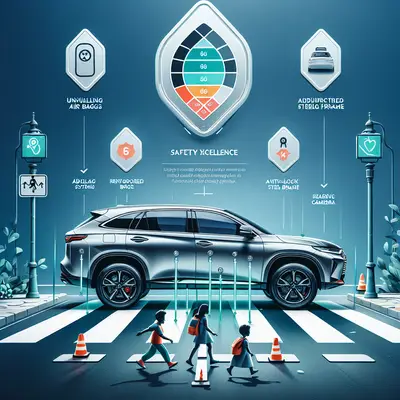
Two SUVs can both wear a “5-star” badge and yet feel dramatically different from behind the wheel. Safety ratings from organizations such as the National Highway Traffic Safety Administration (NHTSA) and the Insurance Institute for Highway Safety (IIHS) summarize complex test performance into simple scores—but elegance is in the detail.
The star or “Top Safety Pick+” label tells you the vehicle clears a high benchmark; the deeper story lies in body structure, restraint performance, and how consistently those systems perform across different crash types. Luxury-leaning family SUVs often invest more heavily in chassis stiffness and advanced materials, resulting in a cabin that feels calm and composed even during evasive maneuvers or sudden braking. That poise is not just “nice to have”; it means the vehicle’s electronic stability control, anti-lock braking, and tire grip can work more predictably when you need them most.
Families should look beyond the headline rating and explore the sub-scores: frontal offset, small-overlap, side impact, roof strength, and head restraint performance. If you drive in dense urban traffic, small-overlap front crash ratings may matter more than you expect. If long-distance highway journeys are part of your lifestyle, roof strength and rollover resistance become more relevant. The refined choice is not simply the “highest number,” but the SUV whose strengths are aligned with the way your family genuinely lives and travels.
The Hidden Importance of Rear-Seat Safety, Not Just the Driver’s Cocoon
Many rating systems historically focused on protecting the driver and front passenger, while rear-seat protection evolved more quietly in the background. For families, this is exactly where your most precious passengers sit—often for hours at a time. An SUV’s safety reputation is incomplete if it does not take rear-occupant protection as seriously as front-occupant protection.
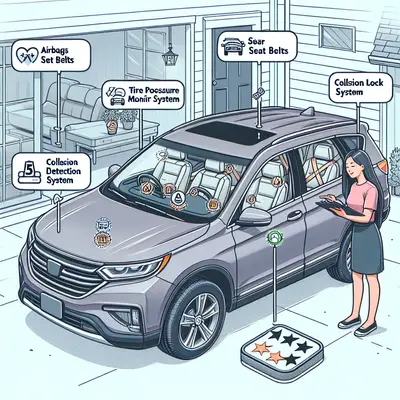
Rear-seat crash performance now includes detailed assessment of head, neck, and chest protection, particularly in newer frontal crash evaluations that consider belted rear occupants. Some modern SUVs feature load limiters and pre-tensioners on the rear seat belts, echoing technology once reserved for the front seats. Others offer optional rear side-impact airbags and carefully sculpted door panels designed to absorb and redirect crash forces away from children’s heads.
When reviewing safety ratings, look specifically for comments on rear-seat performance or updated frontal tests that assess rear occupants as well as front. In practice, this might mean choosing an SUV whose score is slightly less glamorous in pure marketing terms, but which offers commendable rear-occupant protection and better belt geometry for child seats and boosters. A truly family-centric safety profile is one where the second and third rows are treated as first-class passengers in their own right.
Advanced Driver Assistance: Why Calibration and Tuning Matter More Than the Option List
Modern safety discussion often revolves around advanced driver assistance systems (ADAS): automatic emergency braking, lane-keeping assist, blind-spot monitoring, and more. Many SUVs now tick these boxes on the spec sheet, yet their real-world behavior can vary dramatically, and safety ratings are only beginning to reflect that nuance.
Some testing bodies now incorporate evaluations of forward-collision warning and automatic emergency braking performance at urban and highway speeds. However, the subtlety lies in tuning: how early does the system warn you, how smoothly does it intervene, and does it feel like a refined co-pilot or an overbearing backseat driver? In a premium family SUV, the most sophisticated systems tend to be the least intrusive—quietly supporting you without constant chimes or abrupt steering nudges that encourage drivers to switch them off.
Seek out ratings that specifically mention pedestrian and cyclist detection, low-speed crash avoidance (especially relevant in car parks and school zones), and nighttime performance. For families, well-calibrated ADAS is not about drive-by-wire bravado; it is about quiet competence in the background, preventing minor lapses from becoming major incidents, particularly during the most distracted moments of family life.
Crash Tests Don’t Drive Carpool: Stability, Tires, and Everyday Maneuvers
Crash ratings simulate severe, relatively rare events. A more realistic daily safety story is written in lane changes, emergency stops, wet roundabouts, and unexpected debris on the freeway. This is where aspects like suspension tuning, center of gravity, tire specification, and stability control mapping become crucial—areas that safety ratings only partially capture, if at all.
Many premium family SUVs are engineered with a careful balance between comfort and control. A well-tuned suspension can keep the body level under braking and cornering, which helps the tires maintain contact with the road and allows electronic systems to intervene more predictably. Higher-quality, season-appropriate tires further elevate real-world safety, improving stopping distances and grip in poor weather conditions that rarely feature in headline crash scores.
Families should not hesitate to consider test-drive impressions and expert road tests as an informal extension of safety evaluation. An SUV that responds calmly to quick steering inputs, remains composed over rough surfaces, and feels intuitively stable at motorway speeds is quietly adding a layer of “active safety” that reduces the likelihood of needing those crash structures in the first place. The most refined family choice is the vehicle that feels inherently secure long before any airbag is called into action.
Child Seats, Third Rows, and the Quiet Safety of Thoughtful Packaging
Safety ratings do an excellent job of describing how a vehicle behaves under controlled impact conditions. They are less explicit about day-to-day safety-critical details such as child seat installation, third-row access, and the layout of anchors and tethers. For families, this is where the SUV either supports your routines beautifully—or demands awkward compromises.
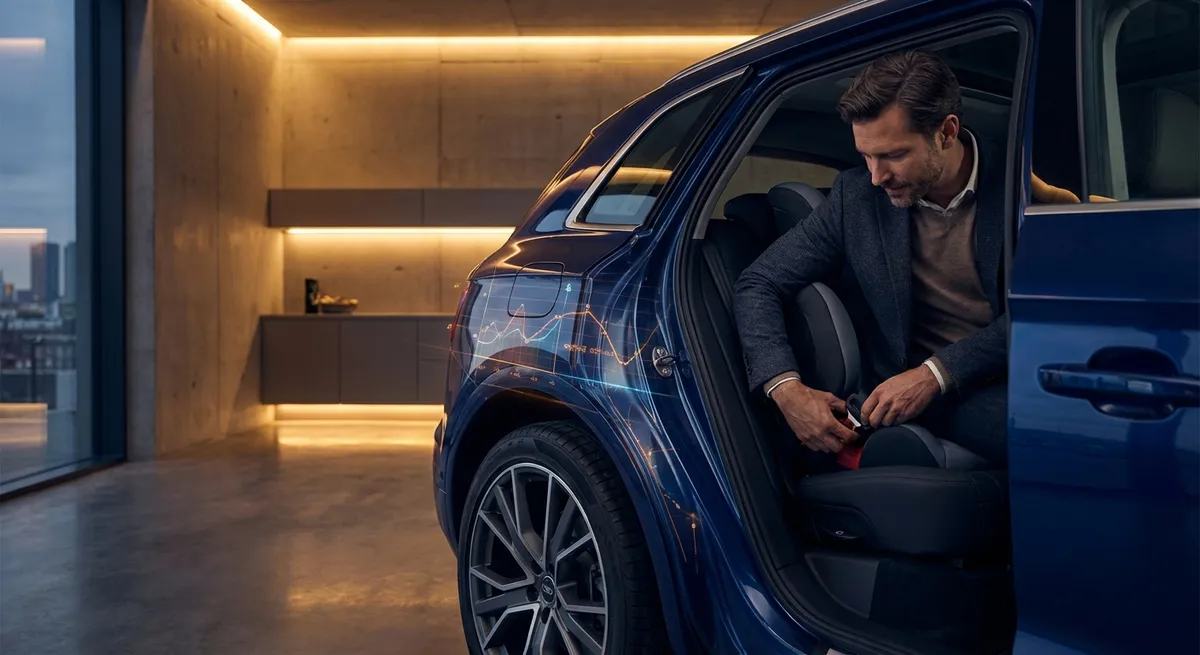
Look for SUVs that provide clear, easy-to-access LATCH/ISOFIX anchors with generous spacing, especially in the outboard seats of the second row. Some models thoughtfully extend anchorage points to the third row, while others leave those seats better suited to older children and adults. Safety organizations and some automakers now publish child restraint installation ratings and guidelines, revealing which vehicles make it simple to achieve a rock-solid fit.
Consider how safely you can load and secure children in the third row: is the passageway wide enough, is there adequate headroom to avoid knocks, and can seat belts be reached without contortion? These seemingly minor ergonomic details directly influence whether harnesses are tightened correctly and seat belts are worn consistently. The truly family-savvy SUV is one that turns safe practices into the path of least resistance—where every buckle, clip, and tether feels intuitive, not like a daily wrestling match.
Conclusion
Safety ratings are indispensable, but they are only the opening chapter of your family SUV’s safety story. The refined, well-informed decision emerges when you align those laboratory scores with your family’s actual routines: where your children sit, how far you drive, under what conditions, and how much support you want from technology in the background.
By looking beyond a single star count—examining rear-seat performance, ADAS tuning, dynamic stability, and everyday child-seat practicality—you move from “safe on paper” to “confident in real life.” In the end, the finest luxury any family SUV can offer is not just a beautifully appointed cabin or a quiet ride, but the serene assurance that your vehicle has been engineered to protect what matters most, in the moments that matter most.
Sources
- NHTSA 5-Star Safety Ratings - Official U.S. government crash-test ratings and explanations of test procedures and star scores
- IIHS Vehicle Ratings - Detailed crash-test results, including small-overlap tests, rear-seat evaluations, and advanced driver assistance system performance
- Euro NCAP Safety Ratings - European crash-test program with specific insights on child-occupant safety and active safety technologies
- Safe Kids Worldwide – Car Seat Safety - Guidance on child restraint use, installation best practices, and relevant considerations for family vehicles
- CDC – Motor Vehicle Safety - Research-based information on road safety, occupant protection, and crash injury prevention strategies
Key Takeaway
The most important thing to remember from this article is that this information can change how you think about Safety Ratings.