For many families, the SUV is no longer just a method of transport; it is the moving center of their day. School runs, late flights, weekend sports, impromptu road trips—your vehicle now hosts much of your family’s real life. The most rewarding SUVs are not always the flashiest or the largest; they are the ones that anticipate needs you have not yet articulated, and resolve frictions you barely notice until they disappear.
This is a closer look at five under‑the‑radar, quietly transformative features that sophisticated family buyers are beginning to prioritize—elements that may not dominate spec sheets, but profoundly shape how your SUV feels to live with, day after day.
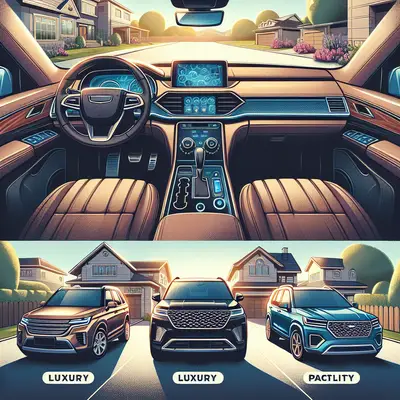
The Architecture of Calm: Cabin Layout That Manages Real Life
Beyond leather options and screen size, the most elegant family cabins are designed around movement—how children climb in, how you access the third row in a parking garage, how you distribute bags, coats, and sports gear without it cascading into chaos.
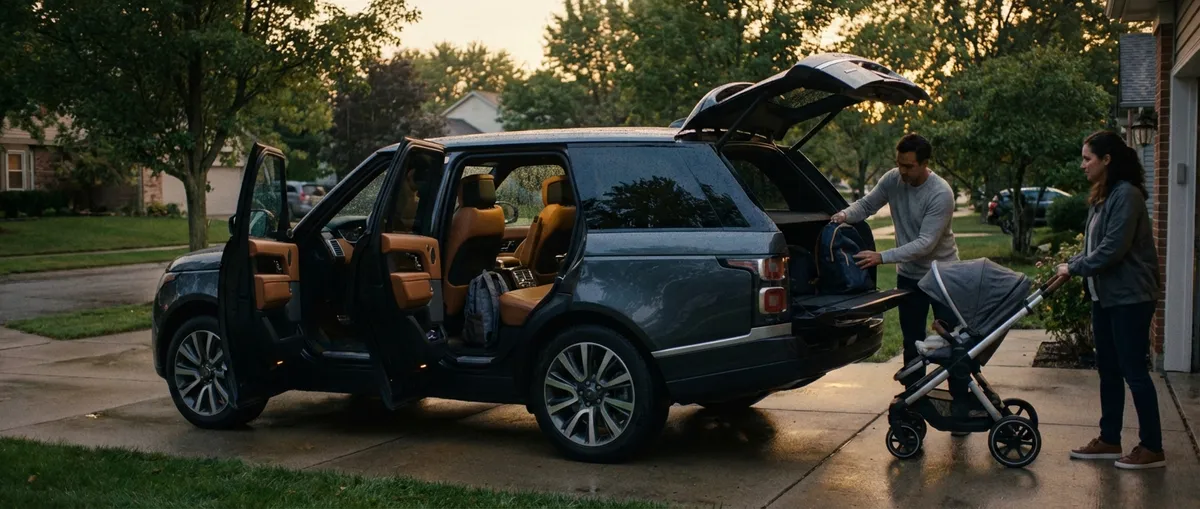
Thoughtful SUVs now offer second-row seats with effortless one-touch slide-and-tilt mechanisms that allow even a belted child seat to remain installed while someone accesses the third row. Flat door sills and wide-opening rear doors reduce the contortion act of buckling a toddler into a rear-facing seat. Some models nuance this further with subtly lower load-in heights and wide, square door apertures that make carrying a sleeping child far less theatrical.
Storage, too, has moved beyond basic cup holders. Premium family‑focused designs incorporate multi‑tiered center consoles that separate “adult essentials” (wallets, key cards, sunglasses) from “rapid‑access kid space” for snacks, wipes, or headphones. Hidden storage under the cargo floor allows you to keep bulky items—strollers, emergency kits, folding chairs—permanently on board without surrendering a clean, uncluttered aesthetic. The most refined cabins feel almost choreographed: everything has an intuitive place, and your family’s rhythms feel supported, not stressed.
Quiet Confidence: Acoustic Refinement That Protects Conversation
Families often underestimate how fatiguing a noisy cabin can be on longer drives. Raised voices, competing music preferences, and road roar create an invisible layer of stress that subtly erodes patience—especially with children on board.
Acoustically refined SUVs go well beyond simple insulation. Laminated front and side glass smooths wind noise at motorway speeds. Carefully engineered door seals and triple-sealed gaps cut the hiss around mirrors and pillars. Some models deploy active noise cancellation, using microphones and speakers to counter low-frequency tire and engine sounds, much like premium headphones.
The true luxury here is not silence for its own sake, but the protection of conversation and calm. It becomes easier to speak softly to a child in the third row, to hold a quiet discussion up front while a baby naps in the back, or to enjoy an audiobook without raising the volume. On a family road trip, this level of acoustic civility may be the difference between arriving slightly tired and truly drained.
Intelligent Comfort: Climate and Seating That Anticipate Each Passenger
“Dual-zone climate control” used to be a luxury headline; for family SUVs, it is now almost a starting point. What separates the more considered options is how precisely they tune comfort for every passenger, not just the adults in the front.
Three- and four-zone climate systems allow the second and even third rows to independently adjust temperature and airflow, which is invaluable when one child runs warm and another is perpetually chilly. Roof-mounted vents that angle directly toward child seats help regulate temperature more evenly than floor vents alone—an important detail for infants and younger children whose bodies regulate heat differently from adults.
Equally transformative is the new generation of seating. Power-adjustable second rows with reclining backrests, sliding bases, and even heating and ventilation blur the line between “family hauler” and executive transport. Some SUVs now offer memory settings for the driver that extend beyond the seat to include mirror positions, steering wheel adjustment, and even climate preferences—ideal when caregiving roles are shared and drivers frequently rotate.
These features do not merely pamper; they reduce fatigue, bickering, and discomfort, making longer journeys substantially more graceful. Comfort, in this context, becomes a tool for family harmony.
Thoughtful Technology: Screens That Serve, Not Distract
Modern SUVs can feel like rolling technology showcases. For families, the question is not how many screens exist, but how well that technology has been curated to support focus, safety, and shared experiences.
The most refined systems now prioritize intuitive interfaces and minimal distraction. Clean, lag‑free touchscreens with clear graphics and logical menu structures reduce the time a driver’s eyes spend off the road. Wireless Apple CarPlay and Android Auto free the center console from cable clutter, while thoughtfully placed wireless charging pads with grippy, cooled surfaces keep phones in place and at optimal temperature.
Rear-seat entertainment, when done right, becomes less about isolated streaming and more about controlled, family-friendly experiences. Some setups allow each child to enjoy independent content while still giving parents the ability to pause or limit screen time from the front. Cabin cameras and intercom functions, meanwhile, let drivers quietly check on rear passengers and speak to the third row without raising their voice—particularly valuable when monitoring infants or mediating sibling disputes.
Crucially, look for vehicles where safety tech is deeply integrated: gentle lane-centering assistance, adaptive cruise control that behaves smoothly in traffic, and blind-spot systems that cover trailers or bikes on a hitch rack. Technology should feel like an unobtrusive guardian, not another system you need to manage.
Future-Proof Practicality: Space, Flexibility, and Charging for a Decade Ahead
Families grow. Car seats give way to booster seats, then to lanky teenagers. Schedules shift, hobbies evolve, and suddenly you are transporting band instruments instead of strollers, camping gear instead of diaper bags. The most intelligent SUV choice recognizes that you are not buying just for this year, but for the next decade of your family’s life.
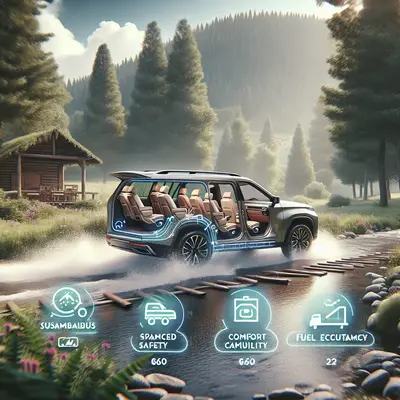
Three-row SUVs with genuinely usable adult-friendly third rows will feel over-specified when your children are small, but they come into their own when you are unexpectedly hosting grandparents, teammates, or friends. Flat-folding, 60/40 or 40/20/40 split seats give you the freedom to configure space around your real cargo, whether that is skis, a cello, or a dog crate. Details like a wide, low cargo opening and a power tailgate with hands-free activation become indispensable once you have balanced groceries in one hand and a toddler in the other.
For many families, the conversation now extends to energy and infrastructure. Plug-in hybrids and fully electric SUVs bring their own family benefits—quiet operation, smooth power delivery, and reduced local emissions around schools and playgrounds. The best of these pair large, flat cargo floors (without intrusive battery humps) with well-placed charging ports and smart route planning. Thoughtful range displays and charge-availability information reduce anxiety on longer trips, and home charging can transform the “fuel stop” into a once-a-week planning choice instead of a mid-errand interruption.
When an SUV is genuinely future-proof, it adapts as your family transitions through early childhood, overflowing calendars, and eventually, perhaps, the quieter years after school runs are a memory. That continuity is a luxury of its own.
Conclusion
A truly exceptional family SUV does more than pass crash tests and offer ample cup holders. It curates an environment where daily life feels less hurried, where children are more comfortable, where conversations are easier, and where the vehicle itself becomes an almost invisible support system for your routines.
By looking beyond the obvious headlines—horsepower, screen size, and cargo volume—and focusing on nuanced architectural design, acoustic refinement, intelligent comfort, thoughtful technology, and long-term adaptability, you can select an SUV that not only serves your family today but gracefully evolves with it. In an age of constant motion, these quiet advantages are what transform a capable vehicle into a trusted companion.
Sources
- [National Highway Traffic Safety Administration (NHTSA) – Vehicle Safety Features](https://www.nhtsa.gov/equipment) - Overview of safety and driver-assistance technologies commonly found in modern SUVs
- [Insurance Institute for Highway Safety (IIHS) – Safety Features for Families](https://www.iihs.org/topics/vehicle-ratings) - Ratings and explanations of crashworthiness and family-relevant safety evaluations
- [Environmental Protection Agency (EPA) – Fuel Economy Guide](https://www.fueleconomy.gov/feg/findacar.shtml) - Data on fuel economy and efficiency, including hybrid and electric SUVs for families considering long-term running costs
- [U.S. Department of Energy – Alternative Fuels Data Center](https://afdc.energy.gov/vehicles/electric.html) - Information on plug-in hybrid and electric vehicles, charging, and benefits for everyday use
- [Consumer Reports – Car Seat Fit and Family-Friendly Vehicles](https://www.consumerreports.org/cars/child-car-seats/how-cars-seat-belts-and-latch-systems-affect-car-seat-installation-a4490275931/) - Analysis of how vehicle design affects child-seat installation and family usability
Key Takeaway
The most important thing to remember from this article is that this information can change how you think about Family Features.