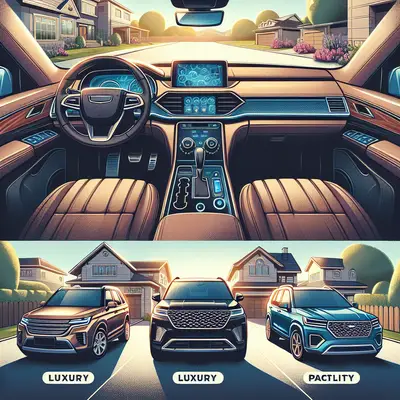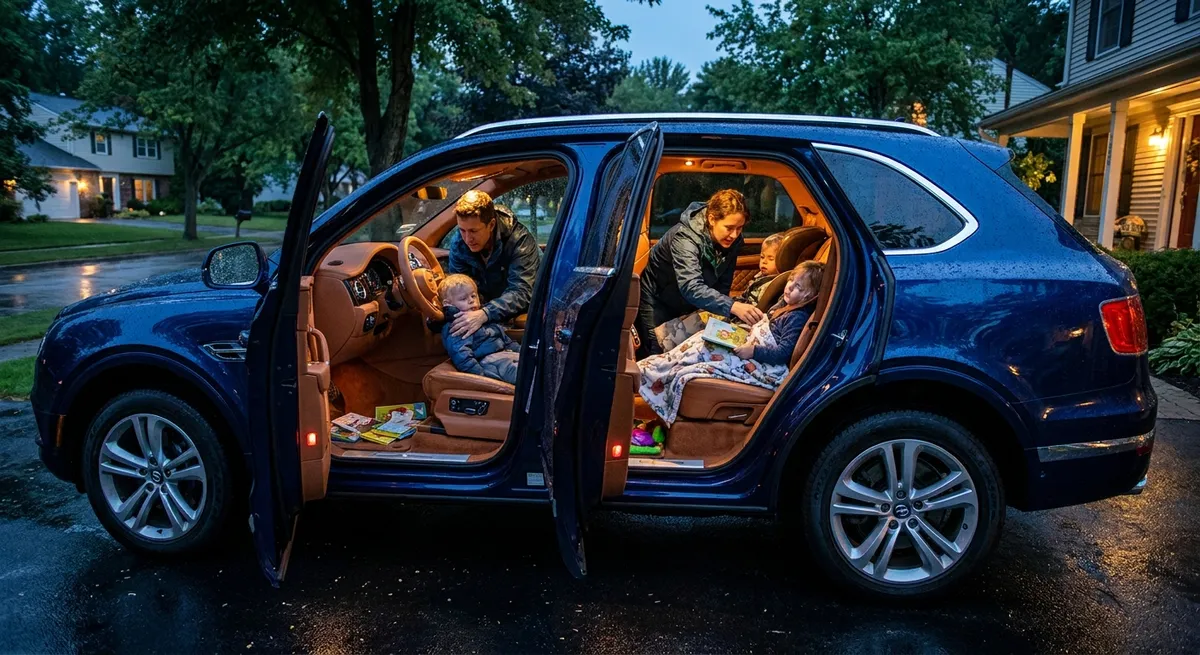
For many families, choosing an SUV is less about spectacle and more about the quiet choreography of daily life: school runs, late-night airport pickups, weekend escapes, and the occasional chaotic carpool. The most rewarding family SUVs rarely shout about their virtues. Instead, they distinguish themselves through small, deliberate decisions—features that make every journey feel a touch more graceful, organized, and reassuring.
Below, we explore five exclusive insights that discerning families often appreciate only after living with their SUV. Consider this a lens for evaluating not just what an SUV is, but how it will feel to share it with the people who matter most.
Insight 1: The Art of Cabin Flow — How Families Actually Move Through the Vehicle
Brochures love to tout “three-row seating” and “ample legroom,” but for families, the real magic lies in how fluidly everyone can move in and out of the SUV. Think of the cabin as a living space with traffic patterns—children climbing to the third row, adults buckling car seats, teens hopping in with backpacks, and grandparents needing a stable handhold.
Look carefully at how the second row operates. Does it tilt and slide in a single motion—even with a child seat installed—so a third-row passenger can slip through without contortions? Are the door openings tall and wide enough that you’re not constantly ducking and twisting, especially with a sleeping toddler in your arms? Is there an intuitively placed grab handle for anyone who needs a bit of support stepping in?
Thoughtful models offer a near-flat floor, limiting tripping hazards and making it easier for kids to navigate on their own. Low step-in heights paired with wide-opening doors create a sense of effortless arrival and departure. These subtleties may not dominate spec sheets, but for families, they dictate whether every school run feels smooth or subtly stressful.
Insight 2: Quiet Confidence — Sound, Serenity, and Family Conversations
Many modern SUVs are powerful and capable, but the most sophisticated family choices prioritize the soundscape as carefully as the powertrain. Cabin quietness is not about sterile silence; it’s about crafting an environment where you can hear the back-row question, the front-row podcast, and the soft hum of the road—without shouting over wind or tire roar.
Look beyond basic noise insulation and ask how the SUV handles sound. Are there acoustic-laminated front windows or even a laminated windshield to soften wind noise at highway speeds? Has the manufacturer tuned the engine and exhaust note to be restrained rather than brash? In some refined models, careful attention to aerodynamics, door seals, and underbody panels creates a calm, composed cabin even on coarser pavement.
For families, this serenity translates into richer conversations, reduced fatigue on long drives, and a general sense that the vehicle fades into the background so the people inside can take center stage. When test-driving, pause the music and simply listen: can your third-row passenger speak at a normal volume and be heard? That is the sound of thoughtful engineering.
Insight 3: Thoughtful Storage — Beyond Cupholders and Cargo Volume
Cargo figures and seat-up/seat-down capacities are helpful, but they tell only part of the story. The most family-friendly SUVs excel in “micro-storage”—the discreet spaces that keep daily life from ending up underfoot or under seats.
Consider the front row: Is there a dedicated, covered space for bags or small purses that keeps them secure in sudden stops? Are there divided bins for sunglasses, charging cables, and house keys so they do not jostle together? A floating center console with space beneath can be ideal for stowing a small backpack or diaper bag within easy reach.
In the second and third rows, look for door pockets that actually accommodate water bottles and snack containers, not just a slim brochure. Seatback pockets with multiple sections can keep coloring books separate from tablets. Flip-open under-floor compartments in the cargo area can discreetly hold emergency supplies, picnic gear, or extra shoes, leaving the visible space open and uncluttered.
Finally, pay attention to how the space adapts. Can you fold down part of the second or third row with a single hand while holding a child’s hand with the other? Are the mechanisms smooth and lightly sprung, or do they require force and awkward angles? True practicality isn’t just about capacity; it’s about how gracefully you can transform the space in the moment.
Insight 4: Human-Centered Technology — Screens That Serve, Not Distract
Today’s family SUVs are awash with screens, yet sophistication lies not in sheer size or pixel count, but in the restraint and clarity of the digital experience. For families, intuitive technology reduces friction; poorly designed interfaces add another layer of mental clutter.
First, examine the basics: Is the home screen clean and legible at a glance? Are core functions—climate, audio volume, defrost, driver assistance settings—accessible without diving through menus? Models that retain a few key physical controls for temperature and volume often prove more pleasant to live with, particularly when you are managing conversations, directions, and schedules simultaneously.
Next, consider how the vehicle supports each family member. Multiple USB-C ports across rows, ideally paired with smart placement of cord pass-throughs, prevent cables from becoming a tangled distraction. Optional built-in rear entertainment systems or simple device mounts can transform long drives without overwhelming the front-row occupants.
Finally, look beyond entertainment to safety-focused technology. Adaptive cruise control, lane-keeping assistance, blind-spot monitoring, and surround-view cameras should be calibrated to assist, not nag. The most polished systems offer gentle steering corrections, thoughtfully modulated alerts, and clear visual cues that feel like a calm co-pilot rather than an anxious instructor. In a refined family SUV, technology protects and streamlines, but never overpowers the experience of simply being together on the road.
Insight 5: Subtle Safety Touches — The Details That Reassure Parents
Official crash-test scores remain essential, but they are only the starting point. Families benefit from examining how safety is woven into the everyday fabric of the SUV, far beyond the headline rating.
Child-seat accommodation is a prime example. Are the LATCH anchors clearly marked and easy to access without digging between tight cushions? Are there multiple full LATCH positions across the second row—or even in the third—so you can configure seats as your family grows? Some SUVs provide wide-opening rear doors and long seat tracks, allowing you to secure a rear-facing seat without pressing it awkwardly into the front passenger’s space.
Also note the quality and placement of head restraints across all rows. Properly sized and adjustable headrests in the third row, often overlooked, can be crucial for older children and occasional adult passengers. Side-curtain airbags that extend fully to the third row, along with thoughtful structural design for side-impact protection, add an additional layer of reassurance.
Finally, consider how the SUV communicates with you about safety. Door-ajar warnings that clearly indicate which door is not fully closed, seat-belt reminders specific to each seating position, and child-lock controls that are easy to confirm at a glance all contribute to a sense of calm control. These are the quiet refinements that, over time, build enduring trust between your family and the vehicle that carries them.
Conclusion
A truly refined family SUV is not defined by a single standout feature, but by a constellation of subtle decisions: how gracefully you enter and exit, how comfortably you converse at speed, how naturally everything has its place, how calmly technology supports you, and how quietly safety is ever-present.
When you next evaluate an SUV, look beyond the brochure-ready highlights. Slide into the third row. Open and close every door. Fold and unfold the seats. Sit in silence with the engine running. Ask yourself how this vehicle will feel on the fifth rainy Tuesday of the month, or during a drowsy late-night drive home. In those small, unremarkable moments, a thoughtfully designed family SUV reveals its true character—and becomes a trusted companion in the evolving story of your family’s life on the road.
Sources
- National Highway Traffic Safety Administration (NHTSA) – Car Seat Recommendations - Authoritative guidance on child-seat use and placement, informing considerations around LATCH anchors and rear seating.
- Insurance Institute for Highway Safety (IIHS) – Vehicle Ratings - Comprehensive safety ratings and crash-test data to complement nuanced, real-world safety considerations.
- Consumer Reports – Guide to Car Seat Safety and Installation - Practical insights into how vehicle design affects ease of child-seat installation.
- Edmunds – Car Noise Levels and Cabin Quietness - Discussion of cabin noise and refinement, relevant to evaluating sound insulation and overall serenity.
- J.D. Power – Automotive Tech and User Experience Studies - Research on how drivers and families interact with in-vehicle technology and driver-assistance systems.
Key Takeaway
The most important thing to remember from this article is that this information can change how you think about Family Features.