Family SUVs are rarely bought on impulse. They are chosen—deliberately, thoughtfully, and often after weeks of conversation around the dinner table. Beyond horsepower figures and brochure-friendly features, what truly shapes daily life is subtler: how easily a grandparent settles into the second row, how gracefully a stroller disappears into the cargo area, how calm everyone feels at the end of a three-hour drive.
This is where genuinely family-focused SUVs distinguish themselves. Not through flashy gimmicks, but through details that earn their worth every single day. Below are five refined, often overlooked insights that sophisticated families consistently appreciate once the novelty of a new vehicle has faded and real life takes the wheel.
The Architecture of Access: How the Cabin Welcomes Every Generation
Family life has a way of turning an ordinary door opening into a small logistical ballet. A thoughtfully designed SUV recognizes this and prioritizes how people—of all ages and mobility levels—transition from pavement to cabin.
Pay close attention to door aperture size and roofline shape. Generously sized rear door openings with a subtly scalloped roof edge can make it dramatically easier to secure a child in a safety seat or assist an older family member. Similarly, a slightly lower step-in height, paired with a supportive but not overly soft seat cushion, can transform what would be a clumsy climb into an unhurried, dignified movement.
Rear doors that open close to 90 degrees are especially valuable for parents dealing with rear-facing seats. Combined with wide, flat door sills and minimal intrusion from the wheel arch, they create a stable platform for feet, diaper bags, and everything else that tends to accompany family logistics.
Even the location of rear grab handles—whether on the B-pillar, the ceiling, or both—can quietly influence how confident a grandparent feels climbing in. When you test-drive, don’t just sit in the driver’s seat. Simulate a real arrival: buckle a child in, help someone into the third row, lean into the far side of the back seat. The right SUV will feel intuitively cooperative, not merely spacious on paper.
The Science of Silence: Cabin Calm as an Everyday Luxury
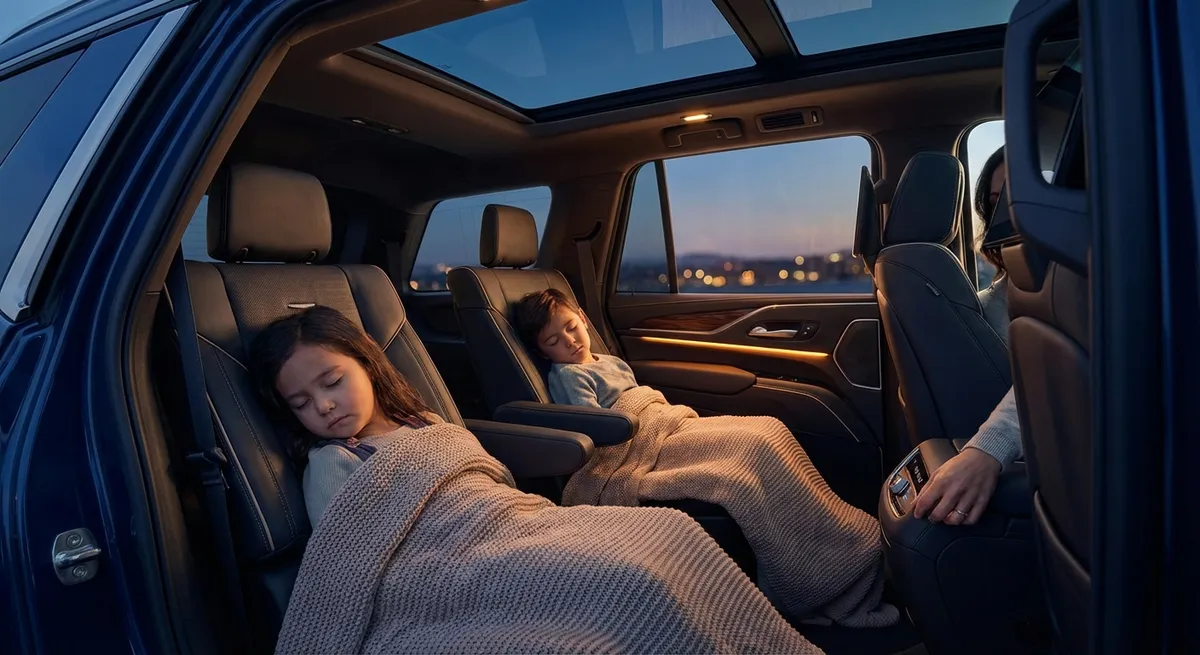
For many families, the greatest luxury is not a panoramic roof or a massaging driver’s seat. It is the absence of fatigue at the end of a busy day. Cabin noise plays a decisive role here, and truly family-minded SUVs treat quiet as a foundational feature, not an afterthought.
Look beyond simple “sound insulation” claims. High-quality models often combine several refined elements: acoustic-laminated glass (especially in the front doors and windshield), additional sound-deadening in the floor and firewall, and carefully tuned engine mounts that reduce vibrations during stop-and-go city driving. The result is not absolute silence—that can feel sterile—but a more composed, low-frequency hush that keeps conversations natural and children more relaxed.
Road and wind noise also influence how loud the audio system must be to be heard clearly. In a calmer cabin, navigation prompts are intelligible at modest volumes, and rear passengers don’t need to raise their voices. This becomes invaluable on longer drives, when cumulative strain matters more than momentary distraction.
During your evaluation, test the SUV on rougher pavement and at highway speeds with the radio off. Ask yourself: Can rear passengers talk without leaning forward? Can you hear a child in the third row without turning your head? The most thoughtfully engineered cabins feel like a moving living room—composed, cocooned, and conducive to actual conversation.
Intelligent Space, Not Just Big Space: Cargo That Adapts Discreetly
Cargo volume numbers are tempting benchmarks, but families quickly discover that clever packaging often outranks sheer size. The way an SUV’s cargo area is shaped, divided, and supported matters more than a few liters on a spec sheet.
A low, flat load floor greatly simplifies sliding in strollers, scooters, and grocery crates. Look for a minimal “lip” at the rear bumper—just enough to prevent items from rolling out, but not so high that heavier items become awkward to lift over. Split-folding rear seats (ideally 40/20/40 instead of just 60/40) offer much more nuanced flexibility, enabling, for example, a child to remain buckled in one side while skis or a folded stroller pass through the center.
Underfloor storage wells are particularly valuable for families who prefer a visually uncluttered cabin. They discreetly accommodate emergency supplies, extra snacks, reusable bags, and even a compact stroller, leaving the primary cargo zone clear. Integrated hooks, rails, and tie-down points allow you to secure school projects, flower arrangements, or luggage without improvising with bungee cords.
Pay attention as well to the tailgate’s motion and clearance. A power tailgate with adjustable opening height is not merely a convenience; it prevents contact with low garage ceilings and makes loading possible even when another car is parked close behind. A hands-free opening function—when properly tuned—can be invaluable when you approach the vehicle with a sleeping child on one arm and a week’s groceries in the other.
Quiet Tech That Serves People, Not Screens
Screens are now inevitable; what distinguishes a refined family SUV is not how many there are, but how subtly they integrate into daily routines. Technology should reduce friction, not add visual clutter or cognitive overload.
Responsive, clearly arranged central displays help ensure that common tasks—adjusting climate zones, activating seat heaters, queuing navigation—require minimal attention. Physical controls for frequently used functions (volume, temperature, defrost) remain remarkably valuable; they can be operated by feel, which is safer and more serene than hunting through layered menus.
Rear-seat USB-C ports, ideally positioned high enough to avoid loose cables tangling underfoot, are increasingly non-negotiable. Consider how many passengers typically ride with devices and whether there are enough charging points not just in the second row, but also the third. Wireless smartphone integration (Apple CarPlay and Android Auto) helps simplify interfaces and preserve familiarity, particularly when multiple drivers share the vehicle.
Look also for digital features tailored to actual family dynamics: a cabin intercom that amplifies the driver’s voice into the third row, a “quiet mode” that reduces rear speaker volume for sleeping children, or profiles that remember individual seat and climate settings for different drivers. These are not gimmicks; they are subtle facilitators of harmony.
During your test, evaluate how intuitive the system feels without a salesperson coaching you. Could a less tech-savvy family member operate basic functions comfortably within a day or two? In a genuinely family-centric SUV, technology recedes into the background, leaving the people and their journeys in focus.
Comfort That Endures: Materials, Seating, and the Patina of Family Life
The right materials do more than look expensive on delivery day; they age gracefully under the realities of family life. Here, elegance and practicality can—and should—coexist.
High-quality synthetic leathers and durable woven textiles have become exceptionally sophisticated. They often resist staining more effectively than traditional leather and tolerate temperature extremes and frequent cleaning better. For families with young children or pets, a thoughtfully chosen interior color—something between stark black and pristine ivory—can disguise everyday wear while still feeling airy and refined.
Seat design is just as crucial. Generous thigh support, subtle contouring, and a well-judged balance between softness and structure ensure that long drives leave everyone stepping out refreshed rather than stiff. Evaluate second- and third-row seat comfort as seriously as the driver’s seat. Children grow, and teenagers will quickly remind you if their designated seats feel like an afterthought.
Removable or easily washable floor mats, ideally with raised edges, help contain sand, melted snow, and the occasional spilled drink. Look for high-touch surfaces—door pulls, steering wheel, armrests—finished in materials that feel pleasant yet robust. A cabin that can be restored to order with a simple, predictable cleaning routine is far more luxurious in practice than one that demands constant worry.
When you imagine the vehicle three or five years from now, ask: Will this interior acquire a graceful patina, or simply look tired? A well-chosen family SUV will feel lived-in, not worn out—subtly reflecting your family’s history without surrendering its composure.
Conclusion
A sophisticated family SUV is defined less by its marketing highlights and more by the small courtesies it extends day after day: the way doors open, how quietly it carries your conversations, how effortlessly it swallows the equipment of modern life, how naturally its technology behaves, and how calmly its materials face the beautiful chaos of family routines.
When you shop, look beyond the obvious. Sit in every seat. Load real items into the cargo area. Drive in silence. Try the controls without instruction. The most rewarding SUVs are those that disappear into the background—allowing your family, your rituals, and your memories to take center stage, supported by a vehicle that feels quietly, consistently on your side.
Sources
- National Highway Traffic Safety Administration (NHTSA) – Vehicle Shopping Tips - Offers official guidance on evaluating vehicles for safety and usability, including considerations for families.
- Insurance Institute for Highway Safety (IIHS) – Vehicle Ratings - Provides crash test results and safety evaluations that complement real-world family-focused assessments.
- Consumer Reports – Car Seat Fit and Family Car Recommendations - Explains how car seat fit is tested and highlights models that better accommodate children’s seats.
- Edmunds – How to Choose the Right Family Car - Discusses space, comfort, practicality, and features that matter most to families in real use.
- AAA – Vehicle Technology and Driver Assistance Features - Breaks down modern in-car technology and its impact on everyday comfort, safety, and usability.
Key Takeaway
The most important thing to remember from this article is that this information can change how you think about Family Features.