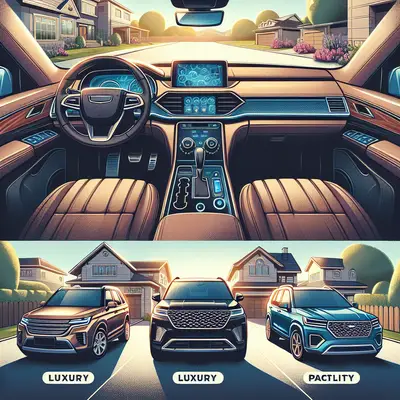
Family SUVs are often evaluated on the obvious qualities—space, safety ratings, and price. Yet for families who value refinement as much as practicality, the real differentiation lies in the quieter details: how the vehicle supports conversation on a late-night drive, soothes a restless toddler, or neatly absorbs the clutter of everyday life.
This is where thoughtful family features truly earn their place. Below are five exclusive, often-overlooked insights that help distinguish a merely capable SUV from one that feels deeply, almost intuitively, attuned to family living.
Insight 1: The Art of Cabin Quiet—Not Just for Comfort, but for Connection
Cabin quiet is often marketed as a luxury feature, but for families it’s also a functional one. A well-insulated, acoustically tuned interior allows parents to speak in calm tones, hear a child’s question from the third row, or carry on a nuanced conversation while cruising at highway speeds. This goes well beyond basic noise reduction; it’s about how the cabin sounds—and how it doesn’t.
Premium family SUVs increasingly use laminated glass, strategically placed sound-deadening materials, and active noise cancellation to target frequencies that cause fatigue on longer drives. The result is not a sterile silence, but a controlled soundscape in which music is clearer, navigation prompts are gentler, and backseat chatter doesn’t need to be shouted. For families, this translates to children who stay engaged longer, less tension on long trips, and a driving environment that feels more like a private lounge than a rolling amphitheater.
When test-driving, don’t just notice how quiet the cabin feels; have a real conversation at 65 mph, speak to someone in the third row, and note whether you find yourself unconsciously lowering your voice. A genuinely refined family SUV allows you to do exactly that.
Insight 2: Lighting That Calms, Guides, and Quietly Organizes
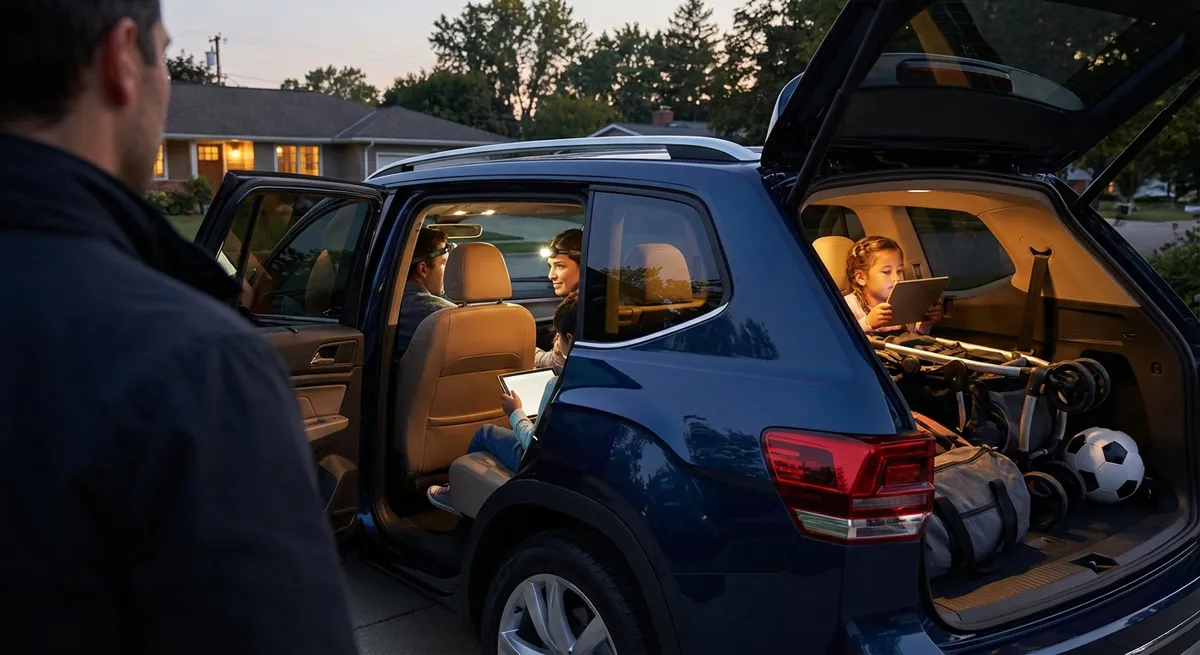
Lighting is rarely a headline feature, yet it subtly dictates how usable and relaxing an SUV feels after dark. For families, ambient and functional lighting can mean the difference between a serene nighttime journey and a fumbling, flashlight-in-the-mouth scramble to find a dropped pacifier.
Look for more than simple overhead dome lights. Premium family-focused SUVs now offer gentle ambient lighting along door panels and footwells, softly illuminating the cabin without disturbing sleeping children. Thoughtful touches include discreet LED lighting around cupholders, USB ports that are easy to locate in the dark, and softly backlit seat adjustment controls that make late-night changes intuitive rather than disruptive.
Equally important are features like automatically dipping interior lighting when the vehicle is in motion at night, and separate lighting zones that allow front passengers to remain alert while the rear stays dim and nap-friendly. When evaluating an SUV, sit in the second and third rows with the doors closed at night and observe how the lighting supports real family routine—reading in the back, checking on a child, or adjusting climate controls without bathing the cabin in harsh light.
Insight 3: Climate Control That Anticipates Real Family Dynamics
Climate control in a family SUV is no longer about “hot” or “cold”; it’s about temperature equity among multiple passengers with very different needs. A truly family-oriented climate system quietly navigates that complexity so you don’t have to.
Advanced multi-zone climate systems, sometimes with three or even four zones, allow front passengers, second-row occupants, and in some cases third-row riders to tailor their own settings. Rear passengers should have not only vents, but thoughtfully positioned ones—high-mounted ceiling or pillar vents that distribute air gently, rather than floor-only vents that struggle to reach a rear-facing child seat.
Look for intuitive rear controls that older children can manage themselves without risk of drastic changes, as well as lockout features when younger passengers are on board. Features like heated second-row seats, ventilated front seats, and automatic de-fogging further elevate daily comfort, particularly in climates with real seasonal extremes.
During a test drive, sit in every row with the climate system running. Note how quickly the rear reaches a comfortable temperature, whether air is delivered where it’s actually needed, and whether the adjustments feel precise rather than blunt. The most refined SUVs deliver a climate experience that feels individually tailored, even with a full cabin.
Insight 4: Storage That Disappears Into the Design—Yet Always Seems to Be There
Families rarely feel they have “too much storage,” but the most desirable solutions are those that almost fade from view until the moment they’re needed. This is storage that respects the aesthetic of a premium cabin while quietly absorbing the realities of family life: bottles, snacks, charging cables, school projects, sports gear, and more.
Look for deep, rubberized door bins that securely hold water bottles and small toys without rattling; a center console that’s not just large, but intelligently divided; and under-floor cargo areas that can conceal essentials like emergency kits or travel blankets. Rear cargo floors that are level when seats are folded help with everything from strollers to weekend projects, while grocery bag hooks, adjustable cargo rails, and small side cubbies help tame everyday clutter.
In higher-end family SUVs, you’ll also find clever features like a dual-tier cargo load floor (for separating clean from muddy items), a hidden storage compartment behind the third row, or even built-in hooks for handbags to prevent them from toppling. The true mark of refinement is when all this usability remains elegantly integrated—practicality without visual chaos.
When evaluating an SUV, place real items in real spaces: strollers, backpacks, sports bags, lunch boxes. Notice whether they sit naturally or require improvisation. A well-designed family SUV will feel like it has a “place” for almost everything, without ever looking like a storage system on wheels.
Insight 5: Second- and Third-Row Seating That Respects Grown-Ups, Too
Many SUVs offer three rows of seating; far fewer make those extra seats genuinely hospitable for all ages. A sophisticated family SUV does not treat the second and third rows as an afterthought—it acknowledges that grandparents, friends, and even teenagers will occupy those spaces for long stretches.
Second rows should offer more than just adequate legroom. Details like adjustable seat backs, sliding bases for legroom vs. cargo flexibility, and thoughtfully positioned armrests transform these seats from “usable” to genuinely comfortable. If captain’s chairs are available, consider whether they make access to the third row easier without sacrificing the ability to supervise younger children.
The third row is where true design integrity reveals itself. Prioritize adult-viable legroom and headroom, seats that are easy to reach without complex acrobatics, and simple, low-effort folding mechanisms. Wide-opening rear doors, one-touch tumble seats, and lower step-in heights are particularly important when installing child seats or helping older relatives in and out.
During your evaluation, sit in the third row as though you were an adult passenger on a two-hour drive—knees, head, shoulders. Check sightlines to the outside, access to cupholders or small storage, and whether you can adjust airflow and lighting. A premium family SUV should make every seat feel like it was designed for someone who matters, because in a family setting, every seat is.
Conclusion
Families with elevated expectations are not simply seeking a larger vehicle; they are searching for a space that supports how they actually live—gracefully, quietly, and with minimal friction. The most compelling family SUVs succeed not just through impressive specifications, but through the accumulation of subtle, human-centered details.
Cabin quiet that fosters conversation, lighting that soothes, climate control that accommodates differing needs, storage that disappears into the design, and seating that genuinely respects every passenger—these elements do more than make daily drives easier. They create a moving environment that feels composed, considered, and reassuringly prepared for whatever a family’s day may bring.
By focusing on these refined, real-world details during your search, you move beyond generic “family-friendly” claims and toward something more rare: an SUV that feels as thoughtfully put-together as the family it carries.
Sources
- [National Highway Traffic Safety Administration (NHTSA) – Vehicle Safety Features](https://www.nhtsa.gov/features) - Overview of modern safety and convenience technologies that influence family-friendly SUV design
- [Insurance Institute for Highway Safety (IIHS) – SUV Ratings and Design Factors](https://www.iihs.org/ratings/by-vehicle-category/suvs) - Provides crash-test results and commentary on structural and interior design relevant to families
- [Edmunds – Car Interior Noise Levels and Comfort](https://www.edmunds.com/car-buying/car-comfort-noise-vibration-and-harshness.html) - Explains how noise, vibration, and harshness impact comfort and perceived refinement
- [Consumer Reports – 3-Row SUV Buying Guide](https://www.consumerreports.org/cars/suvs/3-row-suv-buying-guide-a2241685284/) - Discusses practical considerations for seating, cargo, and family usability in three-row SUVs
- [Ford – Guide to Climate Control and Air Quality Features](https://www.ford.com/support/how-tos/ford-technology/comfort/how-does-automatic-climate-control-work/) - Illustrates how modern multi-zone climate systems function in family vehicles
Key Takeaway
The most important thing to remember from this article is that this information can change how you think about Family Features.