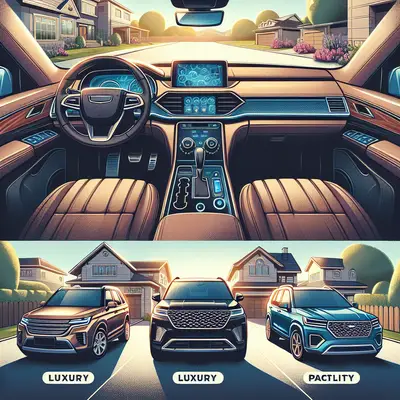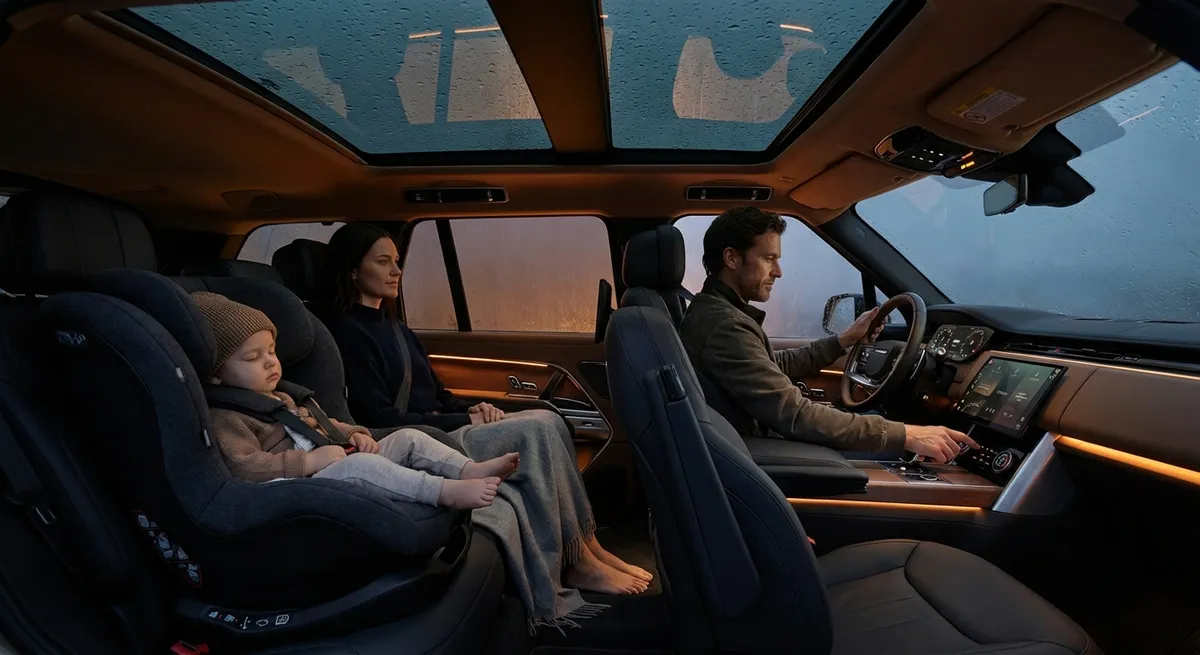
Family SUVs are no longer just about space and safety—they’re about crafting a calm, composed environment that supports your family’s rhythm without shouting for attention. The most satisfying family vehicles tend to impress not with showy features, but with the small, almost invisible refinements that make every school run, airport pickup, and weekend escape feel easier and more composed.
In this piece, we explore five exclusive, often-overlooked insights that help discerning families see beyond brochure buzzwords and uncover the genuinely elevated details that separate a merely “good” SUV from one that quietly enhances daily life.
Insight 1: Cabin Calm Is the New Luxury
For a family SUV, true refinement starts with quiet—both literal and emotional. While decibel ratings and sound insulation get occasional mention, what matters most is how effectively an SUV filters the outside world so that conversations in the second and third rows feel relaxed rather than strained.
Premium family-focused SUVs increasingly use laminated glass, acoustic windshields, and targeted insulation around the wheel wells and firewall. Some models incorporate active noise cancellation, subtly cancelling out droning frequencies from the road and engine. The result is not silence, but a gentle hush that allows your family’s soundtrack—podcasts, playlists, and the inevitable “How much longer?”—to unfold at a softer volume.
An overlooked detail is how well the cabin maintains its composure over broken pavement. The pairing of suspension tuning and cabin insulation determines whether a rough road feels merely like a texture underfoot or a full-body jolt. For families, that distinction matters: a more composed ride means fewer jolted naps, less motion irritation, and a calmer environment for parents trying to decompress between commitments.
The most telling test? Drive your shortlist at the speeds and on the roads you actually use—school zones, suburban arteries, weekend freeway stretches—and pay close attention to conversation volume, how often you raise your voice, and whether second- and third-row passengers can be heard without turning around.
Insight 2: Intelligent Space, Not Just “Three Rows”
In the family segment, “three rows” has become a marketing shorthand for practicality. Yet the most family-friendly SUVs aren’t simply those that fit seven or eight people, but those that manage space with intelligence and grace.
Look beyond the headline seating capacity and examine how the cabin flexes for real life. Can one side of the third row be folded down to create a long loading area for sports gear while still accommodating a grandparent or friend? Do the second-row seats slide far enough to meaningfully change legroom for kids in boosters, or are they more symbolic than functional?
Premium-feeling packaging is often revealed in the micro-details: second-row seats that tilt and slide even with a child seat installed; third-row access that doesn’t require contortionist skills; and a load floor that stays flat when seats are folded instead of scattering odd ridges and gaps. These seemingly small choices determine whether your SUV adapts elegantly to a surprise Costco run and last-minute sleepover—or becomes an ongoing game of Tetris.
Storage solutions deserve equal scrutiny. Truly family-oriented SUVs integrate deep door pockets sized for reusable bottles, discreet covered compartments for valuables, and thoughtfully placed bins that don’t just exist, but actually align with how families move through their day. A well-placed, felt-lined console can be the difference between a composed front cabin and a jumble of cables, sunglasses, and snack wrappers.
Insight 3: Climate Subtleties That Keep Everyone Content
Climate control is rarely the headline, yet it plays an outsized role in whether a family SUV feels genuinely premium. It’s not enough to have “tri-zone climate” in the specs; what matters is how precisely and quietly the system works for real passengers in all three rows.
In more refined SUVs, rear climate controls are intuitive enough that older children can manage their own comfort without constant driver intervention—large, clear buttons or a simple touchscreen with restrained graphics, rather than nested menus buried in the main display. Vent placement is equally crucial: roof-mounted vents can cool the third row rapidly on hot days, while floor vents paired with mid-level vents create a more even temperature gradient in winter.
Pay attention, too, to how quickly the system responds after the vehicle has been parked in the sun or cold. Some vehicles now offer remote pre-conditioning via smartphone apps, letting you pre-cool or pre-heat before buckling a sleeping toddler into a car seat. Paired with ventilated front seats and heated second-row outboard seats, the whole cabin can feel more like a thoughtful lounge than a utilitarian box.
A quieter, more refined climate system—one that doesn’t roar on startup, then cycle abruptly—contributes to the sense of calm. During a test drive, experiment with temperature changes and fan speeds; listen for smooth transitions rather than abrupt gusts. Families often underestimate how much this contributes to reduced fatigue on longer journeys.
Insight 4: Tech That Supports, Not Distracts
The most advanced family SUVs are moving away from tech overload and towards curated, intuitive systems that quietly support the driver while keeping the cabin serene. The goal is not to impress with sheer screen size, but to deliver information and entertainment without visual chaos.
Look for interfaces that prioritize clarity: clean fonts, spare layouts, and essential functions accessible within one or two taps. Wireless Apple CarPlay and Android Auto can streamline the experience, but the underlying system still matters—especially when you need quick access to native navigation, climate controls, or driver assistance settings without swapping apps.
Rear-seat entertainment, if you choose it, should feel like an integrated experience rather than an aftermarket add-on. Thoughtful designs allow content to be streamed independently to each screen, with easy headphone pairing so the front cabin remains quiet. Some automakers now offer in-car Wi-Fi and app ecosystems that can download entertainment for offline viewing before a long drive, reducing the reliance on phone hotspots and last-minute improvisation.
Crucially, examine how the SUV handles driver distraction. Head-up displays that project essential information into the driver’s line of sight, simple steering wheel controls, and well-tuned voice recognition all contribute to a more focused, less cluttered driving experience. The most refined family SUVs don’t just add technology—they edit it, ensuring each element serves a clear purpose.
Insight 5: Everyday Ease as a Design Philosophy
The finest family SUVs feel as though a thoughtful designer shadowed a real family for a week and then quietly solved their friction points. This goes beyond individual features and instead reflects an overarching philosophy: to make daily life smoother in ways you can feel, but often can’t quite pinpoint.
Consider the entry and exit experience. Are the door openings tall and wide enough for a grandparent to step in comfortably and for a parent to lean in and buckle a car seat without straining? Does the SUV offer a hands-free tailgate that works reliably when your arms are full of groceries or luggage, rather than only in perfect conditions?
Interior lighting is another subtle yet telling detail. Gentle, configurable ambient lighting can provide just enough glow for children to find dropped items or read quietly without disturbing the driver. Soft-close center console lids, damped seat-back folding mechanisms, and high-quality materials where hands rest most often (steering wheel, door pulls, armrests) all signal a commitment to everyday serenity.
Even the driving dynamics play a role in this philosophy. A family SUV tuned for smooth, linear acceleration and predictable braking instills confidence, particularly when merging with a full load of passengers. When the vehicle feels secure and unflustered, it sets the tone for everyone inside—a quiet assurance that carries through rush-hour traffic, late-night airport runs, and everything in between.
The final measure of everyday ease is how the SUV feels after the novelty wears off. A truly elevated family vehicle continues to earn its place in your life not through dramatic features, but through an ongoing absence of frustration: fewer awkward contortions, fewer misplaced items, fewer minor annoyances that erode patience over time.
Conclusion
For families with discerning taste, the most rewarding SUVs are those that treat refinement as a daily companion rather than an occasional showpiece. Cabin calm, intelligently managed space, sophisticated climate control, curated technology, and an overarching commitment to everyday ease together create an environment that feels quietly luxurious without ostentation.
When evaluating your next family SUV, look past the obvious talking points and focus instead on these subtle, experience-driven details. They are the difference between a vehicle that simply moves your family and one that actively elevates the way you move through life together.
Sources
- National Highway Traffic Safety Administration (NHTSA) – Vehicle Safety Features - Overview of modern vehicle safety and driver-assistance technologies relevant to family SUVs
- Insurance Institute for Highway Safety (IIHS) – Ratings & Safety Information - Independent crash-test data and insights into structural safety and restraint systems
- EPA – Fuel Economy Guide - Official fuel economy data for comparing SUVs, especially important for families balancing performance and efficiency
- Consumer Reports – Car Buying & Ratings - In-depth testing and owner satisfaction data on ride comfort, noise, reliability, and usability
- Edmunds – Car Features and Options Guide - Detailed explanations of in-car features, tech, and comfort options commonly found in modern SUVs
Key Takeaway
The most important thing to remember from this article is that this information can change how you think about Family Features.