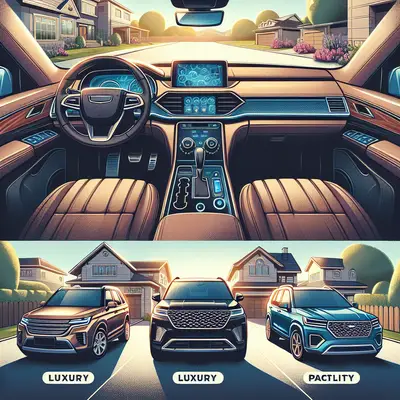
For many families, the right SUV is less about dramatic styling and more about how gracefully it absorbs the demands of everyday life. School runs, client meetings, weekend escapes, late-night airport pickups—all ask for a vehicle that can transition as effortlessly as you do. The most rewarding family SUVs are not necessarily the flashiest; they are the ones that feel composed, considered, and quietly indulgent in the ways that actually matter at 7:30 a.m. on a Tuesday.
Below are five exclusive, under-the-radar insights that discerning families increasingly prioritize—features and characteristics that rarely make the front page of a brochure, but often determine whether an SUV continues to feel like the right choice years down the line.
1. The “Conversation-Friendly” Cabin
One of the most overlooked hallmarks of a well-designed family SUV is how naturally conversation flows across all three rows. Beyond basic legroom, premium family cabins are engineered to support connection—spoken, not shouted.
Cabin architecture, seat height, and sound insulation work together to shape how easily a driver can hear a child in the third row or a partner in the passenger seat. Thoughtful manufacturers tune road- and wind-noise levels so you can speak at a comfortable volume at highway speeds, while still hearing subtle auditory cues from the road. Features such as built-in “cabin talk” systems, strategically placed microphones, and well-calibrated voice recognition further enhance this sense of effortless communication.
Pay attention during test drives: Can you converse with someone in the rearmost seat without turning your head or raising your voice? Are there echoes or odd acoustic “dead zones” when more than one person is speaking? A truly family-centric SUV doesn’t just transport your household; it creates a calm acoustic environment where everyone can be heard without effort.
2. Climate Control as a Wellness Feature
In refined family SUVs, climate control is no longer just about temperature—it quietly shapes comfort, composure, and even how rested everyone feels after a long drive. Advanced multi-zone systems allow the driver, front passenger, and rear occupants to tailor their environment without compromise, while subtle ventilation in seats helps prevent fatigue on extended journeys.
Look for details like rear-row climate panels that are intuitive enough for children to manage on their own, softly backlit controls that don’t dazzle at night, and vents placed where they actually deliver even airflow rather than blowing directly into faces. In higher-end models, air filtration systems can reduce particulate matter, pollen, and certain pollutants—particularly relevant for families with allergies or urban commutes.
During a test drive, experiment: How quickly does the cabin reach a pleasant temperature from a hot or cold start? Do rear passengers cool down or warm up at the same pace as the front occupants? An SUV that treats climate control as a subtle wellness tool, not a blunt instrument, will feel markedly more civilized in day-to-day family life.
3. Seating That Anticipates Real Life, Not Just Brochure Photos
Many SUVs photograph well with all seats upright and perfectly aligned. The true test is how intuitively those seats adapt when you’re juggling a toddler, a laptop bag, and a grocery order on a rainy evening. Premium family seating is as much about choreography as it is about cushioning.
Look for second-row configurations that allow independent adjustment of each seat—both fore-and-aft and recline—so you can balance child-seat legroom with adult comfort. One-touch mechanisms that tilt and slide the second row, even with a child seat installed, can transform the experience of accessing the third row. Flat-folding rear seats that create a truly level load floor mean strollers, luggage, and sports gear can be arranged without a game of Tetris.
Attention to finishing details tells you how seriously the manufacturer takes family life: are the ISOFIX/LATCH anchor points clearly marked and easily accessible, or hidden behind awkward fabric flaps? Are headrests supportive but not intrusive with child seats in place? A seating system that has clearly been tested with actual families—car seats, backpacks, and all—becomes a daily luxury, not just a spec-sheet talking point.
4. Storage That Works Like a Well-Designed Home
The most satisfying family SUVs feel almost residential in how they handle belongings. Instead of a single vast cargo area and a couple of cupholders, they offer a quiet abundance of well-placed, purposefully sized spaces—a glovebox that can actually hold more than documents, door bins that take water bottles plus a book, covered compartments for valuables, and an out-of-sight nook for emergency items.
Beyond sheer volume, pay attention to the logic of the layout. Is there a dedicated place where school forms, sunglasses, charging cables, and snacks can live without invading the main cabin? Are there hooks for shopping bags to prevent contents from tumbling across the floor? Does the cargo area have thoughtful touches like an adjustable load floor, discreet underfloor storage for roadside equipment, and tether points that make securing bulky items simple?
An elegantly practical SUV allows a certain visual calm. When everyday essentials can be stored within reach but out of view, the cabin feels less like a mobile closet and more like a composed, livable space. That quiet orderliness, maintained over months and years, becomes one of its most luxurious qualities.
5. Technology That Respects Your Attention Span
Family SUVs increasingly arrive laden with screens and digital features; the most sophisticated ones are distinguished not by how much they can do, but by how gracefully they do it. The real luxury is not a dazzling interface—it is an interface that steps out of the way and lets you focus on the people and road in front of you.
Evaluate how intuitive the main infotainment system feels on the first encounter. Are the key functions—navigation, media, phone, climate—accessible with minimal layers of menus? Do physical controls still exist for vital tasks like volume and temperature, so you’re not forced to scroll or tap while driving? A clean, restrained interface that pairs seamlessly with Apple CarPlay or Android Auto reduces friction, especially when multiple drivers in the household rotate between vehicles.
Advanced driver-assistance systems (ADAS) are equally crucial. Adaptive cruise control, lane-keeping support, blind-spot monitoring, and rear cross-traffic alert can meaningfully reduce mental load in busy environments. The difference between “standard” and “exceptional” lies in tuning: well-calibrated systems intervene smoothly and predictably, without sudden braking or intrusive beeping that startles passengers. A refined SUV feels like a discreetly competent co-pilot—present, attentive, and never clamoring for attention.
Conclusion
For families with a discerning eye, the most rewarding SUVs are not defined by headline horsepower or oversized touchscreens, but by the quieter ways they cultivate ease: a cabin where voices carry effortlessly, climate and seating that adapt around real lives, storage that creates visual calm, and technology that supports rather than overwhelms. These subtler luxuries rarely shout for attention, yet they shape every mile you share together.
As you explore your next family SUV, treat the test drive as a glimpse into daily life: listen for how the cabin sounds with everyone speaking, note how naturally the seats and storage respond to real scenarios, and pay attention to whether the technology feels like an ally or an obligation. The right vehicle will feel less like a gadget and more like a thoughtfully designed extension of your family’s rhythm—quietly elevating the familiar moments that matter most.
Sources
- U.S. Environmental Protection Agency – Vehicle Air Quality and Cabin Filters - Background on air filtration concepts that relate to in-cabin air quality and filtration systems
- National Highway Traffic Safety Administration (NHTSA) – Overview of Driver Assistance Technologies - Explains modern driver-assistance features and how they enhance safety and reduce driver workload
- Insurance Institute for Highway Safety (IIHS) – Ratings and Vehicle Evaluations - Provides safety ratings and research that inform the value of various SUV safety and convenience technologies
- Edmunds – Car Interior and Cargo Space Guide - Discusses how interior layout and cargo design affect day-to-day usability for families
- Consumer Reports – Car Seat and Child Safety in Vehicles - Offers expert guidance on child-seat considerations that intersect with SUV seating and access design
Key Takeaway
The most important thing to remember from this article is that this information can change how you think about Family Features.