Family SUVs are no longer just about fitting car seats and cargo. For discerning families, they are the moving heart of daily life—where early‑morning school runs, late‑night airport pickups, and unplanned detours all converge. The difference between “good enough” and genuinely elevated often lives in the details that never feature on a billboard, yet quietly refine each journey.
This is an exploration of family‑centric SUV features that go beyond surface‑level checklists—subtle, often overlooked elements that create ease, calm, and continuity for families who expect more from their vehicle than mere transport.
Calming the Cabin: Design That Lowers the Volume on Family Chaos
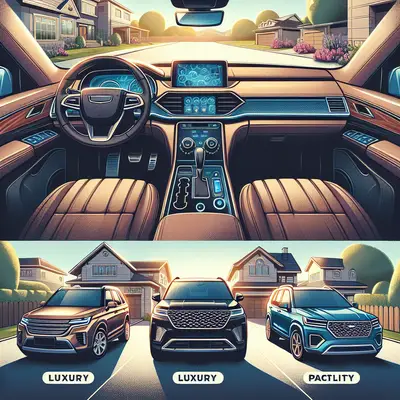
A truly family‑focused SUV doesn’t just move people; it manages energy. Sound insulation, seat design, and airflow are not glamorous bullet points, yet they dramatically shape how a family experiences time on the road.
Well‑engineered cabins use layered glass, strategic insulation, and refined aerodynamics to reduce wind and road noise. For parents, that means quieter conversations, clearer navigation prompts, and less fatigue on long drives. Add in thoughtfully contoured seats with proper lumbar support, and even a late‑night drive home from a birthday party feels less taxing.
Look for multi‑zone climate control that allows adults and children to set their own comfort, rear vents positioned at torso level rather than simply at the feet, and ventilated front seats that keep drivers composed in summer traffic. Subtle ambient lighting—soft, non‑glaring, and adjustable—can soothe younger passengers during evening drives and make night journeys feel cocooned rather than clinical.
The most refined family SUVs marry all of this into a sense of calm: a cabin where the outside world feels appropriately distant, and the chaos of daily logistics loses some of its edge.
The Invisible Butler: Storage That Anticipates Real Life
Families rarely travel light, yet the most satisfying interiors feel orderly rather than overpacked. The distinction often lies in how intelligently an SUV handles “the small stuff”—the everyday objects that usually end up rolling under seats.
Seek out vehicles with tiered center consoles that separate valuables (wallets, small bags, devices) from daily clutter (snacks, charging cables, tissues). Hidden or covered storage helps maintain a clean visual line, reducing the constant sense of “mess in motion” that can creep into busy family cars.
Door pockets that hold full‑size water bottles, under‑floor cargo compartments for infrequently used items, and dedicated spaces for umbrellas or wet gear keep the main cabin free from distraction. For families with younger children, integrated trash solutions—removable bins, bag hooks, or wipeable compartments—are understated luxuries that make Monday morning commutes feel noticeably more composed.
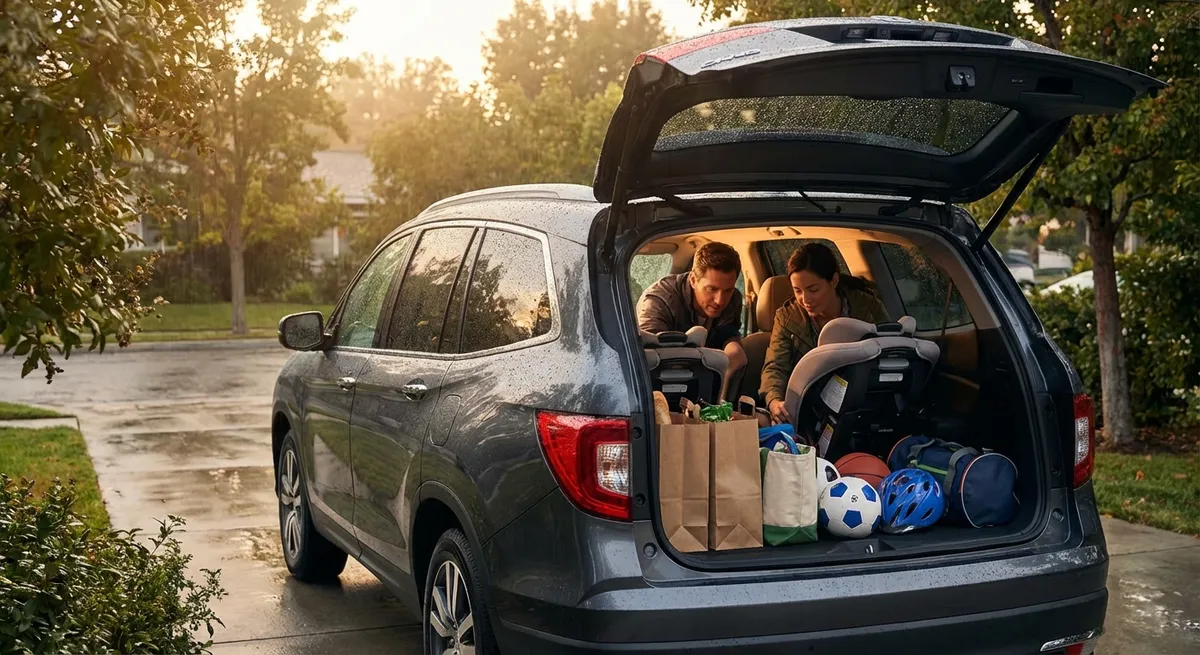
Pay special attention to how the cargo area can be configured: flat‑folding seats that lower with one touch, levers accessible from the rear, and a load floor that remains level even when seats are down. These are the details that turn last‑minute hardware store runs or sports tournaments into seamless rather than stressful logistics.
Third‑Row Reality: Seating That Respects Every Passenger
Many SUVs claim three‑row versatility, yet not all are comfortable or dignified for those seated furthest back. Refined family vehicles treat third‑row occupants as true passengers, not an afterthought.
Watch how easily the second row tilts and slides with child seats installed—some models allow access to the third row without removing a car seat, a quiet game‑changer for parents with multiple young children. Step‑in height and the size and shape of the door opening matter just as much as legroom numbers; grandparents, teens, and friends should be able to enter and exit without contortion.
Once seated, details like a proper seating angle (not knees‑to‑chin), usable headroom, and accessible armrests make longer trips more pleasant. Individual vents and charging ports in the third row signal that the space is designed for real use, not just occasional “overflow” seating.
In truly family‑aware SUVs, each row feels intentionally crafted: everyone has somewhere to place a drink, charge a device, and sit comfortably—whether the drive is ten minutes or several hours.
Tech That Enhances, Not Distracts: Thoughtful Digital Experiences
For modern families, in‑car technology should be both sophisticated and restrained—elevating the journey without overwhelming it. The best systems disappear into routine, allowing drivers to stay focused while passengers remain content.
Prioritize infotainment systems that mirror familiar smartphone interfaces with minimal menus and quick responses. Wireless Apple CarPlay and Android Auto can streamline media, navigation, and messaging without clutter, while multiple USB‑C ports ensure that tablets, phones, and laptops remain ready for school, work, or entertainment.
Rear‑seat entertainment, where available, is most effective when flexible: screens that can mirror personal devices, separate headphone audio, and parental controls that maintain harmony between siblings. Over‑the‑air software updates future‑proof the vehicle’s tech, quietly improving features without a service visit.
Advanced driver‑assistance systems—lane centering, adaptive cruise control, blind‑spot monitoring—are especially valuable for families, but their calibration matters. Look for systems that intervene smoothly and communicate clearly, with alerts that are firm but not jarring. The goal is partnership, not interference: technology that supports an attentive driver on a tiring commute or long holiday drive, rather than attempting to replace them.
Routines, Elevated: Everyday Touches That Distinguish a Family‑First SUV
The most exclusive insights often seem deceptively modest at first glance. When evaluating a family SUV, consider how gracefully it handles the unremarkable yet frequent rituals that define family life.
Hands‑free tailgates that open with a foot gesture transform grocery runs when your hands are full. Memory seating that recalls individual driver positions is more than a convenience; it creates continuity for families where both partners share driving duties. Keyless entry on all doors allows children to access “their” side without waiting for a front‑door unlock, minimizing parking‑lot friction.
Quality of materials is another quiet differentiator. Surfaces that are soft to the touch yet durable, leather or premium seating surfaces that resist spills, and textiles that don’t trap every crumb or pet hair make daily upkeep significantly less demanding. Subtle fragrance systems or high‑grade cabin air filters can make the interior feel consistently fresh, even after sports practices or road trips.
Finally, consider the “reset moment” at the end of a day: How easy is it to restore the vehicle to order? Seats that flip back into place with minimal effort, storage that swallows loose items, and clear, simple layouts help keep the SUV ready for whatever tomorrow brings—without feeling like a second household to manage.
Conclusion
For families who value both function and finesse, the right SUV becomes an anchor in a beautifully orchestrated, often demanding life. The distinguishing features are rarely the loudest or most heavily advertised; they are the intelligently conceived details that lend grace to the everyday—quieting the cabin, honoring every passenger, smoothing routines, and allowing technology to serve rather than dominate.
When you evaluate your next family SUV, look past the obvious metrics. Sit in every row, open every compartment, simulate your real routines. The vehicles that stand out will be the ones that feel composed in the background, letting your family’s life—not the car itself—take center stage.
Sources
- [NHTSA – Vehicle Safety Technologies](https://www.nhtsa.gov/vehicle-safety/vehicle-safety-technologies) – Overview of advanced driver‑assistance systems and how they support safer driving
- [IIHS – Affording the Latest Safety Features](https://www.iihs.org/news/detail/affording-the-latest-safety-features) – Insight into the value of modern safety and driver‑assistance features for families
- [Edmunds – Car Seating & Cargo Space Evaluation](https://www.edmunds.com/car-seat-check.html) – Practical evaluations of seating, car‑seat installation, and cargo usability in family vehicles
- [Consumer Reports – How to Choose the Best SUV](https://www.consumerreports.org/cars/suvs/how-to-choose-the-best-suv-a7793231199/) – Expert guidance on key SUV features, comfort, and practicality for different lifestyles
- [EPA – Green Vehicle Guide](https://www.epa.gov/greenvehicles) – Official information on fuel economy and environmental impact, relevant when assessing family SUVs for long‑term ownership
Key Takeaway
The most important thing to remember from this article is that this information can change how you think about Family Features.