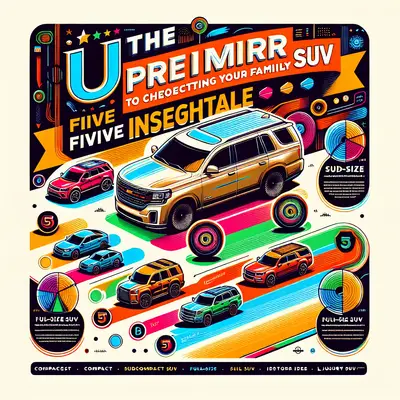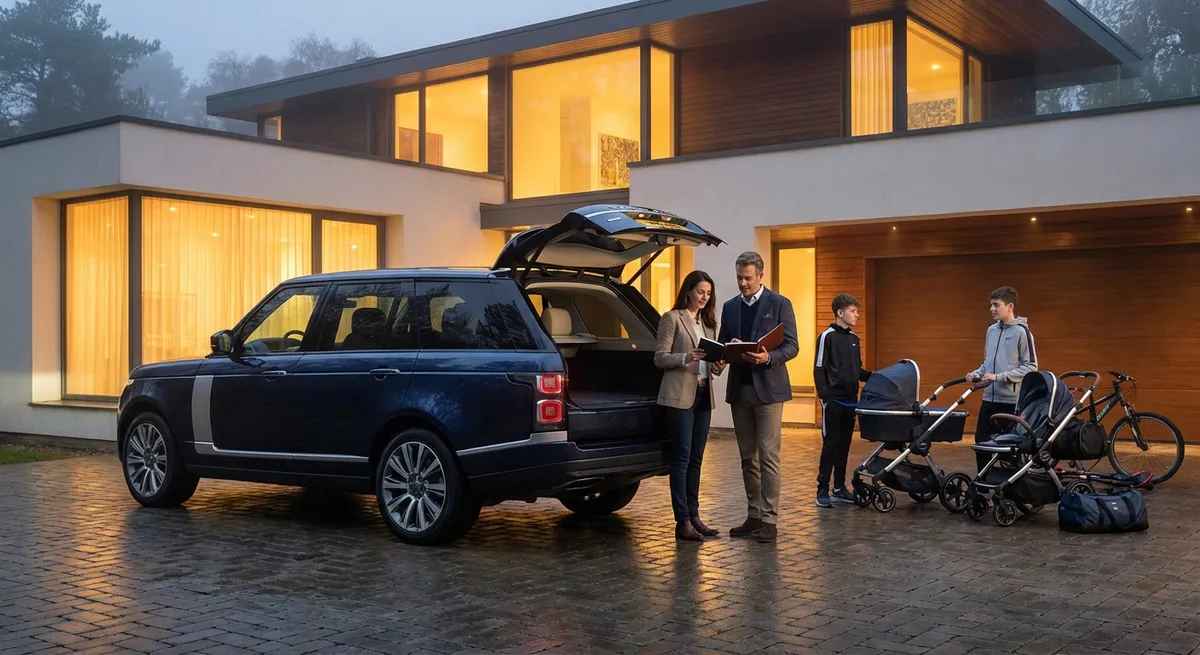
Selecting a family SUV today is less about sheer size and more about orchestrating a refined daily experience. Between school runs, weekend escapes, and interstate holidays, the right SUV becomes a quiet cornerstone of family life—supportive, composed, and pleasantly unobtrusive. This guide explores the subtler, often-overlooked details that genuinely distinguish an excellent family SUV from a merely competent one, with five exclusive insights tailored to families who value comfort, safety, and sophistication in equal measure.
Understanding Your Family’s True Daily Rhythm
Before comparing trim levels and powertrains, it is worth taking an honest inventory of how your family actually moves through the week. Many buyers default to “bigger is better,” only to discover that the SUV is awkward to park at school, thirsty in traffic, and rarely uses its full capacity. Consider not simply how many seats you need, but how frequently all seats are occupied, how often you access the third row, and whether you regularly parallel-park in tight city streets. Reflect on the shape of your cargo—strollers, sports gear, musical instruments, luggage for cross-country trips—and whether a lower load floor or a wider opening is more valuable to you. Families who carpool frequently might prioritize a more compact three-row SUV with smart third-row access, whereas those with long-distance grandparents’ visits may appreciate a full-size SUV with serene highway manners. By mapping your real-world usage patterns, you transform the buying process from reacting to features into commissioning a vehicle that fits your family’s lifestyle with almost bespoke precision.
Exclusive Insight #1: The “Silent Cabin” Test Few Shoppers Perform
Many families glance at sound insulation claims but rarely test them with intention. Yet, cabin quietness does more than feel luxurious—it meaningfully reduces fatigue, particularly on longer journeys with children. During a test drive, switch off the audio system and drive at both city and highway speeds, listening for wind noise around the mirrors, tire roar over imperfect surfaces, and any subtle vibration from the engine bay. Bring your family and hold a normal conversation from the third row to the driver’s seat; note whether voices carry comfortably without raised tones. Pay attention to how the SUV copes with rougher asphalt or expansion joints: a refined vehicle will mute harshness without feeling floaty or disconnected. Parents with young children may also value how a quiet cabin makes it easier to hear subtle cues from the back seats or allow infants to sleep undisturbed. This “silent cabin” test quickly separates SUVs that simply look premium from those engineered to feel calm and composed in everyday life.
Exclusive Insight #2: Third-Row Usability Beyond the Brochure Dimensions
Spec sheets frequently list third-row legroom and headroom, but numbers alone obscure how the space actually works for families. When evaluating a three-row SUV, treat the third row as a living space, not a statistic. Have an adult or tall teenager sit in the third row with the second-row seat adjusted to your typical driving position, and check foot space, knee angle, and the ease of sliding feet underneath the seat in front. Evaluate how gracefully passengers can access the third row with a child seat installed in the second row—some models offer tilt-and-slide mechanisms that maintain access even with a fixed child seat, a quietly transformative feature for families. Consider storage and amenities in the third row: are there cup holders, device pockets, and charging ports, or will older children be forced to share limited space with carry-on items and tangled cables? Finally, fold the third row up and down yourself; note the weight of the seats, whether the mechanism is intuitive, and how much usable cargo volume remains with all seats in place. Discerning families often discover that a slightly smaller SUV with thoughtful third-row design feels more usable than a larger rival with compromised access and amenities.
Exclusive Insight #3: Climate Control That Truly Serves Every Seat
Effective climate control in a family SUV is more nuanced than dual-zone air conditioning. Families with infants, sensitive sleepers, or multigenerational passengers benefit enormously from precise, responsive temperature management. Look for tri-zone or four-zone climate systems that allow the rear cabin to be adjusted independently, ideally with dedicated vents not only in the center console, but also in the roof or pillars for more even airflow. During the test drive, adjust the temperature several degrees up and down in both the front and rear zones and observe how quickly the cabin responds and how quietly the fans operate at higher speeds. In warmer climates, rear sunshades, ventilated front seats, and remote start with climate pre-conditioning can transform summer school runs into something far more civilized. In colder regions, heated second-row seats, a heated steering wheel, and heated side mirrors contribute significantly to winter comfort and safety. While such features may appear indulgent at first glance, they collectively create a more harmonious environment, reducing “too hot” or “too cold” complaints and allowing the driver to focus more entirely on the road.
Exclusive Insight #4: Tech That Enhances, Rather Than Distracts, Family Travel
The most sophisticated family SUVs now blend advanced technology with carefully considered restraint. Instead of simply chasing the largest screen, look for systems that are intuitive enough for any caregiver to use without a lengthy tutorial. Test the responsiveness of the central display, the clarity of its interface, and the presence of physical shortcuts or knobs for frequently used functions like volume and temperature; a tasteful blend of digital and tactile controls often proves the most elegant in daily use. Apple CarPlay and Android Auto integration are increasingly non-negotiable, but observe how smoothly they connect and whether wireless connectivity is stable during a full-length drive. For families, multiple USB-C and USB-A ports across all rows, optional rear entertainment screens with independent inputs, and integrated Wi-Fi hotspots can dramatically reduce friction on long journeys. Modern driver-assistance features—adaptive cruise control, lane-keeping assistance, blind-spot monitoring, and rear cross-traffic alert—should feel supportive rather than intrusive, gently augmenting your awareness without imposing abrupt corrections. A family SUV’s technology suite should feel like a well-trained concierge: always available, never overwhelming, and discreetly efficient.
Exclusive Insight #5: Evaluating Long-Term Comfort, Not Just First Impressions
The first few minutes in a new SUV can be deceiving; soft seats and glossy finishes can mask potential discomfort over many hours. Instead of a cursory loop around the block, request an extended test drive that simulates your true usage: a mix of stop-and-go traffic, open highway, and, if relevant, suburban or rural backroads. Pay attention to seat support across the entire backrest and seat cushion; ideally, thigh support should be sufficient for taller drivers without causing pressure points for shorter ones. Adjustable lumbar support, seat memory settings, and power-adjustable steering columns contribute quietly but meaningfully to daily comfort, especially if multiple adults share driving duties. In the second row, assess whether the seats recline and slide to balance legroom between rows, and consider how the seat shape will feel over time for both children and adults. Families planning long-distance travel should also evaluate how the suspension manages continuous highway cruising—excessively firm setups can become tiring, while overly soft suspensions may induce motion sickness in sensitive passengers. Prioritizing long-term comfort over initial “wow factor” often leads to a vehicle that still feels delightful on the thousandth drive, not just the first.
Weighing Value, Ownership, and the Subtle Costs of Living With an SUV
Once you have refined your shortlist to vehicles that truly fit your family’s rhythm, it is important to look beyond the purchase price. Ownership costs—fuel or electricity usage, insurance, maintenance, and resale value—quietly define the financial experience of owning a family SUV. Compare EPA fuel economy ratings or, in the case of plug-in hybrids and EVs, estimated electric range and charging speed, aligning them with your real driving patterns. Explore certified safety ratings from organizations such as the IIHS and NHTSA, but also consider availability and pricing of advanced safety options across trims; some of the most desirable systems may only appear in higher specifications. Investigate warranty coverage, scheduled maintenance intervals, and the proximity and reputation of local dealerships or service centers, particularly if you are considering a brand that is newer to your region. Finally, review real-world owner feedback from reputable sources to identify recurring issues or particularly well-regarded attributes. This holistic, measured approach transforms the SUV from a single transaction into a long-term companion, curated to support your family’s comfort, safety, and financial peace of mind over many years.
Conclusion
A truly exceptional family SUV does not merely move people and cargo; it shapes the texture of everyday life, smoothing its rough edges and elevating the ordinary into something quietly satisfying. By focusing on cabin serenity, genuine third-row usability, nuanced climate control, well-judged technology, and long-term comfort, families can navigate beyond spec sheets and marketing language toward vehicles that feel thoughtfully tailored. The considered choice is not always the largest or the flashiest SUV on the lot—it is the one that slips seamlessly into your family’s rhythm, delivering calm, confidence, and a sense of understated refinement on every journey.
Sources
- Insurance Institute for Highway Safety (IIHS) – Vehicle Ratings - Comprehensive crash-test and safety ratings for SUVs and other vehicles
- U.S. National Highway Traffic Safety Administration (NHTSA) – 5-Star Safety Ratings - Official government safety ratings and recall information
- U.S. Department of Energy – Fuel Economy Guide - Fuel economy data and operating cost estimates for gasoline, hybrid, and electric SUVs
- Edmunds – Car Reviews and Ratings - Expert and owner reviews, pricing, and detailed specifications for family SUVs
- Consumer Reports – SUV Buying Guide - Independent testing and reliability insights for current SUV models
Key Takeaway
The most important thing to remember from this article is that this information can change how you think about Buying Guide.