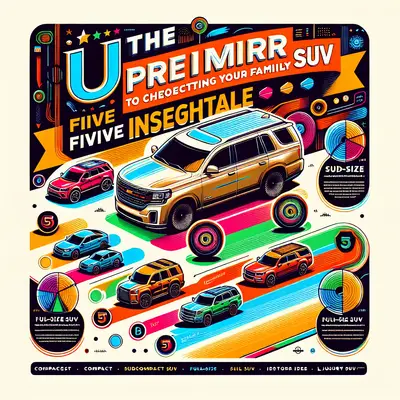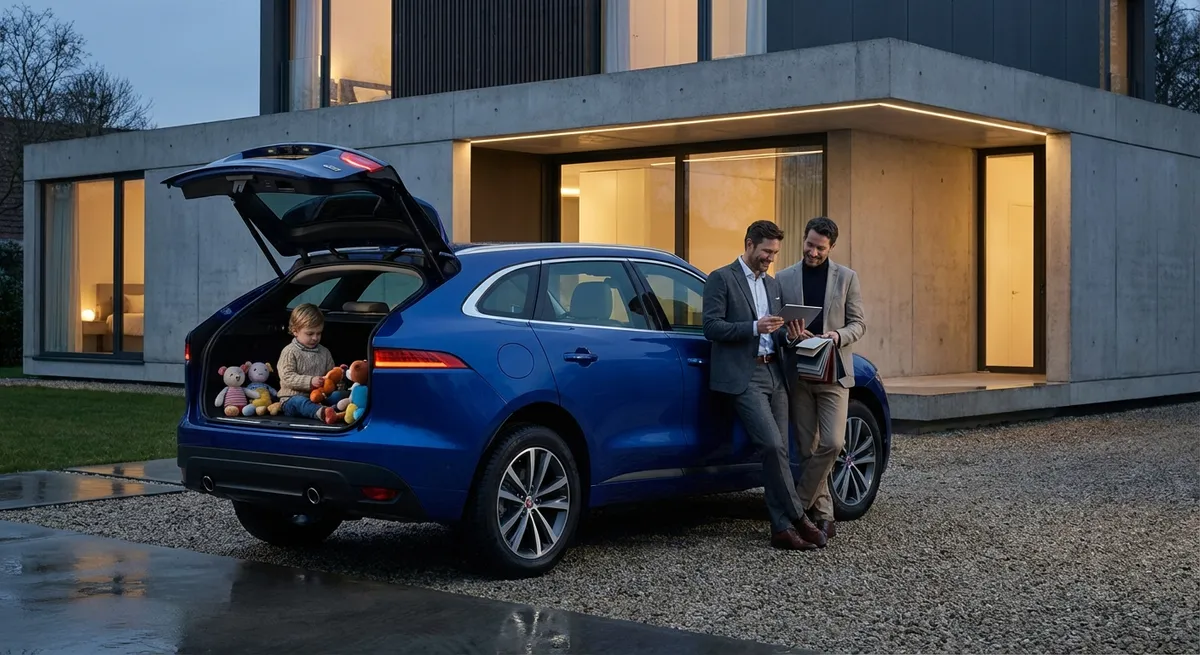
Selecting a family SUV today is less about sheer size and more about how intelligently that space, technology, and comfort are orchestrated. For discerning families, the ideal SUV acts as a calm, meticulously designed command center—equally at ease on school runs, weekend getaways, and long interstate drives. This guide steps beyond basic checklists to explore the nuanced details that quietly elevate daily life, with five exclusive insights to help you choose with confidence and clarity.
Understanding Your Family’s True Daily Rhythm
Before falling for a striking grille or dramatic lighting signature, begin with a precise understanding of how your family actually lives in a vehicle. Who rides where, and how often? Do you regularly carry grandparents, sports gear, musical instruments, or pets? How frequently do you fold the third row, and is it usually for people or cargo?
Mapping a typical week—school, work, activities, grocery runs, occasional road trips—reveals your true priorities. Some families value effortless third-row access above all else; others need a wide, flat load floor for strollers or home improvement supplies. This rhythm-based approach helps you filter the market ruthlessly: models with dramatic design but awkward access, oddly shaped cargo areas, or impractical third rows can be dismissed quickly. You’re left with a shortlist that matches your family’s real life, not a marketing fantasy.
Cabin Architecture: Where Design Quietly Shapes Behavior
A premium family SUV cabin is more than a collection of upscale materials; it’s an intentional environment that subtly organizes chaos. Look closely at cabin architecture rather than only at features. How do the lines of the dashboard, the height of the center console, and the placement of screens and storage guide where items live and how your family moves?
Seek out cabins where climate, media, and navigation controls are logically placed and usable by touch, not just by sight—this reduces distraction and fatigue. Pay attention to how second- and third-row passengers are treated: Are their cupholders and device storage thoughtfully integrated, or an afterthought? Is the floor relatively flat to ease movement across seats? Does the interior feel cohesive from front to back, or like separate zones stitched together?
Seemingly small touches—a slightly higher second row for better outward visibility, gently sculpted door sills for easier ingress, or rear window shades that invite napping rather than screen glare—often have a disproportionate impact on family harmony.
Exclusive Insight #1: Evaluate “Quiet Ergonomics,” Not Just Space
Most buyers look at dimensions, seat counts, and cubic feet. A more revealing lens is what you might call quiet ergonomics: how effortlessly everyone can use that space without negotiation or friction.
During your test drive, simulate realistic scenarios:
- Install an actual child seat in both outboard and middle positions. Notice how easily you can access the buckle, harness, and LATCH anchors without contorting your back.
- Ask an adult to sit in the third row for at least 10–15 minutes, not just a quick sit-down. Check knee angle, headroom, and the ease of stepping in and out, especially with the second row adjusted to a realistic position.
- Load a stroller, sports bags, and a week’s groceries. Observe whether the cargo area’s height, depth, and shape make the process calm and organized—or awkward and tiring.
Quiet ergonomics are what prevent those daily micro-irritations that accumulate. A slightly wider door opening, more intuitive latch placement, or cleverly offset seat rails can transform the same measured interior volume into an experience that feels significantly more livable.
Powertrain and Ride: Calm Confidence Over Raw Performance
For a family, the most luxurious sensation behind the wheel is often not speed but composure. The right powertrain and chassis tuning deliver smooth, predictable power and unobtrusive refinement, creating a soothing environment for children and drivers alike.
When evaluating engines and hybrids, focus on how they respond in the situations you face most often: merging into fast-moving traffic, overtaking on a two-lane road, climbing a highway ramp with a full load of passengers and luggage. Many modern SUVs offer turbocharged engines or hybrid systems; the key is not the headline horsepower figure but the way power arrives—linear, quiet, and without abrupt gear hunting.
Ride quality is equally crucial. Look for controlled body motions rather than pillow softness: the vehicle should absorb imperfections yet resist excessive float on undulating roads. Pay attention to steering weighting and brake modulation in stop‑and‑go conditions—these details determine whether daily driving feels effortless or subtly draining over time.
Exclusive Insight #2: Test for “Conversation Comfort” at Highway Speeds
Interior quietness is widely marketed, but a more meaningful metric for families is conversation comfort: whether you can speak in low, normal tones at 65–75 mph and be heard clearly from the third row.
On your test drive, bring your family if possible and:
- Drive at highway speeds and have a conversation between front and third row.
- Listen for wind noise around mirrors and roof rails; excessive hiss can be tiring over long journeys.
- Note tire noise on different surfaces, such as concrete vs. asphalt, and how much road texture transmits through the cabin.
Vehicles with well-executed sound insulation, laminated glass, and refined aerodynamics create an environment where you can talk, listen to audiobooks, or enjoy music at a modest volume without strain. This “conversation comfort” is a hallmark of genuinely premium family SUVs and often distinguishes models that feel mature from those that feel merely large.
Technology That Enhances, Not Distracts
The most impressive technology in a family SUV doesn’t shout; it recedes gracefully into the background. A well-designed infotainment system should be intuitive enough that you rarely need to think about it, while advanced driver-assistance systems (ADAS) should support, not startle, the driver.
Scrutinize the interface:
- Do commonly used functions—audio, climate, navigation—require multiple taps, or are there thoughtful shortcuts and physical redundancies (knobs, toggles, or quick-access buttons)?
- Are menus clearly labeled, with legible fonts and minimal clutter?
- Does wireless smartphone integration connect quickly and remain stable, without frequent dropouts?
With ADAS, such as adaptive cruise control, lane-keeping assist, and blind‑spot monitoring, judge the tuning rather than just the presence of features. Overly intrusive lane-keeping systems that ping‑pong the vehicle or constant, hyperactive alerts quickly become tiring and are often switched off. Look instead for systems that intervene gently and predictably, reinforcing your confidence without wrestling for control.
Exclusive Insight #3: Prioritize “Future-Proof Connectivity” Over Sheer Screen Size
Instead of focusing solely on screen inches, think about how gracefully the SUV will age alongside rapidly evolving personal tech. Your needs in three to five years may look very different from today.
Assess future-proof connectivity by asking:
- Does the vehicle support both Apple CarPlay and Android Auto, ideally wirelessly?
- Are there multiple USB-C ports across all rows, not just the front—and are they placed where cables won’t tangle feet or obstruct cupholders?
- Does the brand offer over‑the‑air (OTA) software updates for infotainment and, where applicable, for driver-assistance systems?
A vehicle that can accept software improvements, new features, or optimizations over time will remain digitally fresh longer, extending the sense of premium value and sophistication well past the new‑car sheen.
Safety as a Layered Ecosystem, Not a Single Score
Crash-test ratings from organizations like the IIHS and NHTSA are essential, but for a discerning family, they are just the foundation. The more nuanced question is how well the entire safety ecosystem—passive, active, and driver-support technologies—works harmoniously.
Look for strong structural performance, including high ratings in newer or more demanding tests (such as updated side-impact evaluations), and examine whether advanced safety features are standard or locked behind expensive packages. Seat design also matters: supportive seats can help reduce fatigue, while well-contoured head restraints provide comfort and critical whiplash protection.
Consider night driving as part of your safety evaluation. Headlight performance, including beam pattern and automatic high‑beam behavior, can materially affect confidence after dark. Vehicles that illuminate the road evenly without harsh cutoff lines or excessive glare for oncoming drivers significantly enhance safety, especially on rural or poorly lit routes.
Exclusive Insight #4: Study the “Recovery Moments” After a Mistake
Most safety conversations focus on preventing collisions, yet many real-world incidents stem from small, everyday misjudgments—late braking, a moment’s distraction, or an abrupt lane change. How an SUV behaves in these recovery moments reveals a great deal about its underlying engineering.
During your test drive (in a safe, legal environment):
- Perform a few firm but controlled braking maneuvers. Notice whether the vehicle remains straight and composed, or dives, squirms, or feels nervous.
- Simulate a quick lane change at moderate speed. The best family SUVs remain stable and predictable, with minimal body roll and no sense of top-heaviness.
- If equipped, gently test evasive steering at low to medium speed to see how the vehicle transitions back to center.
These exercises give you a real sense of how the SUV will respond when life happens—a child drops a toy, traffic suddenly compresses, or you need to react swiftly. The models that recover with quiet competence are the ones that will earn your trust over years of ownership.
Ownership Experience: The Long Arc of Satisfaction
The true cost and pleasure of owning a family SUV unfold gradually—through maintenance visits, software updates, and how the vehicle looks and feels after thousands of miles. A premium experience extends far beyond the showroom handshake.
Research brand reliability data and customer satisfaction studies, and look into warranty coverage, including any hybrid or battery‑specific guarantees for electrified models. Consider the proximity and reputation of local dealerships or service centers; a refined ownership experience includes clear communication, timely appointments, and transparent maintenance schedules.
Interior durability is another long-term luxury. Run your hand along frequently touched surfaces—door pulls, steering wheel, seat bolsters. Are they robust and resistant to scuffing, or likely to show wear quickly? Families need interiors that age gracefully, absorbing the inevitable spills, scuffs, and experiments with crayons while still looking composed and welcoming.
Exclusive Insight #5: Compare “Ownership Calm” Instead of Only Price
Rather than fixating on the lowest monthly payment, evaluate what might be called ownership calm: the totality of factors that sustain your peace of mind over years.
This includes:
- Predicted reliability and the likelihood of unplanned repairs.
- Insurance costs, which can differ significantly between seemingly similar SUVs.
- Fuel or electricity costs in real-world conditions, not just on paper.
- The quality of the brand’s service network and responsiveness to recalls or software issues.
A slightly higher upfront payment for an SUV with strong reliability ratings, thoughtful service support, and efficient powertrains may yield a smoother, less stressful ownership journey. In the context of a vehicle that will shape your family’s daily life, this calm is an understated but profound form of luxury.
Conclusion
Choosing a family SUV is ultimately an act of curation: selecting not only a vehicle, but an environment in which your family will spend countless hours together. By looking beyond generic specifications and marketing highlights—focusing instead on quiet ergonomics, conversation comfort, future-proof connectivity, recovery behavior, and ownership calm—you refine the decision into something far more meaningful.
The right SUV will feel composed in motion, intuitive in use, and quietly protective in the background. It will free you from daily frictions rather than introducing new ones, and will continue to feel considered and current even as your family’s needs evolve. Approach the process with this level of discernment, and your eventual choice will feel less like a compromise and more like a natural extension of how your family chooses to live.
Sources
- Insurance Institute for Highway Safety (IIHS) – Vehicle Ratings - Comprehensive crash test and safety ratings, including updated evaluations and headlight performance
- National Highway Traffic Safety Administration (NHTSA) – 5-Star Safety Ratings - Official U.S. government crash-test scores and safety information for SUVs and other vehicles
- U.S. Department of Energy – Fuel Economy Guide - Real-world fuel economy data and cost-of-ownership insights for gasoline, hybrid, and electric SUVs
- Consumer Reports – Guide to Car Reliability - Long-term reliability trends and owner satisfaction information across brands and models
- Edmunds – Car Technology and Features Guide - Explanations and evaluations of in-car technology, driver-assistance systems, and connectivity features
Key Takeaway
The most important thing to remember from this article is that this information can change how you think about Buying Guide.