Choosing a family SUV today is less about sheer size and more about how intuitively a vehicle supports your everyday rhythm—school runs, weekend escapes, late-night airport pickups, and everything in between. The difference between “good enough” and genuinely exceptional lies in details many shoppers overlook until after the purchase. This guide takes a refined, quietly discerning approach to the buying process, highlighting five exclusive insights that help you select an SUV that feels composed, capable, and perfectly attuned to your family’s life.
Designing Around Real Life, Not Just Seating Capacity
On paper, many SUVs appear similar: three rows, generous cargo room, flexible seating. In practice, the true test is how the cabin works when no one is posing for a brochure photo. The most family-friendly interiors are not always the largest; they are the most thoughtfully structured.
Look closely at the “movement paths” within the SUV. Can a child slip past a forward-facing car seat to the third row without elaborate maneuvering? Do second-row seats tilt and slide gracefully with one hand, even when a child seat is installed (some models offer “car-seat-friendly” tilt mechanisms that are surprisingly rare)? Pay attention to door cutouts and step-in height—grandparents, pregnant passengers, and teens juggling backpacks will all experience these differently.
Cargo space should be evaluated with the third row both up and down. A generous spec sheet in liters or cubic feet is one thing; being able to stand a stroller upright without folding it is quite another. Seek out flat load floors, minimal liftover height, and cargo wells that allow you to keep must-have items—sports gear, emergency kits, blankets—permanently stowed yet out of sight. A truly well-conceived SUV lets the cabin remain calm and uncluttered even on your busiest days.
The Quiet Luxury of Ride Quality and Cabin Refinement
For families, quiet and composure are not indulgences; they are stress management tools. Yet ride quality and noise isolation are often assessed only in broad strokes—“smooth,” “comfortable,” “a bit loud”—instead of through the more nuanced lens they deserve.
Start by noticing how the SUV behaves over broken pavement, speed bumps, and expansion joints at typical family speeds (25–45 mph). A refined suspension will absorb imperfections without feeling vague or floaty, preserving a sense of control. Listen carefully: Does road noise from coarse asphalt dominate the cabin? Does wind noise creep in around the mirrors at highway speeds? That low-level hum becomes the constant soundtrack on long drives.
Premium-feeling SUVs often employ laminated glass, extensive sound deadening, and active noise cancellation. The result is a cabin where conversation in the third row is easy without raised voices, and where a sleeping child’s head doesn’t bob with every ripple in the road. Test-drive with your usual background noise—music, navigation prompts, children chatting—and ask yourself whether, after a two-hour drive, you’d step out feeling refreshed or depleted. Quiet competence is a form of luxury you feel most on the days you’re not thinking about it.
Technology That Serves, Not Distracts
Family SUVs are increasingly defined by their technology suites, but more screens do not necessarily translate into better family usability. The difference between merely advanced and genuinely sophisticated lies in how gracefully the tech steps out of the way once configured.
Start with the interface: Is the home screen cluttered, or can you reach core functions (climate, navigation, audio, driver assists) within one or two taps? Are there physical knobs or toggles for volume and temperature—controls often adjusted on the move? Evaluate wireless Apple CarPlay and Android Auto not just for availability but for reliability and smooth reconnection after each start.
For families, second- and third-row tech matters as much as the front row. Rear USB-C ports, adjustable air vents, available rear climate control, and optional rear entertainment can transform long journeys from endurance tests into quiet stretches of productive or peaceful time. Critically, explore parental controls: Can you limit rear screen usage, restrict certain apps, or mute specific zones without stopping the car?
Driver-assistance systems deserve careful scrutiny. Adaptive cruise control that behaves naturally in traffic, lane-centering assistance that doesn’t “ping-pong,” and high-quality 360° camera systems with clear low-light performance all elevate daily usability. The most refined SUVs make advanced safety tech feel like a composed co-pilot, not a nervous passenger constantly chiming in.
Beyond Safety Ratings: How Comfort and Control Work Together
Crash-test ratings and feature lists are indispensable, but families live with the subtler side of safety every day: how confidence-inspiring the vehicle feels, and how well it keeps everyone comfortable and secure in real-world scenarios.
Begin with seating. Supportive front seats with adjustable lumbar, long thigh cushions, and a broad range of adjustments help the primary driver stay focused and less fatigued. For children, look at the number and placement of LATCH anchors and top tether points—some three-row SUVs offer tethers in every rear seating position, while others do not. Check whether you can install multiple child seats without blocking critical access to the third row or forcing older children into awkward positions.
Consider how the SUV manages weight and motion. All-wheel drive or advanced traction systems can provide composure in rain, snow, or gravel, but so can well-tuned stability control and predictable steering feel. Test on a variety of roads if possible—tight parking lots, sweeping on-ramps, and uneven surfaces—and pay attention to how easily you can place the vehicle and anticipate its responses.
Finally, look at active and passive safety as a complete ecosystem: robust crash performance, thoughtful airbag coverage, sophisticated driver assists, and excellent visibility from every row. A family-focused SUV does more than perform well in lab tests—it helps prevent incidents through clarity, comfort, and confidence.
Five Exclusive Insights Discerning Families Quietly Rely On
While most buyers focus on price, fuel economy, and headline features, families who choose particularly well tend to look a layer deeper. These five often-overlooked insights can be the difference between “this works” and “this suits us perfectly”:
The “Departure Drill” Test
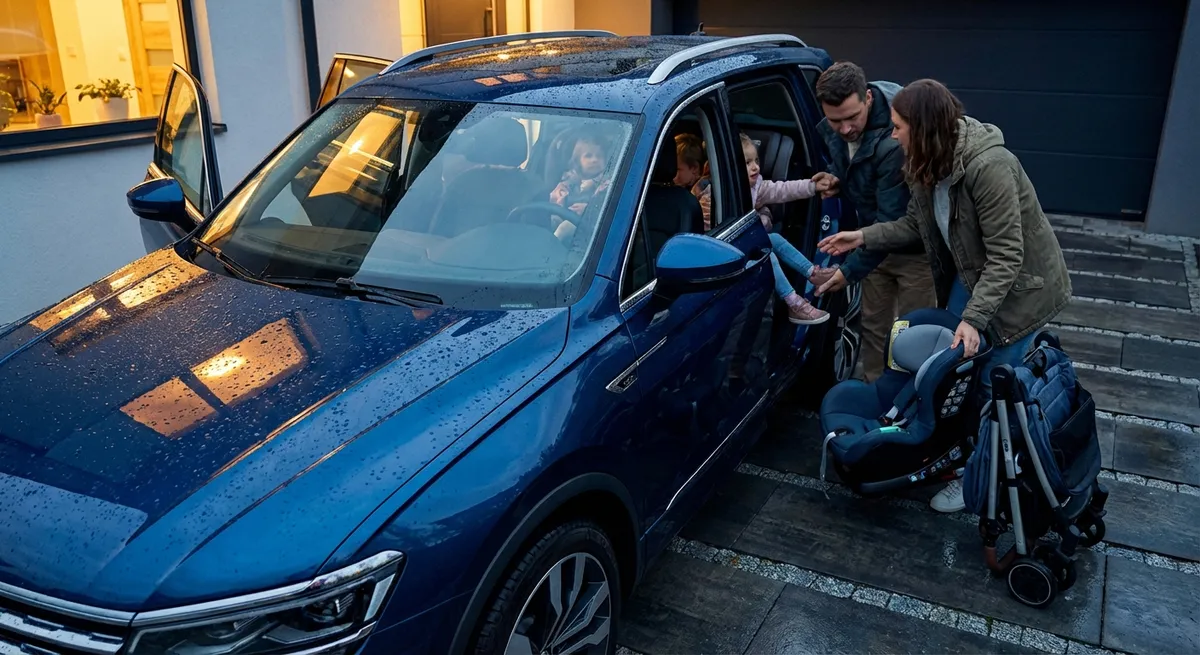
Simulate a hectic school-morning departure at the dealership: doors opening and closing, multiple passengers entering at once, backpacks and sports bags loaded, car seats buckled, someone remembering a forgotten item. Notice how the SUV handles this choreography. Are the door openings wide and unobstructed? Is there a logical place for bags that doesn’t block visibility or access? Vehicles that pass this test often remain pleasant long after the novelty wears off.
- Third-Row Reality vs. Third-Row Marketing
Many SUVs advertise a third row, but the level of genuine adult comfort varies enormously. Sit in the third row yourself—knees, feet, and head. Can you remain comfortable for an hour? Are there cupholders, storage, and air vents where real people can reach them? For growing children and teens, a truly habitable third row can delay the need to move up in size—or to a larger, less efficient vehicle.
Cabin Materials That Age Gracefully
Families place unique demands on interiors: sticky fingers, wet gear, sunscreen, and the occasional spilled snack. Look beyond initial softness or shine and consider cleanability and durability. High-quality synthetic leathers, tightly woven fabrics, and textured surfaces can look fresh longer than some more delicate “premium” materials. Ask to see a well-used showroom or service-loaner example of the same model; how the materials have aged is a revealing preview of your own ownership.
Charging and Storage as Daily Infrastructure
Count the charging points and examine their placement. Are there enough USB-C or power outlets for your family’s typical device load? Are they concentrated in the front, or sensibly distributed to each row? Similarly, evaluate small-item storage: trays for phones, dedicated places for sunglasses, a secure home for toll tags and key cards, and door pockets that truly hold water bottles. These subtle touches turn the SUV into a well-organized mobile base, not a rolling catch-all.
The “Silent Seconds” After the Test Drive
When the test drive ends, sit quietly in the parked vehicle for a full minute. Take in the layout, outward visibility, noise level with the engine off, and your own physical comfort. Can you imagine waiting in the school pickup line here, working on a laptop while a baby naps, or taking an important call? This quiet reset often reveals whether the SUV feels like a sanctuary or simply a machine. Families who trust this instinct seldom regret their purchase.
Conclusion
The right family SUV is more than a checklist of features; it is a carefully chosen partner in the choreography of daily life. When you evaluate how an SUV truly supports movement, comfort, technology, and long-term livability, the field narrows to vehicles that feel calm, capable, and distinctly tailored to your family’s rhythm. By looking beyond the obvious and leaning into these refined details and exclusive insights, you move from simply buying transportation to curating an environment—one that carries your family with understated ease, day after day, year after year.
Sources
- National Highway Traffic Safety Administration (NHTSA) – 5-Star Safety Ratings - Official U.S. government crash-test results and safety information for comparing SUVs
- Insurance Institute for Highway Safety (IIHS) – Ratings & Research - Independent crashworthiness, crash avoidance, and headlight evaluations for a wide range of family SUVs
- Edmunds – Car Seat Check and Family Car Reviews - Practical assessments of child-seat fitment, LATCH access, and family usability across popular models
- Consumer Reports – Guide to Car Safety Features - Detailed explanations and evaluations of advanced safety and driver-assistance technologies
- U.S. Department of Energy – Fuel Economy Guide - Official fuel economy data and cost-of-ownership insights for comparing SUVs and trims
Key Takeaway
The most important thing to remember from this article is that this information can change how you think about Buying Guide.