Selecting a family SUV today is less about sheer size and more about how thoughtfully that space, technology, and refinement serve your daily life. For families who appreciate nuance, the best vehicles distinguish themselves not through flashy features, but through quiet competence and polished execution. This is where a careful, detail‑oriented review becomes more valuable than any sales brochure or quick test drive.
Below, we explore how to read SUV reviews with a more discerning lens—surfacing five often-overlooked insights that matter deeply to families who expect their vehicle to feel like an extension of a well-run home.
How to Read Beyond the Headline Specs
Most SUV reviews begin with horsepower, screen size, and cargo capacity. All useful, but none reveal how the vehicle will actually integrate into your family’s life. A more refined reading asks: How does this SUV behave in the margins of your day—the tight school drop-off lane, the late-night drive home from a weekend away, the chaotic grocery run with tired children?
As you scan reviews, look for language that describes behavior, not just components. Instead of “firm suspension” or “soft ride,” consider how the reviewer describes broken pavement, expansion joints, and speed bumps. Terms like “controlled,” “composed,” and “settled” often translate into less fatigue on longer drives with children in the back. Similarly, any mention of door weight, step-in height, and visibility from the driver’s seat gives a more realistic sense of how multi-generational passengers will experience the vehicle. A sophisticated review should leave you with a sense of rhythm—how the SUV moves, sounds, and feels in daily use—not just a list of features.
Insight 1: The Subtle Comfort of the Second Row (and Beyond)
For a family SUV, the true test of comfort starts behind the driver. Many reviews dwell on front-row space and seat adjustability, yet children, caregivers, and grandparents spend most of their time in the second and third rows. When evaluating reviews, pay special attention to how testers describe the rear seating experience over time, not just at first impression.
Look for commentary on thigh support for taller passengers, headroom with and without panoramic roofs, and the shape of the seatbacks—especially in the third row. A flat seat cushion may appear generous in photos but can become tiring on longer journeys. If a reviewer notes that the knees of adult passengers sit noticeably higher than their hips in the third row, that’s a sign of “emergency-only” seating rather than true family usability. Reviews that mention rear window height, rear air-vent placement, and access to USB ports signal that the writer is paying attention to how real families travel, not just to technical specifications.
Insight 2: Refinement You Hear—And Don’t Hear
Noise, vibration, and harshness (often abbreviated as NVH) rarely make headlines, but they shape every minute your family spends in the vehicle. A sophisticated SUV review will go beyond “quiet cabin” and delve into the character of that quiet. Is the silence serene at highway speeds, or does the sound of the wind shift with cross-breezes and large trucks passing by? Is road noise more pronounced on coarse asphalt than smooth pavement?
When reading reviews, watch for details about the quality of the engine sound under moderate acceleration, not just during hard throttle. A well-tuned family SUV often has a muted, unobtrusive engine note that doesn’t compete with conversation or sleeping children. Notice any mention of how easy it is to speak to third-row passengers without raising one’s voice, or whether the cabin remains calm with the climate control system working hard on a hot day. These small observations are evidence that the reviewer evaluates the SUV the way a family actually uses it—full of people, luggage, and real-life noise.
Insight 3: Cabin Architecture That Respects Real Life
It is one thing to have a beautiful interior, and another to have one that remains beautiful after months of school runs, snacks, and weekend gear. When reading reviews, focus on how the writer talks about material choices and layout, not just how the cabin photographs. Soft-touch surfaces are pleasant, but equally important is how those surfaces will age when touched, wiped, and occasionally scuffed by small feet and larger bags.
Details like the type of gloss used on interior trim, the depth and texture of leather or leatherette, and the finish of touchpoints such as door pulls and seat controls can reveal how carefully the interior was designed. A reviewer mentioning resistance to fingerprints on screens, intuitive climate controls that can be used with minimal distraction, and storage solutions that feel purpose-built (rather than generic cubbies) points to an SUV that has been engineered for daily refinement. You want an interior that feels premium without being precious—capable of absorbing family life without constantly reminding you of its fragility.
Insight 4: Usable Technology, Not Just More Technology
Modern SUVs often compete on the size of their screens and the length of their feature lists. For families, the more meaningful measure is how quickly and safely everyone can use that technology while in motion. A thoughtful review will describe not only the presence of Apple CarPlay, Android Auto, and driver-assistance systems, but also their stability, responsiveness, and learning curve.
Pay attention to remarks about menu depth, the clarity of navigation instructions, and how easily commonly used functions—like adjusting fan speed, changing audio sources, or activating the rear climate—can be accessed without a deep dive into menus. Reviews that speak to how intuitive the system feels after only a short drive are especially revealing. Note any feedback on over-the-air updates and how frequently the manufacturer refines its software; an SUV that receives regular, well-executed digital improvements may effectively grow more capable over time, extending its relevance for a family planning to keep it for many years.
Insight 5: Luggage, Lifestyle, and the Truth Behind Cargo Numbers
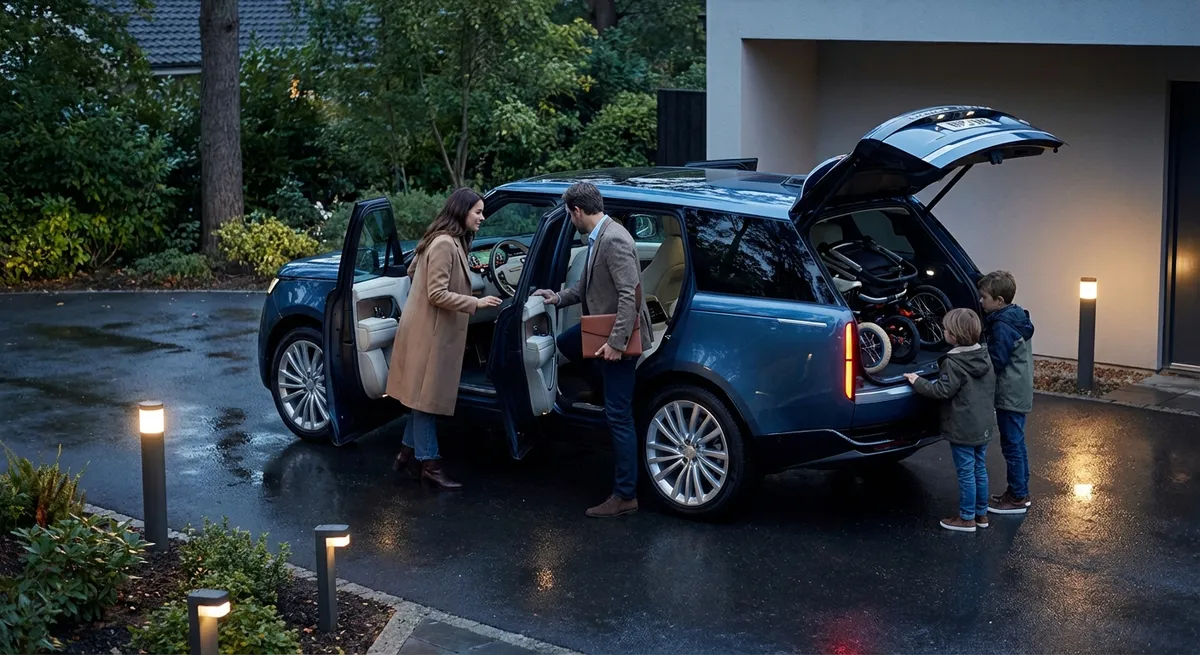
Cargo volume is often reduced to a single figure in brochures, but families live in three dimensions, not cubic feet alone. A perceptive review will describe the shape of the cargo area, the ease of folding the second and third rows, and how the floor height works with strollers, sports equipment, and travel luggage. Look for descriptions of how many carry-on suitcases fit behind the third row, or whether a large stroller can stand upright without dismantling.
Signals of a genuinely family-friendly cargo space include: a low load floor that spares your back, a wide opening without intrusive wheel arches, well-placed tie-down points, and thoughtful underfloor compartments for items you prefer not to leave in sight. If the reviewer notes that the cargo cover is easy to remove and store, or that the power-folding seats work quickly and reliably, you are likely looking at an SUV designed with real usage in mind rather than simply showroom appeal.
Bringing It All Together for a Thoughtful Shortlist
When viewed through this more discerning perspective, SUV reviews become less about comparing numbers and more about curating an experience that will serve your family for years. The finest family SUVs feel almost invisible in the best sense: they support your routines, preserve your energy, and move with a kind of understated grace, whether you’re navigating city streets or crossing state lines.
As you assemble your shortlist, seek out reviews that mirror the way your family actually lives: multiple passengers, varied cargo, changing weather, and a mixture of short and long journeys. Look for reviewers who pay attention to sound, touch, movement, and long-term usability, not just specifications and photos. That’s where the most valuable insights reside—and where you’ll find the SUV that quietly elevates every drive into something more considered, more composed, and ultimately more enjoyable for everyone on board.
Sources
- National Highway Traffic Safety Administration (NHTSA) – Vehicle Safety Ratings - Official U.S. government crash-test ratings and safety information for SUVs and other vehicles
- Insurance Institute for Highway Safety (IIHS) – Ratings & Research - Independent crash tests, headlight evaluations, and safety technology assessments that often complement consumer SUV reviews
- Consumer Reports – SUV Buying Guide - In-depth, data-driven evaluations of SUVs with long-term testing, reliability data, and owner satisfaction insights
- Edmunds – SUV Reviews & Ratings - Professional road tests and rankings that include real-world impressions of ride quality, noise, comfort, and usability
- Kelley Blue Book – Best Family Cars - Expert-curated lists highlighting SUVs that perform well for family use, with commentary on practicality and everyday livability
Key Takeaway
The most important thing to remember from this article is that this information can change how you think about SUV Reviews.