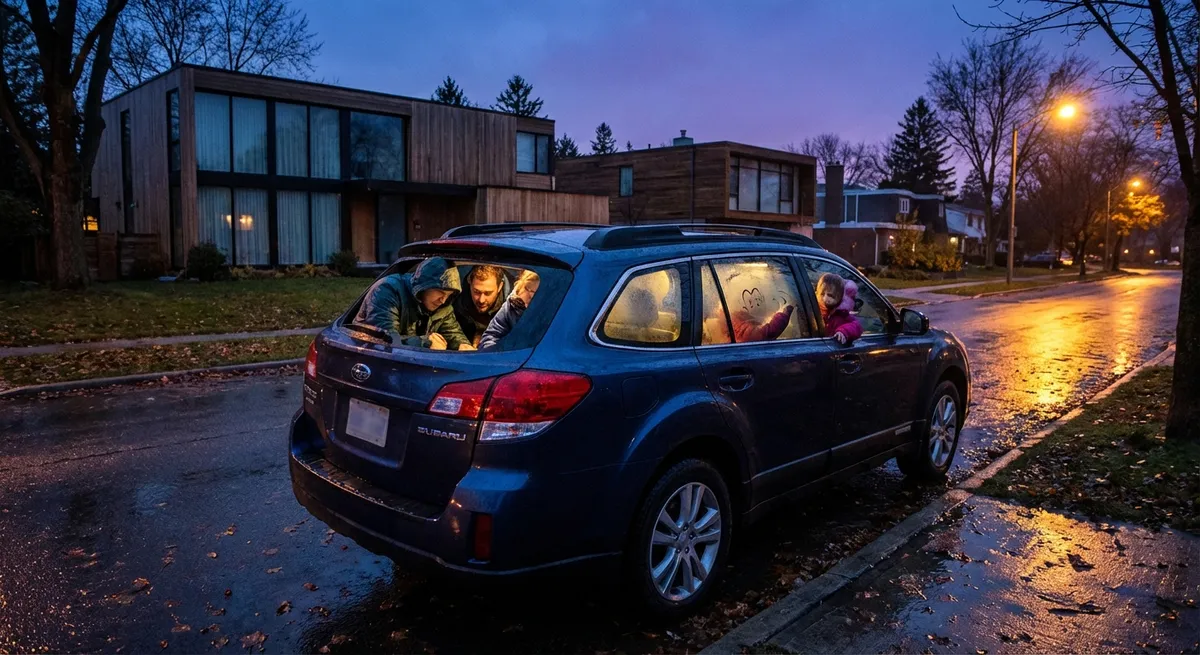
Every family SUV can feel impressive for the first 20 minutes. The real distinction emerges in the quiet details—the way a cabin manages chaos on a Monday school run, how the second row feels after three hours on the interstate, or whether the technology invites calm or creates distraction. For families who prefer substance over show, the most revealing qualities are often the ones that never appear in a brochure. This guide explores five exclusive, under-discussed insights that help discerning families separate “nicely equipped” from genuinely exceptional.
Insight 1: How the SUV Manages Fatigue, Not Just Comfort
Most spec sheets obsess over seat materials and adjustability, but far fewer address how an SUV actively reduces fatigue over time. For families, fatigue management is quietly transformative—particularly on long drives with children in the back.
Pay attention to how the seat cushions support the thighs and lower back after at least 30–40 minutes of driving, not just during a quick dealership loop. A refined family SUV balances firmness with subtle give, keeping your posture neutral instead of lounging you into a slouch. Observe whether the steering wheel, pedal placement, and seat alignment encourage a natural, shoulders-relaxed position; even a slight offset between seat and wheel can lead to neck tension on longer journeys. Advanced features like multi-contour seats, memory profiles linked to individual keys, and gentle adjustable lumbar support can turn an everyday commute into a more restorative experience. For rear passengers, well-shaped cushions and thoughtfully angled backrests matter just as much—tired children are rarely patient passengers. True family comfort is less about plushness and more about how the vehicle leaves everyone feeling after a demanding day.
Insight 2: The “Real-Life Cabin” Test: Surfaces, Storage, and Subtle Sound
In showroom lighting, almost every cabin feels premium. The real test is whether the interior retains its composure in real family conditions—snacks, backpacks, sports gear, and everything else that travels with you.
Look closely at the materials used in high-touch areas: the lower door cards, seat backs, and console sides where small shoes, bags, and strollers are likely to make contact. Soft-touch does not always mean fragile; high-quality, satin-finish plastics and tightly grained leather or leatherette can be both elegant and forgiving. Examine storage not just for volume, but for discretion and usability: deep door bins that hold reusable water bottles upright, lidded compartments to hide clutter, and a secure place for tablets and headphones. A well-designed family cabin allows everyday objects to disappear from view, preserving a sense of calm.
Equally important is how the cabin manages sound. True refinement is not simply “quiet,” but the right kind of quiet: engine noise gently muted but not anesthetized, wind noise smoothed at highway speeds, and road noise damped so conversations in the third row do not require raised voices. Listen to the way doors close—the solid, damped “thunk” often hints at the level of insulation and build precision that your family will appreciate over thousands of miles.
Insight 3: Technology That Simplifies Family Life Instead of Complicating It
In modern SUVs, screens have become center stage, but technology that feels impressive in a demo can feel exhausting in daily use. For families, the best tech disappears into the background, quietly making logistics simpler and distractions fewer.
Evaluate how many steps it takes to perform everyday tasks: pairing a phone, starting navigation to a saved address, changing a child’s audio source in the rear, or switching driver profiles. Systems that offer intuitive menus, large clear icons, and physical shortcuts for core functions (climate, audio volume, defrost) can dramatically reduce cognitive load while driving. Wireless Apple CarPlay and Android Auto, multiple fast-charging USB-C ports in both front and rear rows, and a clear head-up display all contribute to a calm, organized cockpit.
For families with older children, rear-seat tech deserves careful scrutiny. Rear climate controls with limited, thoughtfully placed buttons can give kids autonomy without chaos. If the SUV offers rear entertainment, consider how it’s integrated: Can headphones be paired easily? Can the driver subtly mute or limit rear volume without navigating three layers of menus? Sophisticated family technology feels like an invisible assistant, not another device demanding attention.
Insight 4: The “Transition Moments” That Define Daily Ease
Most reviews focus on how an SUV drives once everyone is seated. Families live in the transitions: school drop-off, grocery loading, post-practice pickup, and the inevitable “Can you grab that from the back?” moments. These segments reveal how deeply the vehicle has been engineered for real life.
Observe how effortless it is to enter and exit each row. Are the rear doors wide enough that a grandparent can step in gracefully? Does the second row tilt and slide with one hand when a child seat is installed, or does it become a two-handed struggle? Pay attention to step-in height—too tall and daily use becomes tiresome; too low and visibility and presence may feel compromised.
In the cargo area, refined utility shows up in details: a flat loading floor, minimal lip to lift over, low-friction carpeting that resists snags from strollers and luggage wheels, and well-placed tie-down points for securing gear. Power tailgates with adjustable opening height help in low garages, and buttons that fold the second or third rows flat from the rear can turn a hectic Costco run into a far more composed experience. The best family SUVs choreograph these transitions so that the vehicle seems to anticipate what you’re about to do next.
Insight 5: Stability, Composure, and Calm in Imperfect Conditions
Families rarely drive in perfect conditions. Heavy rain, uneven urban streets, surprise lane changes, and late night drives with sleeping children are the real proving grounds for a capable SUV. Beyond published safety ratings, how the vehicle behaves in these imperfect moments defines its character.
On a test drive, seek out less-than-ideal surfaces if possible: patched pavement, gentle curves at moderate speed, and situations that require confident, smooth braking. A carefully tuned SUV will feel composed—firm enough to maintain control, yet compliant enough not to jolt passengers. The steering should communicate what the front wheels are doing without requiring correction on straight roads. Confident, predictable braking feel is vital when the vehicle is fully loaded with passengers and cargo.
Advanced driver assistance systems (ADAS) deserve mindful evaluation as well. Features like adaptive cruise control, lane centering, and blind-spot monitoring should feel natural and unobtrusive, quietly expanding your margin of safety without taking over the experience. Look for systems that are transparent and easy to adjust, not ones that constantly beep or tug at the wheel. When an SUV can remain calm and collected in rush hour traffic, on a wet highway, or during a late-night drive home with a sleeping family, it signals engineering that has been tuned for real human lives, not just certification tests.
Conclusion
The most rewarding family SUVs are rarely defined by a single headlining feature. Instead, they shine through a collection of thoughtful decisions: ergonomics that preserve energy, cabins that resist visual and acoustic clutter, technology that serves rather than distracts, and dynamics that instill quiet confidence in imperfect conditions. For families who value refinement over spectacle, these quieter virtues matter far more than the size of the touchscreen or the boldness of the grille. By looking beyond the obvious and paying attention to how an SUV supports your family’s rhythms—hour by hour, mile by mile—you can choose a vehicle that doesn’t simply transport you, but subtly elevates every journey together.
Sources
- U.S. National Highway Traffic Safety Administration (NHTSA) – 5-Star Safety Ratings - Authoritative information on crash tests and safety technologies for SUVs and other vehicles
- IIHS – Vehicle Safety Ratings - Independent crashworthiness and crash avoidance ratings that help evaluate real-world safety performance
- Edmunds – Car Seat Check & Family Car Reviews - Practical assessments of car-seat fit, rear-seat usability, and family-focused functionality
- Consumer Reports – Guide to Comfortable Car Seats - In-depth discussion of seat ergonomics, support, and long-distance comfort considerations
- SAE International – Advanced Driver Assistance Systems Overview - Technical background on modern driver-assistance features and how they function on the road
Key Takeaway
The most important thing to remember from this article is that this information can change how you think about SUV Reviews.