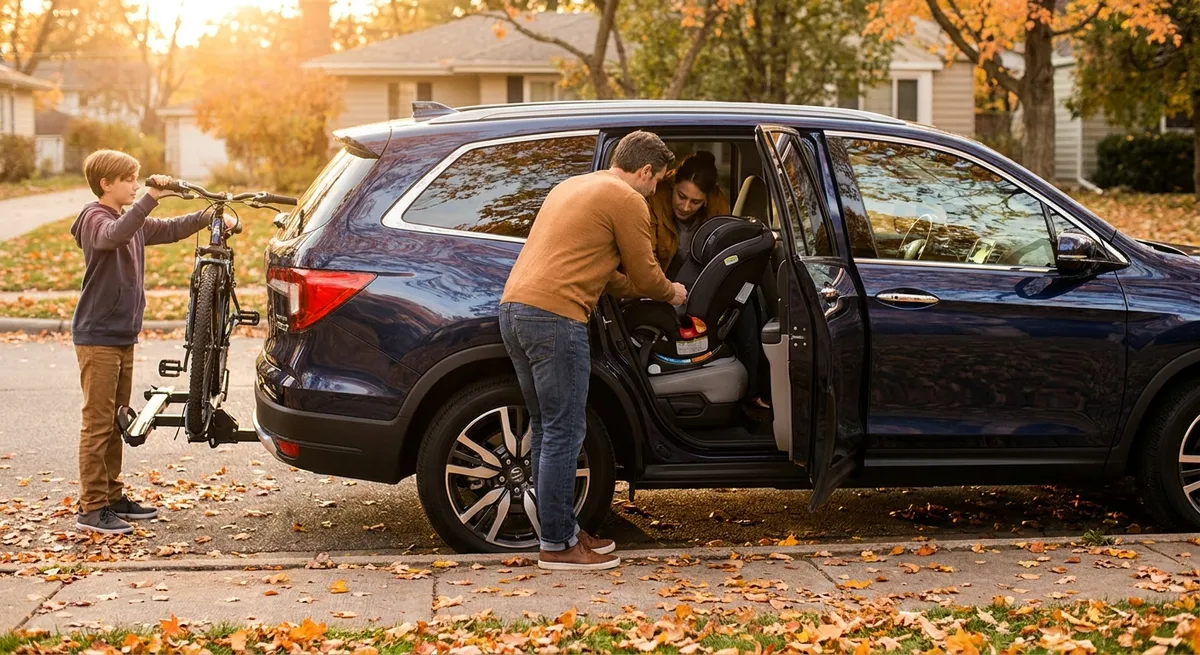
The most rewarding family SUVs are not simply purchased; they are curated. Beyond horsepower figures and cargo volume charts lies a quieter calculus: how a vehicle will support your family’s rhythm today, and how gracefully it will adapt to the next chapter. This guide leans into that more nuanced layer of decision-making—where design, engineering, and everyday life converge. Below, you’ll find five exclusive, often-overlooked insights that help turn a routine SUV purchase into a truly long-term, confidence-inspiring choice.
Looking Beyond Today: Evaluating “Future-Fit” Versatility
Many SUV decisions are made around the needs of a single life stage—toddler seats, school runs, or teen carpools—yet the most satisfying ownership experiences come from vehicles that remain effortlessly useful as your family’s needs evolve.
When you test-drive, imagine three distinct scenarios: early childhood (rear-facing seats and strollers), middle years (school bags, sports gear, grandparents in the second row), and later stages (teenagers, luggage for long road trips, perhaps even moving a child to college). Prioritize SUVs with second-row seats that slide, recline, and fold independently, allowing you to “reconfigure” the cabin for each chapter. Pay attention to the geometry of the third-row access—wide door openings, step-in height, and how far the second row tilts or slides when a child seat is installed.
Also look for wiring, ports, and storage that anticipate growth: multiple USB-C ports (not just USB-A), 120V outlets for laptops or coolers, and a truly flat load floor when seats are folded. Roof rails with a respectable dynamic load rating open up future options for cargo boxes, bikes, or kayaks. Think in eight- to ten-year horizons; a “future-fit” SUV should feel as natural and accommodating for a weekend away with teenagers as it did for those first drives home from the hospital.
Quiet Refinement: Cabin Comfort as a Daily Wellness Choice
Cabin refinement is often framed as a luxury, yet for families, it borders on wellness. Hours spent in traffic or on long holiday drives are far more restorative in an SUV that thoughtfully manages sound, vibration, and temperature.
During your test drive, turn the audio system off and listen intentionally. Notice how the vehicle handles coarse pavement, expansion joints, and crosswinds. SUVs that employ laminated front glass, extensive door seals, and additional insulation around the firewall and wheel wells make conversation easier and reduce fatigue—especially valuable with sleeping children in the back. Adaptive or dual-pane glass can also reduce wind noise at highway speeds, creating a more composed environment.
Climate control is another understated marker of refinement. Look for tri- or quad-zone systems with dedicated rear controls, rear air vents that reach the third row, and quick warm-up or cool-down performance. Ventilated seats, heated steering wheels, and heated rear seats are not mere indulgences; they help keep everyone comfortable at different temperature preferences. Over time, a quieter, more thermally balanced cabin becomes one of the most appreciated aspects of owning a premium-feeling family SUV.
Intelligent Space: Subtle Storage That Elevates Everyday Life
Most SUV brochures highlight cubic feet of cargo volume, but what often matters more is the intelligence of the small spaces: where items naturally live when you are in motion. The most family-friendly SUVs feel like well-designed homes—everything has a place, and nothing is in the way.
Look closely at the center console: Is there a dedicated space for a large smartphone that does not block cupholders? Are there covered compartments to hide small valuables when you park at a busy sports field or shopping center? Deep door pockets that can hold water bottles, umbrellas, or coloring books are more practical than shallow ones that serve only as décor.
Families who travel frequently should pay attention to underfloor cargo storage, removable or adjustable cargo shelves, and hooks or tie-down points for grocery bags and gear. A low liftover height eases loading strollers and heavy suitcases, while a power tailgate with height adjustment prevents accidental bumps into low garage ceilings. Small, thoughtful touches—like bag hooks behind the front seats, integrated trash or tissue compartments, and configurable cupholders—can turn a hectic weekday routine into a more composed, almost ritualized experience.
Tech That Supports, Not Distracts: Curating the Digital Experience
Modern SUVs compete on screen size and feature lists, but the mark of a truly well-resolved family vehicle is how gracefully the technology fades into the background once set up. The goal is to support the journey, not dominate it.
When evaluating infotainment systems, test how intuitively you can perform three tasks without instruction: pair a phone, enter a navigation destination, and adjust driver-assistance settings. If any of these require tapping through dense menus or diverting significant attention from the road, that system may feel frustrating over time. Wireless Apple CarPlay and Android Auto reduce cable clutter, while over-the-air software update capability means your SUV can improve long after it leaves the showroom.
Rear-seat entertainment, Wi‑Fi hotspots, and multiple device charging points can be invaluable on long drives, but consider how you will manage screen time and content. Some premium systems allow parental control over what is displayed, or can mirror educational apps rather than just streaming media. Meanwhile, advanced driver-assistance features—adaptive cruise control, lane-centering, blind-spot monitoring, and 360-degree cameras—should feel subtle and confidence-boosting, not intrusive. The ideal SUV quietly layers support around you, allowing you to focus on the road and your passengers rather than the interface.
Ownership Serenity: Hidden Costs and Long-Term Confidence
A sophisticated SUV choice extends beyond the moment of purchase into the years of ownership that follow. True peace of mind comes from understanding not only what the vehicle costs today, but how predictably it will treat your time and budget over its lifetime.
Scrutinize warranty coverage, including bumper-to-bumper, powertrain, and corrosion protection. Some brands offer complimentary maintenance for a set period, roadside assistance, and even loaner vehicles during service visits—benefits that can markedly change the ownership experience for busy families. Investigate reliability data and real-world owner feedback from independent sources to understand common issues and maintenance patterns.
For electrified options—hybrid, plug-in hybrid, or fully electric SUVs—pay particular attention to battery warranties and projected range retention. Consider how charging (at home or on the road) fits your family’s actual routine, including school drop-offs, extracurricular activities, and weekend trips. Insurance costs, tire replacement prices (especially for large wheels), and the availability of nearby service centers are all part of the “serenity equation.” An SUV that blends a refined driving experience with predictable, well-supported ownership will feel like a wise decision long after the showroom shine has faded.
Conclusion
Selecting a family SUV is less about chasing the latest headline feature and more about harmonizing design, technology, comfort, and long-term practicality with your family’s unique rhythm. When you look beyond spec sheets and ask how an SUV will grow with you, how it will sound and feel on your quietest mornings and longest drives, you begin to see the difference between a merely capable vehicle and a truly considered companion. By prioritizing future-fit versatility, cabin refinement, intelligent space, thoughtful technology, and ownership serenity, you position your family not just to travel, but to travel well—for many years and many journeys to come.
Sources
- National Highway Traffic Safety Administration (NHTSA) – Vehicle Safety Ratings - Official crash-test ratings and safety information for comparing family SUVs
- Insurance Institute for Highway Safety (IIHS) – Ratings & Research - Independent crashworthiness and crash-avoidance evaluations, including SUV-specific insights
- U.S. Department of Energy – Fuel Economy Guide - Detailed fuel economy and energy-use data for gas, hybrid, and electric SUVs
- Consumer Reports – Car Reliability and Owner Satisfaction - Long-term reliability scores, owner satisfaction, and real-world feedback on popular family SUVs
- Edmunds – Car Ownership & Cost of Ownership - Total cost of ownership estimates, including depreciation, insurance, maintenance, and fuel for SUVs
Key Takeaway
The most important thing to remember from this article is that this information can change how you think about Buying Guide.