The most rewarding family SUV purchases rarely begin with horsepower figures or screen sizes. They start with a quiet realization: your next vehicle must serve as a mobile extension of your home—orderly, safe, serene, and adaptable. In a market saturated with bold claims and glossy images, the genuinely discerning choice is made in the subtleties: how the cabin calms a hectic school run, how the safety systems behave in real traffic, how gracefully it accommodates growth and change. This guide is crafted for families who value refinement over spectacle and substance over noise, with five exclusive, often-overlooked insights that transform “just another SUV” into a long-term, confidence-inspiring companion.
The Architecture of Calm: Ride, Noise, and Everyday Grace
For a family SUV, refinement is not a luxury; it is a form of daily stress management. While test drives often focus on acceleration and steering, the true measure of suitability is the architecture of calm: how the vehicle manages noise, vibration, and harshness during the unglamorous parts of life—construction zones, rain-slick highways, and poorly maintained side streets.
Begin by testing at typical family speeds (20–45 mph) on imperfect roads. Listen for wind swirl around mirrors, tire hum on coarse pavement, and the way the suspension responds to manhole covers or expansion joints. A well-tuned chassis will absorb imperfections without harsh impact, while the cabin remains composed, free from rattles or resonances. If available, compare the base and upgraded tires, as higher-end all-season tires can dramatically influence cabin serenity.
Also pay attention to how the SUV performs with a full load: children, gear, possibly a stroller or sports equipment in the back. Weight changes the dynamics; a sophisticated family SUV should feel settled, not overwhelmed. If the dealer permits, briefly drive with the rear seats folded and then upright—interior acoustics shift, and a well-designed cabin will remain pleasantly quiet and free from echo regardless of configuration.
Intelligent Space: The Geometry of Real Family Life
Many SUVs boast generous cargo volume on paper, yet feel strangely uncooperative in real use. The difference lies in intelligent space: the careful geometry of seat folding, door opening angles, loading height, and the small, elegant touches that prevent everyday frustrations from becoming routines.
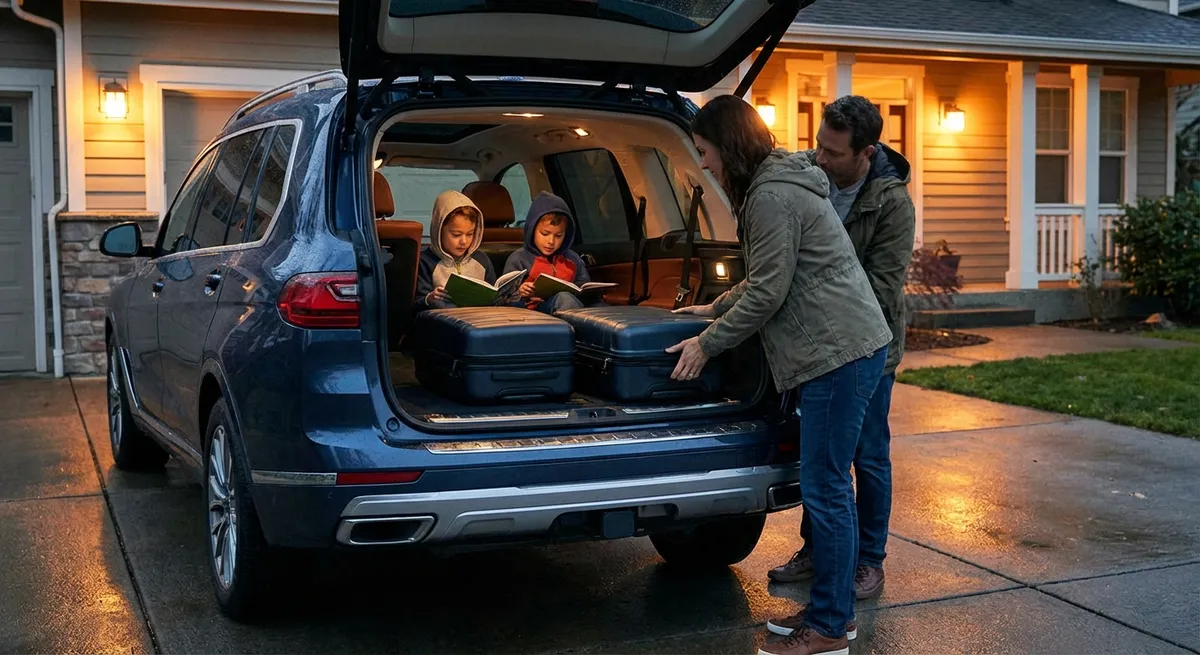
Introduce a dose of reality to your evaluation. Bring a stroller, a bulky sports bag, or a week’s worth of reusable grocery totes to your test drive. Observe how high you must lift items over the bumper, whether the cargo floor is flat with seats folded, and if the rear opening is square enough to accept awkward objects like a folded wagon or a large dog crate. Notice how easily third-row passengers can exit when child seats are installed in the second row; premium-feeling access is seamless, not contorted.
Inside the cabin, examine the “micro-architecture”: Are there dedicated spaces for water bottles, tablets, and headphones? Are USB ports and charging pads located where children can reach them without trailing cables everywhere? Consider how you live across seasons—muddy boots, wet outerwear, sandy beach days. Removable mats, seat-back protectors, and discreet storage bins for wet or dirty items are subtle, but these are the features that keep an SUV feeling new, orderly, and inviting long after the initial novelty fades.
Safety with Restraint: How Assistance Systems Behave in Reality
Modern SUVs are awash in advanced driver assistance systems (ADAS), but more is not automatically better. For families, the goal is safety with restraint: systems that support, not startle; that unobtrusively protect, rather than constantly intrude. Two SUVs can wear the same “feature list,” yet provide vastly different experiences based on tuning and integration.
During your test drive, deliberately and safely explore how these systems behave. On a lightly trafficked road, gently drift within your lane to feel the lane-keeping assist: does it nudge you discreetly or tug abruptly at the wheel? Try adaptive cruise control in moderate traffic; a well-calibrated system accelerates and decelerates smoothly, avoiding jerky changes that unsettle passengers or create motion sickness. Pay attention to forward collision warnings and blind spot alerts—do they sound panicked or measured, and are the visual indicators intuitive to read at a glance?
Investigate the ability to customize and refine these systems. A sophisticated family SUV allows you to tailor settings—sensitivity, warning intensity, steering intervention levels—so the vehicle supports your driving style rather than fighting it. Finally, corroborate your impressions with formal safety data from the Insurance Institute for Highway Safety (IIHS) and National Highway Traffic Safety Administration (NHTSA), not just star ratings but specific notes on crash performance, headlight quality, and child seat anchorage ease. Safety, at the highest level, is both engineered and experienced.
The Subtle Economics of Ownership: Beyond the Sticker Price
A discerning buyer treats the purchase price as the opening chapter, not the entire story. The true sophistication lies in understanding the subtle economics of ownership: how your SUV will age, what it will cost to maintain, and how predictably it will serve your family across a decade rather than a lease term.
Begin with fuel economy, but interpret it in context. Plug-in hybrids may offer exceptional efficiency for short, city-focused commutes, while a refined hybrid or well-calibrated gasoline engine may prove more convenient and consistent on longer suburban or highway drives. Use the EPA’s FuelEconomy.gov calculator to estimate annual fuel costs for your specific mileage, driving mix, and local fuel prices, rather than relying on generalized labels.
Next, examine maintenance intervals and warranty coverage. Premium-feeling ownership often comes from manufacturers that include scheduled maintenance for the first few years, offer longer powertrain warranties, and have a strong, local servicing network. Research common repair patterns and reliability scores through trusted sources such as Consumer Reports or J.D. Power; an SUV that is slightly more expensive upfront may be considerably more affordable—and less disruptive—over time.
Finally, consider resale and long-term flexibility. Configurations with thoughtful, universal appeal—neutral exterior tones, practical interior colors, popular option packages—typically retain value more gracefully. The ideal family SUV remains desirable not only to your household as needs evolve, but also to the next owner when it is time to upgrade or downsize.
Digital Serenity: Screen, Software, and the Family Tech Ecosystem
In today’s SUVs, software matters as much as sheet metal. For families, the objective is digital serenity: technology that integrates gracefully into your household’s ecosystem and reduces friction, rather than amplifying distraction and conflict. This is especially crucial as children bring their own devices, preferences, and streaming habits into the cabin.
Evaluate the infotainment system as you would a new smartphone. Is the interface intuitive within minutes, or does it require constant referencing of menus and submenus? Try pairing multiple phones, switching between Apple CarPlay or Android Auto sessions, and launching navigation while streaming audio. A refined system responds promptly, handles multitasking without freezing, and offers physical controls for vital functions—volume, temperature, defrost—so you aren’t constantly hunting through touchscreens while driving.
Rear-seat tech deserves equal scrutiny. Are there dedicated USB-C ports for each row? Can children control their own climate and audio zones without disturbing the driver? If rear entertainment screens are available, consider whether they accept multiple input sources and can be managed from the front seats to resolve disputes quickly. Over-the-air (OTA) software updates are another mark of sophistication, allowing improvements and bug fixes without a trip to the dealership. Aim for a digital environment that feels cohesive, predictable, and calm—technology in service of the journey, not the other way around.
Conclusion
Finding the right family SUV is less about chasing the latest trend and more about honoring the nuances of how your family actually lives. The most rewarding choices are those that feel quietly capable rather than loudly impressive—a composed ride that soothes, an interior that anticipates daily rituals, safety systems that protect with poise, ownership costs that unfold predictably, and technology that dissolves into the background of a well-orchestrated drive. When you evaluate with this level of intention, your next SUV becomes more than transportation; it becomes a calm, reliable backdrop to the moments that truly matter.
Sources
- [Insurance Institute for Highway Safety (IIHS) – Ratings & Research](https://www.iihs.org/ratings) - Detailed crash-test results, headlight evaluations, and child safety seat anchor ratings for current SUVs
- [National Highway Traffic Safety Administration (NHTSA) – 5-Star Safety Ratings](https://www.nhtsa.gov/ratings) - Official U.S. government safety ratings, including frontal, side, and rollover test data
- [U.S. Department of Energy – FuelEconomy.gov](https://www.fueleconomy.gov/feg/findacar.shtml) - Official fuel economy data and cost calculators for comparing SUVs, hybrids, and plug-in hybrids
- [Consumer Reports – Car Reliability & Owner Satisfaction](https://www.consumerreports.org/cars/) - Long-term reliability scores, owner satisfaction data, and maintenance insights for family SUVs
- [J.D. Power – Vehicle Dependability and Initial Quality Studies](https://www.jdpower.com/cars/ratings) - Industry-recognized ratings on dependability, quality, and ownership experience across SUV segments
Key Takeaway
The most important thing to remember from this article is that this information can change how you think about Buying Guide.