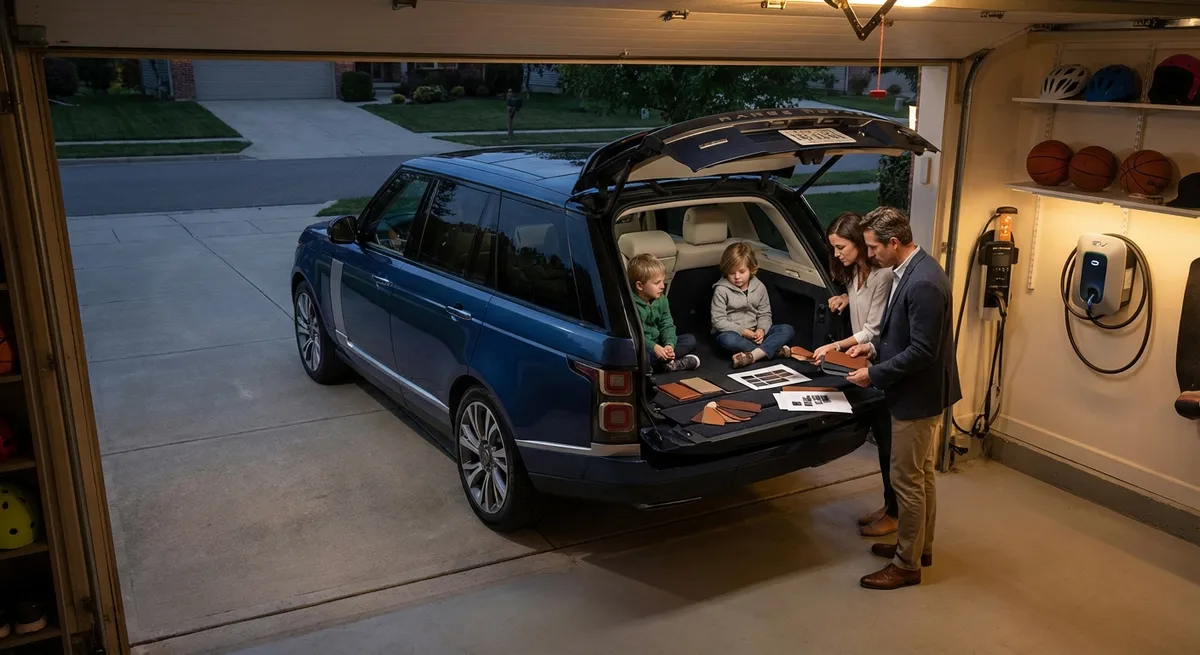
Selecting a family SUV today is less about chasing the latest trend and more about curating a daily environment that quietly supports everything your family does. Beyond horsepower figures and cargo volumes lies a subtler layer of comfort, composure, and thoughtful engineering that will define how this vehicle feels at year three, not just on day one. This guide steps past the usual talking points and focuses on five refined, under-discussed considerations that sophisticated buyers use to separate “good enough” from genuinely exceptional.
Insight 1: Cabin Calm Is Engineered, Not Advertised
Most spec sheets will tell you how much power an SUV has; few will reveal how it will actually sound when your child naps in the back after a long day. True cabin calm is a blend of engineering decisions that rarely appear in marketing copy but dramatically influence family life.
Listen for how an SUV handles coarse asphalt at highway speed—this exposes tire noise, wind intrusion, and structural resonance. Vehicles with laminated front (and ideally rear) side glass, extensive door seals, and acoustic insulation in the firewall and floorpan typically deliver a more serene cabin, especially on long trips. Pay attention to how the suspension deals with expansion joints and patched tarmac: does it quietly absorb imperfections or transmit a dull thud into the cabin? An SUV that feels unruffled at 70 mph will leave you and your passengers noticeably less fatigued after a weekend of shuttling between sports, parties, and errands. During your test drive, turn off the audio system, maintain a steady speed, and simply listen—calm is a luxury in itself.
Insight 2: The Second Row Is Your Real Luxury Suite
For families, the true measure of an SUV’s refinement is not the driver’s seat—it is the second row. This is where children do homework, teens scroll between activities, and adults occasionally recline after a long day. Yet buyers often spend only a cursory moment here before signing a contract.
Start with the seating geometry: are the rear cushions long enough to support growing legs, or do they slope down sharply, forcing knees upward? Ideally, you want generous thigh support and an adjustable backrest angle so passengers can sit upright when needed or recline for naps. Check the height of the window beltline: a lower line allows younger children better outward visibility, reducing motion sickness and restlessness. Assess the placement and number of USB-C ports, dedicated climate controls, and air vents—particularly those mounted higher on the pillars or ceiling, which provide more even airflow for rear passengers. Finally, close the doors and listen for how solidly they shut from the second row: it is a subtle but telling indicator of structural integrity and build quality that your family will experience every single day.
Insight 3: True Practicality Lives in the Margins, Not the Max Numbers
Cargo volume in liters or cubic feet makes for easy comparison charts, but real-world practicality emerges from the details those numbers obscure. Families rarely load to the roofline; instead, they juggle strollers, sports bags, grocery totes, musical instruments, and luggage—often all at once.
When you inspect the cargo area, look at the shape before the size. A flat, wide floor with minimal intrusions is far more usable than a larger but awkwardly sculpted space. Check whether the third row folds fully flat, and if so, whether there is a defined “step” in the floor that can complicate sliding heavier items. Low liftover height is crucial when loading a stroller or travel crib alone. Hidden underfloor storage can elegantly conceal muddy shoes, emergency supplies, or reusable shopping bags. Power-folding seats are convenient, but what matters more is the ability to fold them quickly from the cargo area without walking around the vehicle. A truly family-oriented SUV turns the rear compartment into an orderly, intuitive staging area, not a chaotic storage bin.
Insight 4: Quiet Tech: Digital Systems That Stay Out of the Way
Modern family SUVs are saturated with screens and features, but refinement is not about more technology—it is about better-behaved technology. The most livable systems work so fluidly that they barely register as “tech” at all.
Evaluate how many steps it takes to perform your most common tasks: starting navigation, finding a contact, switching between podcast and music, adjusting seat heating, or activating rear climate control. If these require navigating multiple menus or small on-screen icons, they will quickly become tedious. Voice control should recognize natural phrases, not memorized commands; test this on the spot. Wireless Apple CarPlay and Android Auto, combined with a wireless charging pad that actually keeps a modern phone cool and charged, can dramatically reduce cable clutter and distraction. Examine the instrument cluster and head-up display: can you see key information at a glance, or are you forced to decipher visual noise? A premium family SUV uses technology to relieve your cognitive load, not add to it—especially on those nights when everyone is talking at once.
Insight 5: The Long View: Refinement You’ll Appreciate in Year Five
Many SUVs feel impressive for the first weekend; genuinely well-considered ones continue to feel composed and coherent after years of daily use. Families, more than anyone, benefit from choosing with a long horizon in mind.
Research not only reliability ratings, but also how a model ages in real-world use—pay attention to owner feedback on seat comfort after several hours, how the interior materials resist scuffs from child seats and backpacks, and whether tech features stay stable after software updates. Evaluate the dealership experience and service network; your time is valuable, and streamlined maintenance with loaner vehicles or concierge services becomes a quiet but meaningful luxury. Consider fuel economy or electrified options not purely as a cost equation, but as a quality-of-life factor: fewer fuel stops or planned charging routines can make school runs and weekend getaways more predictable. Above all, choose an SUV whose fundamentals—driving manners, seating comfort, visibility, and control layout—feel inherently right to you. Trends age; good engineering does not.
Conclusion
The most satisfying family SUVs are rarely the ones with the loudest marketing claims. They are the vehicles that create an atmosphere of ease: cabins that stay calm on rough roads, second rows that welcome every passenger, cargo areas that cooperate rather than fight back, technology that recedes into the background, and ownership experiences that remain steady for years. When you shop with these five insights in mind, you move from simply buying transportation to thoughtfully selecting the moving space your family will inhabit every day—one that feels as considered and composed as the rest of your life.
Sources
- National Highway Traffic Safety Administration (NHTSA) - Official crash test ratings and safety information to support long-term family-focused decision making
- Insurance Institute for Highway Safety (IIHS) Ratings - Independent safety evaluations, including crashworthiness and crash-avoidance technology performance
- Consumer Reports: How to Choose the Best SUV - Practical guidance on SUV selection, reliability, and owner satisfaction data
- Edmunds Car Buying Guide - Detailed breakdown of what to look for on test drives and how to interpret features beyond the brochure
- U.S. Department of Energy – Fuel Economy - Comprehensive fuel economy and energy usage data for comparing conventional, hybrid, and electric SUVs
Key Takeaway
The most important thing to remember from this article is that this information can change how you think about Buying Guide.