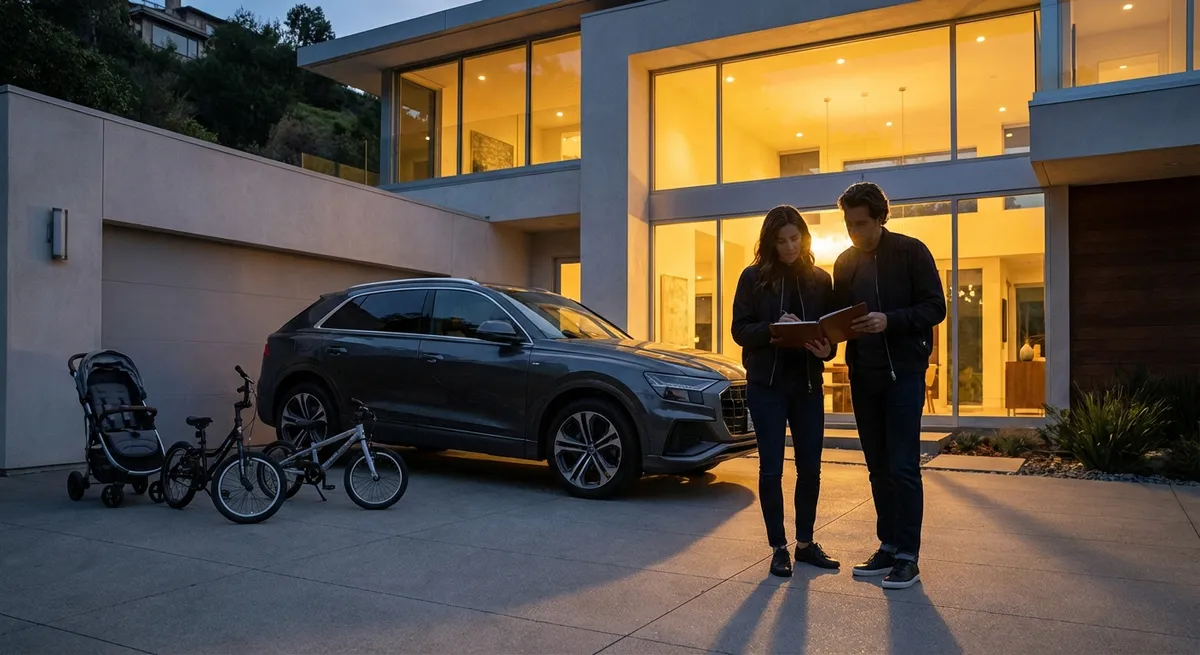
For families who value refinement as much as practicality, choosing an SUV is less about chasing the latest trend and more about quietly curating an environment that supports every facet of daily life. Beyond horsepower figures and cargo volumes lies a more nuanced question: how does this vehicle feel, function, and age alongside your family? This review playbook explores five exclusive insights that often remain between the lines of standard SUV reviews, helping you read the subtleties that truly matter in a premium family vehicle.
1. Cabin Acoustics: The Unseen Indicator of Quality
Most SUV reviews mention noise levels in passing, but few treat cabin acoustics as the decisive quality metric it is. For a family, how an SUV manages sound—engine, wind, tire roar, and even the ambient “hum” at highway speed—can transform long drives from draining to restorative.
Luxury-leaning family SUVs increasingly employ double-laminated glass, active noise cancellation, and targeted sound deadening around the firewall and wheel wells. When reading or watching reviews, pay attention to whether testers describe specific sound sources (e.g., “noticeable wind noise at the A-pillars” or “tire drone on coarse asphalt”) rather than generic comments like “it’s quiet.” The more precise the observation, the more likely it reflects a truly refined acoustic package.
In a test drive, assess the cabin at 65–75 mph on a variety of surfaces. Can passengers speak in low, conversational tones? Does streaming music retain its clarity at low volume, or must you turn it up to mask noise? For families with young children, the ability to maintain a peaceful audio environment—whether for nap time or evening commutes—will prove more valuable than a few tenths shaved off a 0–60 time.
2. Seat Architecture: Beyond Leather and Lumbar
Reviewers often praise “comfortable seats,” but discerning families know that long-term comfort is a function of architecture, not just padding. Think of seating as the SUV’s furniture: it must support, not simply cushion. Premium family SUVs increasingly adopt multi-density foam, extended thigh support, adjustable side bolsters, and even subtly contoured shoulder areas to reduce fatigue.
When comparing reviews, look for commentary on seat ergonomics over time—how testers felt after multiple hours behind the wheel, not just an initial impression. Pay attention to mentions of:
- Seat base length and thigh support, especially for taller drivers and teens
- The shape and firmness of the head restraints, crucial for both comfort and whiplash protection
- Second-row adjustability (slide, recline, tilt) and how it affects both child-seat installation and adult comfort
- Third-row usability for real passengers, not only children
If you frequently install child seats, consider reviews that evaluate how easily LATCH anchors are accessed and whether the seat bolsters make installation awkward. A genuinely family-first SUV pairs supple materials with thoughtful sculpting so that long journeys feel unhurried and unhurried days feel effortless.
3. Climate Mastery: Quiet Control Over Every Seat
Many reviews list “tri-zone climate control” as a bullet point, but discerning families know climate performance is about nuance, not counting zones. The difference between “everyone’s comfortable” and “turn it down, I’m freezing” comes from how intelligently an SUV manages air distribution, temperature gradients, and sunlight exposure.
Premium family SUVs now offer features such as UV-filtering glass, ventilated second-row seats, and micro-climate control that balances temperature with humidity. Reviews that merely note the existence of vents overlook what matters: how quickly the cabin reaches a stable, comfortable state in real weather.
During a test drive, observe:
- How rapidly the cabin cools or warms from a genuinely cold or hot start
- Whether third-row passengers receive direct, adjustable airflow rather than only overhead vents
- If the system maintains an even temperature without constant manual adjustment
- Whether climate controls are intuitive enough for a 10-year-old to use without distraction
Families living in climates with harsh summers or winters will feel these differences daily. The most refined systems disappear into the background, quietly maintaining comfort so that no one has to negotiate over fan speed or temperature mid-journey.
4. Digital Experience: Tech That Ages Gracefully
Many SUV reviews fixate on screen size and interface flashiness. For a premium family experience, longevity matters more than novelty. The question is not “How impressive is this today?” but “How elegantly will this system age over five to eight years of family life?”
Look for reviews that examine software responsiveness, menu logic, and over-the-air update capability—not just the presence of wireless Apple CarPlay or Android Auto. A truly refined family SUV avoids burying essential functions (like drive modes, climate essentials, or seat heaters) under layers of touch menus. Physical controls for high-frequency tasks are not old-fashioned; they are quietly luxurious because they respect your attention.
When evaluating an SUV’s tech suite:
- Note whether reviewers mention software updates and how often the brand improves features post-purchase
- Look for commentary on smartphone integration stability over longer drives
- Observe how the vehicle handles multiple devices connected simultaneously (parents up front, teens in the back)
- Consider whether rear-seat entertainment or device charging solutions feel thoughtfully integrated rather than tacked on
Families should favor systems that are calm, legible, and consistent. A refined digital environment reduces cognitive load—freeing you to focus on the road, the conversation, and the trip itself.
5. Daily-Use Refinement: The Small Rituals That Define Ownership
The most exclusive insight, and one that reviewers increasingly—but not always—address, is how the SUV handles the micro-moments of everyday life. This is where premium family vehicles truly distinguish themselves: in the smoothness of a powered tailgate, the logic of storage cubbies, or the way ambient lighting subtly illuminates the cabin at night without glare.
Instead of focusing solely on headline specs, seek reviews that discuss:
- The step-in height and door opening angle, crucial when carrying a sleeping child or managing car seats
- How gracefully the third row folds and rises—can it be operated one-handed while holding a bag?
- The design and depth of the cargo area with all seats up, not just the maximum capacity with rows folded
- Subtle conveniences: integrated sunshades, hands-free tailgate access that actually works, clever underfloor storage, or hooks and tie-downs for grocery bags and sports equipment
Conduct your own “daily ritual test” during a dealership visit: simulate your morning school run, weekend shop, or sports practice load-out. A truly well-reviewed family SUV should anticipate these patterns. In many cases, the real mark of a premium choice is not the badge on the grille but the number of times per week the vehicle saves you a step, a reach, or a minor frustration.
Conclusion
For families with discerning tastes, reading SUV reviews is no longer about scanning a score and skimming a feature list. It is about interpreting the finer points—cabin acoustics, seat architecture, climate mastery, digital longevity, and daily-use refinement—that define how a vehicle will feel in year six as much as in month one. By focusing on these five exclusive insights, you elevate your search from “finding an SUV” to curating a long-term companion: one that moves with quiet confidence through your family’s evolving life, and does so with a level of calm, comfort, and consideration that feels unmistakably premium.
Sources
- [U.S. National Highway Traffic Safety Administration (NHTSA)](https://www.nhtsa.gov/ratings) - Provides official crash-test ratings and explanations of safety evaluation methods, useful context when reviewing SUVs.
- [Insurance Institute for Highway Safety (IIHS) – Vehicle Ratings](https://www.iihs.org/ratings) - Offers detailed crashworthiness, crash-avoidance, and headlight performance ratings that complement qualitative SUV reviews.
- [Edmunds – How to Test-Drive a Car Like a Pro](https://www.edmunds.com/car-buying/how-to-test-drive-a-car-like-a-pro.html) - Explains what to focus on during a test drive, including comfort, noise, and controls, aligning with the refined evaluation approach discussed here.
- [Consumer Reports – What Makes a Car Comfortable](https://www.consumerreports.org/cars-driving/what-makes-a-car-comfortable-a1690896701/) - Breaks down seat design, ride quality, and noise considerations that underpin sophisticated comfort assessments.
- [Environmental Protection Agency (EPA) – Fuel Economy Guide](https://www.fueleconomy.gov/feg/findacar.shtml) - Offers official fuel economy data and tools to compare SUVs, providing an objective backdrop to efficiency claims in reviews.
Key Takeaway
The most important thing to remember from this article is that this information can change how you think about SUV Reviews.