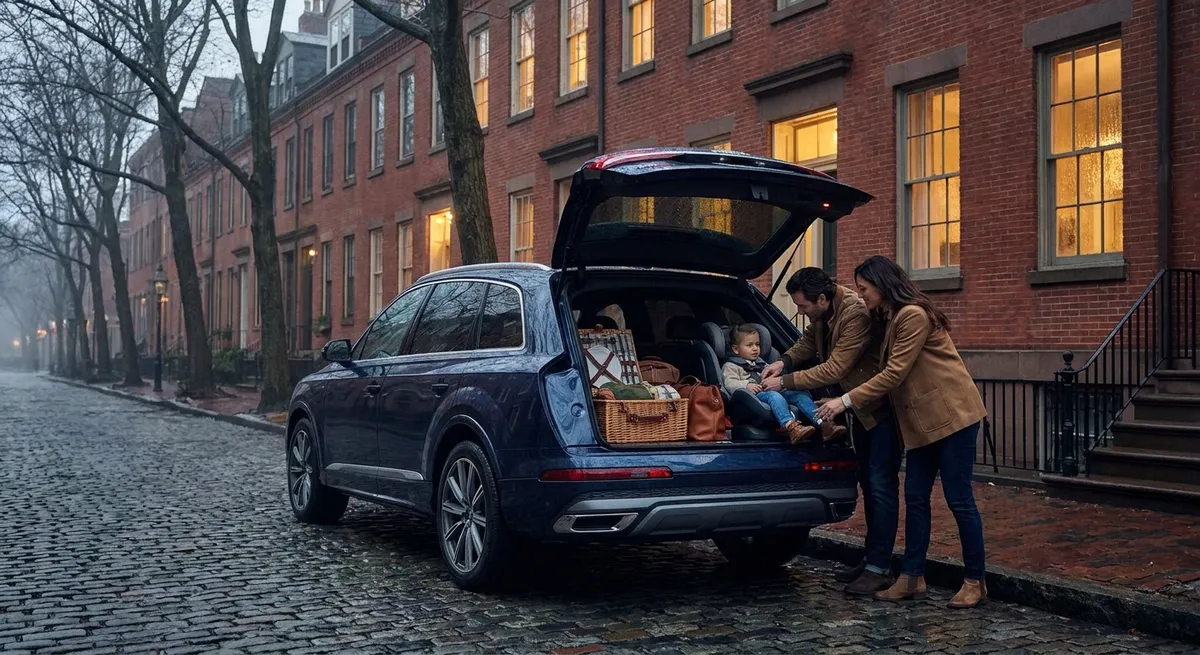
Choosing a family SUV today is less about chasing the latest headline feature and more about curating a daily environment that feels composed, protective, and quietly indulgent. For families who value refinement as much as practicality, the real differentiators often sit just beneath the surface—details that rarely make the brochure cover, yet define how the vehicle feels in year five as much as on day one.
Below are five exclusive, under-discussed insights that help separate a merely capable family SUV from one that genuinely elevates every journey.
1. Cabin Silence: Beyond “Quiet,” Listen for the Right Kind of Calm
Many SUVs claim a quiet cabin; far fewer deliver the kind of layered acoustic refinement that keeps everyone calmer, less fatigued, and more willing to talk rather than tune out. The distinction lies not only in decibel levels but in the quality of the sound that does reach your ears.
Look for evidence of laminated (acoustic) glass, particularly in the front windows, and pay close attention to how the cabin copes with coarse highway surfaces—where cheaper insulation often reveals itself. A well-engineered family SUV will separate road and wind noise from the core passenger space, so you can hold a soft conversation with someone in the third row without raising your voice.
If available, test drive the vehicle on imperfect tarmac at 60–70 mph. Turn off the audio system and simply listen. Do you perceive a single, soft background “hush,” or a mix of sharper intrusions—gravel hiss, wind around the mirrors, tire slap over expansion joints? That distinction is telling. Families who spend time on the road will feel the difference at the end of a long weekend drive: fewer headaches, less frayed patience, and children who are more likely to fall asleep in the back.
Many brands now offer active noise cancellation, but it should complement, not compensate for, robust fundamental insulation. If the cabin feels naturally serene before the system is engaged, you are on the right track.
2. Seating Architecture: Design That Anticipates Real Family Life
Premium family SUVs are no longer defined solely by leather upholstery and power adjustments. The true mark of thoughtful design is seating that anticipates the rhythm of family life: school runs, car seats that move between vehicles, teenagers who outgrow the second row, grandparents who need easy access.
Begin with the second row. A bench that offers both sliding and reclining adjustments is far more valuable than a rigid three-seat layout. It allows you to flexibly trade legroom between the second and third rows, position child seats so they are easy to buckle, and create a “preferred” seat for longer journeys. Captain’s chairs can feel indulgent, but in a family context their real virtue is the natural aisle they create, allowing older children to reach the third row without everyone climbing and contorting.
The third row should be assessed as a genuine space, not a theoretical one. Sit adults or tall teenagers back there and check knee angle, headroom, and thigh support. A refined SUV will provide not just a place to perch, but thoughtful amenities: individual vents, accessible USB ports, usable cupholders, and at least some side-glass area so rear passengers do not feel secluded in a dark alcove.
Finally, pay attention to the subtleties of the cushioning itself. Denser foam in the base, proper lumbar contouring, and a seat back that supports the shoulders can make a decisive difference on longer trips. Test this by taking a slightly extended drive: if you notice yourself shifting often to get comfortable, the seats may not be ideal for years of family touring.
3. Ride Character: The Nuance Between Floaty and Fatiguing
Family SUVs walk a delicate line: too soft and the vehicle can feel vague and unsettled; too firm and every pothole becomes a small event. The best options maintain a poised, almost unruffled character across imperfect roads—calm body motions, yet clear control.
On your test drive, deliberately seek out real-world conditions: broken pavement, gentle curves, urban speed bumps, and highway ramps. Notice how the SUV responds when you encounter a mid-corner bump or an uneven patch at speed. A well-tuned family SUV will absorb the disturbance with a single composed motion rather than oscillating or “bobbling” afterward. This matters more than outright sportiness, especially with young passengers trying to read or nap.
If adaptive or air suspension is available, treat it as more than a box to tick. Explore the modes. A refined system will show its sophistication in the middle setting—not overly plush, not brittle—delivering consistency rather than drama. Be cautious of “sport” settings that feel impressive for ten minutes but would prove tiresome on a three-hour interstate run.
For many families, wheel size is a hidden culprit. Larger wheels paired with low-profile tires can look striking but often undermine ride comfort, especially over sharp imperfections. When possible, test the SUV on the exact wheel and tire specification you plan to buy. The difference between a 20-inch and a 21/22-inch wheel, in a family context, can be the difference between “elegantly composed” and “constantly apologizing to the back seat.”
4. Hidden Practicality: The Elegance of Effortless Everyday Use
True luxury for a family is not just what you see—it’s what you don’t have to think about. The most accomplished SUVs integrate small, intelligent solutions that keep daily life orderly with minimal effort.
Start with cargo space, but look beyond raw volume figures. Evaluate the shape of the load area with the third row both up and down. A nearly flat floor, low load lip, and wide opening can be more beneficial than a few extra nominal liters. Consider how a stroller, sports equipment, musical instruments, or weekly groceries would realistically fit. Does the cargo cover store neatly when not in use? Are there hooks for shopping bags, a side net for loose items, or underfloor compartments for items you prefer to keep hidden?
Inside the cabin, seek genuinely usable storage: a center console deep enough to swallow a small handbag, door bins that accept large water bottles, secure spots for tablets and headphones, and at least one discreet compartment for valuables when parked. Pay attention to the ergonomics of cupholders—are they placed where elbows naturally fall, and do they hold both slim cans and wider reusable bottles without rattling?
Thoughtful touches—magnetized seat-belt clips that prevent buckles from being trapped under child seats, integrated rear sunshades, wide-opening rear doors, and intuitively folding seats that can be operated one-handed—transform the SUV from a simple people-mover into a genuinely accommodating family environment. These features may not appear in bold type on the spec sheet, yet they are the things you will appreciate every single day.
5. Digital Maturity: Technology That Serves, Not Distracts
In a modern family SUV, screens and software are unavoidable; the question is whether they feel like a polished extension of the vehicle or a collection of novelties. Digital maturity is not about how many inches of display you get, but how gracefully the systems support family life without demanding attention.
Evaluate the interface with a critical eye. Are key functions—temperature, fan speed, audio volume, defrost—accessible via physical controls or at least large, persistent on-screen buttons? Systems that bury climate or seat heating within multiple menus can feel exquisite in a showroom and exasperating in real traffic.
Test smartphone integration thoroughly. Apple CarPlay and Android Auto should connect quickly and reliably, preferably wirelessly, and maintain a stable connection even when multiple devices are present. Check if the rear passengers have their own charging ports (USB-C is increasingly preferable), and whether rear-seat entertainment—if offered—can operate independently so younger passengers can watch or listen without disrupting the front.
Advanced driver assistance systems (ADAS)—adaptive cruise control, lane centering, blind-spot monitoring—should feel intuitive and refined, not abrupt or unpredictable. During the test drive, activate them on a highway and observe: does the system accelerate and brake smoothly? Does lane-keeping feel gentle and supportive rather than intrusive? Families benefit enormously from these systems when they are well-executed, but poorly tuned technology can increase rather than reduce fatigue.
Finally, consider the brand’s approach to software updates. Vehicles that support over-the-air (OTA) enhancements can quietly improve navigation, refine driver assistance behavior, and add features over time. In a family context—where you may keep the SUV for many years—this can help the cabin tech feel current long after the initial purchase.
Conclusion
For families seeking a premium SUV, the goal is not simply to accumulate features but to curate a calm, capable, and enduring companion. A truly distinguished family SUV is defined by its subtleties: the hushed composure of its cabin, the thoughtfulness of its seating, the smooth control of its ride, the intelligence of its everyday practicality, and the quiet confidence of its technology.
By looking beyond surface-level specifications and exploring these deeper layers of refinement, you can assemble a shortlist that feels less like a compromise and more like a considered extension of how your family lives, travels, and experiences the world—today and in the many journeys to come.
Sources
- U.S. Environmental Protection Agency – Fuel Economy Guide – Official fuel economy data and comparisons for SUVs and other vehicles
- National Highway Traffic Safety Administration (NHTSA) – Crash test ratings and information on advanced safety and driver assistance technologies
- Insurance Institute for Highway Safety (IIHS) – Independent safety evaluations, crashworthiness ratings, and headlights/ADAS assessments for SUVs
- Edmunds – Car Reviews and Ratings – Professional SUV reviews, road tests, and owner insights on comfort, practicality, and technology
- Consumer Reports – SUV Buying Guide – Data-driven reliability, owner satisfaction, and usability evaluations for family SUVs
Key Takeaway
The most important thing to remember from this article is that this information can change how you think about SUV Reviews.