Family SUVs are often discussed in terms of cargo space and cupholders. Useful, yes—but insufficient for families who care as much about refinement as practicality. For parents balancing business meetings with ballet recitals, or school runs with weekend escapes, the right SUV is less a people-mover and more an elegantly engineered daily companion.
This is where details matter. The way doors open in a narrow school parking lane, how a cabin handles competing temperature preferences, or the quiet competence of a driver-assistance system after a long day—these are the nuances that shape real family comfort. Below, we explore five less-obvious, but deeply impactful, family-focused SUV insights that rarely make the brochure, yet subtly elevate every drive.
Insight 1: Cabin Architecture Matters More Than Cabin Size
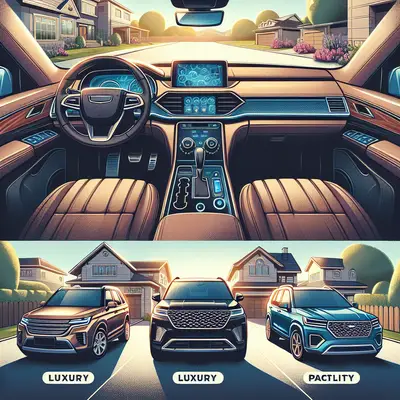
Many spec sheets prioritize total passenger volume, but how that space is shaped is often more important than the headline number. Sophisticated families should pay attention to cabin architecture: the geometry of seating, door openings, and sightlines that govern how gracefully your family moves in and out of the vehicle.
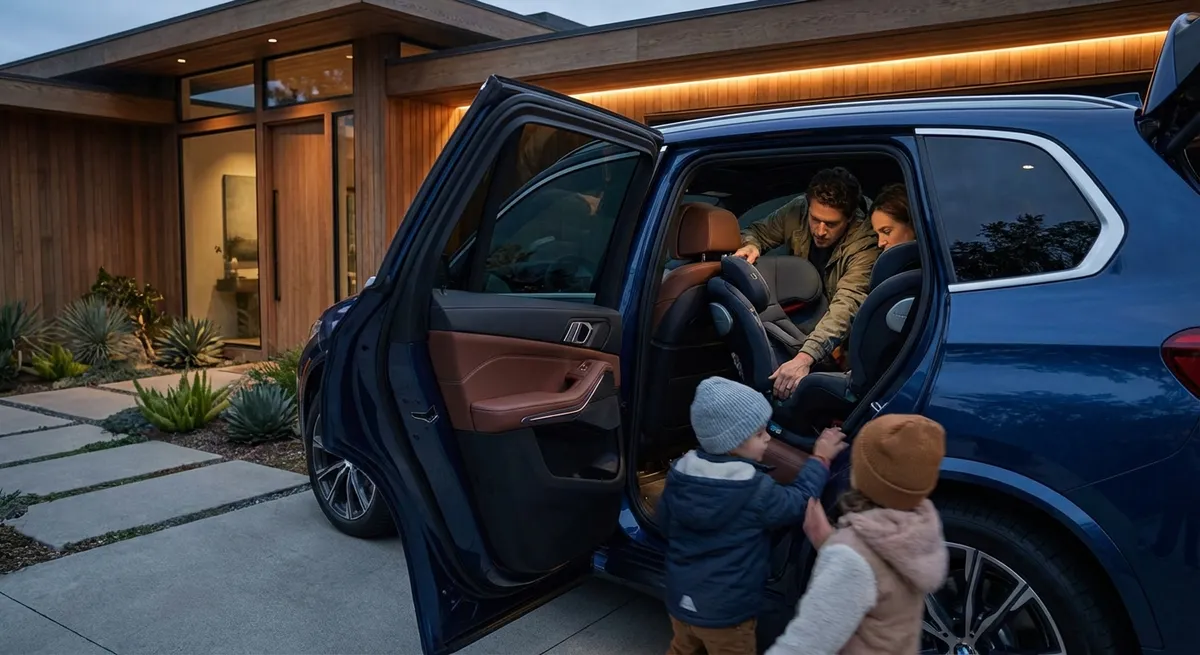
Look for second-row seats that slide as well as recline, allowing you to tailor legroom between rows as children grow—and as grandparents occasionally join the journey. Pay attention to how the third row is accessed: a seat that tilts and slides forward with a single, low-effort motion can make loading a child seat or helping a toddler far more dignified.
Window design also plays a quiet yet decisive role. A low beltline and larger glass areas help younger passengers see out more easily, reducing motion discomfort and making long drives feel less confining. At the front, a slightly elevated seating position with slender roof pillars can give the driver both composure and confidence, particularly in tight urban streets or crowded school zones.
The most refined family SUVs feel thoughtfully “zoned”—with clear personal spaces for each occupant—rather than simply large. When test driving, move through the cabin as your family would on a hectic morning: install a car seat, climb into the third row, buckle everyone in. The true value of a well-designed cabin becomes obvious not in isolated comfort, but in the choreography of a busy family day.
Insight 2: Climate Control as a Comfort Strategy, Not a Button
A premium family SUV should treat climate not as a single setting, but as a customizable comfort strategy. While multi-zone climate control is now widespread, not all systems are created equal—and discerning families should look beyond a “tri-zone” label.
Evaluate how finely the system can be adjusted for each row and how intuitively the settings can be changed without distracting the driver. Rear passengers, especially teens, appreciate the ability to control fan speed and direction independently. For younger children, softly diffused vents rather than aggressive, direct airflow help maintain comfort without drafts or noise. Roof-mounted or pillar-mounted vents can distribute air more evenly to the rear rows, which becomes invaluable on longer journeys.
Advanced filtration and air-quality monitoring, once reserved for luxury sedans, are quietly arriving in higher-end SUVs. Families in urban or wildfire-prone regions may benefit from cabin air filters that address fine particulates and allergens and can automatically switch to recirculation in poor air quality. Heated rear seats, ventilated front seats, and a heated steering wheel are more than indulgences; they enable lower overall cabin temperatures in winter and slightly higher settings in summer, which can improve efficiency while maintaining individual comfort.
When you test drive, deliberately stagger preferences: ask your passengers to request different temperatures and fan speeds. Observe how quickly and quietly the system adapts and whether you can adjust key settings without digging through distracting on-screen menus. A well-designed climate system fades into the background, leaving only a sense of calm, tailored comfort.
Insight 3: Acoustics and Conversation: The Invisible Luxury
Many family SUVs advertise quiet cabins, but few consider the more nuanced goal: a soundscape that supports conversation, focus, and rest simultaneously. For a family, acoustics are not just about decibels but about what you hear, where you hear it, and how fatiguing that becomes over time.
Start with road and wind noise. On a test drive, turn off the audio system at highway speeds and listen carefully. A refined SUV will suppress the low-frequency roar of tires and the high, whispery turbulence around mirrors and pillars, making it easier to converse without raising your voice. This matters on longer drives, where subtle noise fatigue can leave passengers more irritable and drivers more tired.
Then consider how sounds travel within the cabin. In some vehicles, back-row conversations overwhelm the front, or the driver must frequently twist around or raise their voice to communicate. Thoughtful cabin shaping and acoustic glass can help conversations flow more naturally. Some models now offer “conversation enhancement” systems, using microphones and speakers to subtly amplify voices between rows; when well-tuned, this technology disappears into the experience, simply making it easier for everyone to hear one another.
Audio systems themselves can be allies in creating zones of calm. Look for SUVs that allow selective audio zoning—so children in the rear can enjoy a movie through headphones while the front occupants listen to a podcast or drive in near-silence. Premium audio brands are less about volume and more about clarity at modest levels, preserving detail even during quiet late-night drives home from events.
The most elegant family SUVs manage sound as deliberately as they manage space: muting the outside world just enough, supporting easy conversation, and giving each passenger the option of personal quiet.
Insight 4: Intuitive Tech That Respects a Parent’s Mental Bandwidth
Family life demands constant micro-decisions. The last thing a parent needs is an SUV that behaves like another demanding device. True sophistication in a family vehicle is not about the sheer number of screens, but whether the technology respects your attention.
Judge the interface by what you can accomplish in one or two presses while driving. Core tasks—adjusting volume, changing key climate settings, activating defoggers, accessing navigation home—should be possible through physical controls or logically placed, large on-screen targets. Overly layered menu structures or heavily gesture-based controls may look futuristic in a showroom but become liabilities in rain, traffic, or with restless children on board.
Consider how the vehicle handles multiple devices. A refined family SUV offers numerous USB-C ports and wireless charging, but more importantly, manages them intelligently: seamless switching between driver and passenger phones for calls and audio, clear indication of which device is currently paired, and stable wireless smartphone integration that does not routinely drop connections. Wireless Apple CarPlay and Android Auto, when executed well, allow your digital life to transfer gracefully from your pocket to the dash.
Parental controls are another quiet differentiator. Some models allow speed alerts, geographic boundaries, or personalized driver profiles—especially valuable for households with teen drivers. Look for the ability to configure these settings easily and receive clear, unobtrusive notifications rather than constant, nagging alerts.
Sophisticated in-vehicle tech should feel like a calm, competent assistant: present when needed, invisible when not, and always secondary to the primary task of driving well.
Insight 5: Safety That Blends Discretion with Decisive Action
Advanced safety systems are now expected in family SUVs, but how those systems behave day-to-day is where refinement emerges. For parents, the real luxury is a vehicle that quietly extends their attention and reaction time without becoming overbearing.
Evaluate the tuning of driver-assistance features, not just their presence. Adaptive cruise control, for instance, should accelerate and brake with the smooth confidence of an attentive, experienced driver—not jerkily or too conservatively. Lane-centering assistance should gently guide, not ping-pong between lane markings or insist on control in complex urban environments. During a test drive, experience these systems in varied traffic, and notice whether they feel like a calm partner or an anxious co-pilot.
Pay close attention to rear-seat and occupant-sensing safety. Some SUVs now include systems that remind drivers to check the rear seats or even use sensors to detect motion and alert you to a child inadvertently left behind. More advanced collision-avoidance features can intervene when reversing out of driveways, monitoring cross-traffic and even braking if necessary—a quiet but powerful reassurance in neighborhoods with children or pets.
The best family SUVs also integrate these features elegantly into the driver’s visual field: clear, high-resolution camera views with realistic guidelines; heads-up displays that show key information without clutter; and warning tones that are distinct yet not harsh. An excessive barrage of beeps and flashing icons can undermine the peace you’re trying to cultivate.
In an ideal family SUV, safety systems feel almost ceremonial: present, respectful, and prepared to step in decisively when required—while allowing you to remain very much in charge.
Conclusion
For discerning families, the true excellence of an SUV is rarely captured by a single specification or feature list. It lives in the intersection of clever cabin architecture, nuanced climate control, refined acoustics, considerate technology, and safety that protects without overwhelming. These subtleties do not shout from billboards, yet they shape every school run, weekend trip, and late-night airport pickup.
When you evaluate your next family SUV, step beyond the obvious numbers. Sit in every seat. Adjust every control. Drive in silence, then with music, then with conversation. Ask how the vehicle will feel not on its best day, but on your most demanding day. The right SUV will meet those moments with poised, unflustered competence—delivering not just transportation, but a quietly elevated family experience.
Sources
- NHTSA – Vehicle Safety Features - Overview of modern safety and driver-assistance technologies relevant to family vehicles
- IIHS – Ratings and Vehicle Safety Information - Independent crash-test results and evaluations of advanced safety systems in SUVs
- EPA – Green Vehicle Guide - Guidance on choosing vehicles, including SUVs, with considerations for efficiency and emissions
- AAA – Evaluating Advanced Driver Assistance Systems - In-depth look at how driver-assist technologies function in real-world driving
- Consumer Reports – Car Seat and Child Passenger Safety - Practical insights into how vehicle design affects car seat installation and rear-seat usability
Key Takeaway
The most important thing to remember from this article is that this information can change how you think about Family Features.