For today’s families, the right SUV is less a purchase and more a long-term partnership. Yet many reviews still fixate on headline horsepower, splashy touchscreens, and cargo numbers in isolation. At Family SUV Review, we prefer a more nuanced lens—one that looks beyond surface specifications and into how an SUV actually supports a family’s rhythm: school runs, late flights, weekend sports, and quiet moments in between.
What follows are five exclusive, often-overlooked insights that transform SUV shopping from a checklist exercise into a deeply informed, almost tailor-made decision.
The Hidden Art of Cabin Layout: Beyond “Spacious”
Most SUV reviews treat interior room as a single metric—cubic feet. Families, however, live in the details. The true luxury is not just space, but how intelligently that space is orchestrated.
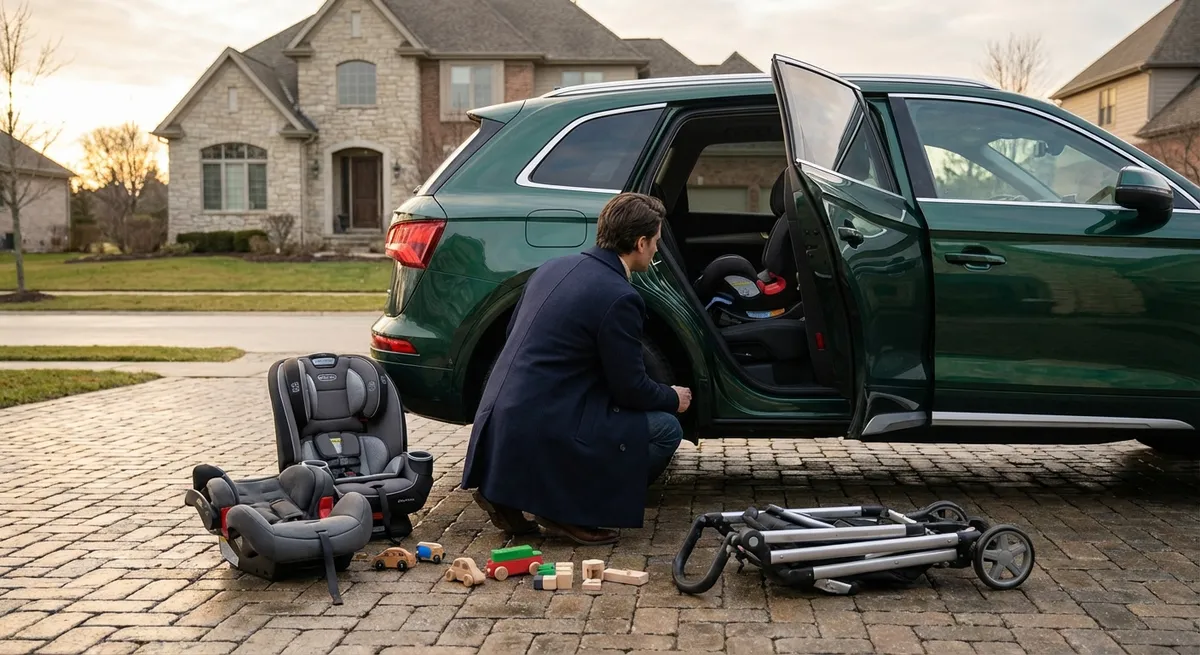
Consider the second row. Some SUVs offer slide-and-tilt seats that preserve access to the third row even with a child seat installed—a refinement that can spare you from contortionist-level maneuvering on a rainy school morning. Others position the LATCH anchors inboard, making it genuinely practical to secure three car seats across without bruised knuckles and frayed patience.
Third-row design is another quiet differentiator. On paper, many SUVs “seat seven,” but leg angle, floor height, and window size dictate whether those rearmost seats feel like a serene alcove or a compressed afterthought. Families with teens should pay close attention to toe room under the second row and the shape of the seat base; these small details determine whether a long drive feels civilised or cramped.
Thoughtful cabin layouts also reveal themselves in mundane moments: a flat floor in the second row that allows a child to move across without tripping, armrests that double as stable surfaces for snacks, and door openings that are wide without being unwieldy in tight parking structures. These are rarely top-line features, yet they define everyday satisfaction.
Ride Quality and Quiet Tuning: The New Family Luxury
Power figures and 0–60 times make headlines; composure is what makes memories. For family use, ride quality and cabin quietness eclipse outright performance as the true measures of refinement.
Many SUVs are tuned either for firm, “sporty” handling or soft, floaty comfort. The real art lies in the balance: a suspension that gracefully manages speed bumps and patched city streets without becoming imprecise on the highway. Families should listen (and feel) for how the vehicle behaves over broken pavement, expansion joints, and steep driveways—areas where lesser calibrations reveal themselves in abrupt jolts or body sway.
Cabin quietness is equally vital, especially with children. Noise is tiring, and constant road roar or wind rush can transform even a short trip into a draining experience. Look for reviews that measure or comment on:
- Wind noise around mirrors and the A-pillars at highway speeds
- Tire noise on coarse asphalt
- How well the vehicle isolates engine sound under moderate acceleration
Some manufacturers deploy acoustic glass, extra sound-deadening material, or active noise cancellation. These touches don’t photograph well, but they allow you to carry on a soft conversation in the third row or listen to an audiobook without raising your voice—an understated but deeply premium form of comfort.
Intuitive Tech, Not Just Impressive Screens
It is easy to be seduced by enormous screens, animated graphics, and a dazzling list of connected features. For families, technology should feel graciously invisible: available when needed, quietly out of the way when not.
The first test is responsiveness: laggy menus and slow boot times become magnified when you are trying to cue navigation at a busy intersection or soothe a restless toddler with music. Voice control that understands natural speech (“Take me to the nearest pharmacy”) is vastly preferable to systems that demand precise, scripted commands.
Consider also how many core functions are locked behind touchscreens. Climate controls that require multiple taps through submenus feel impressive in a showroom, but quickly frustrate in real traffic. More family-centric interfaces retain physical knobs or toggles for temperature, audio volume, and defrost—controls you can operate by feel while keeping your eyes on the road.
Smartphone integration deserves similar scrutiny. Wireless Apple CarPlay and Android Auto are convenient, but only if the connection is stable. A premium experience includes:
- Multiple USB-C ports in all rows, ideally with high-speed charging
- Logical cable routing that doesn’t tangle seat mechanisms
- Rear-seat charging options placed where children can use them without trapping wires in doors or seat tracks
The most refined SUVs also anticipate digital boundaries: rear-seat reminders that discreetly notify you if a back door was opened at the start of a trip, or parental controls that let you cap audio volume or lock certain apps. When reading reviews, look past screen size and ask: how elegantly does this technology support, rather than dominate, family life?
Safety Nuance: How Assistance Systems Behave with Real Families
Most SUV reviews list safety features as a checklist: automatic emergency braking, lane-keeping assist, blind-spot monitoring. For families, the crucial question is subtler—how do these systems behave in actual daily use with children on board?
Adaptive cruise control, for example, can be transformative on long drives, but its value hinges on how smoothly it accelerates and decelerates. Systems that brake abruptly or surge forward aggressively can unsettle passengers and induce motion sickness. More refined implementations emulate a thoughtful human driver, modulating speed gently and reading traffic flow gracefully.
Lane-centering assist is another area where nuance matters. Some systems are almost hyperactive, making frequent corrections that feel twitchy through the steering wheel. Others work more discreetly, providing a gentle guiding hand rather than fighting your inputs. For parents, the aim is subtle support, not a second driver.
Families should also pay attention to:
- Rear cross-traffic alert sophistication: Does it detect approaching cyclists and vehicles reliably in crowded school or supermarket parking lots?
- Automatic emergency braking performance: How well does it recognize pedestrians, including at night or in low-contrast conditions?
- Driver attention monitoring: Is it helpful and unobtrusive, or does it bombard you with alerts?
The most useful reviews delve into the quality of these systems—how early they warn, how refined their interventions feel, and how easy they are to customize. Safety, in a family SUV, is not just about having technology; it is about that technology behaving predictably and gracefully.
Long-Term Practicality: Resale, Durability, and the “Grown-With-Us” Factor
The true cost of a family SUV is measured over years, not months. Yet many reviews emphasize first impressions, with only passing mention of how an SUV will age alongside your household.
Resale value, for instance, can vary dramatically between models, even within the same segment. Brands with strong reputations for reliability and quality often command higher prices on the used market, offsetting a higher purchase price. Families who plan to upgrade as children grow older may find that a vehicle with higher residual value is a quietly prudent investment.
Durability is another underappreciated domain. Pay attention to:
- Materials on high-contact surfaces: seat upholstery, door handles, steering wheel, and center console lids
- How well the cargo area is protected from stroller wheels, sports equipment, and grocery runs
- Whether the third-row mechanism feels robust or flimsy when folded and unfolded repeatedly
Subtle details—like stain-resistant fabrics, easily wiped plastics that do not show every scuff, or durable seat-back plastics where children’s shoes inevitably land—may not headline launch events, but they define whether the cabin still feels composed after several years.
The “grown-with-us” factor might be the most valuable insight of all. Can the SUV transition from rear-facing infant seats to booster seats without making access miserable? Will the third row eventually accommodate teenagers, or will you be forced to upsize sooner than expected? Are roof rails and towing capabilities sufficient to support future weekend pursuits, from bikes to small trailers?
Sophisticated SUV reviews anticipate these arcs of family life, helping you choose not simply for today’s needs, but for the next chapter as well.
Conclusion
The most meaningful distinctions between family SUVs aren’t always captured in glossy photos or bold specification tables. They live in the refined details: how a second row slides, how gently a safety system intervenes, how serenely a cabin shields your children from noise and chaos, and how gracefully the vehicle grows with your family’s evolving rituals.
Reading SUV reviews through this more discerning lens allows you to look past the noise of marketing and into the lived experience each model offers. When you prioritize thoughtful cabin design, composed ride and quiet, intuitive technology, well-calibrated safety systems, and long-term practicality, the right SUV begins to reveal itself—not as a compromise, but as an elegant extension of how your family moves through the world.
Sources
- National Highway Traffic Safety Administration (NHTSA) - Official crash test ratings and explanations of advanced driver-assistance technologies
- Insurance Institute for Highway Safety (IIHS) - Independent safety evaluations and detailed SUV crash-test results
- Edmunds: What to Look for in a Family Car - Practical guidance on family-focused features and cabin usability
- Kelley Blue Book: SUV Buying Guide - Overview of SUV types, features, and long-term ownership considerations
- Consumer Reports: Car Child Seat Safety - Insight into child seat fitment, ease-of-use factors, and safety testing principles
Key Takeaway
The most important thing to remember from this article is that this information can change how you think about SUV Reviews.