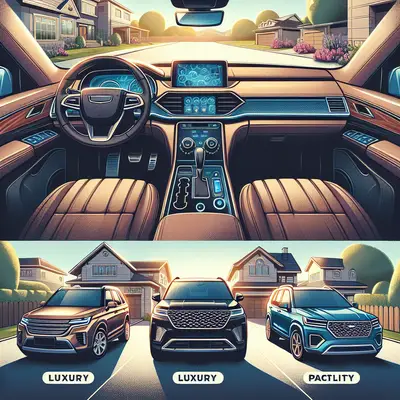
There is a quiet art to choosing a family SUV that feels genuinely considered rather than merely capacious. Beyond headline figures and marketing slogans lies a world of small, expertly executed details that transform daily journeys—from school runs to weekend escapes—into something smoother, calmer, and more intuitively orchestrated. This is where discerning families find real value: in the features that work gracefully in the background, making every drive feel more composed and more under control.
Below are five exclusive, often-overlooked insights that reward a closer look when you’re shopping for your next family SUV.
1. The “Invisible” Ergonomics of Loading, Buckling, and Unloading
For families, the true test of an SUV begins not on the highway but in the driveway, parking lot, and school pickup lane. Ergonomics here is less about sculpted seats and more about how effortlessly you can move children, bags, and gear in and out of the vehicle.
Pay attention to door aperture and hinge design: wide-opening rear doors that swing close to 90 degrees dramatically simplify securing child seats and helping younger children in and out. Similarly, a slightly higher—but not excessive—ride height can strike the perfect balance: elevated enough to avoid deep bending, yet low enough that children can climb in independently.
Look for rear doors that extend down to cover the sills, reducing the chance of muddy trouser legs, and recessed seatbelt buckles that are firm enough for older children to manage without pinching their fingers. Another understated luxury is thoughtful handle placement—both inside and outside the cabin—so that grandparents, pregnant passengers, and children each have something intuitive to hold as they enter or exit.
These details rarely occupy center stage in brochures, yet they define how the vehicle fits into your daily rhythm. An SUV that shortens the choreography of loading and unloading, even by a few minutes each day, earns its place in a family’s routine.
2. Cabin Calm: Acoustic Refinement for Real-World Family Life
Cabin quietness is often marketed as a luxury feature, but for families it becomes a practical necessity. A well-insulated SUV can keep a napping child asleep over a speed bump, allow a parent to take a call with clarity, and reduce the fatigue that builds subtly over long drives.
Instead of focusing solely on “quiet” as a single metric, look at how the cabin controls different types of noise. Laminated front windows significantly reduce wind whisper at motorway speeds and soften the harshness of passing trucks. Acoustic glass and additional door seals can make the difference between a persistent background hiss and a calm, library-like ambience. Some higher-end models even employ active noise cancellation to filter low-frequency road rumble, much like premium headphones.
Consider also the tonal quality of the sound that remains. A gentle, consistent hum is less tiring than intermittent rattles or booming resonance from the rear cargo area. Split-fold rear seats that lock down solidly, cargo covers that don’t chatter, and well-damped interior panels all contribute.
In a family context, this “acoustic tuning” isn’t just about indulgence. It means softer voices carry more easily, you’re not raising your tone to be heard over the road, and audio instructions from navigation systems or safety alerts come through cleanly instead of harshly. The result is a more collected, less stressful environment for everyone on board.
3. Thoughtful Tech: Screens That Serve, Not Dominate
Modern family SUVs are awash with screens and digital interfaces. The distinction between an SUV that feels truly premium and one that merely appears high-tech lies in how respectfully these technologies integrate into everyday family life.
Seek out systems that prioritize clarity over complexity. Large icons, logical menus, and minimal distraction are far more valuable than animated graphics. Physical controls for core functions—temperature, volume, defrost—remain crucial when you’re driving with one hand on the wheel and one eye on a restless toddler. A high-quality head-up display can place key information—speed, navigation cues, safety warnings—within your natural line of sight, reducing the temptation to glance down repeatedly.
For families, device integration is often more important than an onboard app ecosystem. Look for seamless wireless Apple CarPlay and Android Auto, multiple high-wattage USB-C ports distributed across rows, and rear-seat charging solutions that prevent cables from draping dangerously across the cabin. True sophistication in this area means designing for multiple users: teenagers streaming content, parents navigating, and perhaps a grandparent simply wanting a quiet ride without screens dominating their field of view.
Consider as well how the SUV manages digital “zones.” Rear-seat climate controls, media volume limits, and adjustable screen brightness can contribute subtly yet significantly to a harmonious cabin, particularly on longer journeys when fatigue and friction tend to rise.
4. Intelligent Storage: Beyond Cupholders and Glove Boxes
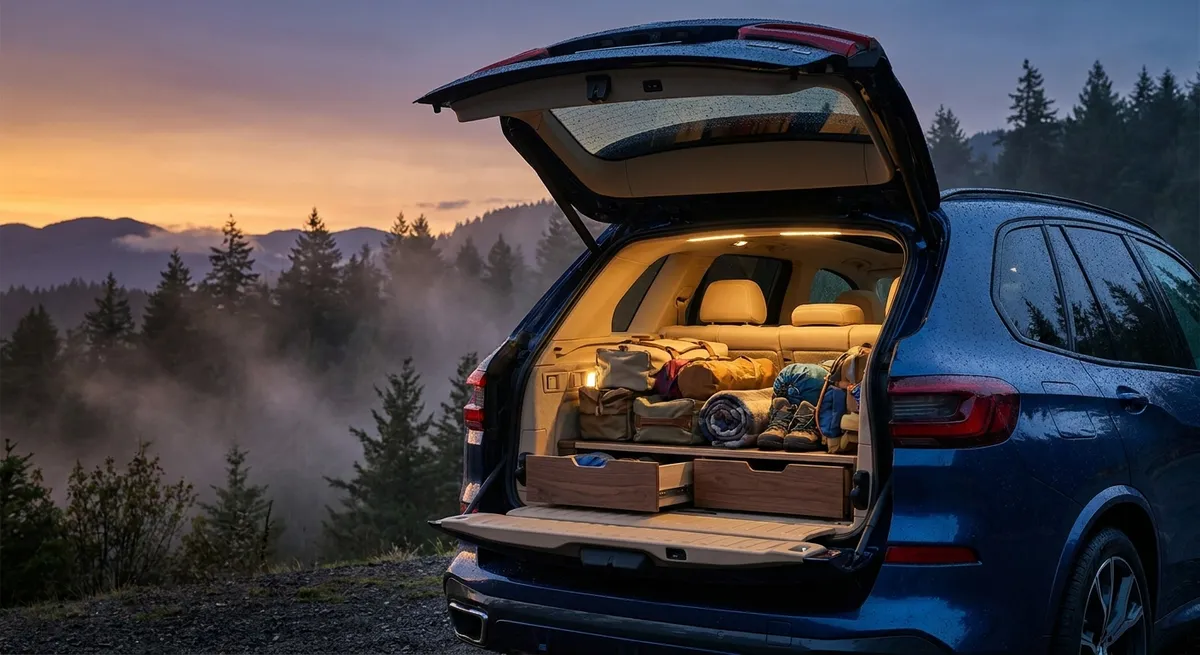
At first glance, many SUVs boast generous cargo space and abundant cupholders. Yet families quickly discover that the design of storage is far more influential than the sheer volume. The most refined family vehicles treat storage as an integrated architecture rather than an afterthought.
Look for a tiered center console: a secure, covered upper compartment for valuables, and a lower open area for bags or tablets. A pass-through or sliding console can give front passengers flexibility when reaching for items or assisting children in the second row. Deep door bins that accommodate large water bottles, not just slim cups, are surprisingly transformative on a busy day.
In the second and third rows, strategically placed pockets—ideally with wipe-clean or water-resistant linings—help organize snacks, toys, and activity books. Some models offer hidden underfloor cargo compartments in the rear: perfect for stowing emergency kits, extra nappies, or a change of clothes without visual clutter.
A particularly elevated touch is the presence of dedicated solutions for family realities: hooks robust enough for school backpacks or grocery bags, flat-folding seats that create a level loading floor for luggage or strollers, and seatback designs that resist scuffing from kicking little feet. When these elements work in concert, the SUV becomes less a mobile storage challenge and more a well-ordered extension of the home.
5. Climate and Comfort: Subtle Controls That Keep Everyone Content
True family comfort extends beyond plush seats and dual-zone climate control. The most thoughtfully designed SUVs understand that every passenger, regardless of age or size, experiences the cabin differently—and they design for that diversity.
Begin by studying vent placement. Roof-mounted vents in the second and third rows provide more even airflow for children in car seats, helping them stay comfortable without drafts blowing directly into their faces. Tri- or quad-zone climate control allows older children or grandparents in the rear to subtly tailor their environment without affecting the driver’s focus.
Heated and ventilated front seats are now increasingly common, but for families, heated second-row seats and a heated steering wheel can be more impactful in colder climates—warming up the cabin quickly for school runs or late-evening pickups. In warmer regions, ventilated seats and high-quality UV-filtering glass make a similar difference, reducing reliance on maximum fan settings that can disturb napping children.
Materials should be soft to the touch yet durable enough for real life: leather or high-grade synthetic upholstery that resists staining and wipes clean easily; floor mats with raised edges to contain sand, crumbs, or snow; and gently textured surfaces that age gracefully rather than showing every scuff.
A final refinement is the quality of cabin air management. Models that offer high-grade particulate filters or even air purification systems can help reduce allergens and urban pollution inside the vehicle, quietly supporting the health and wellbeing of the entire family on each journey.
Conclusion
Selecting a family SUV at a sophisticated level is less about chasing the most dramatic headline specifications and more about recognizing the harmonious interplay of details that shape everyday life. How gracefully your children climb aboard, how calm the cabin feels in motion, how intelligently technology fades into the background, how effortlessly belongings find their place, and how evenly comfort is distributed across every row—these are the signatures of a genuinely elevated family vehicle.
When you approach test drives with these five insights in mind, you move beyond the surface and into a more discerning kind of decision-making—one that rewards not just the first impression, but every journey that follows.
Sources
- National Highway Traffic Safety Administration (NHTSA) – Vehicle Safety Features - Explains practical considerations for child seats, anchoring systems, and safe access to rear seating
- U.S. Environmental Protection Agency (EPA) – Inside Story: A Guide to Indoor Air Quality - Provides context on air quality and filtration relevant to in-cabin air systems
- IIHS – Driving with Children: Tips for Safer Travel - Discusses child safety and ergonomics that influence door, seat, and restraint design in family vehicles
- Consumer Reports – How to Choose the Best Family Car - Offers research-based guidance on family-oriented features such as seating, storage, and usability
- BMW Group – Acoustic Comfort and Noise Control - Explores advanced approaches to acoustic refinement and noise management in modern vehicles
Key Takeaway
The most important thing to remember from this article is that this information can change how you think about Family Features.