Family SUVs are no longer just about cargo space and cupholders. For discerning families, the right vehicle now feels closer to a thoughtfully designed living space on wheels—part lounge, part office, part nursery, and part escape. When the cabin is curated with genuine family life in mind, the result is a quieter, smoother, more intuitive daily rhythm for everyone on board.
Below, you’ll find five exclusive, often-overlooked insights that transform a “nice SUV” into a truly elevated family environment—one that doesn’t just move your family, but meaningfully supports how you live.
1. The “Second Row First” Philosophy
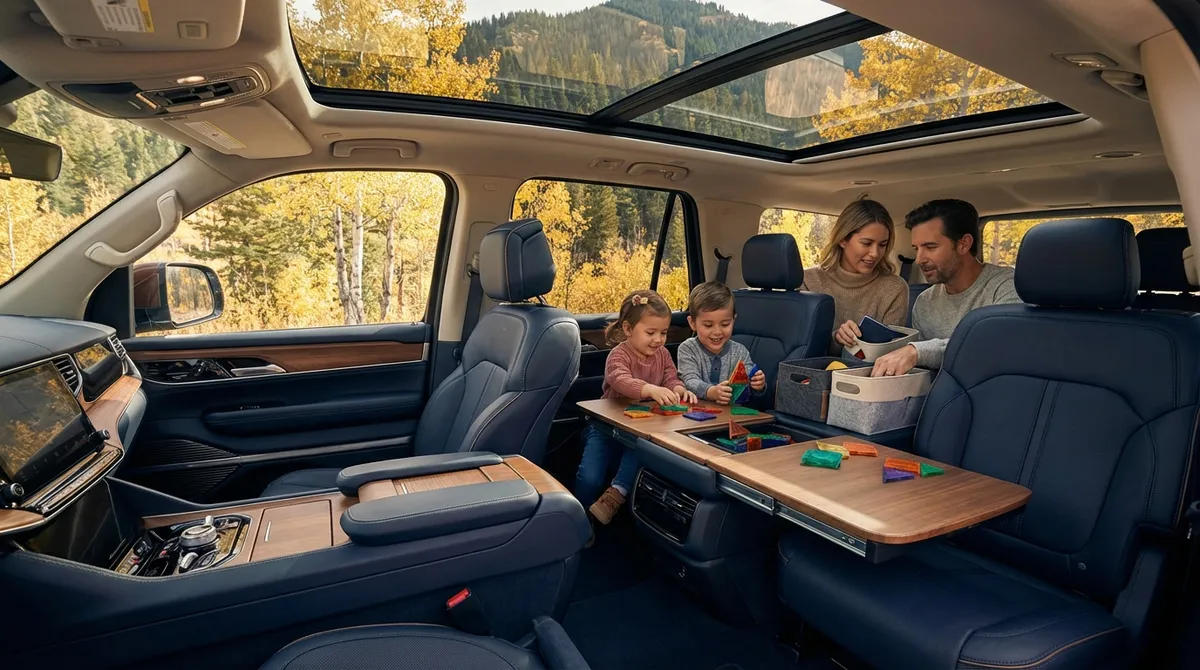
Most people still shop SUVs from the driver’s seat outwards. Yet for families, it’s the second row that dictates day-to-day comfort and harmony. A refined family SUV treats the second row as the true centerpiece of the cabin, with details that go far beyond simple legroom.
Look for seats that feel like individual armchairs rather than an undifferentiated bench—subtle sculpting, adjustable backrest recline, and real thigh support so children and grandparents are equally comfortable on long drives. Sliding second-row seats are invaluable; they allow you to fine-tune the balance between child-seat legroom, third-row access, and cargo space depending on the trip.
Pay attention to entry and exit. Wide-opening rear doors, a low step-in height, and a roofline designed to avoid head bumps turn school drop-offs and weekend activities into a fluid, graceful motion instead of an awkward shuffle. The most considered SUVs also offer ISOFIX/LATCH anchor points that are easy to see and access, minimizing the chore of installing and adjusting child seats.
A genuinely family-centric second row feels like a destination, not an afterthought—a place where children can read, nap, or talk without needing constant adjustment or apology from the adults in front.
2. Cabin Quietness as an Invisible Safety Feature
Silence in a family SUV is more than a luxury; it’s a subtle safety asset. A well-insulated, calm cabin reduces fatigue for the driver, cuts down on stress for children, and makes it easier to hear important sounds—navigation prompts, approaching emergency vehicles, or a quiet comment from the back.
When test-driving, don’t simply notice engine power. Notice conversation. Can back-row voices be heard at normal volume on the highway? Is there a persistent wind whistle around the mirrors? Do coarse road surfaces send a dull roar through the cabin, or does the noise simply fade into the background?
Premium family SUVs employ laminated glass on front (and sometimes rear) windows, extensive sound-deadening materials under the carpet and in the doors, and carefully tuned door seals to keep out wind and traffic noise. Even tire choice matters: touring-oriented tires can be surprisingly effective at lowering cabin decibels without sacrificing safety.
The quietest cabins allow family life to unfold more naturally—children fall asleep more easily, adults arrive fresher, and everyone is less frayed by the end of a long day’s drive. It’s an intangible that becomes very tangible by the end of a week of commuting, school runs, and weekend travel.
3. Climate Control That Understands Real Family Dynamics
A sophisticated family SUV doesn’t treat climate control as a single temperature dial. Families often carry multiple “climates” at once—an infant in a rear-facing seat, a teenager in a hoodie, and a driver stepping in from the rain or summer heat. Balancing everyone’s comfort without endless adjustments is where advanced systems quietly shine.
Seek out vehicles with at least tri-zone climate control, allowing the driver, front passenger, and rear occupants to set distinct temperatures. Even more refined are systems that offer separate fan speed for the rear, dedicated rear vents positioned high on the pillar (so air reaches child seats more effectively), and vents in the third row rather than relying solely on airflow from the front.
Subtle touches elevate the experience further. An “auto” mode that genuinely works—responding quickly to direct sunlight, humidity, or rapid door openings—means you can stop micromanaging the temperature during every errand. Some models integrate air quality sensors and cabin filters that help reduce allergens and urban pollution, a quiet reassurance for parents of sensitive children.
When evaluating climate features, consider whether the system can keep the entire cabin genuinely comfortable without constant intervention. Climate control that “just works” is one of the most underrated forms of luxury for a busy family.
4. Charging, Connectivity, and the Art of Peaceful Occupants
In contemporary family life, a dead tablet battery at the start of a long journey can feel more dramatic than low fuel. The most thoughtfully designed family SUVs turn connectivity and charging into a seamless, invisible support system that prevents small irritations from becoming cabin-wide crises.
Count the charging options—but also consider their placement. Front USB-C ports are expected; what matters more for families are the rear ports: ideally multiple, within easy reach, and paired with intelligent storage (seat-back pockets, center console trays, or dedicated device shelves) so cables don’t tangle and devices don’t end up on the floor.
Integrated Wi‑Fi hotspots can be transformative on long trips, enabling streaming, schoolwork, and video calls without draining phone data. Rear-seat entertainment systems, when done well, offer individual screens and headphone options so siblings can coexist peacefully with different content. Even without factory screens, a combination of strong charging infrastructure and stable connectivity often accomplishes the same goal with tablets and laptops.
Look for wireless Apple CarPlay and Android Auto for the driver as well. A clean, wire-free front cabin not only looks more elegant, it reduces daily friction—no more fumbling with cables while managing children, coffee, and keys. The result is a quieter, more self-sufficient ecosystem in which each passenger can independently engage, work, or unwind.
5. Storage That Anticipates, Not Just Accommodates
Cargo volume figures are everywhere, but real family-friendly storage is about how that space works, not just how big it is. The most sophisticated family SUVs are almost architectural in how they organize belongings—turning chaos into order with discreet, functional touches.
Start at the rear: a flat, low load floor that remains level with seats folded down makes strollers, sports gear, and luggage easier to slide in and out. A wide, squared-off opening is more practical than a stylized but narrow hatch. Consider clever cargo solutions such as adjustable floor panels, hidden underfloor compartments for valuables or emergency kits, and integrated hooks or rails to keep groceries and bags from toppling.
Within the cabin, admire the small things. Deep door pockets that can properly hold water bottles and an umbrella. A center console that swallows a handbag or small backpack. Seat-back pockets that are structured enough for books and tablets, not just loose papers. Cupholders that can accept both children’s bottles and insulated travel mugs without a precarious fit.
The most elegant family SUVs also understand that storage should look considered, not cluttered. Covered bins, softly damped lids, and quality materials prevent the cabin from feeling utilitarian, even when it’s fully loaded with the artifacts of family life. This is where practicality and luxury meet: a place for everything, and no sense of compromise.
Conclusion
Selecting a family SUV at a premium level is less about headline features and more about the quiet choreography of daily life: how your children climb in, how easily you converse on the highway, how serene the cabin feels after an hour in traffic, and how effortlessly your belongings disappear into thoughtful spaces.
By focusing on second-row design, cabin quietness, intelligent climate control, connected calm, and anticipatory storage, you move beyond simply buying transport. You curate a mobile extension of your home—one that respects your time, your comfort, and your family’s evolving needs with a level of refinement that you feel every single day, even when you don’t consciously notice it.
Sources
- [National Highway Traffic Safety Administration (NHTSA) – Child Safety Seat Recommendations](https://www.nhtsa.gov/campaign/right-seat) - Guidance on proper child seat placement and securing, relevant when assessing second-row usability and anchor access
- [Insurance Institute for Highway Safety (IIHS) – Evaluations of LATCH Ease of Use](https://www.iihs.org/ratings/child-seat-anchors) - Independent assessments of how accessible and user-friendly child-seat anchors are in various SUVs
- [Environmental Protection Agency (EPA) – Indoor Air and Filtration Basics](https://www.epa.gov/indoor-air-quality-iaq/air-cleaners-and-air-filters-home) - Background on air filters and air quality, useful context for evaluating in-cabin air filtration systems
- [Edmunds – Car Noise Levels and Cabin Quietness](https://www.edmunds.com/car-reviews/features/how-we-measure-car-noise.html) - Explains how automotive noise is measured and why quiet cabins matter for comfort and fatigue
- [Kelley Blue Book – Family Car Buying Considerations](https://www.kbb.com/car-advice/articles/best-family-cars-buying-guide/) - Overview of key family-focused factors when choosing a vehicle, including seating, storage, and tech features
Key Takeaway
The most important thing to remember from this article is that this information can change how you think about Family Features.