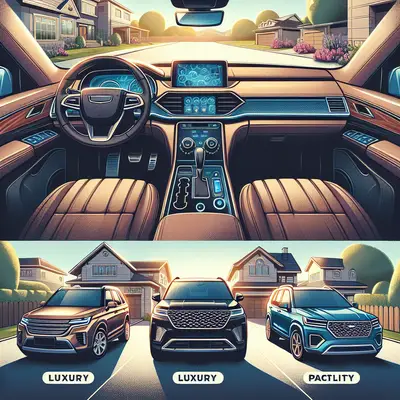
For families who expect more than simple practicality from an SUV, the true measure of excellence is found in the details that rarely appear in glossy advertisements. It is less about spectacle and more about how a vehicle orchestrates mornings, school runs, weekend escapes, and late-night returns with quiet competence. This is where refined family features step forward—those considered touches that slip into the background and simply make life smoother, safer, and more serene.
Below are five exclusive, often-overlooked insights that discerning families should seek out when evaluating their next SUV. They transform a vehicle from “capable” to “beautifully calibrated for family life.”
Insight 1: Cabin Zoning That Respects Every Age and Stage
Many SUVs boast generous space, yet few are thoughtfully zoned for the complex choreography of modern family life. Look beyond simple three-row capacity and study how the cabin is divided, accessed, and experienced by each occupant.
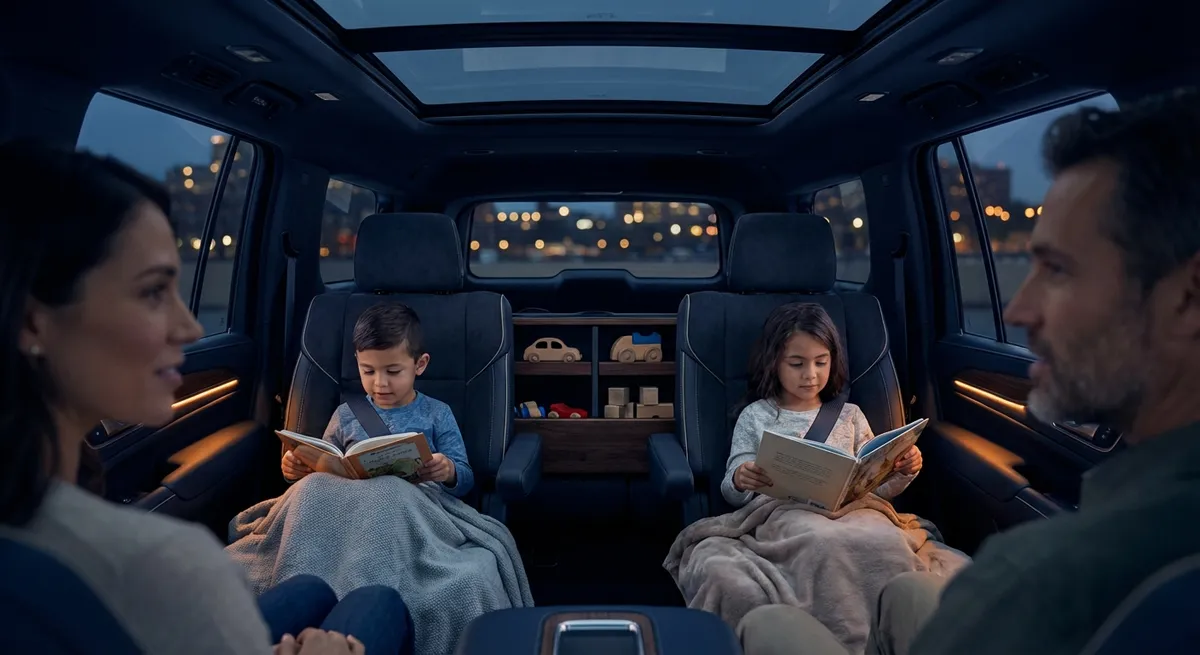
Refined family SUVs increasingly employ “cabin zoning” principles—front-row environments designed for command and calm, second-row spaces configured as social hubs, and third-row areas that feel intentional rather than afterthoughts. Sliding and tilting second-row seats that maintain easy access to the third row, even with a child seat installed, can be transformative for parents juggling multiple young children. Adjustable second-row captain’s chairs with independent armrests, reclining functionality, and integrated sunshades can turn longer journeys into quiet, restful intervals rather than endurance tests.
Equally, pay attention to row-to-row sightlines. Can the driver easily glance at a third-row child without turning fully around? Does the center console subtly step down or taper to allow visual communication between parents and children? These are the rare design decisions that reveal whether a cabin is simply spacious—or genuinely family-centric.
Insight 2: Climate and Light as Wellness Features, Not Just Comfort Add-Ons
Climate control and lighting used to be simple toggles; in a sophisticated family SUV, they begin to feel more like wellness tools. Multi-zone climate control is now expected, but what matters is its sensitivity: rear zones that allow older children or teenagers to fine-tune temperature without freezing the driver, dedicated vents reaching the third row, and quiet, well-distributed airflow that doesn’t blast directly onto a sleeping child.
Natural light also plays an underrated role in mood and comfort. Panoramic roofs with well-insulated shades can brighten weekend drives yet close quickly to create a cocooned, nap-friendly space. Look for UV-filtering glass and thoughtful tint gradations that shield younger passengers without darkening the cabin excessively. Ambient interior lighting, when properly executed, guides movement at night—illuminated door pulls, soft footwell glows, and gentle console lighting that avoids harsh reflections on the windshield.
Together, these features are not indulgences but quiet contributors to calmer children, less driver fatigue, and journeys that feel unhurried even when the schedule is not.
Insight 3: Storage That Anticipates Real Life, Not Just Luggage
Any SUV can swallow suitcases; the more revealing test is what it does with the small, persistent clutter of family life. Refined family SUVs incorporate layered storage—immediate access for daily essentials, concealed spaces for valuables, and modular cargo areas that evolve with children’s needs.
Seek out deep, rubberized door pockets that hold reusable bottles upright, a configurable center console that can accommodate a small handbag or snacks without crushing them, and dual-level glove compartments that divide documents from frequently used items. Underfloor cargo storage, especially when laid out in wide, flat compartments, is invaluable for stowing sports equipment, emergency kits, or spare shoes without encroaching on luggage space.
Split-folding seats are now standard, but the most sophisticated designs fold nearly flat with a single, light touch and offer multiple configurations—such as one side of the second row folding independently to support asymmetrical passenger and cargo needs. Bonus points for cargo bays with low liftover heights, integrated grocery bag hooks, and power-folding rear seats that can be adjusted from both the tailgate area and the second row. These details reduce friction during the most hectic transitions: from supermarket car park to school performance to weekend getaway.
Insight 4: Digital Calm—Tech That Serves, Rather Than Distracts, the Family
In the modern family SUV, the most valuable technology is not the flashiest—it is the kind that quietly recedes into the background once configured. Families benefit from an interface that is intuitive on the first use and predictable on the fiftieth, minimizing cognitive load for the driver.
Prioritize systems with clear, uncluttered menus, physical or haptic controls for the most frequently used functions (temperature, volume, defrost, camera views), and seamless smartphone integration that does not feel like a compromise. Over-the-air software updates can extend the life and relevance of the SUV’s technology stack, but verify that the manufacturer has a proven track record of supporting older models, not just the newest releases.
Rear-seat connectivity also matters: consider the placement and quantity of USB-C and power outlets, the availability of integrated Wi‑Fi hotspots, and the ability to manage content access and volume levels from the front row. The ideal setup creates “digital calm”—children feel catered to without turning the cabin into a swirl of competing screens and sounds. Some premium systems even allow for audio “zoning,” keeping the driver’s navigation prompts and calls private while rear passengers enjoy their own entertainment.
Insight 5: The Art of Quiet—Acoustic Refinement as a Family Essential
Noise management is one of the most underrated family features in an SUV, yet it profoundly shapes each journey. A well-insulated, acoustically considered cabin allows soft voices to be heard clearly between rows, so parents are not constantly raising their voices to communicate—or worse, turning around to repeat themselves while driving.
Look for laminated front and side glass, generous use of sound-deadening materials in the firewall and floor, and aerodynamic design elements that minimize wind buffeting at highway speeds. Independent reviews and test drives are crucial here: road noise from tires and suspension tuning varies significantly between models and trims. Even subtle differences are noticeable to a child trying to nap or a parent managing a conference call from the driver’s seat during a quiet layover.
Hybrid and electric SUVs add another dimension. Their inherently quieter powertrains can be a gift to families, but only if the manufacturer has also addressed wind and road noise; otherwise, those background sounds can become more pronounced without engine noise to mask them. When executed well, acoustic refinement transforms the SUV into a mobile sanctuary—a place where conversations, audiobooks, and music feel shared, not strained.
Conclusion
Selecting a sophisticated family SUV is no longer a simple exercise in comparing cargo volumes, seat counts, and horsepower figures. For families who value grace as much as capability, the more meaningful distinctions emerge in the subtleties: how space is zoned, how light and air are orchestrated, how storage anticipates real life, how technology fades into the background, and how silence is carefully engineered.
By deliberately seeking these five deeper insights, families move beyond the surface-level spec sheets and into the realm of lived experience. The result is not just an SUV that fits the family, but one that elevates their everyday journeys—discreetly, intelligently, and with a sense of refined ease that lingers long after the engine is switched off.
Sources
- National Highway Traffic Safety Administration (NHTSA) – Vehicle Safety Features - Offers guidance on child seating, access, and safe installation—key to evaluating real-world family usability in multi-row SUVs
- Insurance Institute for Highway Safety (IIHS) – Ratings & Research - Provides independent crash-test and headlight ratings that complement the softer, comfort-focused considerations covered here
- U.S. Department of Energy – Fuel Economy: SUV and Minivan Technology Trends - Explores how newer SUV technologies, including hybrids and EVs, influence refinement, noise, and operating costs for families
- Edmunds – Car Interior Noise and Comfort Explained - Includes practical advice on evaluating cabin quietness and comfort during a test drive
- Consumer Reports – What to Look for in a Family Car - Outlines key considerations for family-oriented vehicles, including seating, storage, and usability features
Key Takeaway
The most important thing to remember from this article is that this information can change how you think about Family Features.