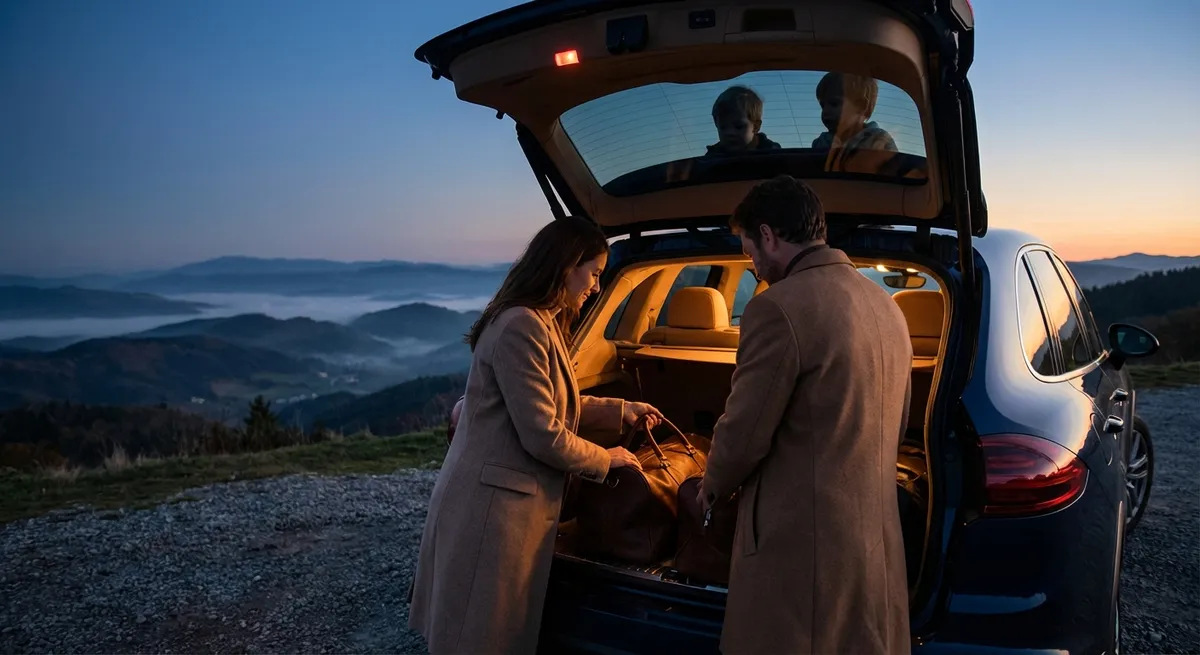
For families who see every school run, weekend escape, and airport pickup as part of a larger, carefully composed life, an SUV is far more than a practical box on wheels. It is the family’s grand tourer—quietly orchestrating comfort, safety, and order amid real‑world chaos. At Family SUV Review, we look past the brochure gloss to understand how a vehicle feels at 6:45 a.m. on a Tuesday, loaded with bags, instruments, pets, and expectations. This guide distills five exclusive review insights we apply when evaluating SUVs for families who value refinement as much as room.
Insight 1: The “Second Row First” Principle
Most SUVs are sold on the strength of their front seats and exterior stance, yet the true heartbeat of a family vehicle is the second row. In our reviews, we begin not at the driver’s seat, but in the middle of the cabin—because that is where a family’s daily rhythm lives. We study the seat contouring, thigh support, and recline range with the same care others reserve for the driver’s throne.
Equally vital is how the second row manages personal space. We evaluate the distance between seatbacks, the placement of USB-C ports (not just their existence), and whether cupholders are actually usable with reusable bottles rather than only slim soda cans. We note how easily a child can buckle in without parental acrobatics and whether integrated sunshades feel like an afterthought or a thoughtfully engineered touch. Our benchmark: if you could comfortably work, read, nap, or feed a toddler in the second row on a two‑hour drive without frustration, the SUV qualifies as a genuine family tourer.
Insight 2: Real-World Cabin Quiet, Not Just Numbers
Many manufacturers tout decibel figures and “acoustic glass,” but what matters to a family is the quality, not simply the quantity, of cabin noise. In our evaluations, we focus on how sound behaves when life is happening: one child asleep, one chatting, a podcast playing at low volume, and a highway surface that’s less than perfect.
We pay attention to the character of noise—whether wind sounds are a distant murmur or an intrusive hiss, whether road roar disappears under conversation or forces raised voices. SUVs that excel use a layered approach: laminated glass, well‑insulated wheel wells, and refined powertrains that step away in the background rather than shout for attention. A quiet cabin is not just a luxury flourish; it is a buffer that preserves patience, reduces fatigue, and makes every journey feel more composed. For families who spend significant time on the road, this serenity is one of the most undervalued measures of true refinement.
Insight 3: The “Mess Map” and Hidden Practicality
Spill a drink, drop a snack, kick the seatback—this is the real choreography of family travel. When we review SUVs, we create what we call a “mess map”: a mental overlay of where crumbs will accumulate, where dirty shoes will strike, and where sticky fingerprints will inevitably land. Then we examine whether the vehicle’s materials and design anticipate that reality.
We look for robust, wipe-clean surfaces in high-contact zones: the backs of front seats, lower door cards, and the flooring immediately inside each door. We assess whether carpet edges are protected by scuff plates that can be cleaned without fraying, and whether storage bins are shaped to be emptied and wiped rather than trapping debris in awkward corners. Cargo areas are scrutinised for lip height (can a stroller be lifted in gracefully?), subfloor storage (where do the emergency snacks live?), and seat-fold mechanisms that work one‑handed when the other is occupied with a child or bag. The most sophisticated family SUVs aren’t the ones that avoid mess—but the ones that are elegantly prepared for it.
Insight 4: Technology That Serves, Not Distracts
In a genuine family SUV, technology should feel like an unobtrusive concierge, not a demanding guest. Our reviews distinguish between headline features and genuinely integrated systems that reduce friction in daily life. We observe how many steps it takes to accomplish tasks you will repeat countless times: adjusting the climate for the rear seats, accessing a favourite navigation destination, starting a heated steering wheel on frozen mornings.
We favour interfaces that privilege muscle memory—physical dials and clearly shaped switches for core functions—paired with intuitive touchscreens for customisation and connectivity. Wireless Apple CarPlay and Android Auto are now expected; what sets a premium family SUV apart is how seamlessly they integrate with native systems, how quickly they connect on startup, and whether voice controls can reliably handle real‑world requests from a distracted parent. Rear-seat entertainment, when offered, is evaluated not just for screen size, but for how easily it can be used without reboot rituals or cable clutter. The standard we apply is simple: does the technology fade into the background, allowing the family, not the interface, to take centre stage?
Insight 5: The Graceful Transition—from City Chore to Weekend Escape
A family SUV must effortlessly inhabit multiple worlds: parallel parking at a crowded curb one day, gliding up to a countryside inn the next, and handling an impromptu garden centre visit somewhere in between. Our evaluations pay particular attention to how gracefully an SUV transitions between these demands.
In the city, we value compact-feeling dimensions, well-tuned steering at low speeds, and camera systems that provide confidence without distortion. On the open road, we look for an unhurried, supple ride that keeps its composure on imperfect surfaces, as well as power delivery that feels smooth and confident when merging or overtaking with a full complement of passengers and luggage. We also examine efficiency not as a headline number, but as a lived experience: does the hybrid system, if fitted, work seamlessly in stop‑start traffic? Are real‑world consumption figures close to official claims when the vehicle is used as a genuine family hauler? A truly refined family SUV should never feel out of place—whether outside a theatre, in a muddy field, or in the school queue.
Conclusion
For families who view their SUV as a travelling extension of home—ordered, comfortable, quietly capable—the details matter as much as the data. At Family SUV Review, our lens is intentionally intimate: second-row realities, the nuance of cabin quiet, the management of everyday mess, the subtlety of technology, and the art of moving effortlessly between school gates and weekend retreats. When we call an SUV a worthy family grand tourer, it is because it has excelled where spec sheets fall silent—making not just the destination, but every moment along the way, feel more composed, more deliberate, and more beautifully lived.
Sources
- National Highway Traffic Safety Administration (NHTSA) - Official U.S. government crash test ratings and safety information for SUVs and other vehicles
- Insurance Institute for Highway Safety (IIHS) - Independent crash test data and safety evaluations specifically covering SUV body styles
- U.S. Environmental Protection Agency – Fuel Economy - Authoritative fuel economy and emissions data for new SUVs, including hybrid and plug-in models
- Consumer Reports – SUVs - Comprehensive, independent testing and owner satisfaction insights for a wide range of SUVs
- Edmunds Car Reviews - Professional road tests and real-world impressions of SUVs across segments and price points
Key Takeaway
The most important thing to remember from this article is that this information can change how you think about SUV Reviews.