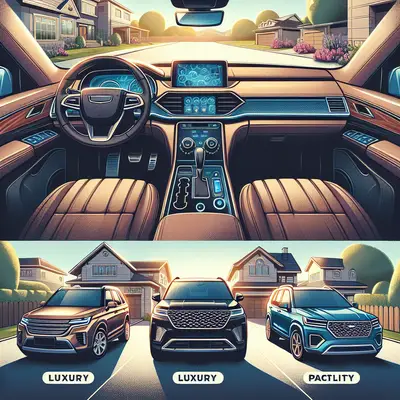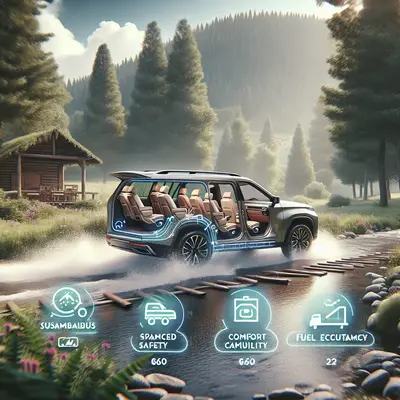
For families who value both refinement and real-world practicality, the right SUV is less about spectacle and more about thoughtful execution. It is the difference between a vehicle that merely accommodates children and one that gracefully supports an entire family’s rhythm—school runs, late flights, wet soccer cleats, and quiet Sunday drives alike. Beneath the marketing gloss, there is a quieter story: a set of subtle, often-overlooked details that transform an SUV from transport into a genuinely livable family space.
This is a closer look at five exclusive insights many spec sheets barely whisper about—yet they make all the difference for families who notice the details.
1. Cabin Zoning: When Comfort Becomes Personal Space
Beyond basic dual-zone climate controls, the most family-conscious SUVs now treat the cabin as a series of personal micro-environments rather than a single shared space. This is particularly relevant in three-row models, where a toddler in a rear-facing seat, a teenager with headphones, and a temperature-sensitive grandparent may all be traveling together.
Look for models that offer independent climate control for the third row, not just the second, and ideally include roof-mounted vents that deliver air gently and evenly rather than blasting straight at small faces. Premium implementations allow rear passengers to manage their own settings from a dedicated control panel, while parents retain override authority from the front.
Pay attention to how the system actually behaves in practice: Does the cabin reach a comfortable temperature quickly in extreme weather, and does it maintain that comfort quietly? Vehicles with efficient heat pumps or advanced automatic climate logic tend to be more seamless to live with. For families who commute daily and travel seasonally, this sort of climate zoning feels less like a luxury and more like daily peace of mind.
2. Seat Architecture: The Elegance Hidden in Everyday Access
Seat count is easy to compare; seat architecture is not—and yet it is where many family SUVs truly distinguish themselves.
The most considered designs anticipate real family scenarios: one sleeping child in a forward-facing seat, a second in a rear-facing seat, and a third person needing to access the third row without waking either. In this context, the angle and travel of the second-row seat mechanism are more important than a brochure’s simple “easy access” claim.
Refined family SUVs often feature:
- Second-row seats that tilt and slide with a child seat installed (when using lower anchors), preserving access to the third row.
- A low, nearly flush floor that reduces step-in height for older relatives and younger children alike.
- Thoughtful armrest and shoulder belt placement that prevents seat belts from tangling or obstructing boosters.
Another subtle factor is seat contouring. Firmer, well-bolstered cushions resist the “slouch” common on long drives and provide better support for growing backs. High-end models often use multi-density foam and carefully sculpted thigh support, which matters as children transition from child seats to seat belts. Over time, the family that chooses intelligent seat architecture is the family that arrives less fatigued.
3. Acoustic Serenity: The Overlooked Family Safety Feature
Noise control is usually marketed as a luxury attribute, but for families, it has very practical implications. A well-insulated cabin does more than create a hushed atmosphere; it makes conversation easier, reduces the strain of long drives, and lowers cognitive fatigue for the driver.
The most thoughtfully engineered SUVs treat the cabin as an acoustic cocoon. Look for evidence of:
- Laminated front and, ideally, side glass to reduce wind and traffic noise.
- Active noise cancellation systems that help counter low-frequency road hum.
- Strategic use of acoustic insulation in the floor, firewall, and wheel wells.
Many modern SUVs now offer built-in “cabin communication” systems—often a discreet interior microphone and speaker setup that allows the driver’s voice to be gently projected to the third row without shouting. This is not just a convenience for parents instructing children; it also supports calmer, more natural conversation across all three rows.
In real use, a quiet SUV preserves the nuance of family life on the move: a child reading in peace, a partner on a conference call, a sleeping infant remaining asleep despite highway expansion joints. It is one of the most civilized family features, and yet it rarely appears at the top of the spec sheet.
4. Storage That Understands Real Life, Not Just Luggage
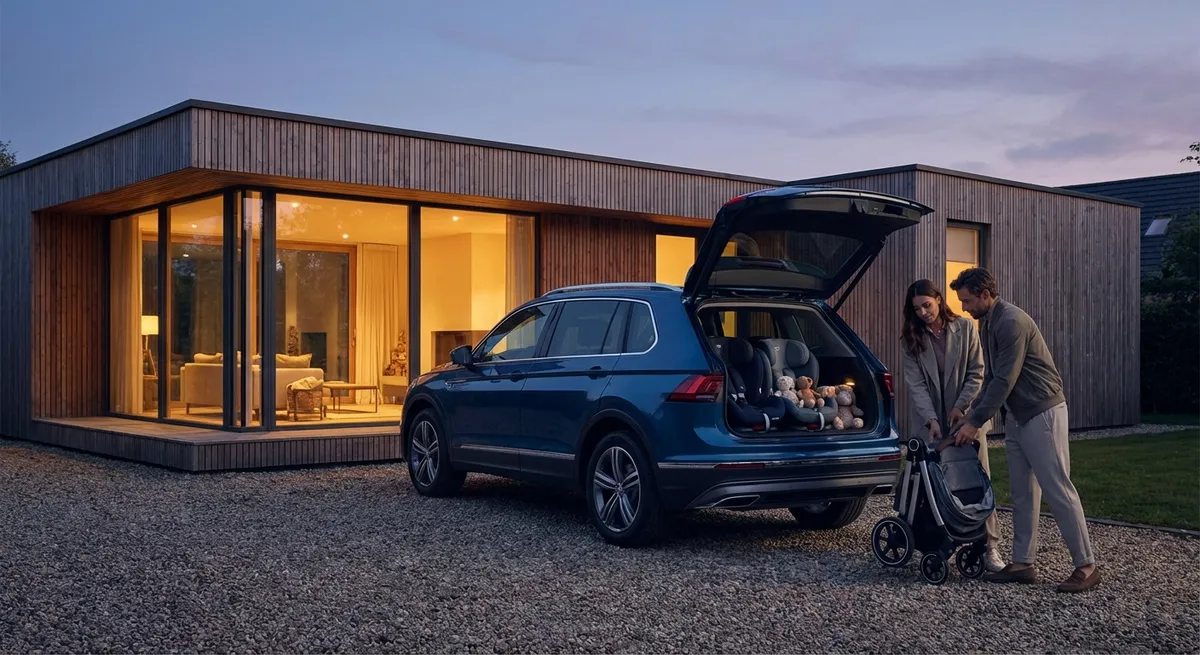
Families do not travel with “luggage” so much as they travel with a small ecosystem of items: strollers, sports equipment, music stands, science projects, reusable grocery bags, and occasionally a suitcase or two. The best family SUVs are designed not only to hold this ecosystem, but to keep it in gentle order.
Beyond cubic feet, consider the quality of the cargo space:
- Floor height and depth: A low, flat load floor allows a stroller to slide in without lifting it high, and makes it possible for older children to help load or unload.
- Underfloor storage: A hidden, washable compartment is invaluable for muddy shoes, beach gear, or emergency essentials that should live in the vehicle without visual clutter.
- Adjustable cargo floors or sliding second rows: These allow you to balance legroom with storage based on who is traveling and what they’re carrying that day.
Smaller storage moments matter as well: a secure, felt-lined area for a tablet; door pockets that actually accept a large reusable water bottle; a dedicated, discreet space for a handbag that does not become a projectile under hard braking. The more a vehicle anticipates these everyday needs, the less energy a family spends simply managing their belongings.
This quiet orderliness, multiplied across months and years, becomes one of the most appreciated qualities of a well-designed family SUV.
5. Tech That Serves, Not Distracts, the Family Routine
In modern SUVs, screens and software are unavoidable—but the way they are executed can either simplify family life or constantly compete with it.
The most sophisticated family-centric SUVs balance innovation with restraint. Consider:
- Interface clarity: Can you adjust temperature, defog the windshield, or change drive mode with minimal menu-diving? A clean, intuitive layout reduces distraction while driving with a full cabin.
- Device integration done elegantly: Multiple USB-C ports in all rows, thoughtfully placed so cords do not drape across walkways. Wireless smartphone integration that reliably connects each time, without elaborate tapping or re-pairing.
- Profiles and memory: Driver profiles that remember seat, mirror, and climate preferences, but also audio levels and navigation tendencies. Families often alternate drivers; a vehicle that gracefully adapts reduces small, daily frictions.
Crucially, consider how the vehicle handles screens for younger passengers. Rear entertainment systems that mirror personal devices, rather than locking families into a proprietary ecosystem, tend to age better. Some of the most refined solutions now allow parents to send navigation destinations or route suggestions from the front to a rear screen—transforming children from passive viewers into co-navigators on longer trips.
Well-judged technology should feel like an invisible valet: always present, rarely demanding attention, and quietly smoothing the edges of a busy family schedule.
Conclusion
For families choosing an SUV with discernment, the true differentiators are not always the headline features. They are the subtler, often unadvertised touches—how the second row moves, how the cabin sounds at 70 mph, how gracefully a muddy stroller disappears into the cargo floor, how easily the climate adapts to three generations sharing one journey.
When you test-drive your next family SUV, listen and observe beyond the obvious. Sit in every row. Open every compartment. Adjust every seat. Speak in a normal voice while driving at speed and notice whether everyone hears you. These quiet, refined details are where a family vehicle stops being just capable and becomes genuinely considerate—a moving extension of home, crafted not merely to move your family, but to understand it.
Sources
- [NHTSA: Car Seat and LATCH System Information](https://www.nhtsa.gov/equipment/car-seats-and-booster-seats) - Details on child seat installation considerations that influence seat design and access
- [IIHS: Rear-Seat Safety and Child Passenger Research](https://www.iihs.org/topics/child-safety) - Research on rear seating, belt fit, and child safety impacting family-focused SUV layouts
- [EPA: Fuel Economy and Vehicle Technology](https://www.fueleconomy.gov/feg/technology.jsp) - Overview of climate systems, efficiency, and related technologies in modern vehicles
- [National Library of Medicine: Effects of Noise on Health](https://www.ncbi.nlm.nih.gov/pmc/articles/PMC7790013/) - Discussion of how prolonged noise exposure affects fatigue and well-being, relevant to cabin noise considerations
- [Honda CabinTalk Feature Overview](https://www.honda.com/newsroom/news/2017/03/2018-honda-odyssey-features-and-highlights) - Example of built-in cabin communication systems that enhance family interaction in multi-row vehicles
Key Takeaway
The most important thing to remember from this article is that this information can change how you think about Family Features.