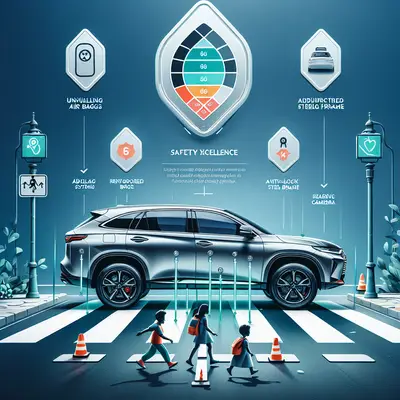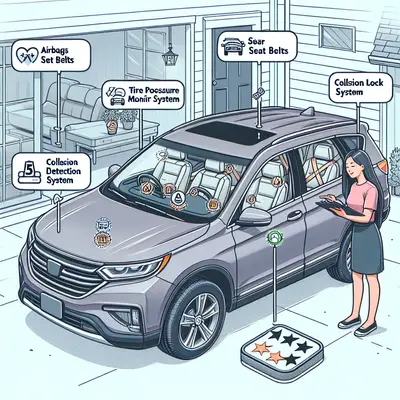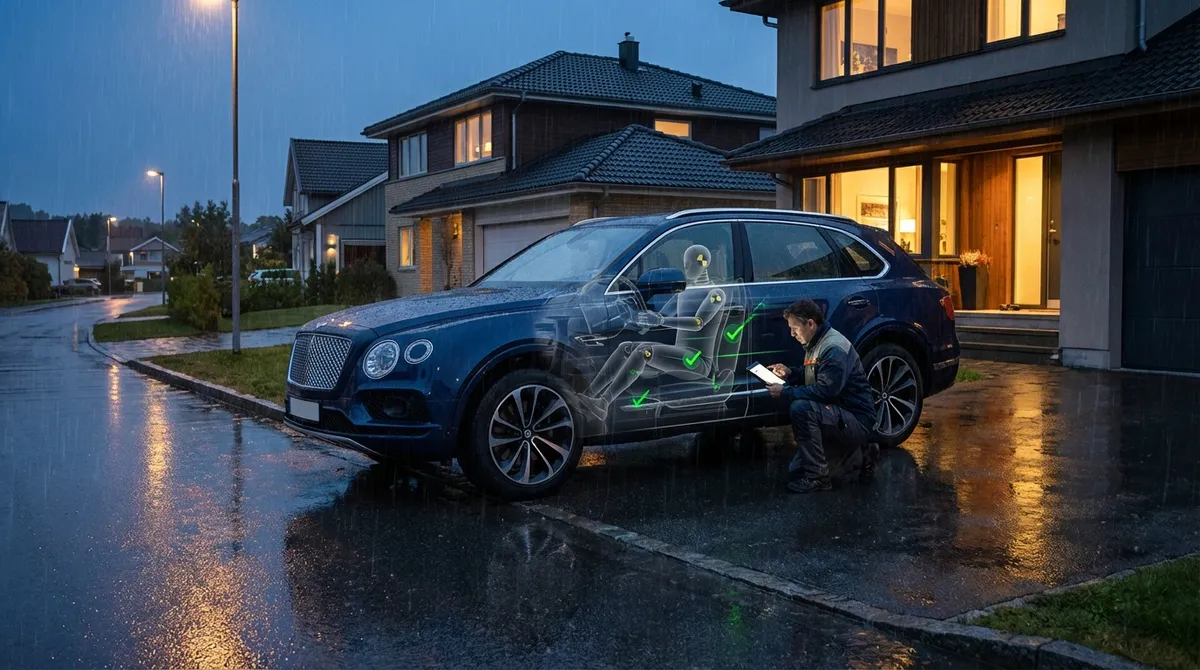
Safety ratings are often treated as a simple scoreboard—five stars versus four, “Top Pick” versus “Recommended.” But for families who expect their SUV to function as both sanctuary and travel companion, the surface-level grade is only the overture. The true story of safety lives in the details: how an SUV behaves in difficult moments, how it anticipates human error, and how gracefully it protects not only adults up front, but children in the second and third rows. This is where a thoughtful reading of safety data becomes an advantage that quietly elevates every journey.
Below are five exclusive, under‑discussed insights that help refined families interpret SUV safety ratings with real-world discernment—beyond the brochure and into the everyday lives they are designed to protect.
1. The “Family Seating Zone” Matters More Than the Driver’s Seat
Many safety ratings highlight how well the front occupants fare in a crash, but families live predominantly in rows two and three. For a family SUV, you are effectively shopping for the safety performance of the rear cabins, not just the driver’s environment.
Modern test programs like those from the Insurance Institute for Highway Safety (IIHS) and Euro NCAP are steadily expanding their evaluations of rear-occupant protection, yet these nuances often stay buried in technical reports, not headlines. When an SUV advertises excellent frontal crash scores, it may mask critical differences in how well it protects children or smaller adults in the rear.
For family shoppers, the sophisticated move is to look specifically for:
- Ratings or notes on rear-seat belt performance, including load limiters and pretensioners
- Assessments of child restraint compatibility, not just the presence of LATCH/ISOFIX anchors
- Commentary on third-row access and whether child seats can remain installed while accessing the back
In essence, a family SUV’s true character is revealed not by how it treats the driver, but by how carefully it considers the passengers you love most who are seated behind you.
2. Advanced Driver Assistance Systems: Calibration Over Checklists
Safety marketing has become a chorus of acronyms: AEB, LKA, BSM, RCTA. Many SUVs now offer a familiar suite of Advanced Driver Assistance Systems (ADAS), leading to the illusion that all systems are effectively interchangeable. They are not. What distinguishes a truly family-focused SUV is not simply which features are present, but how elegantly they are tuned to real driving and parenting scenarios.
A premium safety experience feels composed, not nervy. Consider:
- Forward collision warning and automatic emergency braking (AEB) that intervene decisively in genuine emergencies but remain calm in dense traffic or roundabouts
- Lane centering that gently supports your line on the motorway without “ping-ponging” between markers
- Adaptive cruise control that accelerates and decelerates smoothly enough that sleeping children remain undisturbed
Independent organizations such as IIHS now evaluate the performance of crash-avoidance technologies, not merely their presence. Families benefit by examining not only whether an SUV includes these features, but whether third-party testing reports them as effective, predictable, and minimally intrusive. The goal is not a robotic chauffeur; it is a confidant co‑pilot that reduces cognitive load without eroding driver engagement.
3. Crash Test Results Reveal Structural Grace, Not Just Toughness
There is a lingering assumption that a larger or heavier SUV is automatically safer. In reality, what separates merely big vehicles from truly protective ones is the quality of their structural engineering, as revealed by sophisticated crash testing.
Modern tests do far more than drive a vehicle straight into a barrier. Small overlap front collisions, side-impact tests with heavier, SUV-like barriers, and roof-strength evaluations collectively map how gracefully a body structure manages crash energy. The most thoughtfully engineered family SUVs channel forces around the cabin with a kind of mechanical choreography—crumple zones that absorb, pillars that maintain space, and restraint systems that synchronize their response.
When reading safety ratings, it is worth noting:
- How the SUV performs in small overlap or “offset” tests, which simulate clipping a pole or barrier—a common real-world scenario
- Whether the vehicle maintains a survival space around the driver and passengers, avoiding significant intrusion into the footwell or cabin
- How consistently it performs across different crash modes, not just one flagship test
For families, this structural refinement is not abstract engineering; it is the quiet confidence that, if the unthinkable occurs, the interior world you’ve created for your children remains as intact as physics allows.
4. Child Safety Is a System, Not a Single Score
Most rating systems include a child-occupant or child-seat usability component, but this is often treated as a supporting detail rather than a central decision factor. For parents and caregivers, however, these “secondary” elements shape daily life—multiple school runs, weekend road trips, and the logistics of grandparents, nannies, or carpool rotations.
A sophisticated evaluation of child-related safety considerations goes beyond merely verifying that the SUV offers LATCH anchors. It looks at:
- Anchor Accessibility: Are the lower anchors clearly exposed or buried between cushions? This affects whether seats are installed correctly every time.
- Multiple Child Seat Configurations: Can you realistically fit two or three child seats across the second row? Can one seat be placed in the third row while still allowing access?
- Integrated Solutions: Some upscale SUVs offer built-in booster seating, advanced airbag tuning for children, or dedicated belt routing that helps prevent misuse.
Euro NCAP, for instance, publishes detailed child-occupant and child-seat installation assessments that reveal far more nuance than a simple composite rating. The most family-centric SUVs treat child safety as a meticulously integrated ecosystem—anchoring hardware, belt geometry, airbag logic, and seat design all resolved into a cohesive, forgiving system that acknowledges that real life can be messy, hurried, and imperfect.
5. The Subtle Comforts That Prevent Fatigue—and Hidden Risk
Safety ratings understandably focus on what happens in a crash or near-miss moment, yet some of the most meaningful safety contributions come from features that help you avoid reaching a critical point in the first place. For families, fatigue and distraction are often the true adversaries: long nights, early departures, restless children, and complex schedules.
Refined SUVs help by quietly reducing cognitive and physical strain:
- Acoustic Refinement: Reduced cabin noise lowers fatigue on long drives, helping the driver remain focused and calm.
- Ergonomic Seating: Supportive, adjustable seating with thoughtful lumbar design can reduce back and neck strain that otherwise dulls reaction times.
- Intuitive Controls: A well‑designed interface prevents the driver from hunting through layers of menus while on the move; common tasks are completed almost subconsciously.
- Cabin Visibility and Lighting: Panoramic visibility, well-placed mirrors, and smart exterior lighting systems (such as adaptive headlights) expand situational awareness, especially in poor conditions.
Though not always reflected in official rating summaries, organizations like the National Highway Traffic Safety Administration (NHTSA) and academic research consistently link fatigue, distraction, and environmental stress with elevated accident risk. A genuinely safety‑oriented family SUV therefore balances crash performance and ADAS technology with a serene, ergonomic environment that supports the driver’s best self, even on difficult days.
Conclusion
For families seeking more than a spec-sheet purchase, SUV safety ratings are less a verdict and more a vocabulary. They allow you to ask sharper questions: How well are my rear passengers protected? Is this driver assistance suite expertly composed or merely assembled? Does the underlying structure demonstrate real engineering grace, not just mass? How meticulously has the child safety environment been thought through? And, perhaps most quietly of all, does this cabin help us arrive not only safely, but clear-headed and unhurried?
When viewed through these lenses, a family SUV stops being defined by a single star rating or award badge. It becomes a carefully considered refuge—one that harmonizes structural strength, intelligent technology, and human-centered design into a safety experience that feels as polished as it is protective, journey after journey.
Sources
- [Insurance Institute for Highway Safety (IIHS) – Vehicle Ratings](https://www.iihs.org/ratings) – Detailed crash test results, crash-avoidance evaluations, and explanations of test protocols for SUVs and other vehicles.
- [National Highway Traffic Safety Administration (NHTSA) – 5-Star Safety Ratings](https://www.nhtsa.gov/ratings) – Official U.S. government crash test ratings, rollover assessments, and safety recall information.
- [Euro NCAP – Safety Ratings & Child Occupant Protection](https://www.euroncap.com/en/ratings-rewards/safety-ratings/) – European crash test data, including in-depth child occupant and child-seat installation evaluations.
- [Centers for Disease Control and Prevention (CDC) – Child Passenger Safety](https://www.cdc.gov/transportationsafety/child_passenger_safety/index.html) – Evidence-based guidance on child restraints, booster seats, and rear-seat safety considerations.
- [Harvard T.H. Chan School of Public Health – Drowsy Driving](https://www.hsph.harvard.edu/news/hsph-in-the-news/drowsy-driving-dangerous/) – Research-backed discussion of fatigue, alertness, and their impact on driving safety.
Key Takeaway
The most important thing to remember from this article is that this information can change how you think about Safety Ratings.