Even the most discerning families often underestimate just how profoundly the right SUV can recalibrate daily life. It is not simply a question of cargo space and cupholders, but of how subtly the vehicle supports the rhythm, comfort, and safety of every passenger—day after day, year after year. Selecting a family SUV becomes less about ticking boxes and more about curating an environment: serene, intuitive, and quietly robust.
Below, we explore five exclusive insights that move beyond conventional spec-sheet comparisons and into the realm of genuinely elevated family living.
1. Cabin Atmosphere: Engineering Calm Into the Commute
For families, the true test of an SUV is not its 0–60 time but its ability to keep everyone composed when traffic stalls or the schedule tightens. The most refined family SUVs are engineered as much for acoustic and sensory calm as for performance.
Look for models that publish sound insulation measures—acoustic glass, additional door seals, and strategically placed insulation in the floor and firewall. Luxury-leaning family SUVs often use laminated glass and active noise cancellation, transforming long drives into a space where children can nap and adults can speak in a natural tone. Pay attention to seat design as well: multi-density foam, proper thigh support, and contoured second- and third-row seats reduce fatigue, especially on longer journeys.
Ambient lighting is another underappreciated element. Adjustable, low-intensity interior lighting in the evening helps maintain a relaxed environment, especially with younger passengers. Paired with tri- or quad-zone climate control, the cabin begins to feel more like a rolling lounge than a simple transporter. The goal is not ostentation, but an atmosphere that gently lowers the collective heart rate, even when the schedule does not.
2. Practical Luxury: Materials That Age Gracefully With Children
Families often assume that premium materials and young children are a risky mix. In practice, the right materials can be both indulgent and pragmatic—resisting stains, scratching less easily, and aging more gracefully than budget-grade plastics.
Look for upholstery that balances softness with durability. High-quality leather or leatherette with protective coatings can shrug off everyday spills better than porous cloth, and many brands now offer stain-resistant fabrics designed with family use in mind. Don’t just note “leather seats” in the brochure—evaluate stitching quality, side-bolster reinforcement, and the feel of frequently touched surfaces such as door pulls, center console lids, and steering wheels.
Flooring and cargo-area materials are equally critical. Some of the best family SUVs offer thick, removable cargo mats, durable seatback coverings, and trunk sill protectors that prevent scratches from strollers or sports gear. Even the texture of switchgear and the sturdiness of seat folding mechanisms matter over time; refined, solid-feeling components are less likely to rattle or break after years of daily use.
This is “practical luxury”: a cabin that feels elevated on day one and remains dignified after countless school runs, road trips, and grocery hauls.
3. Safety That Understands Chaos, Not Just Crash Tests
Safety ratings are non-negotiable, but the most helpful systems for families shine not only in crash scenarios but in managing daily chaos: drop-off lines, crowded parking lots, and late-evening drives when everyone is tired.
Advanced driver-assistance systems (ADAS) such as adaptive cruise control, lane-centering assistance, and automatic emergency braking are now common, but their tuning varies dramatically. During a test drive, pay attention to how smoothly these systems intervene. Does the adaptive cruise brake abruptly, or does it modulate speed with finesse? Does lane centering feel natural, or does the wheel tug and overcorrect? Refined calibration makes the technology feel like a discreet co-pilot rather than an intrusive overseer.
For families, some of the most valuable safety features are the quietest:
- Rear-seat occupant alerts that help prevent inadvertently leaving a sleeping child in the vehicle.
- Surround-view (360°) cameras with high resolution and multiple angles for navigating tight school parking lots.
- Blind-spot intervention (not just warning) that gently steers away from danger.
- Rear automatic braking that can stop the SUV if a small object—or child—passes behind it.
Think of safety not only as crash survivability, but as an ecosystem of systems that reduce the likelihood of ever needing that crash protection in the first place.
4. True Usability of Three Rows: Beyond the Brochure Numbers
On paper, many SUVs boast three rows; in practice, only a few offer a third row that families will genuinely use and appreciate. The difference lies in subtle ergonomic decisions that transform “emergency seating” into a viable daily solution.
Begin with access. Look for second-row seats that slide forward while maintaining a child seat in place, or tilt-and-slide mechanisms that make entry to the third row possible without elaborate gymnastics. If you have or expect multiple child seats, verify in person how many can be installed without interfering with access to the rear.
Next, sit in the third row as an adult. Assess thigh support, headroom, and shoulder width. If your knees are near your chest, that row is best reserved for occasional, short trips. Also consider where the third-row passengers’ air vents and USB ports are located; a truly family-focused SUV will give rear-most passengers actual comfort and agency over airflow and charging.
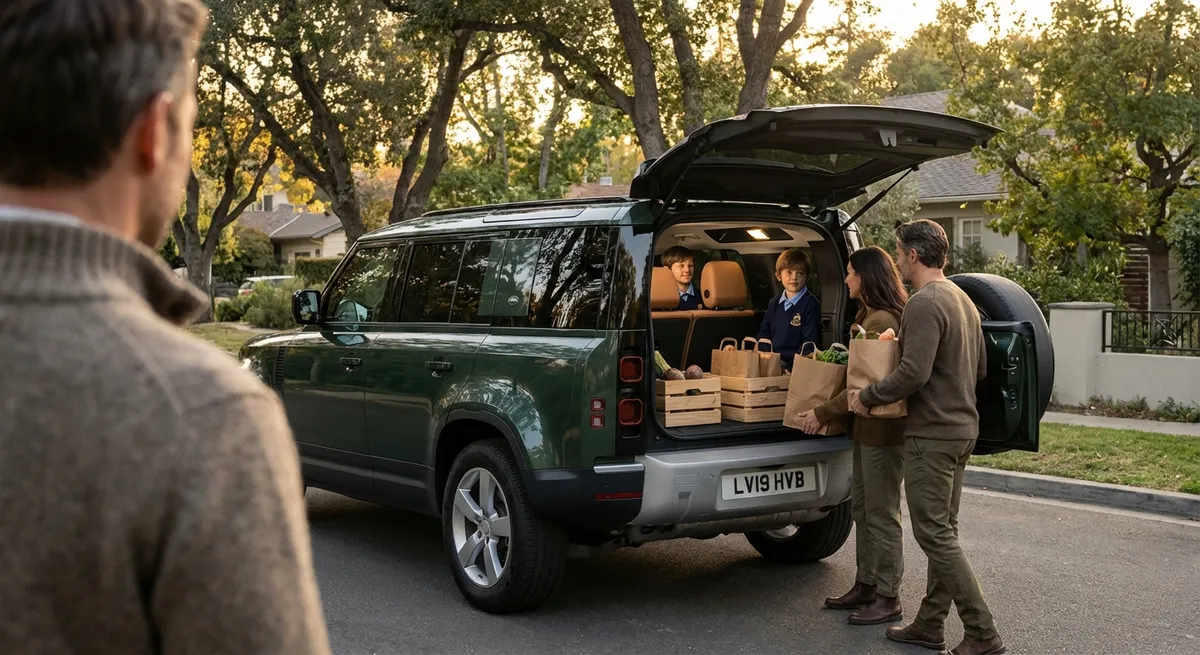
Finally, study how the cargo area behaves with the third row in use. Some SUVs retain enough space for a full grocery run or a couple of carry-on suitcases even with all seats up, while others are reduced to a narrow shelf behind the last row. The most family-capable SUVs allow multiple configurations—partial folding, split rear seats, and cargo management systems—that keep the vehicle versatile as needs evolve.
5. Tech That Enhances, Not Distracts, Family Life
The modern SUV cockpit is increasingly digital, but families benefit most from technology that simplifies—not complicates—their lives. The most refined setups integrate seamlessly into your existing digital ecosystem and provide intuitive control while minimizing distraction.
Start with smartphone integration. Wireless Apple CarPlay and Android Auto reduce cable clutter and allow quick access to navigation, messaging (via voice), and music. Look for responsive, high-resolution touchscreens paired with a few well-placed physical knobs or buttons for frequently used tasks like volume and climate control; this combination is faster and safer to operate while driving than screen-only systems.
Rear-seat tech should be considered carefully. Dedicated rear entertainment systems can be a blessing on long trips, but they should be easy to manage from the front seats and flexible enough to accommodate individual preferences. Multiple USB-C ports, household-style power outlets, and thoughtful device storage may actually be more valuable than fixed screens, letting your children use their own tablets or laptops.
Lastly, consider the software lifespan of the SUV. Over-the-air updates, robust navigation with real-time traffic, and a clear track record of software support from the manufacturer can extend the relevance of your vehicle’s tech over many years. The objective is an SUV that grows with your family’s digital habits rather than becoming a dated gadget on wheels.
Conclusion
Selecting a family SUV is no longer about merely “fitting everyone in.” For refined families, it is about choosing a vehicle that quietly orchestrates comfort, safety, and practicality with an undercurrent of luxury. By examining cabin atmosphere, material longevity, real-world safety behavior, the authenticity of third-row usability, and the intelligence of onboard technology, you move beyond checkbox shopping and into intentional curation.
The result is an SUV that does more than transport your family. It becomes a calm, capable, and beautifully considered extension of your home—ready for school runs, weekend escapes, and everything in between.
Sources
- [National Highway Traffic Safety Administration (NHTSA) – 5-Star Safety Ratings](https://www.nhtsa.gov/ratings) – Official U.S. government crash-test ratings and safety information for SUVs and other vehicles.
- [Insurance Institute for Highway Safety (IIHS) – Ratings](https://www.iihs.org/ratings) – Independent crash-test results and evaluations of advanced driver-assistance systems.
- [Edmunds – Car Interior Materials and What They Mean](https://www.edmunds.com/car-buying/understanding-interior-materials.html) – Overview of common automotive interior materials and their durability implications.
- [Consumer Reports – Guide to Car Safety Features](https://www.consumerreports.org/cars/car-safety-features-guide-a1066502681/) – Detailed explanations of modern safety and driver-assistance technologies and how they affect daily driving.
- [Kelley Blue Book – Three-Row SUV Buying Guide](https://www.kbb.com/car-advice/articles/3-row-suv-buying-guide/) – Practical guidance on evaluating three-row SUVs, including space, access, and family usability.
Key Takeaway
The most important thing to remember from this article is that this information can change how you think about Buying Guide.