Selecting a family SUV today is less about sheer size and spec sheets, and more about how gracefully a vehicle integrates into your family’s daily choreography. Beyond the headline features and glossy brochure photography, there is a quieter layer of engineering, ergonomics, and design thinking that determines whether an SUV simply “works” for family life—or truly elevates it. This is where discerning families find their advantage: in noticing details that most shoppers overlook, but that reveal themselves every day in the school run, the weekend escape, and the late‑night airport pickup.
1. The Art of Cabin Architecture: How the Space Actually Flows
Many SUVs boast similar cargo volumes and legroom on paper, yet feel dramatically different in person. The difference lies in cabin architecture—how the space is shaped, accessed, and experienced from every seat.
A truly considered family SUV balances a commanding front driving position with a second row that feels like a lounge rather than an afterthought. Look for gently scalloped front seatbacks that free up knee room without forcing an upright, “perched” posture for rear passengers. Subtle details—like slightly higher second‑row seat bases—improve outward visibility for children, reducing motion sickness and keeping them more engaged with the journey.
For families using child seats, the width and contouring of the rear bench matter just as much as official LATCH anchor counts. Flat, supportive cushions make it easier to install two child seats while still preserving a usable middle position. In three‑row SUVs, the true test is how intuitively passengers can reach the third row without dismantling the entire second row: a one‑hand tilt‑and‑slide mechanism that works even with a child seat installed (where available) is the difference between a theoretical seven‑seater and a genuinely practical one.
When you test drive, don’t just sit in the driver’s seat. Rotate through every row, simulate buckling in a child seat, imagine a sleepy grandparent climbing into the third row at night. The SUV that feels naturally accommodating from every angle is the one that will keep your family comfortable well beyond the initial novelty.
2. Ride Quality with Children in Mind: Calm, Composed, and Unfussy
Many SUVs market “sporty handling,” but for a family vehicle, the more meaningful promise is composure. The finest family SUVs do not shout their competence; they glide, isolating the cabin from broken pavement, expansion joints, and the incessant bustle of city streets.
Several elements determine whether an SUV delivers that calm, almost cocoon‑like ride:
- Suspension tuning: Softer isn’t always better. The most sophisticated family SUVs combine compliant damping with excellent body control, preventing the “bobbing” or side‑to‑side motion that unsettles children and can induce motion sickness.
- Wheel and tire choice: Oversized wheels with ultra‑low‑profile tires may photograph well, but they often degrade ride quality. For families, a slightly smaller wheel with more tire sidewall usually yields a more forgiving, quieter drive.
- Cabin insulation and glazing: Laminated front glass, generous sound deadening, and solid door seals contribute to a calmer interior. On a test drive, note how the vehicle feels at 30 mph on side streets versus 65 mph on the highway. A premium family SUV will maintain its composure and hushed ambience even as speeds increase.
Pay particular attention to how the SUV handles imperfect scenarios: a quick lane change on a rough surface, a sharp turn into a steep driveway, or braking firmly from suburban speeds. Families rarely drive on closed circuits—the real luxury is an SUV that remains unruffled in the real world, even with a full complement of passengers, luggage, and the occasional last‑minute sports bag tossed into the cargo area.
3. Intuitive Technology, Not Tech for Its Own Sake
The most successful family SUVs are not defined by the length of their feature list, but by how effortlessly those features fade into the background once you start using them. Sophisticated families should assess technology through the lens of ease, clarity, and longevity—not novelty alone.
An elegant infotainment system is one that:
- Balances a responsive touchscreen with a few well‑placed physical controls for high‑frequency tasks like volume, temperature, and defrost.
- Offers wireless smartphone integration (Apple CarPlay, Android Auto) that connects seamlessly, without frequent dropouts or complicated menus.
- Presents navigation and key vehicle information in clean, high‑contrast layouts that are legible at a glance—not busy or over‑animated.
For parents, practical technology can be quietly transformative: a high‑quality surround‑view camera that genuinely reduces parking stress; a head‑up display that keeps eyes on the road; user profiles that memorize seat, mirror, and climate preferences for multiple drivers. In three‑row models, cabin intercom or “cabin talk” features can reduce yelling to the third row, and separate climate zones allow teenagers and toddlers to coexist without climate wars.
When reviewing an SUV’s technology, ask a simple question: “Will this still feel intuitive five years from now?” Balanced, thoughtfully implemented systems age gracefully; overly complex or trend‑chasing interfaces can feel dated almost as soon as the next software update arrives.
4. The Quality You Touch Daily: Materials, Craft, and Quiet Durability
For family use, quality is not about opulence; it is about resilience with refinement. The most satisfying family SUVs blend premium materials with a deliberate understanding that children, pets, and luggage will interact with every surface more vigorously than any designer might wish.
Soft‑touch materials on high‑contact zones—steering wheel, door armrests, center console edges—improve perceived quality on every journey. But equally important are the harder‑wearing surfaces: seat upholstery that resists staining yet avoids feeling plasticky; door sills and seat backs that can handle scuffs from shoes and sports equipment without looking tired within a year.
There is also the question of tactile coherence. In a well‑resolved cabin, buttons, switches, and stalks share a consistent weighting and finish. Door closures have a solid, reassuring “thunk” rather than a hollow echo. These details signal not just luxury, but structural integrity and attention to assembly.
Families should look beyond initial showroom shine: gently press, pull, and interact with the interior. Do storage lids close with a damped, confident motion or a brittle snap? Do seat mechanisms feel robust? Does the steering wheel feel like it will age gracefully with years of use? A truly premium family SUV is one you never have to treat delicately, yet which continues to feel composed and well‑made long after the first school year’s worth of commutes.
5. Subtle Practicality: The Intelligent Details That Quietly Matter
The finest family SUVs are defined by details you notice only after living with them: the hooks, pockets, and thoughtful design touches that make life smoother without fanfare. This is where one SUV can quietly distinguish itself from the rest.
Seek out:
- Genuinely usable small‑item storage: A dedicated space for phones that includes wireless charging and cable management; a bin that actually fits a medium handbag; multiple cupholders sized for both children’s bottles and adult coffee tumblers.
- Smart cargo solutions: A low, wide load floor that eases the loading of strollers and suitcases; under‑floor storage for delicate items or charging cables; rear seats that fold fully flat with simple, one‑touch releases—ideally from both the cargo area and second row.
- Thoughtful lighting: Gentle, well‑placed ambient lighting that aids visibility at night without creating glare; illuminated rear door handles; cargo lights that make late‑night unloading less of a blind exercise.
- Ingress and egress designed for daily life: Door openings that accommodate child seats without contortion; running boards or slightly lower sills that help younger children climb in independently; grab handles placed with intention, not as an afterthought.
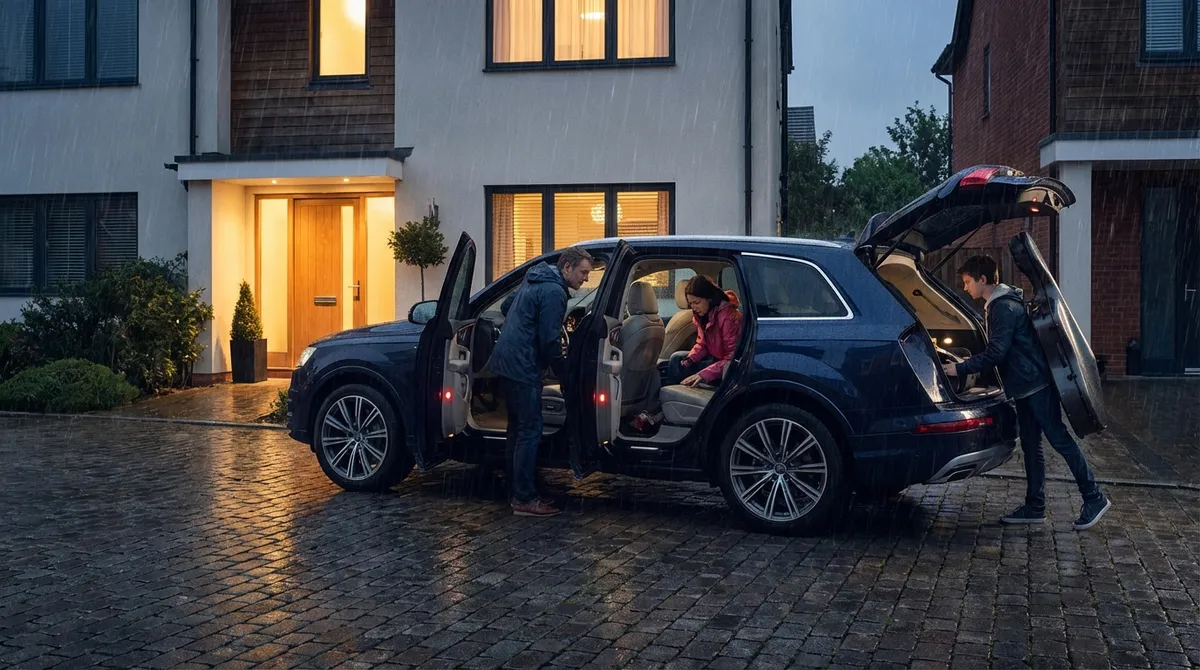
These elements may not headline marketing campaigns, but families feel their impact every day. During your evaluation, imagine the least glamorous scenarios: a rainy‑day grocery run, loading a sleeping child into a car seat after sunset, packing for a long‑weekend road trip. The SUV that makes those moments smoother—with fewer compromises and less fumbling—is the one that will quietly earn your loyalty.
Conclusion
A truly refined family SUV does more than transport. It orchestrates comfort, practicality, and composure in a way that respects both the demands of everyday life and the desire for something a little more considered, a little more elevated. By looking beyond the obvious—beyond horsepower figures, screen sizes, and marketing gloss—and focusing on cabin architecture, ride maturity, intuitive technology, tactile quality, and subtle everyday usability, families can identify the SUVs that will not simply impress on test‑drive day, but will continue to feel like an intelligent, gracious partner for years to come.
In a crowded market, the most rewarding choice is rarely the loudest or the flashiest. It is the SUV that feels quietly resolved in every detail, from the first turn of the wheel to the thousandth school drop‑off.
Sources
- [National Highway Traffic Safety Administration (NHTSA) – Vehicle Safety Ratings](https://www.nhtsa.gov/ratings) - Official U.S. government crash test ratings and safety information for SUVs and other vehicles
- [Insurance Institute for Highway Safety (IIHS) – Ratings](https://www.iihs.org/ratings) - Independent crashworthiness, crash avoidance, and headlight evaluations that help compare family SUVs
- [Environmental Protection Agency (EPA) – Fuel Economy Guide](https://www.fueleconomy.gov/feg/findacar.shtml) - Official fuel economy data for comparing SUV efficiency and long‑term running costs
- [Consumer Reports – SUV Buying Guide](https://www.consumerreports.org/cars/suvs/) - In‑depth testing, reliability data, and owner satisfaction insights for a wide range of SUVs
- [Edmunds – What to Look for in a Family Car](https://www.edmunds.com/car-buying/what-to-look-for-in-a-family-car.html) - Practical guidance on family‑focused features, interior usability, and safety technologies
Key Takeaway
The most important thing to remember from this article is that this information can change how you think about SUV Reviews.