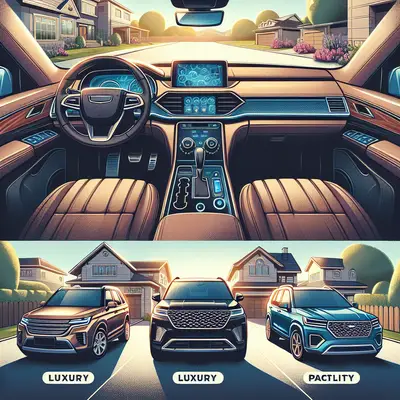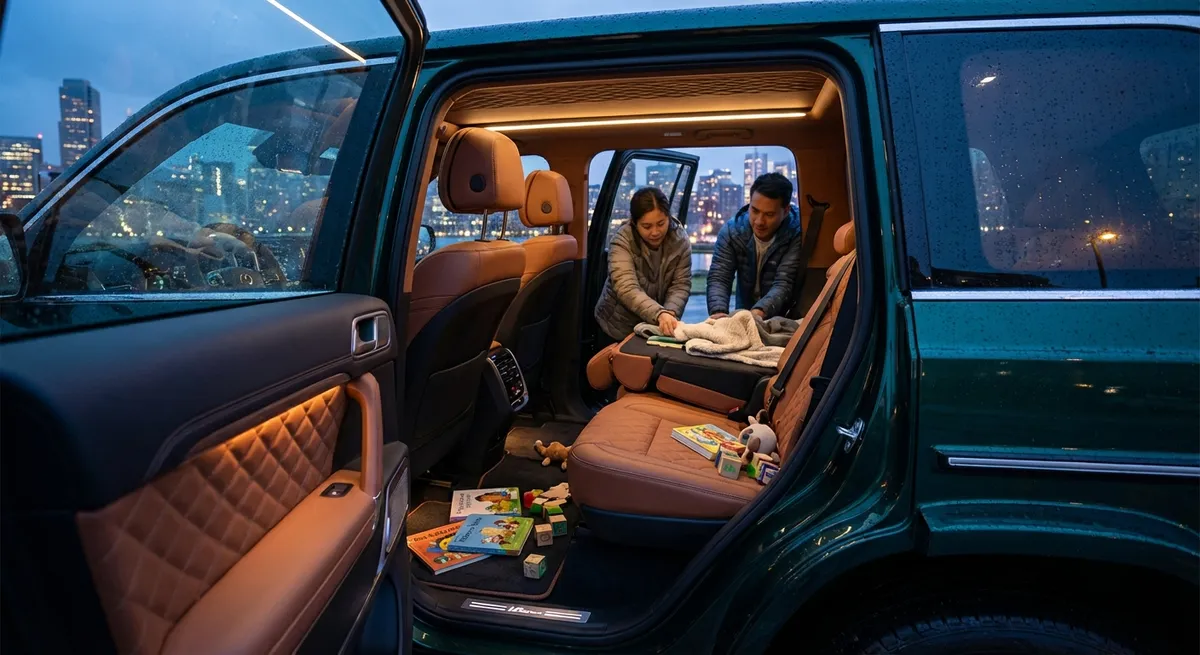
Even among well-reviewed SUVs, only a handful feel as though they were genuinely designed around family life rather than merely adapted to it. The difference is rarely captured in a brochure. It resides in unspoken details: how a second-row seat glides with one hand while you hold a toddler, whether the cabin still feels serene when every seat is filled, and how gracefully the vehicle adapts from school run to weekend escape. This is where discerning families discover that “family-friendly” can be elevated into something quietly exceptional.
Below are five exclusive, often-overlooked insights that help distinguish a truly sophisticated family SUV from one that is simply large and well-equipped.
1. The True Luxury: Effortless Access for Real-World Routines
Many SUVs feature three-row seating, but few make all three rows genuinely usable in everyday life. The distinction lies in the choreography of access.
A refined family SUV prioritizes one-handed operation of second-row seats—even when a child seat is installed. Look for tilt-and-slide mechanisms that still function with a latched child seat in place, allowing older children or adults to step into the third row without a clumsy shuffle. Wide rear-door openings, low step-in heights, and thoughtfully placed grab handles matter just as much as seat count; they determine whether grandparents can enter gracefully and whether children can climb in independently without drama.
Electrically operated tailgates with hands-free opening are now common, but the premium experience comes from how intelligently the system has been tuned. Consider tailgates that open high enough for taller adults yet allow a programmable stop point for low garage ceilings. Equally telling is how flat the load floor is when all seats are folded and whether there is a minimal lip to lift bulky strollers or travel cribs over. The most family-conscious designs anticipate you loading items every single day, not just on holidays.
2. Cabin Serenity: Protecting Conversation and Calm
Sound insulation is often marketed as a luxury feature, yet for families it is also a wellbeing feature. A serene cabin makes it easier to converse with children in the third row, hear subtle changes in a baby’s breathing, and emerge from a long drive far less fatigued.
Look beyond generic claims of “quiet cabins” and examine the specifics: laminated acoustic glass, additional insulation in the firewall and wheel wells, and active noise cancellation tuned to reduce low-frequency droning from the road. Tyre choice and suspension geometry significantly affect interior noise; premium family SUVs are engineered to isolate small vibrations and road imperfections without feeling disconnected or floaty.
Ventilation and climate control also contribute to perceived serenity. Tri- or quad-zone climate systems allow each row to be comfortable without argument, while rear window shades protect younger passengers from harsh sunlight and help maintain a stable cabin temperature. Rear vents thoughtfully placed at both mid-level and roof-level distribute air more evenly—particularly important if you regularly carry a full complement of passengers.
The most carefully executed interiors feel acoustically balanced: the engine note recedes into the background, road noise is muted, and the overall ambience supports calm conversation rather than forcing you to raise your voice.
3. Intelligent Storage: The Quiet Marker of a Well-Designed Family SUV
Storage is rarely glamorous, but it is where family-focused design truly reveals itself. Every family SUV has cupholders and a boot; not every SUV understands where daily life actually lands.
Open the front centre console: can it accommodate a small handbag or compact laptop, or is it merely a shallow tray for keys? Look for underfloor storage in the cargo area for items that live in the car—first aid kits, compact strollers, sports gear—so they do not monopolize visible space. Side pockets with durable, easy-clean linings are more practical for damp umbrellas and sandy footwear than plush materials that age quickly.
More sophisticated designs offer modular cargo solutions: adjustable load floors to create a flush surface with folded seats; rails and movable dividers to keep grocery bags upright; hooks and tie-down points that are robust enough for heavier loads. Some SUVs include hidden compartments specifically for valuables that might otherwise be left in sight during school runs or sports practices.
Inside the cabin, a premium family SUV offers thoughtful solutions such as seatback tablet mounts that can be removed without tools, clever phone storage for every occupied row, and ambient lighting that makes it easy to locate dropped items at night without flooding the cabin with harsh light. These details may never be mentioned in advertising, but you will notice them every single day.
4. Adaptive Seating: When Flexibility Outranks Sheer Size
Families are dynamic: car seats come and go, teenagers appear seemingly overnight, and your SUV must quietly evolve with every new chapter. The most sophisticated family vehicles are not merely large; they are exquisitely adaptable.
Begin with the fundamentals: ISOFIX/LATCH anchor placement. An SUV that allows three child seats across the second row, or offers ISOFIX anchors in the third row, provides flexibility that many families only discover they needed later. Pay close attention to how easy it is to access those anchors—awkward placement can turn every installation into a small ordeal.
Sliding and reclining second-row seats can feel like a small luxury for passengers, yet they also serve a more functional role: allocating legroom where it is needed most. If you occasionally carry adults in the third row, check whether the second row can move forward without compromising their comfort or safety. Split-folding seatbacks (40/20/40 rather than 60/40) allow for long items like skis or musical instruments to be carried while keeping two full-size passenger positions.
Premium SUVs increasingly offer powered folding mechanisms for rear rows, but the most family-conscious designs ensure there are also manual controls accessible from the rear doors or cargo area. This allows you to reconfigure the cabin in a single motion, rather than walking around the vehicle multiple times. Seat materials are equally important: high-quality leather or synthetic alternatives that resist staining, clean easily, and age gracefully will feel far more luxurious after several busy years than delicate fabrics that show every spill.
5. Digital Ecosystem: Technology That Enhances, Not Distracts
Technology is now one of the defining characteristics of a modern family SUV, but more screens do not always equate to a better experience. The most refined vehicles favour clarity and restraint over spectacle.
Begin by evaluating the driving interface: a clean, intuitive layout with minimal menu-diving reduces distraction and fatigue. Wireless smartphone integration (Apple CarPlay, Android Auto) is now almost essential, as is a wireless charging pad with cooling considerations so devices do not overheat on long journeys. Multiple USB-C ports across all rows matter more in practice than a single high-spec screen; they ensure that everyone can remain charged and content without arguments over cables.
For families, rear-seat connectivity is more meaningful than sheer screen size. Look for systems that allow independent media in the back, integrated Wi‑Fi hotspots for longer trips, and the ability to mirror educational apps or streaming content without clumsy workarounds. Head-up displays and clear digital instrument clusters allow the driver to remain focused, subtly reinforcing safety.
Software support and update policies have become a quiet indicator of long-term value. Over-the-air updates can refine driver-assistance features, navigation, and energy management over time, extending the vehicle’s relevance well beyond its initial specification. A premium family SUV is not only well-equipped at delivery; it continues to evolve in step with your family’s needs and digital habits.
Conclusion
The most satisfying family SUVs are not defined solely by horsepower figures or screen dimensions, but by a careful orchestration of everyday details. Effortless access, acoustically serene cabins, intelligent storage, adaptive seating, and a thoughtfully integrated digital ecosystem all contribute to a driving experience that feels calm, composed, and genuinely family-centric.
For discerning families, the goal is not to chase every available feature, but to identify the quiet, structural decisions that reveal a manufacturer’s understanding of real life. When those understated elements align, an SUV becomes more than transport—it becomes an elegant companion to the evolving rhythm of your family.
Sources
- [National Highway Traffic Safety Administration (NHTSA) – Child Safety, Car Seats and Booster Seats](https://www.nhtsa.gov/equipment/car-seats-and-booster-seats) - Authoritative guidance on proper child seat use and anchor considerations
- [Insurance Institute for Highway Safety (IIHS) – Ratings: LATCH Ease of Use](https://www.iihs.org/ratings/latch) - Evaluates how accessible and user-friendly child seat anchors are in different vehicles
- [BMW Group – Acoustic Comfort and Sound Insulation](https://www.bmwgroup.com/en/news/general/2020/acoustic-comfort.html) - Insight into how premium manufacturers engineer cabin quietness
- [Volvo Cars – Safety and Family-Oriented Interior Design](https://www.volvocars.com/us/v/safety) - Explains Volvo’s philosophy on safety, seating, and family-focused interior solutions
- [Edmunds – Car Storage and Cargo Space Explained](https://www.edmunds.com/car-buying/car-cargo-capacity-explained.html) - Detailed overview of how to interpret and compare storage and cargo features in vehicles
Key Takeaway
The most important thing to remember from this article is that this information can change how you think about Family Features.